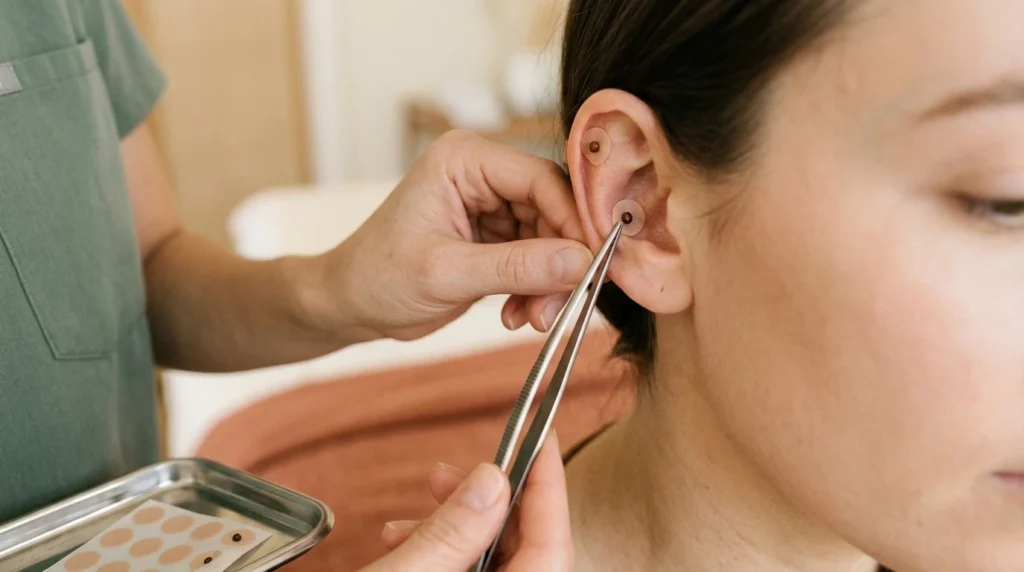
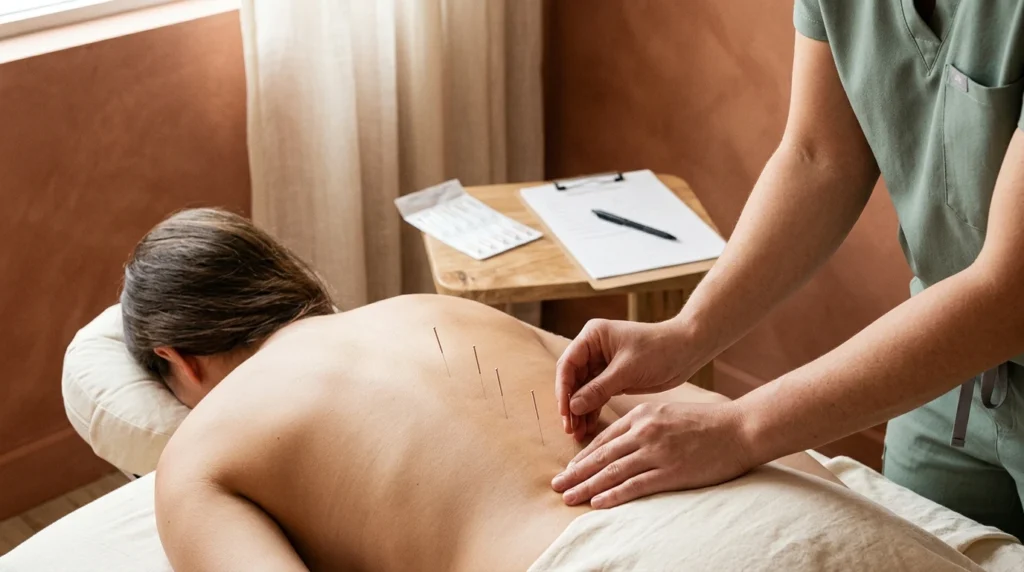
Yes, acupuncture can help a pinched nerve for many people, but it's worth being precise about how. Acupuncture for a pinched nerve works on two fronts. It calms the pain signal itself (neuromodulation), and it eases the muscle guarding and soft-tissue irritation that crowd an inflamed nerve root (what we'll call "soft-tissue decompression"). It does …


Yes, acupuncture can help a pinched nerve for many people, but it’s worth being precise about how. Acupuncture for a pinched nerve works on two fronts. It calms the pain signal itself (neuromodulation), and it eases the muscle guarding and soft-tissue irritation that crowd an inflamed nerve root (what we’ll call “soft-tissue decompression”). It does not push a herniated disc back into place or shave down a bone spur. The broader outlook is encouraging: a review in Current Reviews in Musculoskeletal Medicine reports good to excellent outcomes in up to 90% of people with a pinched nerve in the neck who are managed without surgery. At Copper Wellness, acupuncture is one part of that conservative plan, not a substitute for a proper evaluation. This guide explains what “decompression” and “neuromodulation” really mean, what the research shows (with its limits), and how to tell whether a pinched or “trapped” nerve needs urgent care first.
Key Takeaways
- Acupuncture mainly helps a pinched nerve by changing how the nervous system processes pain and by relaxing the protective muscle tension around the irritated root. It does not physically move a disc or bone.
- For a pinched nerve in the neck, a 2024 meta-analysis pooled 27 studies with 3,124 patients and found a favorable result for acupuncture (risk ratio 1.14). The authors flag heterogeneity between the trials.
- For sciatica, a 2022 meta-analysis in Complementary Therapies in Medicine of 28 randomized trials (2,707 participants) found higher response rates with acupuncture than with analgesic medication (risk ratio 1.20), while calling for more rigorous trials.
- Serious side effects are rare. In a German safety study of 229,230 patients, 8.6% reported any adverse effect and 2.2% reported one that needed treatment, most often minor bleeding or bruising.
- Saddle numbness, new loss of bladder or bowel control, or sudden weakness in an arm or leg are emergency signs. They need emergency care, not acupuncture.
Pinched Nerve at a Glance: Where Acupuncture Fits
Before the detail, here is the short version: which kind of pinched nerve you’re likely dealing with, and where acupuncture belongs in the plan.
| Situation | Typical signs | Where acupuncture fits | Who else is involved |
|---|---|---|---|
| Pinched nerve in the neck (cervical radiculopathy) | Neck pain that travels into the shoulder, arm or hand; tingling, numbness, weaker grip | Reasonable early conservative option for pain and muscle guarding once red flags are ruled out | Chiropractor or physical therapist for joint mechanics and nerve mobility; spine physician if weakness progresses |
| Pinched nerve in the lower back (lumbar radiculopathy) | Back or buttock pain radiating down the leg, sometimes below the knee; numbness or tingling in the leg or foot | Reasonable early conservative option, often combined with movement-based care | Physical therapist, chiropractor, massage therapist; spine physician if conservative care stalls |
| Nerve entrapment at the wrist or elbow (e.g. carpal or cubital tunnel) | Numbness or tingling in specific fingers, worse with certain hand positions | A different condition with a different workup; discuss with your clinician | Primary care or a hand specialist for diagnosis |
| Red-flag symptoms | Saddle numbness, bladder or bowel changes, sudden limb weakness | Not first. Go to the emergency department. | Emergency physician, spine surgeon |
What a Pinched Nerve Actually Is (and Why “Radiculopathy” Matters)
“Pinched nerve” and “trapped nerve” are everyday names for a nerve that is being compressed or irritated somewhere along its path. Most of the time people mean a nerve root, the point where a nerve branches off the spinal cord and exits between two vertebrae. The medical term for symptoms caused by an irritated root is radiculopathy. It matters because radiculopathy behaves differently from ordinary muscle pain. The pain follows the nerve’s path into an arm or leg, and it can come with numbness, pins-and-needles or weakness.
Two things usually happen at once. There is mechanical pressure: something in a tight space is touching the root. And there is chemical irritation: the inflammation around that contact point sensitizes the nerve, so it fires pain signals more easily. That second component explains why some people with dramatic MRI findings feel fine while others with modest findings are in a lot of pain. It’s also where conservative treatments, including acupuncture, have room to work.
What causes a pinched nerve
According to a 2019 review of lumbar radiculopathy in Cureus, a pinched nerve in the lower back “may be related to disc bulging or herniation, facet or ligamentous hypertrophy, spondylolisthesis, or even neoplastic and infectious processes.” In plain terms, that means a bulging or herniated disc, thickened joints or ligaments narrowing the space, one vertebra slipping forward on another, or, rarely, a tumor or infection. Rare causes are one reason a proper evaluation matters. If you’re unsure what separates a bulge from a herniation, our explainer on bulging disc vs. herniated disc walks through it, and our guide to herniated disc vs. muscle strain helps you tell nerve pain from a pulled muscle.
The neck is a little different. The Current Reviews in Musculoskeletal Medicine review (Iyer & Kim) notes that most cases of cervical radiculopathy “are not due to ‘soft’ disc herniation, but rather due to cervical spondylosis.” Spondylosis is age-related wear of the discs and joints, often with bone spurs narrowing the opening where the root exits.
How common it is
Pinched nerves are common. The same Cureus review estimates the prevalence of lumbar radiculopathy at 3%-5% of the population, affecting both men and women. For the neck, the Iyer & Kim review cites an annual incidence of cervical radiculopathy of 107.3 per 100,000 for men and 63.5 per 100,000 for women.
A different kind of “pinched nerve”: wrist and elbow entrapment
Some people say “pinched nerve” when they mean a nerve squeezed out in the limb, such as the median nerve at the wrist (carpal tunnel) or the ulnar nerve at the elbow (cubital tunnel). These are peripheral entrapments, not root problems. The symptom pattern, the tests and often the treatment pathway differ. This article focuses on nerve roots in the neck and lower back. If your symptoms sit mainly in specific fingers and change with wrist or elbow position, raise that with your clinician so it’s assessed on its own terms.
Decompression: What Acupuncture Can (and Can’t) Take Pressure Off
“Decompression” is the word in this article’s title most likely to be misunderstood, so let’s be exact. In spine medicine, surgical decompression means physically removing what’s pressing on the nerve, such as part of a disc, a bone spur or thickened ligament. Acupuncture cannot do that, and no honest acupuncturist will tell you it can.
What acupuncture can plausibly influence is the soft-tissue and chemical load around an irritated root. When a nerve root is irritated, the muscles around it often tighten protectively (muscle guarding). That tension adds to pain and stiffness and can make movement feel threatening. Easing that layer, and calming the nerve’s own sensitivity, is what our acupuncturists mean when they talk to patients about “taking pressure off.” Here is how we explain the split:
| What acupuncture may help take pressure off | What acupuncture cannot take pressure off |
|---|---|
| Protective muscle guarding around the neck, shoulder blade, low back or hip. Needling activates sensory nerve fibers (see the neuromodulation section below), which is the basis for its effect on muscle tone and pain. | A herniated disc fragment pressing on the root. Acupuncture does not move disc material. |
| Pain sensitization: the nervous system’s “volume knob” turned up by ongoing irritation. This is the best-studied target (endogenous opioid and descending inhibitory pathways). | Bone spurs or arthritic overgrowth narrowing the opening where the nerve exits. |
| The inflammatory, chemical side of nerve irritation. This is supported mainly by laboratory and animal research, so we describe it as a possibility, not a proven effect in patients. | True structural stenosis (narrowing of the spinal canal) or a slipped vertebra. These need a spine physician’s assessment. |
So where does surgery come in? The Cureus review describes the window for judging whether conservative care has worked as one that “typically ranges between four and eight weeks.” If you haven’t improved after a well-run course of nonsurgical care, or if weakness is getting worse, a referral to a spine specialist to discuss injections or surgical decompression is appropriate. When a disc is the suspected cause, our chiropractic team’s article on chiropractic care for a herniated disc explains how joint-based care fits alongside this. When imaging is warranted, Copper Wellness can coordinate it through our labs and imaging service rather than sending you off to start over somewhere else.
Neuromodulation: How Needling Changes the Pain Signal
“Neuromodulation” simply means changing how nerves send and process signals. It is the most important mechanism behind acupuncture for a pinched nerve, and it is better documented than most people expect.
A widely cited review of the neural mechanisms of acupuncture analgesia in Progress in Neurobiology (Zhao, 2008, abstract on Europe PMC) describes the pathway step by step. With manual acupuncture, “all types of afferent fibers (Abeta, Adelta and C) are activated.” Those incoming signals travel to the spinal cord and brainstem, where “the opioid peptides and their receptors in Arc-PAG-NRM-spinal dorsal horn pathway play a pivotal role in mediating acupuncture analgesia.” Put simply, needling prompts the body’s own pain-relief chemistry and switches on circuits that turn down pain traffic at the spinal cord. The review notes these findings have been “confirmed and further explored in the human brain by means of functional imaging.”
A 2023 review in Frontiers in Cellular Neuroscience (Yang et al., PubMed Central) adds that acupuncture engages “descending pain inhibitory mechanisms, such as opioid, adrenergic, and serotonergic pathways.” In other words, more than one of the body’s pain-control systems is involved.
The U.S. National Center for Complementary and Integrative Health is careful here, and so are we. Its patient guide to acupuncture states that “how acupuncture works is not fully understood,” though it “may affect nervous system function.” Mechanisms explain why a benefit is plausible; the clinical trials below tell us how large that benefit tends to be.
This is the part of acupuncture our practitioners think about most when treating nerve pain. Dr. Stephanie Madden, Copper Wellness’s founder, holds a Doctor of Acupuncture from AOMA Graduate School of Integrative Medicine and has clinical experience that includes work at a VA clinic. Dr. Anais Jackson-Gonzalez earned her Doctorate in Acupuncture and Chinese Medicine at the National University of Health Sciences and focuses on pain management, combining acupuncture with cupping, gua sha and moxibustion.
Nerve repair: what the lab research suggests (and doesn’t yet prove)
You may see claims online that acupuncture “regenerates” nerves. The real picture is more modest. The Yang et al. review summarizes animal and early-phase research suggesting acupuncture may “promote the proliferation and migration of Schwann cells” (the cells that support and insulate peripheral nerves) and stimulate “the release of neurotrophic substances such as nerve growth factors.” The authors also state the limitation plainly: “Most studies have only examined the protective effect of acupuncture in the initial phase” of nerve injury, and “better models or clinical trials are needed.” That’s promising science, but it is not evidence that acupuncture repairs a compressed nerve in people, and we don’t present it that way.
Electroacupuncture: why the frequency matters
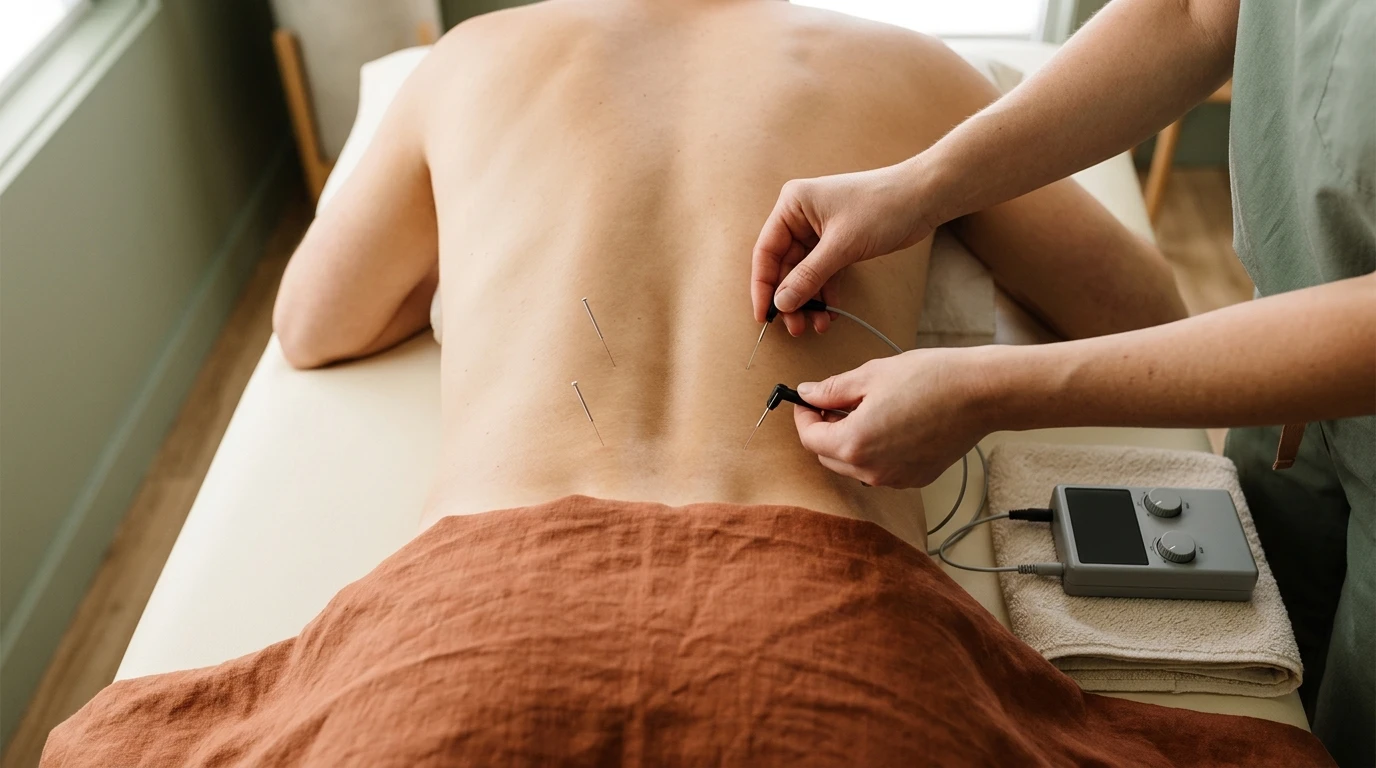
Electroacupuncture passes a mild electrical current between pairs of needles. It’s often used for nerve-related pain because it gives a steady, controllable stimulus. The Progress in Neurobiology review reports that the release of opioid peptides evoked by electroacupuncture “is frequency-dependent”: electroacupuncture “at 2 and 100Hz produces release of enkephalin and dynorphin in the spinal cord, respectively.” Enkephalin and dynorphin are two different natural opioid compounds. So a low-frequency and a high-frequency setting appear to engage different pain-control chemistry, which is part of why practitioners adjust settings rather than using one default. This is laboratory groundwork, not a promise of a particular outcome. Learn more on our electroacupuncture page.
Acupuncture for a Pinched Nerve in the Neck (Cervical Radiculopathy)
A pinched nerve in the neck typically shows up as neck pain that travels into the shoulder blade, arm or hand, often with tingling, numbness or a weaker grip. Looking at your arm symptoms tells a clinician roughly which root is involved. According to the Iyer & Kim review, “the C7 root (C6-7 herniation) is the most commonly affected.”
| Nerve root | General area where symptoms tend to show up |
|---|---|
| C5 | Shoulder and outer upper arm |
| C6 | Outer forearm toward the thumb side of the hand |
| C7 | Back of the arm toward the middle finger (the most commonly affected root) |
| C8 | Inner forearm toward the ring and little fingers |
These patterns overlap from person to person, so they’re a starting point for an exam, not a diagnosis.
The natural course is often encouraging. The Iyer & Kim review notes that “the majority of patients see substantial improvements 4–6 months that are generally maintained over 2–3 years.” The role of conservative care, acupuncture included, is to make that stretch more manageable: less pain, better sleep, more movement, and early detection of anyone who isn’t following the expected path.
On acupuncture for cervical radiculopathy specifically, the 2024 meta-analysis (Zhao et al.) found that acupuncture outperformed the comparison groups on its “total efficiency” measure (risk ratio 1.14, 95% CI 1.09-1.19). The authors also concluded that “acupuncture is significantly more effective than traction therapy in the treatment of cervical spondylosis.” The caveat matters: the included studies “showed heterogeneity,” meaning they varied in methods and quality, so treat the size of the effect as an estimate, not a fixed number.
Is acupuncture good for a pinched nerve in the neck, then? For many people it’s a reasonable, low-risk part of early care, especially when pain and muscle guarding are the main problems and strength is intact. If your neck pain is more local than radiating, our page on acupuncture for neck pain covers that broader picture. If it has dragged on for months, read our guide to neck pain that won’t go away. When joint stiffness in the neck is part of the problem, chiropractic care for neck pain often runs alongside acupuncture in the same plan.
Acupuncture for a Pinched Nerve in the Lower Back
A pinched nerve in the lower back usually involves the L4, L5 or S1 roots, the ones that form the sciatic nerve. That’s why lumbar radiculopathy and “sciatica” overlap so heavily. Typical signs include back or buttock pain radiating down the leg, often below the knee, with numbness or tingling in the calf or foot and sometimes weakness when you lift the foot or rise onto your toes. If your symptoms are mostly leg pain along the sciatic nerve, our dedicated page on acupuncture for sciatica goes deeper into that presentation.
The research on acupuncture for a pinched nerve in the lower back is larger than for the neck, though the quality caveats are similar. The 2022 meta-analysis by Han and colleagues pooled 28 randomized trials with 2,707 participants and found the response rate “significantly higher in the acupuncture group compared to the analgesic group” (risk ratio 1.20, 95% CI 1.16-1.24). The authors are clear that “studies with a rigorous study design are required to increase the validity of the effectiveness and safety of acupuncture treatment for sciatica.”
Clinical guidelines point the same direction, with one important scope note. The American College of Physicians’ 2017 guideline in Annals of Internal Medicine recommends nonpharmacologic treatments first. For acute or subacute low back pain it names “superficial heat (moderate-quality evidence), massage, acupuncture, or spinal manipulation (low-quality evidence).” For chronic low back pain it names “exercise, multidisciplinary rehabilitation, acupuncture, mindfulness-based stress reduction (moderate-quality evidence).” That guideline covers low back pain broadly, not radiculopathy specifically, so it supports acupuncture as a reasonable first-line option for back pain in general rather than proving a specific effect on a compressed root.
In practice, acupuncture for a pinched nerve in the back works best as part of a broader plan. Our page on acupuncture for back pain covers non-radiating back pain. Movement-based rehab through physical therapy for back pain is often what helps people stay better once pain settles.
What the Research Actually Shows
Most pages on this topic either skip the evidence or claim acupuncture is “proven” for pinched nerves. Neither is accurate. Here is the research we rely on, with an honest note on how much weight each piece deserves.
| Study | Who was studied | What it found | How much weight to put on it |
|---|---|---|---|
| Zhao et al., 2024 meta-analysis | Cervical spondylotic radiculopathy (pinched nerve in the neck): 27 studies, 3,124 patients | Acupuncture favored on “total efficiency” (RR 1.14); more effective than traction | Directly on topic, but the trials were heterogeneous; a moderate signal, not a precise effect size |
| Han et al., 2022 meta-analysis | Sciatica: 28 randomized trials, 2,707 participants | Higher response rate than analgesic medication (RR 1.20) | Directly on topic for the lower back; the authors themselves call for more rigorous trials |
| American College of Physicians guideline, 2017 | Low back pain in general (acute, subacute, chronic) | Acupuncture listed among first-line nonpharmacologic options | High-authority guideline, but not specific to radiculopathy; low-quality evidence for acute, moderate for chronic |
| Vickers et al., 2018 individual patient data meta-analysis | 20,827 patients from 39 trials of chronic pain (musculoskeletal pain, osteoarthritis, headache, shoulder pain) | Acupuncture superior to sham and to no acupuncture; effects persist and “cannot be explained solely in terms of placebo effects” | Strong methodology, but not about pinched nerves specifically; best read as evidence that acupuncture’s pain effect is real |
| Yang et al., 2023 review | Mostly laboratory and animal studies of peripheral nerve injury | Possible effects on Schwann cells, nerve growth factors and descending pain inhibition | Mechanism research only; the authors say more clinical trials are needed |
The Vickers analysis deserves a closer look because it answers the most common skeptical question: “Isn’t it just placebo?” Published in the Journal of Pain, it pooled raw data from 20,827 patients and found “acupuncture was superior to sham as well as no acupuncture control for each pain condition,” and that “treatment effects of acupuncture persist over time.” NCCIH’s summary points the same way, noting that research found “acupuncture was more effective than no treatment for back or neck pain.”
The plain-language takeaway: can acupuncture help with a pinched nerve? The evidence says it can reduce pain for many people, with a real effect beyond placebo and a strong safety record. It does not show that acupuncture reverses the structural cause, and the trials specific to radiculopathy carry quality caveats. That’s why we use it as part of a monitored plan rather than as a stand-alone fix.
Is Acupuncture Safe for a Pinched Nerve?
This is one of the most common worries we hear, and the data is reassuring. The largest safety study we cite followed 229,230 patients in Germany who received on average 10.2 ± 3.0 acupuncture treatments each. Of those, “19,726 patients (8.6%) reported experiencing at least one adverse effect and 4,963 (2.2%) reported one which required treatment.” The most common effects were “bleedings or haematoma (6.1% of patients, 58% of all adverse effects), pain (1.7%) and vegetative symptoms (0.7%).” In plain terms: a small bruise or a bit of soreness at a needle site, or briefly feeling lightheaded. Serious events were rare; across the whole group, two patients experienced a pneumothorax (a collapsed lung from a needle placed too deep over the chest). One scope note: in that study, acupuncture was delivered by physicians in Germany, so the numbers reflect trained practitioners.
NCCIH likewise notes that “relatively few complications from using acupuncture have been reported,” and that acupuncture needles in the U.S. are regulated as medical devices that must be “sterile and labeled for single use only.” Having a herniated disc doesn’t by itself make acupuncture unsafe: the needles work in muscle and soft tissue, nowhere near the disc.
To keep your treatment safe, tell your acupuncturist about:
- Blood thinners or a bleeding disorder (bruising is the most common side effect)
- Recent spine surgery, hardware or injections
- Pregnancy, or the possibility of it
- A pacemaker or other implanted device, especially before electroacupuncture
- Any new or worsening weakness, numbness or bladder/bowel change since your last visit
Training matters too. A licensed acupuncturist and a practitioner who offers dry needling as an add-on technique come from very different educational paths. Our article on dry needling vs. acupuncture explains the difference.
Red Flags: When a Pinched Nerve Needs Urgent Care, Not Acupuncture
Most pinched nerves are painful but not dangerous. A small number are emergencies, and the first job of any clinician, acupuncturist included, is to screen for them. Use this three-tier checklist before you book any conservative care.
Tier 1: Go to the emergency department now. The Cureus review lists “saddle anesthesia, incontinence to bowel or bladder, and sudden paresis in an extremity” as red-flag warning signs that call for emergency evaluation:
- Numbness in the groin, inner thighs or buttocks (the “saddle” area)
- New loss of bladder or bowel control, or new difficulty urinating
- Sudden weakness in an arm or leg, such as foot drop or a hand that won’t grip
Tier 2: Get a medical evaluation before needling. These don’t always mean an emergency, but they need a physician’s workup first. Our clinicians screen for them at intake and refer out when they’re present:
- Weakness that is getting steadily worse over days, not better
- Signs that the spinal cord itself may be involved, not just a nerve root. The Iyer & Kim review lists “upper motor neuron signs including hyperreflexia” (overly brisk reflexes) among these. Patients may notice new clumsiness in their hands or a change in how they walk.
- Symptoms that began after a fall, car accident or other trauma
- Fever, unexplained weight loss or a history of cancer alongside new back or neck pain
- Symptoms on both sides at once, or pain that is severe and unrelenting at night
Tier 3: Reasonable to start conservative care, acupuncture included. Radiating pain, tingling or numbness in one arm or leg, strength that is normal or stable, and none of the signs above. Start care, and re-check this list if anything changes.
Not sure whether your symptoms belong in an emergency room or a regular appointment? Our guide to urgent care vs. primary care can help, but when in doubt with Tier 1 symptoms, go to the emergency department.
Your First Visit, Step by Step
Knowing what will happen makes the first appointment much easier. Here’s how a visit for a pinched nerve typically unfolds at Copper Wellness. Details vary by person and by which clinician you see.
- History and red-flag screening. Where the pain started, where it travels, what makes it better or worse, and the Tier 1 and Tier 2 questions above. Bring any imaging reports you already have.
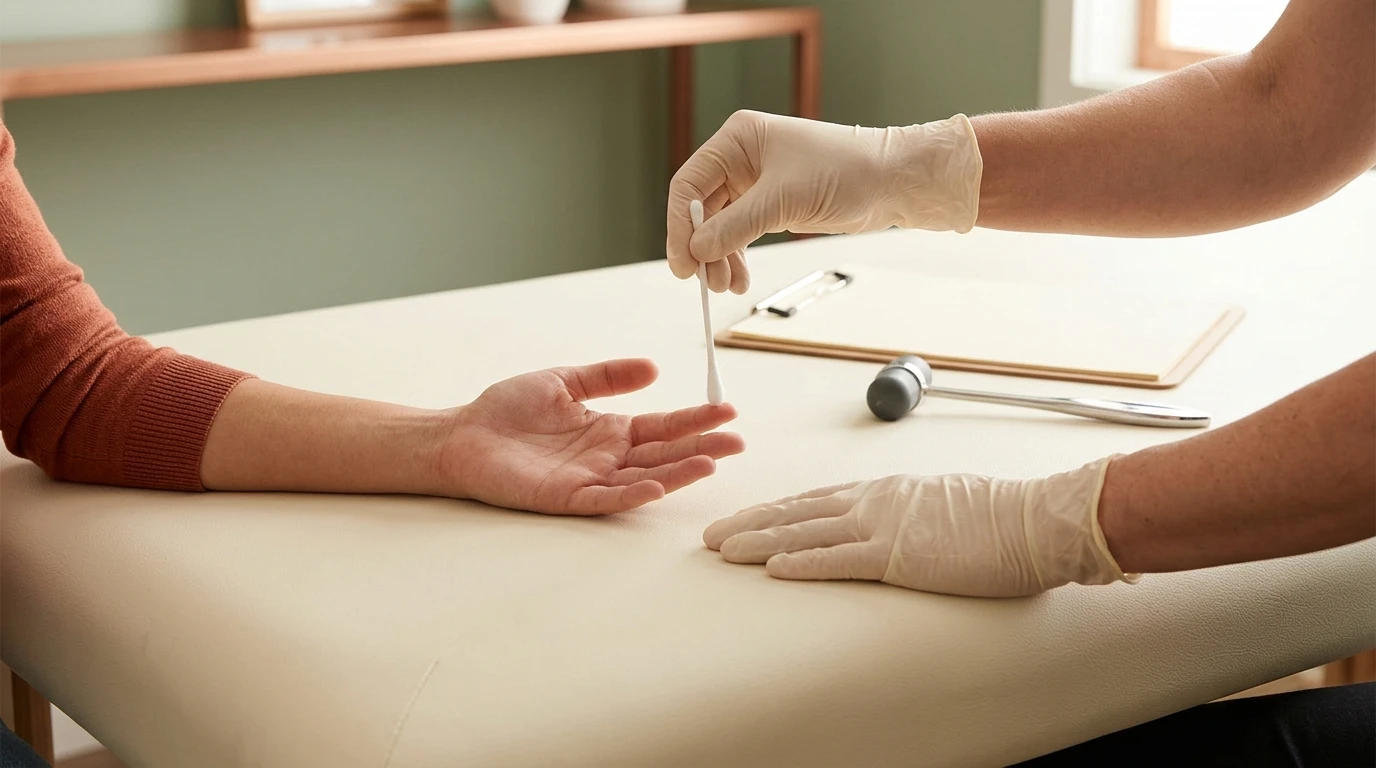
- Physical exam. Strength in key muscle groups, sensation along the arm or leg, reflexes, and movement tests that gently load the nerve. Together these help confirm whether a nerve root is involved and roughly which one.
- Traditional Chinese Medicine assessment. Our acupuncturists also assess you in TCM terms, including pulse and tongue observation and the channels the pain follows. If you’re curious about that framework, our article on the meridians of the body explains it. This sits alongside the clinical exam, not in place of it.
- Treatment. Needles are typically placed both near the affected area (for example along the neck and shoulder blade, or the low back and hip) and at points farther along the limb. Electroacupuncture may be added. When muscle guarding is prominent, the session may include cupping therapy or gua sha. Most people rest comfortably while the needles are in place.
- What it feels like. Insertion is usually brief and mild. Many people then notice a dull ache, heaviness or spreading sensation around the needle. Classical texts call this de qi. The Progress in Neurobiology review notes that acupuncture analgesia accompanies exactly this “soreness, numbness, heaviness and distension.” It should never feel sharp, electric or alarming; tell your practitioner right away if it does.
- A plan and a checkpoint. You leave with a plan: how often to come in, what to do at home, and when you’ll be re-assessed. If you’re not improving at that checkpoint, the plan changes.
How Long Until Acupuncture Helps a Pinched Nerve?
Will acupuncture help a pinched nerve quickly? Some people notice easier movement or better sleep after the first few sessions. Others need longer, and some don’t respond meaningfully. Results vary with the cause, how long symptoms have been present, and what else is going on, so be wary of anyone who promises a fixed number of sessions.
Two benchmarks from the research help set expectations. First, the natural course: for a pinched nerve in the neck, the Iyer & Kim review notes most patients improve substantially within 4-6 months. For acute or subacute low back pain, the ACP guideline observes that “most patients with acute or subacute low back pain improve over time regardless of treatment.” Second, the checkpoint: the Cureus review puts the usual window for judging conservative care at four to eight weeks.
Our approach follows those benchmarks. We reassess after a short initial series in the first few weeks. If pain, function and the neurological exam aren’t moving in the right direction, we adjust the plan, bring in another discipline, or refer you for imaging or a specialist opinion. We don’t simply keep scheduling the same treatment.
What to do between sessions
What you do between appointments matters as much as the treatment itself. Your clinician will tailor this, but common ground includes:
- Keep moving within comfort. Gentle walking and the movements your clinician gives you usually beat bed rest for nerve-root pain.
- Look at your desk setup. Screen height, chair support and how long you sit without a break all change the load on the neck and lower back.
- Find a sleep position that doesn’t provoke symptoms. Pillow height for the neck, or a pillow between the knees for the low back, can make a noticeable difference.
- Track your symptoms. Note where the pain and tingling reach. Symptoms pulling back toward the spine (centralizing) is generally a good sign; spreading further down the limb is worth reporting.
- Re-check the red flags if anything new appears.
Acupuncture, Chiropractic, PT or Massage? Building a Combined Plan
People often ask whether they should see a chiropractor for a pinched nerve, an acupuncturist or a massage therapist. Usually the honest answer is “more than one, in the right order.” The Cureus review states it directly: “Treatment of lumbar radiculopathy requires a multimodal and multispecialty team.” Here’s how the disciplines divide the work in a coordinated plan at Copper Wellness:
| Discipline | Main job in a pinched-nerve plan | Often most useful when |
|---|---|---|
| Acupuncture / electroacupuncture | Turn down the pain signal (neuromodulation) and ease protective muscle guarding | Pain, poor sleep and guarding are limiting everything else |
| Chiropractic care | Assess and improve joint mechanics in the neck, mid back or low back | Stiff, restricted segments are adding load around the irritated root |
| Physical therapy | Nerve-mobility work, strength, motor control and a home program | Pain has eased enough to rebuild capacity and prevent recurrence |
| Massage therapy | Soft-tissue and myofascial work around the neck, shoulder girdle, low back and hips | Muscle tension is a large part of the picture, between other sessions |
A chiropractor for a pinched nerve isn’t an either/or choice with acupuncture. At Copper Wellness, Dr. Adam Mohr (Doctor of Chiropractic, National University of Health Sciences) and Dr. Mimosa Nguyen (Doctorate of Chiropractic, Logan University, trained in the Graston Technique and Activator Method) work from the same care plan as our acupuncturists. If you’re weighing the two hands-on approaches, our article on chiropractor vs. physical therapist lays out the differences.
And massage or acupuncture: which is better for a pinched nerve? They do different things. Acupuncture has the stronger evidence base for modulating nerve pain. Massage addresses tight tissue directly and can make the rest of the plan feel more comfortable. Our massage therapists, including Benicia Blue (deep tissue and myofascial release) and Andy Holsteen (myofascial release and corrective exercise), use approaches covered in our pages on massage for sciatica and deep tissue massage for muscle and joint pain.
Why Chicago Patients Bring a Pinched Nerve to Copper Wellness’s Integrated Team
A pinched nerve rarely belongs to one specialty, and that’s exactly how Copper Wellness is built. Acupuncture, chiropractic care, physical therapy and massage therapy work under one roof at 1654 W. North Ave., on the border of Bucktown and Wicker Park. Every clinician on your case works from the same shared care plan. Your acupuncturist knows what your chiropractor found, and your physical therapist knows which movements flared your symptoms last week.
- Doctorate-level acupuncturists. Dr. Stephanie Madden (Doctor of Acupuncture, board-certified herbalist, with prior clinical work that includes a VA clinic) and Dr. Anais Jackson-Gonzalez (pain-management focus; bilingual English/Spanish care).
- Root-cause, monitored care. Red-flag screening at intake, a clear re-assessment point, and referral out when a plan isn’t working, rather than repeating it. That’s the standard for acupuncture in Bucktown at our clinic.
- Imaging coordination when the exam calls for it, instead of starting over elsewhere.
- Practical access. Blue Cross Blue Shield and Aetna are accepted, along with FSA and HSA, and a third-party billing department verifies coverage before treatment. Details are on our insurance page. The clinic has a wheelchair-accessible entrance and an assistive hearing loop.
We serve patients from Bucktown, Wicker Park, Lincoln Park, West Town and Logan Square, all from our single North Avenue clinic.
Acupuncture for Pinched Nerve: Frequently Asked Questions
Can acupuncture help a pinched nerve, or only the muscle pain around it?
Both, in different ways. Acupuncture calms the pain signal coming from the irritated nerve root through the nervous system’s own pain-control pathways, and it eases the protective muscle tension around it. It doesn’t remove what’s physically pressing on the nerve, which is why it works best within a monitored plan.
Is acupuncture good for a pinched nerve in the neck?
For many people it’s a reasonable, low-risk early option. A 2024 meta-analysis of 27 studies found a favorable effect for cervical radiculopathy, though the trials varied in quality. It’s best suited to cases where pain and stiffness dominate and arm strength is stable.
What’s the fastest way to heal a pinched nerve?
There isn’t a single fastest fix. The quickest route is usually to rule out red flags first, stay gently active, and combine treatments that address pain, joint mechanics and strength rather than relying on one approach. Many pinched nerves improve over weeks to months, and good care makes that period more manageable and helps catch the cases that need more.
How long does it take for acupuncture to work on nerve pain?
It varies. Some people notice changes within the first few sessions; others take longer, and some don’t respond. We reassess after a short initial series and change the plan if progress isn’t clear, rather than committing you to a fixed package. Results may vary.
Is massage or acupuncture better for a pinched nerve?
They complement each other more than they compete. Acupuncture has more research behind it for nerve-related pain, while massage works directly on tight muscle and fascia. Many patients do best with both, coordinated within one plan.
Is acupuncture safe if I have a herniated disc?
Generally yes. Needles go into muscle and soft tissue, not into the disc, and large safety studies show adverse effects are mostly minor bruising or soreness. Tell your acupuncturist about any weakness, recent surgery or blood thinners. Get emergency care first for saddle numbness, bladder or bowel changes, or sudden weakness.
Can acupuncture help a trapped nerve after back surgery?
It may be part of recovery, but timing and needle placement should be coordinated with your surgeon, especially around incisions and hardware. We ask for your surgical details and, when appropriate, work alongside your surgical team’s restrictions.
Are there acupuncture points that should be avoided?
Yes. Traditional acupuncture teaching cautions against certain points in specific situations, pregnancy being the best-known example. A licensed acupuncturist screens for these at intake and adjusts point selection accordingly, which is one more reason to see a fully trained practitioner.
Does insurance cover acupuncture for a pinched nerve?
It depends on your plan. Copper Wellness accepts Blue Cross Blue Shield and Aetna, as well as FSA and HSA, and our billing team verifies coverage before treatment. For a breakdown of what affects the price, see our guide to how much acupuncture costs.
Should I get an MRI before acupuncture?
Not always. If you have red-flag symptoms, progressive weakness, or symptoms that haven’t improved after a reasonable course of conservative care, a medical evaluation and imaging should come first. For straightforward radiating pain with stable strength, many people can start conservative care while their clinician monitors the exam.
If a pinched nerve is limiting how you work, sleep or move, schedule your complimentary virtual consultation with Copper Wellness and we’ll help you work out where acupuncture fits in your plan. Call (872) 267-1717, email Hello@CopperWells.com, or book online at copperwellness.janeapp.com. We serve patients from across Chicago’s Bucktown, Wicker Park, Lincoln Park, West Town and Logan Square neighborhoods at our clinic at 1654 W. North Ave.