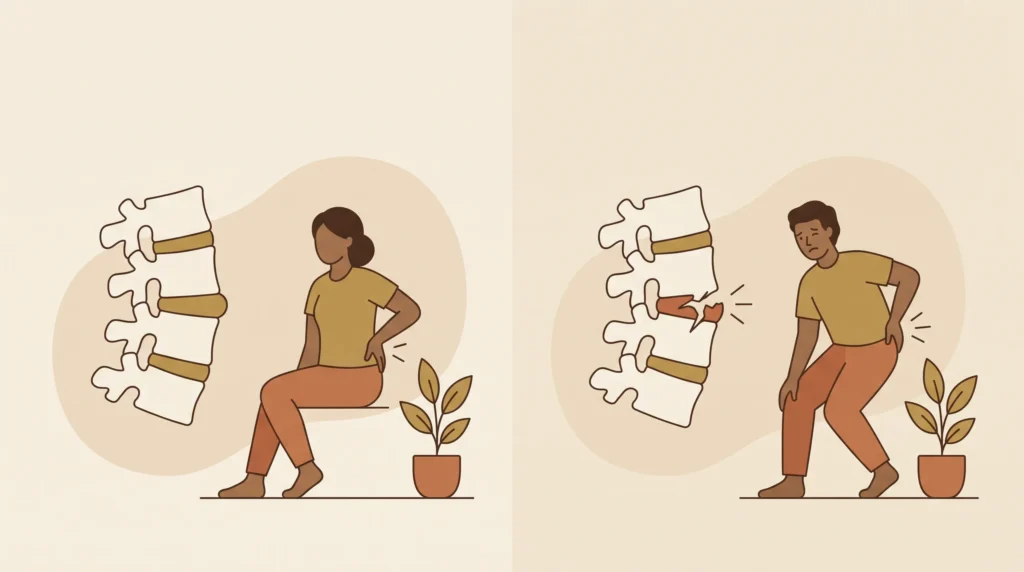
If you have neck pain that won't go away, the most useful yardstick comes from clinical guidelines, not guesswork: in a normal recovery, neck pain should start to ease within the first 3 weeks, and its limits on daily activity should ease within the first 6 weeks, according to the Royal Dutch Society for Physical …


If you have neck pain that won’t go away, the most useful yardstick comes from clinical guidelines, not guesswork: in a normal recovery, neck pain should start to ease within the first 3 weeks, and its limits on daily activity should ease within the first 6 weeks, according to the Royal Dutch Society for Physical Therapy (KNGF) clinical practice guideline published in Physical Therapy. If your pain isn’t clearly improving by week 3, is still limiting you at week 6, or keeps coming back, that’s a reasonable point to get evaluated — and for ordinary mechanical neck pain with no warning signs, a chiropractor is a sensible first stop. Some symptoms, though, mean you should skip the chiropractor and go to the ER or a medical doctor first. Below we cover exactly when to see a chiropractor for neck pain, when not to, and what the research actually says it can and can’t do.
This article is for general education and isn’t a diagnosis. If you’re unsure whether your symptoms are serious, contact your doctor or call 911.
Key Takeaways
- Watch the 3-week and 6-week marks. Pain should begin decreasing within about 3 weeks and activity limits within about 6 weeks (KNGF guideline). Neck pain is usually called acute under 6 weeks, subacute from 6 weeks to 3 months, and chronic after 3 months.
- Red flags come first. Sudden severe headache, double vision, trouble speaking, fever with a stiff neck, clumsy hands, trouble walking or bladder changes need emergency or urgent medical care — not a chiropractic appointment.
- Chiropractic care has real but modest evidence. In an NIH-funded trial of 272 adults, spinal manipulation beat medication for pain at 8, 12, 26 and 52 weeks — but supervised home exercise with advice did about as well as manipulation at most time points.
- Mild soreness afterward is common; serious harm is very rare. In a study of 529 neck-pain patients, 56% reported a side effect after one of their first three chiropractic treatments, mostly musculoskeletal soreness or pain; no serious adverse events occurred.
- Plan for the long game. Between half and three quarters of people with neck pain report it again 1–5 years later, so a good plan includes strengthening and a re-check point, not a one-off “crack.”
Neck Pain Triage: Where to Go First
This quick-reference table answers the practical question behind “what doctor to see for neck pain”: based on your symptoms, where should you start, and how fast? It’s built from the red-flag table in “Neck Pain: Initial Evaluation and Management,” published by the American Academy of Family Physicians in American Family Physician, the Canadian C-Spine Rule study published in JAMA, and the American Heart Association/American Stroke Association scientific statement on cervical artery dissection in Stroke.
| Your symptoms | What it may point to | Where to go first | How soon |
|---|---|---|---|
| Sudden severe or “worst-ever” headache, tearing/ripping neck pain, double vision, slurred speech, drop attacks, fainting, one-sided weakness or numbness | Possible artery tear (dissection) or stroke | Call 911 | Now |
| Neck pain after a car crash or fall, especially if you’re 65+, it was a high-force accident, or you have tingling in your arms or legs | Possible spinal injury | Emergency room | Today |
| Fever with a stiff neck, light sensitivity, or night sweats | Possible infection, including meningitis | Emergency room or urgent medical care | Today |
| Unsteady walking or balance problems, loss of coordination (such as clumsy hands), leg weakness, new bladder or bowel changes | Possible spinal cord compression (myelopathy) | Medical doctor or ER | Urgently |
| Unexplained weight loss, a history of cancer, or night pain that rest doesn’t ease | Needs a medical work-up to rule out serious disease | Primary care | Within days |
| Pain that shoots down one arm, with numbness, tingling or weakness in a band-like pattern — stable or improving | Likely a pinched nerve (cervical radiculopathy) | Chiropractor, physical therapist or physician for an evaluation; see a physician promptly if weakness is getting worse | This week |
| Stiff, achy neck, no red flags, not improving by about 3 weeks or still limiting activity at 6 weeks | Mechanical neck pain with delayed recovery | Chiropractor or physical therapist | Book an evaluation |
| Achy neck for less than 2–3 weeks that’s gradually improving | Normal recovery | Self-care, stay active, re-check | Re-assess weekly |
This table is a guide, not a diagnosis. If you’re unsure which row you’re in, call your doctor — or 911 for anything in the first row.
How Long Is Too Long? Neck Pain Timelines, Week by Week
Neck pain is extremely common. The Global Burden of Disease 2021 neck pain collaborators, writing in The Lancet Rheumatology, estimated that 203 million people worldwide had neck pain in 2020, a figure projected to reach 269 million by 2050, with prevalence peaking between ages 45 and 74 and higher in women. The Bone and Joint Decade Neck Pain Task Force, in Spine, found that 30% to 50% of adults typically have neck pain at some point in a given year — yet according to the AAFP review, only about 1 in 5 people with neck pain seek care for it.
So how long does neck pain last, and how long is too long? You’ll find wildly different answers online — “one week,” “three to five days,” “a few weeks.” Those numbers aren’t really recovery norms; they’re caution thresholds for when to ask for advice. The evidence-based picture looks like this. Clinicians generally describe neck pain as acute when it has lasted less than 6 weeks, subacute from 6 weeks to 3 months, and chronic beyond 3 months — the definitions used in a 2026 Cochrane review protocol on cognitive-behavioural treatment for neck pain.
| How long you’ve had it | Clinical label | What’s typical | What to do |
|---|---|---|---|
| A few days to 2 weeks | Acute | Pain often starts easing on its own | Stay active, use self-care, watch for red flags |
| 3 weeks | Acute | Pain should be noticeably decreasing | If it isn’t, book an evaluation with a chiropractor, PT or physician |
| 6 weeks | Acute → subacute | Limits on daily activity should be easing | If you’re still limited, get a structured treatment plan; imaging may be considered for moderate-to-severe pain |
| 3 months or longer | Chronic | Pain persists or keeps recurring | A multimodal plan built around exercise, plus a look at sleep, stress and workload |
Neck pain for 2 weeks: usually still a normal recovery
If you’ve had neck pain for 2 weeks and it’s slowly getting better, you’re most likely on a normal recovery curve. The KNGF guideline’s advice for this group is reassuring and fairly hands-off: stay informed, keep moving, do simple exercises, and act as normally as you can. Resting your neck completely or wearing a collar isn’t recommended for typical cases. The exception is anything on the red-flag list, which needs prompt attention no matter how long you’ve had pain.
Neck pain for weeks (3–6 weeks): the point to get it checked
If you’ve had neck pain for weeks and it isn’t clearly improving by the 3-week mark, the guideline considers that a sign of delayed recovery — which is exactly the group for whom it recommends hands-on treatment such as mobilization or manipulation combined with exercise. This is also the window where a clinician can check for a pinched nerve: the AAFP review notes that 80% to 90% of people with cervical radiculopathy improve significantly within 4 weeks, so a nerve problem that isn’t following that curve deserves a closer look. The AAFP adds that an MRI “may be appropriate” when moderate-to-severe pain lasts longer than 6 weeks. If you’re not sure whether your situation is an urgent-care problem or a regular-appointment problem, our guide to urgent care vs. primary care walks through the difference.
Neck pain for months: when it becomes chronic
Neck pain for months crosses into chronic neck pain, and it’s more common than many people expect. A 2017 review in The BMJ by Cohen and Hooten reports that although most acute episodes resolve on their own, more than a third of people still have low-grade symptoms or recurrences more than a year later. A separate Neck Pain Task Force analysis of prognosis in Spine found that between half and three quarters of people with neck pain report it again 1–5 years later. That’s not a reason for alarm — it’s a reason to treat persistent neck pain with a plan that builds strength and resilience rather than chasing short-term relief.
Neck Pain Red Flags: When Neck Pain Can Be a Sign of Something Serious

Can neck pain be a sign of something serious? Occasionally, yes. Most neck pain is mechanical — muscles, joints and discs — but a small share of cases signal a condition that needs medical care fast. These are the neck pain red flags that should send you to emergency or medical care before any chiropractic, massage or acupuncture appointment.
Call 911: possible stroke or artery tear
Cervical artery dissection — a small tear in the lining of one of the arteries in the neck — is one of the more common causes of stroke in young and middle-aged adults, according to the AHA/ASA statement. It can show up as a one-sided headache or pain at the back of the neck, and the statement urges clinicians to consider dissection as a possible cause of those symptoms. The AAFP lists these vascular warning signs: a ripping or tearing sensation in the neck, double vision, drop attacks (sudden falls without losing consciousness), headache, fainting, vertigo, vision changes, and symptoms of a transient ischemic attack (“mini-stroke”) such as slurred speech or one-sided weakness. If neck pain arrives with any of these, call 911.
Go to the ER today: after an accident, or fever with a stiff neck
After a car crash, fall or sports collision, emergency clinicians use decision rules to decide who needs imaging. The Canadian C-Spine Rule study followed 8,924 alert, stable trauma patients and found that 1.7% had a clinically important neck injury. Its high-risk factors — being 65 or older, a dangerous mechanism of injury, or tingling in the arms or legs — mean imaging is needed. Separately, fever with a stiff neck, light sensitivity or night sweats can signal infection, including meningitis, and needs same-day medical care.
See a doctor within a day or two
The AAFP lists deep, aching neck pain, weakness, changes in how you walk, loss of coordination, tremor, and bladder or bowel dysfunction among the signs of spinal cord compression (myelopathy), and says myelopathic signs such as leg weakness, balance problems and bladder or bowel changes “should be evaluated and treated urgently.” Unexplained weight loss, a history of cancer, or intense night pain that doesn’t ease with rest also call for a medical work-up, and the AAFP notes that rapidly progressive nerve symptoms — such as arm weakness that’s getting worse — warrant a more aggressive evaluation. The KNGF guideline asks physical therapists to screen every new neck-pain patient for fracture, vertebral artery dissection, spinal cord injury or myelopathy, infection, tumors and systemic disease before starting treatment.
One honest caveat: according to the International Framework for Red Flags for Potential Serious Spinal Pathologies, published in the Journal of Orthopaedic & Sports Physical Therapy, serious spinal pathology is rare, and most individual red flags don’t have strong evidence as stand-alone tests. Clinicians weigh them together in context — which is why a thorough in-person history and exam matters more than any online checklist, including this one.
Why Neck Pain Won’t Go Away: The Usual Suspects
When neck pain won’t go away, it’s rarely because of one dramatic structural problem. More often it’s a combination of irritated joints, protective muscle tension, deconditioning, and life factors like stress and sleep that keep the pain system on high alert.
Irritated joints and guarded muscles (mechanical neck pain)
The most common pattern is mechanical neck pain: the small facet joints and surrounding muscles become irritated, and the muscles tighten to protect the area. That guarding can outlast the original irritation, which is why stiffness, reduced rotation (trouble checking your blind spot while driving) and aching across the top of the shoulders often linger. Neck pain that began with a minor car accident (whiplash) or a sports strain frequently follows this same pattern once a serious injury has been ruled out. Hands-on soft-tissue work can ease this kind of tension — our article on deep tissue massage for muscle and joint pain explains how.
Disc changes and arthritis — and why an MRI “finding” may not be the cause
Degenerative disc changes and arthritis in the neck (cervical spondylosis) are real, but they’re also a normal part of aging. The AAFP review notes that MRI shows degenerative discs in 15% of people in their 20s who have no symptoms at all — and in more than 85% of symptom-free people over 65. The Neck Pain Task Force likewise did not identify disc degeneration as a risk factor for neck pain. In other words, “wear and tear” on an MRI report doesn’t automatically explain your pain. A disc that bulges or herniates and presses on a nerve is a different story; our explainer on bulging disc vs. herniated disc covers the difference.
Desk posture and “tech neck”: what the evidence actually shows
Forward head posture from screens and laptops gets a lot of blame, and it’s part of the story — but a smaller part than many websites claim. A systematic review and meta-analysis by Mahmoud and colleagues in Current Reviews in Musculoskeletal Medicine described the link between forward head posture and neck pain as controversial: adults with neck pain did tend to show more forward head posture, correlated with pain and disability, but no association was found with most neck-pain measures in adolescents. Practically, that means there’s no single “perfect posture” to hold all day. Changing position often, taking movement breaks, and building endurance in the neck and upper-back muscles matter more than sitting rigidly upright.
Stress, sleep and coping — why some neck pain lingers
This is the factor people least expect. The Task Force’s prognosis research found that psychosocial factors, including psychological health and coping patterns, were the strongest prognostic factors for how neck pain turns out, and its prevalence work listed genetics, poor psychological health and tobacco exposure among the risk factors. That doesn’t mean the pain is “in your head.” It means stress, poor sleep and worry change how the nervous system processes pain, and a good treatment plan addresses them alongside the neck itself.
Headaches, jaw tension and neck pain
Can neck pain cause headaches? Yes — irritated joints and muscles in the upper neck can refer pain into the head, often felt at the base of the skull, behind one eye or across the forehead. Chiropractic care for this pattern is covered on our page about chiropractic care for headaches, and if you’re not sure which kind of headache you have, see tension headache vs. migraine. Jaw clenching and TMJ problems can also feed neck tension, which is one reason our chiropractors look at the jaw as part of TMJ chiropractic care. A new, sudden or “worst-ever” headache is different — that’s a red flag, not a tension pattern.
Muscle or Nerve? How to Tell What Kind of Neck Pain You Have
One of the most useful distinctions — and a common “People Also Ask” question — is whether your pain is coming from muscles and joints, from a pinched nerve in the neck (the situation people usually mean when they search for a chiropractor for a pinched nerve), or, rarely, from pressure on the spinal cord. The BMJ review notes that nearly half of people with chronic neck pain have mixed or predominantly nerve-related (neuropathic) symptoms, so it isn’t always either/or.
| Feature | More likely muscle/joint | More likely nerve (radiculopathy) | More likely spinal cord (myelopathy) — urgent |
|---|---|---|---|
| Where you feel it | Neck, top of shoulders, between shoulder blades | Shoots down one arm in a band-like pattern, sometimes into the hand | Both arms and/or legs; deep aching |
| What it feels like | Dull ache, stiffness, tightness | Sharp, burning or electric; numbness or tingling | Clumsiness, loss of fine hand control |
| Strength | Normal (may feel “tired”) | May be weak in specific arm muscles | Weakness, balance and walking problems |
| Other signs | Worse with certain positions, better with movement | Worse with certain neck positions; reflex changes on exam | Bladder or bowel changes |
| Where to go | Self-care; chiropractor or PT if not improving | Chiropractor, PT or physician evaluation; physician promptly if weakness worsens | Medical doctor or ER urgently |
People often search for how to “release” a trapped nerve in the neck. There’s no safe self-release move to recommend without an exam, and the encouraging news is that most cases settle with conservative care — the AAFP’s 80%–90% figure for improvement within 4 weeks. What a clinician adds is a proper check of your strength, reflexes and sensation to confirm which nerve is involved, then gentle options such as mobilization, positioning advice and graded exercise, chosen based on that exam. Our article on seeing a chiropractor for a herniated disc explains how disc-related nerve pain is assessed and managed, and when it needs a referral instead.
What Doctor to See for Neck Pain: Primary Care, Chiropractor, Physical Therapist or Specialist?
Once red flags are ruled out, many people get stuck on the next question: should I see a neck pain doctor or chiropractor? The honest answer is that several kinds of clinicians can help, and the right first stop depends on your symptoms and what you want from care.
| Clinician | Best first stop when… | What they can do | What they don’t do |
|---|---|---|---|
| Primary care (MD, DO or nurse practitioner) | You have any red flag, other health conditions, or want medication | Medical work-up, labs, medication, imaging orders, referrals to specialists | Usually limited hands-on treatment or exercise coaching |
| Chiropractor (DC) | Mechanical neck pain or stiffness with no red flags, especially if it isn’t improving by 3 weeks | Exam, spinal manipulation and mobilization, soft-tissue work, exercise, referral when needed | Prescribe drugs or perform surgery |
| Physical therapist (PT) | You want an exercise-led plan, or your neck pain is tied to weakness, deconditioning or work demands | Exam, graded strengthening, mobility work, manual therapy, activity planning | Prescribe drugs or perform surgery |
| Specialists (physiatrist/pain medicine, neurologist, spine surgeon) | Progressive nerve symptoms, confirmed structural problems, or pain that hasn’t responded to conservative care | Injections, nerve testing such as EMG, radiofrequency procedures, surgery | Usually not the first stop for uncomplicated neck pain |
Primary care is the right door for anything medical. The BMJ review notes that anti-inflammatory drugs (NSAIDs) and muscle relaxants are effective for acute neck pain — ask your clinician or pharmacist whether they’re appropriate for you rather than self-dosing. At Copper Wellness, integrative primary care is led by our board-certified Family Nurse Practitioner, Elise Sterritt, FNP-BC, who can evaluate the medical side of persistent pain and coordinate with our chiropractors — though true emergencies always belong in the ER.
Chiropractors and physical therapists overlap more than most people realize: both examine the neck, use hands-on techniques and prescribe exercise. For a detailed side-by-side, see our guide to chiropractor vs. physical therapist. If your neck pain seems linked to weakness or you want a strongly exercise-based plan, physical therapy at Copper Wellness is available under the same roof as our chiropractic team.
Specialists handle what conservative care can’t. Pain-medicine physicians and physiatrists offer epidural steroid injections for nerve pain and radiofrequency denervation for facet-joint pain, though the BMJ review rates the evidence for both as weak. Neurologists evaluate progressive nerve symptoms. Spine surgeons treat cases like spinal cord compression or nerve compression that doesn’t settle; for cervical radiculopathy and facet-joint pain, the same review found surgery outperformed conservative care in the short term but not in the long term for most patients. Copper Wellness doesn’t offer injections or surgery — if you need them, our clinicians will refer you to the appropriate specialist.
Can a Chiropractor Help With Neck Pain? What the Research Actually Shows
Can a chiropractor help with neck pain? For many people, yes — but the evidence is more nuanced than most clinic websites admit, and it points clearly toward combining hands-on care with exercise. Here’s what the strongest studies found.
What the evidence supports
The best-known trial is a randomized trial by Bronfort and colleagues in the Annals of Internal Medicine, funded by the National Institutes of Health. It enrolled 272 adults who had neck pain for 2 to 12 weeks and gave them 12 weeks of spinal manipulation, medication, or home exercise with advice. Spinal manipulation produced better pain relief than medication at 8, 12, 26 and 52 weeks. A Cochrane review of manipulation and mobilisation for neck pain, pooling 51 trials with 2,920 participants, found that manipulation (the quick “adjustment”) and mobilisation (slower, gentler joint movement) produced similar results, that multiple sessions of cervical manipulation may relieve pain and improve function better than certain medications, and that thoracic (mid-back) manipulation improved pain in the short term for acute and subacute neck pain. The KNGF guideline recommends mobilization or manipulation combined with exercise for patients whose recovery is delayed.
The NIH’s National Center for Complementary and Integrative Health (NCCIH) summarizes it similarly: a 2021 analysis of 6 studies with 446 participants found spinal manipulation helped reduce acute neck pain (results to be interpreted cautiously), and for chronic neck pain it “may reduce pain and improve function,” based on low-to-moderate-quality evidence.
Where it falls short
The same body of research sets clear limits. In the Bronfort trial, home exercise with advice gave outcomes similar to spinal manipulation at most time points. The AAFP review cautions that isolated manipulation or mobilization “may provide temporary pain relief but not consistent long-term benefit.” The Cochrane review describes the evidence comparing cervical manipulation with control treatments as “few and diverse.” And the BMJ review finds the strongest evidence among complementary treatments is for exercise, and rates the evidence for spinal manipulation, massage, acupuncture and yoga as weaker.
| Question | What studies found | Source |
|---|---|---|
| Does manipulation beat medication? | Yes, for pain at 8, 12, 26 and 52 weeks (272 adults) | Bronfort et al., Annals of Internal Medicine |
| Does it beat home exercise? | No — outcomes were similar at most time points | Bronfort et al. |
| Is a “crack” necessary? | No — manipulation and gentler mobilisation gave similar results | Cochrane review (51 trials, 2,920 people) |
| Does it help on its own long term? | Isolated manipulation may give temporary relief without consistent long-term benefit | AAFP, American Family Physician |
| What has the strongest evidence? | Exercise | Cohen & Hooten, The BMJ |
| When is hands-on care recommended? | For delayed recovery, combined with exercise | KNGF guideline, Physical Therapy |
That’s why chiropractic care for neck pain at Copper Wellness is built around more than adjustments. Dr. Adam Mohr, our co-owner and a Doctor of Chiropractic trained at the National University of Health Sciences in Lombard, Illinois, works with athletes from recreational to professional level. Across our chiropractic team, plans pair hands-on treatment with targeted exercise and a home program, reflecting what the research supports. Individual results vary, and no clinician can promise a specific outcome or timeline.
When to See a Chiropractor for Neck Pain — and When Not To
Good reasons to book a chiropractic evaluation
- You have no red flags, and your pain isn’t clearly improving by about 3 weeks, or it’s still limiting your daily activities at 6 weeks.
- Your neck pain keeps coming back — two or three episodes a year is a pattern worth addressing, given how often neck pain recurs.
- Stiffness limits how far you can turn your head, for example when driving or checking your blind spot.
- You get headaches that seem to start in your neck, and a physician has ruled out other causes.
- You’d like a drug-free option — the Bronfort trial is a reasonable basis for considering manipulation alongside or instead of medication, ideally with exercise.
When to see a doctor first instead
Don’t start with a chiropractor if anything in the red rows of the triage table applies — stroke-like symptoms or a sudden, unusual headache, fever with a stiff neck, signs of spinal cord compression, unexplained weight loss, arm weakness that’s getting worse, or a significant accident that hasn’t been medically cleared (especially if you’re 65 or older or have tingling in your limbs). The same goes for a known serious condition affecting the spine, such as cancer, infection or inflammatory disease: see your physician first and tell any chiropractor about it, since NCCIH notes that preexisting health problems may increase the risks of spinal manipulation.
How to choose a chiropractor for persistent neck pain
Whoever you see, a good chiropractor for persistent neck pain should:
- Be a licensed Doctor of Chiropractic.
- Take a full history and screen for red flags and vascular risk before any neck manipulation.
- Offer non-thrust options if you’d prefer not to have your neck “cracked.”
- Give you exercises to do at home, not just in-office treatment.
- Set a clear re-check point and tell you what happens if you’re not improving.
- Refer you to a physician or specialist when something falls outside their scope.
You can read more about how our team approaches evaluation and treatment on our chiropractic care page.
Is Chiropractic Care Safe for Your Neck? Side Effects and Stroke Risk, in Numbers
Safety is a fair question, and it deserves real numbers rather than a vague “very safe.”
Common, temporary side effects. In a prospective study by Rubinstein and colleagues in the Journal of Manipulative and Physiological Therapeutics, 529 neck-pain patients treated by 79 chiropractors were followed closely: 56% reported at least one adverse event after one of their first three treatments, and 13% rated it as severe in intensity — most commonly musculoskeletal or pain-related complaints, while symptoms such as dizziness or nausea were uncommon (under 8%). There were no serious adverse events in the study. NCCIH notes that these mild-to-moderate reactions are common and that most resolve within 24 hours.
Rare, serious risk: artery dissection and stroke. Serious complications, including stroke related to cervical artery dissection, have been reported after neck manipulation, though NCCIH describes them as very rare. The harder question is cause and effect. A population study by Cassidy and colleagues in Spine analyzed 818 vertebrobasilar strokes over more than 100 million person-years. People under 45 were about three times more likely to have seen a chiropractor before their stroke — but they were equally more likely to have seen a primary care physician. The researchers found no evidence of excess stroke risk with chiropractic care compared with primary care, and the likely explanation is that an early, undiagnosed dissection causes neck pain and headache that bring people in for care. The AHA/ASA statement concludes that biomechanical evidence isn’t sufficient to show manipulation causes dissection, but that population studies did find an association in younger patients — and recommends that patients be informed of this association before cervical manipulation.
What reduces the risk. The International IFOMPT Cervical Framework, published in the Journal of Orthopaedic & Sports Physical Therapy, sets out how clinicians should screen for possible vascular problems — through targeted history questions and an adapted physical exam — before treating the neck. And since the Cochrane review found manipulation and gentler mobilisation produce similar results, you can ask for a non-thrust approach and still receive evidence-based care. This is also why stroke-like symptoms always go to 911, never to a chiropractor.
What Happens at Your First Chiropractic Visit for Persistent Neck Pain
Many people put off an evaluation because they’re unsure what will happen — or worry that a chiropractor might miss something serious. Here’s how our clinicians approach a first visit for neck pain that won’t go away, step by step.
- History and goals. We start with your story: when the pain began, what makes it better or worse, prior episodes, your work and training demands, and what you want to get back to.
- Red-flag screen. We ask specifically about the warning signs covered above — fever, weight loss, night pain, neurological symptoms, recent trauma — following the kind of serious-pathology screen the KNGF guideline and the IFOMPT red-flag framework describe.
- Vascular screening before any neck manipulation. Following the IFOMPT Cervical Framework, we ask targeted questions about headaches, dizziness, vision changes and other vascular warning signs before any manipulation of the neck.
- Physical and neurological exam. We assess posture, spinal alignment and range of motion, and check strength, reflexes and sensation in the arms to tell muscle and joint pain apart from nerve involvement.
- Imaging only if it’s indicated. Most people with neck pain don’t need an X-ray or MRI on day one; imaging is reserved for specific situations like trauma meeting the Canadian C-Spine criteria, progressive neurological signs, or moderate-to-severe pain beyond 6 weeks. Copper Wellness doesn’t image in-house — when an X-ray, MRI or CT scan is appropriate, our labs and imaging referrals go to trusted private imaging centers after your initial evaluation.
- Treatment options, discussed with your consent. Depending on your exam, options may include spinal manipulation, gentler mobilization, the instrument-based Activator Method, or Graston Technique soft-tissue work. Dr. Mimosa Nguyen, who holds a Doctorate of Chiropractic from Logan University and focuses on sports medicine, is trained in both Graston Technique and the Activator Method — useful options for patients who prefer not to have a neck adjustment. Consistent with the AHA/ASA recommendation, we discuss the benefits and risks of neck manipulation before using it.
- A home-exercise plan. You’ll leave with exercises focused on strengthening the neck, shoulders and upper back — the approach the evidence supports most for chronic neck pain.
- A re-check point and referral if needed. We set a point to measure progress. If you’re not improving as expected, we adjust the plan, bring in another modality, or refer you to a physician or specialist.
Beyond Adjustments: Exercise, Massage and Acupuncture for Stubborn Neck Pain

Because persistent neck pain rarely has a single cause, the best plans usually combine approaches — with exercise as the backbone.
Exercise. A Cochrane review of exercises for mechanical neck disorders, covering 27 trials, found moderate-quality evidence that strengthening exercises for the neck, shoulders and shoulder blades help chronic neck pain — while stretching alone may not. It found no evidence either way for acute neck pain, and no high-quality evidence overall, so exercise plans should be individualized and progressed gradually.
Acupuncture. A large individual-patient-data meta-analysis by the Acupuncture Trialists’ Collaboration in The Journal of Pain, covering 20,827 patients in 39 trials, found acupuncture outperformed both sham acupuncture and no acupuncture for chronic musculoskeletal pain (a category that includes neck pain), and its effect decreased only about 15% at one year. Dr. Anais Jackson-Gonzalez, who holds a Doctorate in Acupuncture and Chinese Medicine from the National University of Health Sciences and focuses on pain management, often combines acupuncture with cupping and gua sha — see acupuncture for neck pain for details. Note that the KNGF physical therapy guideline advises against dry needling for neck pain; if you’ve seen dry needling and acupuncture used interchangeably, here’s how dry needling and acupuncture differ.
Massage. The BMJ review places massage among treatments with weaker evidence than exercise, so we use it as a support for comfort and mobility rather than a stand-alone fix. Our massage therapy team includes Benicia Blue, trained at The Soma Institute in deep tissue and myofascial release, and Andy Holsteen, who combines myofascial release with corrective exercise and breathwork.
What the guideline advises against. Many websites list electrotherapy, ultrasound, traction, laser and neck collars as neck-pain treatments. The KNGF guideline advises against low-level laser, electrotherapy, ultrasound, traction and dry needling for neck pain, and against collars in most cases. We’d rather spend your visit time on what the evidence supports. As with any treatment, individual responses vary.
What You Can Do at Home While You Decide
Self-care won’t replace an evaluation when you need one, but it genuinely helps recovery:
- Keep moving. The KNGF guideline’s advice for typical neck pain is to stay active and carry on with normal activities as much as you can, rather than resting or immobilizing your neck.
- Favor gentle strengthening over stretching alone. Simple exercises for the neck, shoulders and upper back tend to help more than stretching by itself.
- Use heat or cold for comfort, whichever feels better — neither changes the long-term course, but both can make movement easier.
- Break up screen time. Change position regularly, bring screens closer to eye level, and don’t try to hold one rigid posture.
- Check your pillow height so your neck stays roughly in line with your spine when you sleep on your back or side.
- Ask before taking medication. Over-the-counter pain relievers can help acute neck pain, but check with a pharmacist or clinician about what’s safe with your other medications and conditions.
The 3-week neck check-in: a simple tracking checklist
Use this to turn “it still hurts” into a clear decision:
- Day 1 — set your baseline. Rate your pain from 0 to 10. Note whether you can comfortably turn to check your blind spot in the car, and whether you have any arm pain, numbness, tingling or weakness.
- Weeks 1, 2 and 3 — re-score. Same questions, same day each week. Also note which daily activities (work, sleep, exercise, driving) the pain limits.
- Any time — check for red flags. If a red-flag symptom appears, stop tracking and use the triage table at the top of this article.
- At week 3 — decide. If your pain score isn’t clearly lower than your baseline, book an evaluation with a chiropractor, physical therapist or physician.
- At week 6 — decide again. If your daily activities are still limited, get a structured treatment plan even if the pain has eased somewhat.
- If arm weakness is getting worse at any point, see a physician promptly rather than waiting for the next check-in.
Seeing a Chiropractor or PT in Chicago: Referrals and Insurance in Illinois
If you’re in Chicago, a few Illinois-specific details can make it easier to get started. According to the Illinois Chiropractic Society, Illinois licenses chiropractors as “chiropractic physicians” under the Medical Practice Act — the same statute that licenses MDs and DOs — to treat human ailments without drugs and without surgery.
Physical therapy has its own access rules. As summarized in an ATI Physical Therapy press release from August 2018, since August 16, 2018 Illinois patients can be evaluated and treated by a licensed physical therapist without a prescription; the PT must notify your health care provider within 5 business days, and must refer you on if there’s no measurable improvement after 10 visits or 15 business days. Some insurers and Medicare may still require a physician’s prescription, so check your plan.
Whether your insurance requires a referral for chiropractic care depends on your specific plan. Copper Wellness accepts Blue Cross Blue Shield and Aetna, as well as FSA and HSA payments, and a third-party billing department verifies your coverage before treatment — see our insurance page for details. Our single clinic at 1654 W. North Ave., where Bucktown meets Wicker Park, provides chiropractic care in Wicker Park and Bucktown and also sees patients from Lincoln Park, West Town and Logan Square.
Stubborn Neck Pain Rarely Has a Single Cause — So Copper Wellness Treats It With a Coordinated Team
The research in this article points to one practical conclusion: neck pain that won’t go away tends to respond best to a plan that combines hands-on care, exercise, and attention to the factors that keep pain going. That’s the kind of care Copper Wellness is built to deliver.
- Several specialists, one shared plan. Our chiropractors, physical therapy team, acupuncturists and massage therapists work under one roof and communicate on a shared care plan, so your treatment doesn’t depend on juggling separate offices that never talk to each other.
- Root cause over quick fixes. Because isolated manipulation tends to give temporary relief, we build plans around strength, mobility and the life factors — stress, sleep, work setup — that keep neck pain coming back.
- Credentialed, safety-first care. Doctors of Chiropractic Dr. Adam Mohr and Dr. Mimosa Nguyen work alongside doctoral-level acupuncturists and a board-certified Family Nurse Practitioner, with red-flag and vascular screening before neck manipulation and non-thrust options when you prefer them.
- Accessible care. Our clinic has a wheelchair-accessible entrance, seating and restroom, an assistive hearing loop, and bilingual English/Spanish care with Dr. Anais Jackson-Gonzalez.
Not sure whether you need a chiropractor, a physical therapist or an acupuncturist? Book a free virtual consultation with our founder, Dr. Stephanie Madden, who will listen to what’s going on and recommend the right specialist to start with.
FAQ
How long is too long to have neck pain?
Most neck pain should start easing within about 3 weeks, with limits on daily activity easing by about 6 weeks. If yours isn’t following that path, get it evaluated. Pain lasting beyond 3 months is considered chronic and usually needs a structured, exercise-based plan.
What is a red flag for neck pain?
Sudden severe headache, double vision, slurred speech or one-sided weakness (call 911); fever with a stiff neck; clumsy hands, trouble walking or bladder changes; unexplained weight loss or a history of cancer; and pain after a significant accident. Each of these needs emergency or urgent medical care rather than a chiropractic visit first.
How do I know if my neck pain is muscular or nerve?
Muscle and joint pain usually stays in the neck and shoulders and feels achy or stiff. Nerve pain tends to shoot down one arm and can bring numbness, tingling or weakness. A clinician confirms which it is by testing your strength, reflexes and sensation.
Do chiropractors actually help neck pain?
They can. In an NIH-funded trial, spinal manipulation relieved pain better than medication for up to a year — but home exercise did about as well, so the best plans combine hands-on care with exercise. Individual results vary.
When should you not go to the chiropractor for neck pain?
Skip the chiropractor as a first stop if you have stroke-like symptoms, a sudden severe headache, fever with a stiff neck, signs of spinal cord compression, worsening arm weakness, or pain after an accident that hasn’t been medically checked. Those situations need emergency or medical care first.
How do I know if my neck needs to be adjusted?
You can’t reliably self-diagnose that — a popping sensation or stiffness doesn’t mean a joint is “out of place.” A chiropractor decides on treatment after an exam, and because gentler mobilisation gives results similar to manipulation, an adjustment isn’t the only option.
Should I see a doctor or a chiropractor first for neck pain?
Start with a medical doctor or nurse practitioner if you have any red flag, other significant health conditions, or want medication. For stiff, achy neck pain with no warning signs that isn’t improving after a few weeks, a chiropractor or physical therapist is a reasonable first stop — and a good one will refer you if the exam calls for it.
How many chiropractic visits does neck pain usually take?
It varies, and no one can promise a set number. In the 529-patient study, about half of those who returned for a fourth visit reported being recovered, and the NIH-funded trial used a 12-week course. A good plan sets an early re-check point and shifts toward home exercise so visits don’t continue indefinitely.
Do I need an X-ray or MRI before seeing a chiropractor?
Usually not. Imaging is for specific situations — significant trauma, suspected infection, progressive nerve symptoms, or moderate-to-severe pain lasting beyond 6 weeks. MRI often shows age-related disc changes in people with no pain, so an unneeded scan can mislead.
Can neck pain cause headaches or dizziness?
Neck problems can cause headaches, often felt at the base of the skull. Dizziness with neck pain needs more caution because it can signal an artery problem — sudden or severe dizziness, especially with headache, vision changes or trouble speaking, needs emergency care. Once serious causes are ruled out, see can a chiropractor help with vertigo.
Is it normal to feel sore after a neck adjustment?
Fairly common: 56% of 529 neck-pain patients reported a side effect — most often musculoskeletal soreness or pain — after one of their first three treatments, and NCCIH notes most such reactions resolve within 24 hours. Severe or neurological symptoms need prompt medical attention.
Do I need a referral to see a chiropractor in Illinois?
Illinois licenses chiropractors as chiropractic physicians, so you can generally book directly. Your insurance plan may still have its own referral or pre-authorization rules — check with your insurer, or let our billing team verify your coverage before your first visit.
Ready for a clear answer about your neck pain? Schedule your complimentary consultation at Copper Wellness — call (872) 267-1717, email Hello@CopperWells.com, or book online at copperwellness.janeapp.com. Our clinic at 1654 W. North Ave. in Chicago serves patients from Bucktown, Wicker Park, Lincoln Park, West Town and Logan Square.