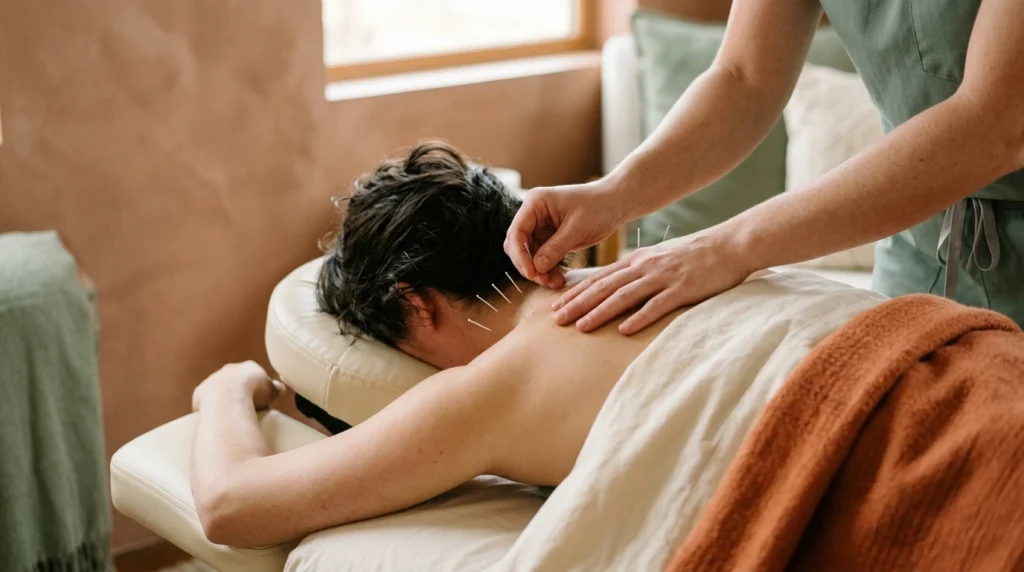
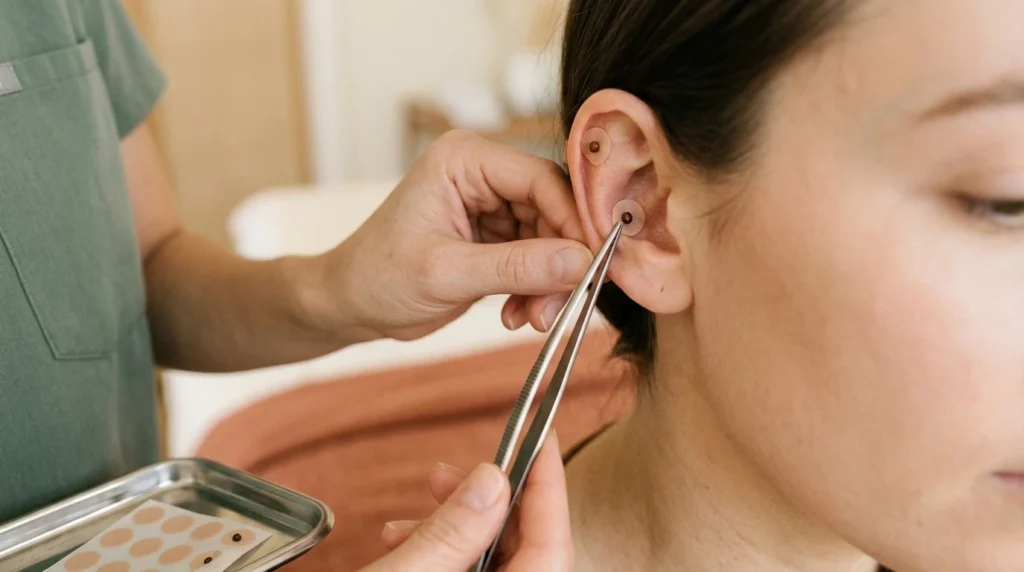
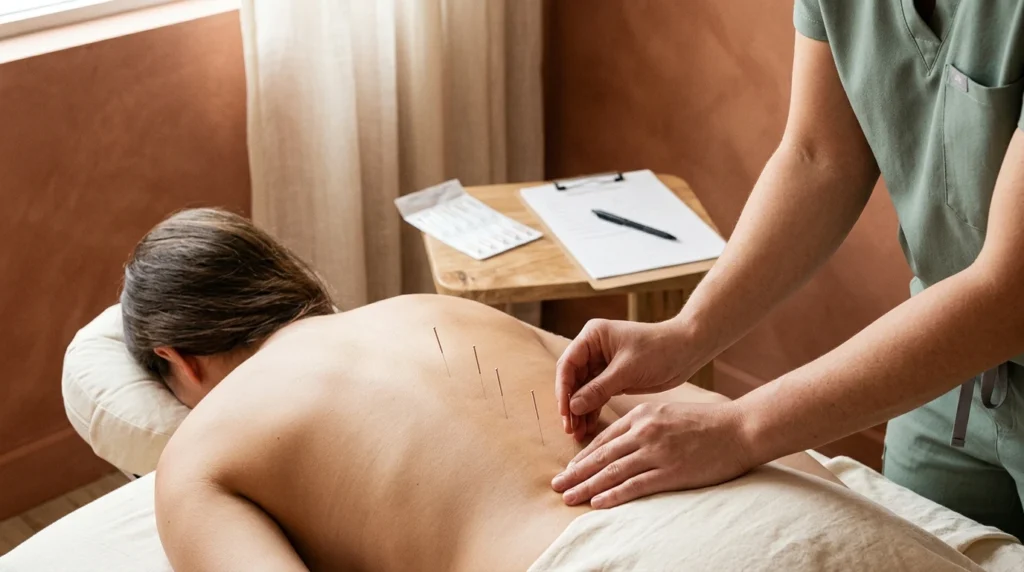
Acupuncture for fibroids has not been shown to shrink or remove uterine fibroids. A 2010 Cochrane review of acupuncture for uterine fibroids found that no randomized double-blind controlled trials met its inclusion criteria, and concluded that the effectiveness of acupuncture for managing fibroids "remains uncertain." What the research does leave room for is more modest: …

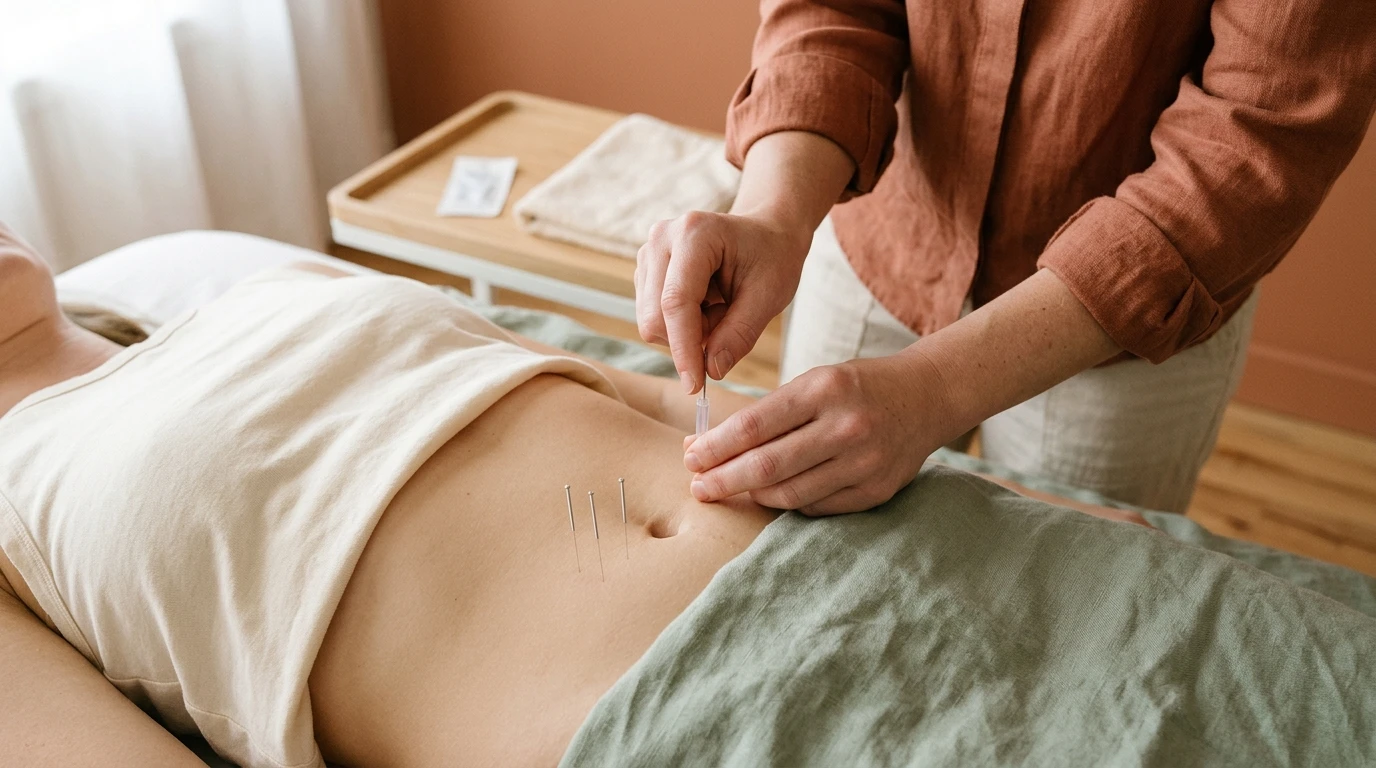
Acupuncture for fibroids has not been shown to shrink or remove uterine fibroids. A 2010 Cochrane review of acupuncture for uterine fibroids found that no randomized double-blind controlled trials met its inclusion criteria, and concluded that the effectiveness of acupuncture for managing fibroids “remains uncertain.” What the research does leave room for is more modest: small trials, most of them run in China, suggest acupuncture may help some people with fibroid-related symptoms such as pelvic pain, cramping and the stress that comes with them. That makes it a possible complement to care from your gynecologist, not a replacement for it. Below: an evidence scorecard, a symptom map, the red flags that need medical attention, and a checklist to use before you book. At Copper Wellness, we plan acupuncture for fibroid symptoms around that honest middle ground.
Key Takeaways
- About 20 percent to 80 percent of women develop fibroids by the time they reach age 50, according to the U.S. Office on Women’s Health, and not all women with fibroids have symptoms.
- There is no good-quality evidence that acupuncture shrinks fibroids. The Cochrane review found no double-blind trials it could include and called the effectiveness of acupuncture “uncertain.”
- A 2023 meta-analysis in Frontiers in Medicine pooled 11 trials with 735 patients, all conducted in China, and reported smaller fibroid volume and lower symptom scores. The authors also describe the trials as “highly heterogeneous,” so treat this as a signal worth studying, not proof.
- What acupuncture can reasonably offer is symptom support (pain, cramping, stress, sleep) alongside conventional care. Results vary from person to person, and no outcome can be promised.
- Bleeding that soaks through one or more pads or tampons every hour for several hours in a row, or clots the size of a quarter or larger, needs a healthcare provider, per the CDC. So does pelvic pain with nausea or fever, which ACOG links to a fibroid on a stem that has twisted.
Acupuncture and Fibroids at a Glance: What the Evidence Shows
Most pages about acupuncture and fibroids either promise shrinkage or wave the question away. This scorecard separates the claims and grades each one against the best research available.
| Question | What the best evidence found | Strength of evidence | Source |
|---|---|---|---|
| Can acupuncture shrink fibroids? | No randomized double-blind trials qualified for the Cochrane review; effectiveness “remains uncertain.” The 2023 meta-analysis reported smaller fibroid and uterine volume across 11 trials, all run in China. | Very limited: no high-quality trials, and the pooled trials were highly heterogeneous | Cochrane review (2010); Ren et al. (2023) |
| Can it ease fibroid symptoms? | All 8 analyzed participants in a small pilot reported improvement on a symptom questionnaire after 6 weeks. The 2023 meta-analysis reported lower symptom scores. | Low: a nine-person pilot in which every group received acupuncture, plus heterogeneous trials | Cruz et al., Medical Acupuncture (2019); Ren et al. (2023) |
| Can it ease period pain in general? | A Cochrane review of 42 RCTs (4,640 women) with primary period pain found “insufficient evidence” either way. This review was not about fibroids. | “Low or very low” quality for all comparisons | Cochrane review on period pain (2016) |
| Acupuncture plus Chinese herbs? | 9 RCTs with 640 women found the combination had “a more positive effect” than herbs alone. The conclusions “need to be validated by further high-quality research.” | Low: compared against herbs, not against no treatment or standard medical care | Chen et al., Frontiers in Oncology (2024) |
| Chinese herbs alone? | 21 trials (2,222 women), most with unclear or high risk of bias. None reported fibroid-related symptoms. Evidence “does not support or refute” herbal preparations. | Insufficient | Cochrane review of herbal preparations (2013) |
| Is acupuncture safe? | Relatively few complications have been reported; serious adverse effects, including infections, occur when it is not delivered properly. The fibroid trials reported no serious adverse reactions. | Reassuring, with a licensed practitioner and sterile technique | NCCIH; Ren et al. (2023); Cruz et al. (2019) |
What Uterine Fibroids Are, and Why That Shapes What Acupuncture Can Do
Uterine fibroids are benign growths that develop from the muscle tissue of the uterus. Doctors also call them leiomyomas or myomas. The Office on Women’s Health notes that fibroids are almost always benign (not cancerous). Estimates of how common they are vary widely. The Cochrane review puts the figure at 30% of women during their reproductive years, while the Office on Women’s Health gives a range of 20 percent to 80 percent by age 50. According to ACOG, fibroids occur more often in Black women than in White women, and they also seem to appear at a younger age and grow more quickly in Black women.
Fibroid symptoms depend on the size and position of the growths, and many people have none at all. When symptoms do show up, ACOG lists:
- Longer, more frequent or heavy menstrual periods, and bleeding between periods
- Menstrual cramps, and anemia from blood loss
- Dull, heavy, aching pain in the abdomen or lower back, or pain during sex
- Pressure: frequent urination or difficulty urinating, constipation, an enlarged abdomen
- In some cases, miscarriage or infertility
Pelvic pressure, urinary urgency and pain with sex overlap heavily with other pelvic conditions. Our guide to pelvic floor dysfunction symptoms is a useful comparison, and endometriosis is a different condition again with its own approach (see pelvic floor therapy for endometriosis). This is one reason an imaging-confirmed diagnosis matters before any treatment plan.
Fibroids are sensitive to estrogen. ACOG notes that fibroids often shrink when a woman enters menopause, and the Office on Women’s Health says that after menopause, fibroids usually shrink. If you’re approaching that transition, our article on perimenopause vs. menopause explains where you might be.
Here is why this shapes expectations. A fibroid is a physical mass of muscle tissue inside the uterine wall. Fine needles placed in the skin are not expected to remove it. The realistic question for most people is not “will acupuncture make my fibroid disappear?” but “can acupuncture make my fibroid symptoms easier to live with while my gynecologist monitors or treats the fibroid?”
Can Acupuncture Shrink Fibroids? What the Research Actually Shows
Short answer: the evidence does not show that acupuncture reliably shrinks fibroids. Here is what each major piece of research found, and what it can’t tell us.
The Cochrane review: no trials good enough to judge
Cochrane reviews are among the most rigorous summaries in medicine. When Cochrane reviewers looked for trials of acupuncture for uterine fibroids, “no randomized double-blind controlled trials met the inclusion criteria.” Their conclusion was that the effectiveness of acupuncture for fibroids “remains uncertain,” and they called for “well designed RCTs with long term follow up.” In other words, the question has not been answered either way to the standard medicine expects.
The 2023 meta-analysis: promising numbers, important caveats
The most-cited newer evidence is the meta-analysis by Ren and colleagues. Out of 1,035 trials identified, 11 were included, covering 735 patients with a mean age of 34 to 48 years. The authors reported reductions in fibroid volume, uterine volume and symptom scores in the acupuncture groups. Three caveats matter, and the authors state them themselves:
- The trials were very different from one another. “In terms of acupuncture scheme design and fibroid-related symptoms, the trials are highly heterogeneous.” Different point selections, schedules and outcome measures make pooled results hard to interpret.
- All of them came from one setting. All experiments were conducted in China “with strong regional and cultural characteristics,” so the findings may not carry over directly to patients and clinics elsewhere.
- Follow-up was short. The authors call for “more high-quality randomized controlled trials and long-term follow-ups.” Nobody knows from this data whether any change in size lasts.
Acupuncture combined with Chinese herbs
A 2024 meta-analysis by Chen and colleagues pooled 9 randomized trials involving 640 women and found that “acupuncture combined with Chinese herbs has a more positive effect on the treatment of uterine fibroids than Chinese herbs alone.” Note the comparison: acupuncture plus herbs was tested against herbs, not against no treatment, a sham procedure or standard gynecologic care. The authors add that “these conclusions need to be validated by further high-quality research.”
A nine-person feasibility pilot
The pilot by Cruz and colleagues recruited nine participants into two treatment groups (6 weeks and 12 weeks). All 8 subjects analyzed reported improvement on a symptom questionnaire after 6 weeks, and no adverse responses were reported. On size, though, the researchers were candid: changes in uterine size and fibroid volume “cannot be adequately determined due to technical issues for ultrasound examination in the study.” It is a useful feasibility signal, not evidence of shrinkage.
How to read a fibroid-acupuncture claim
If a website tells you acupuncture shrinks fibroids, or explains how acupuncture shrinks fibroids as if it were settled, ask four questions:
- Was it compared with a sham procedure or no treatment? The Cochrane review found no qualifying double-blind trials, and the combined-herbs analysis compared against herbs only.
- Was size measured with imaging before and after? In the pilot, ultrasound problems meant size changes could not be determined.
- How many people were studied? Nine in the pilot; 735 across 11 heterogeneous trials in the meta-analysis.
- Where, and for how long? All of the meta-analysis trials were run in China, and the authors themselves ask for long-term follow-up.
A claim that can’t answer these questions is a hypothesis, not a fact. That is how our clinicians talk about it with patients, too.
Can Acupuncture Help With Fibroid Symptoms?
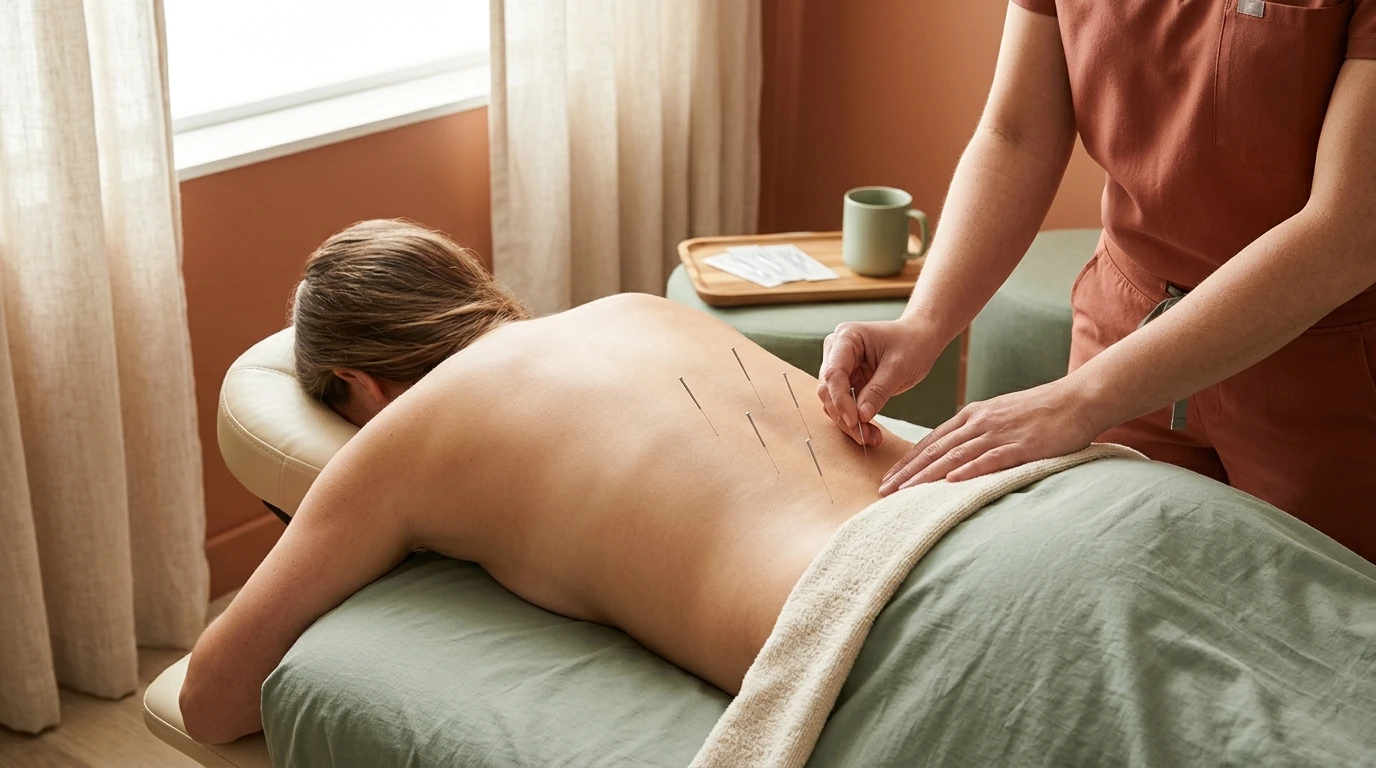
So can acupuncture help with fibroids at all? This is where it has a plausible, if modestly supported, role. The aim is to make day-to-day life more comfortable while your gynecologist manages the fibroid itself. Responses vary widely, and some people notice little change. That is why we set a defined trial period and reassess, rather than committing anyone to open-ended treatment.
Pelvic pain and cramping
The clearest fibroid-specific symptom data come from the pilot (all 8 analyzed participants reported improvement after 6 weeks) and the lower symptom scores in the 2023 meta-analysis. For context, the evidence on period pain more broadly is not strong either: the 2016 Cochrane review rated its evidence “low or very low” quality and found insufficient evidence to say whether acupuncture works for primary period pain. We describe acupuncture for cramping as worth a time-limited trial, not a sure thing. Our page on acupuncture for period pain and PMS covers how we approach cycle-related pain in general.
Acupuncture for heavy periods
Heavy bleeding is the fibroid symptom people most want help with, and it is also where acupuncture’s evidence is thinnest. None of the studies above measured menstrual blood loss directly; the pilot tracked self-reported symptoms. Heavy periods that cause anemia or disrupt your normal activities are, per ACOG, a sign that treatment may be needed, and the medications and procedures in the table below are what actually reduce bleeding. If you’re interested in acupuncture for heavy periods, use it for comfort and overall well-being while your gynecologist addresses the bleeding, and track your flow against the CDC thresholds in the red-flags section.
Stress, sleep and quality of life
Living with fibroids can mean planning around unpredictable periods, broken sleep and worry about what comes next. We address stress and sleep as part of the same plan rather than as separate problems; see our pages on acupuncture for anxiety and acupuncture for insomnia. No fibroid-specific study gives us a figure for these outcomes, so we set goals with you and check them at each reassessment.
Low back ache and pelvic pressure: where acupuncture and pelvic floor therapy meet
ACOG describes fibroid pain in the lower back as often “dull, heavy and aching.” For back pain we may combine needling with techniques described on our acupuncture for back pain page. When pressure shows up as urinary urgency, pain with sex or a sense of heaviness, pelvic floor therapy can address how the surrounding muscles respond. Our pelvic floor therapist, Dr. Lisa Lagomarcino, holds a doctorate from Midwestern University’s Chicago College of Osteopathic Medicine, with a focus on pelvic rehab and chronic pain, and holds specialized pelvic-health certification from the Herman & Wallace Pelvic Rehabilitation Institute. Neither therapy changes the fibroid; both can change how your body copes with it.
What Acupuncture Can’t Do for Fibroids
Being clear about limits is part of good care. Acupuncture:
- Can’t remove fibroids or reliably shrink them. The Cochrane review found the effectiveness of acupuncture for fibroids uncertain.
- Can’t diagnose fibroids or rule out other causes of bleeding or pain. ACOG lists uncertainty about whether a growth is a fibroid or another type of tumor as a reason for medical treatment. Imaging and evaluation belong with your gynecologist.
- Can’t treat anemia from heavy bleeding. Iron-deficiency anemia needs medical assessment and treatment.
- Can’t stop fibroids from growing or coming back. No study has followed acupuncture patients long enough to show this; the 2023 meta-analysis explicitly calls for long-term follow-up.
- Shouldn’t delay medication, a procedure or surgery when you need one. NCCIH’s advice for all of traditional Chinese medicine is direct: “Don’t use TCM to replace or delay seeking conventional care.”
Conventional Fibroid Treatments Acupuncture Doesn’t Replace
Copper Wellness does not provide any of the treatments below. They come from your gynecologist, an interventional radiologist or a gynecologic surgeon. We list them because knowing which options actually shrink or remove fibroids makes it clear where acupuncture fits: alongside these, never instead of them. What each treatment does, and whether it shrinks or removes fibroids, is taken from ACOG’s patient guidance.
| Treatment | What it does | Shrinks or removes fibroids? | Who provides it |
|---|---|---|---|
| Watchful waiting | Fibroids that don’t cause symptoms, are small, or occur near menopause often do not require treatment | No (monitoring only) | Gynecologist |
| Hormonal birth control | Often used to control heavy bleeding and painful periods | No; may cause fibroids to increase slightly in size | Gynecologist |
| Hormonal IUD | Reduces heavy and painful bleeding, for fibroids that don’t distort the inside of the uterus | No; does not treat the fibroids themselves | Gynecologist |
| Tranexamic acid | Reduces blood lost during your period | No | Gynecologist |
| GnRH agonists | Stop the menstrual cycle; sometimes used before surgery | Yes, temporarily; fibroids usually return to their previous size after stopping | Gynecologist |
| GnRH antagonists with add-back therapy | Treat heavy bleeding for up to 2 years | No; “they do not shrink fibroids” | Gynecologist |
| Uterine artery embolization (UAE) | Particles cut off the blood flow to the fibroid | Yes, shrinks | Interventional radiologist |
| Radiofrequency ablation (RFA) | Uses energy and heat to destroy fibroid tissue | Yes, shrinks | Gynecologic surgeon |
| Myomectomy | Surgical removal of fibroids, leaving the uterus in place | Removes them; new fibroids may develop later | Gynecologic surgeon |
| Hysterectomy | Removal of the uterus, when other treatments haven’t worked or aren’t possible | Removes the uterus | Gynecologic surgeon |
Which option makes sense depends on your symptoms, the size and location of the fibroids, and whether you want to become pregnant. Those decisions belong in a conversation with your gynecologist. Acupuncture can sit beside any of these paths, with your gynecologist kept in the loop.
Fibroid Symptoms: What Acupuncture May Offer and Who to See
Use this map to match each symptom with the right kind of help, at Copper Wellness and beyond it.
| Symptom | Where acupuncture may fit | What needs medical care | Who handles it |
|---|---|---|---|
| Heavy bleeding, fatigue | Comfort and well-being during treatment | Bleeding that meets the CDC thresholds, suspected anemia, bleeding between periods | Gynecologist; acupuncturist as support |
| Cramping, pelvic pain | A time-limited symptom trial | Sudden or severe pain, pain with nausea or fever | Acupuncturist; gynecologist or urgent care for red flags |
| Pelvic pressure, frequent urination | Limited role on its own | Large fibroids pressing on the bladder or bowel may need a procedure | Gynecologist; pelvic floor therapist for muscle-related symptoms |
| Low back ache | Needling for pain and muscle tension | New or worsening pain that doesn’t fit your known pattern | Acupuncturist; massage therapist (see massage for back pain) |
| Stress, poor sleep | Relaxation-focused sessions within the plan | Persistent low mood or anxiety | Acupuncturist; your primary care clinician |
| Trying to conceive | Supportive care coordinated with your fertility team (see fertility acupuncture) | Evaluating whether fibroids are affecting fertility | Gynecologist or reproductive endocrinologist |
Red Flags: When Fibroid Symptoms Need Prompt Medical Care
Acupuncture is never the right first step for these. Contact your gynecologist or primary care clinician promptly, and use emergency care when symptoms are severe:
- Very heavy bleeding: a flow that soaks through one or more pads or tampons every hour for several hours in a row (CDC).
- Large clots: blood clots the size of a quarter or larger (CDC).
- Long periods: menstrual periods lasting more than 7 days (CDC).
- Signs of anemia or a disrupted life: unusual tiredness, weakness or shortness of breath, or periods so heavy or painful that they cause anemia or disrupt your normal activities. ACOG lists the latter as a sign that treatment may be needed.
- Severe pelvic pain, especially with nausea or fever: ACOG notes that fibroids attached to the uterus by a stem may twist and can cause pain, nausea, or fever.
- Bleeding between periods, or any bleeding after menopause: always worth a medical check.
- Heavy bleeding with dizziness or fainting: go to the emergency department.
Not sure where to go? Our guide to urgent care vs. primary care can help you decide.
Is Acupuncture Safe if You Have Fibroids? Side Effects, Herbs and Timing
For most people, acupuncture from a licensed practitioner is low-risk. NCCIH notes that “relatively few complications from using acupuncture have been reported,” but also that when it is not delivered properly, acupuncture “can cause serious adverse effects, including infections.” Choose a licensed acupuncturist who uses sterile, single-use needles. In the fibroid research, the 2023 meta-analysis found acupuncture had no serious adverse reaction, and the pilot reported no adverse responses. You may notice brief soreness or a small bruise where a needle was placed.
Chinese herbal medicine for fibroids: what Cochrane found
Herbal formulas are a common part of traditional Chinese medicine (TCM) care for fibroids. The 2013 Cochrane review of herbal preparations included 21 randomized trials with 2,222 women, and the majority had unclear or high risk of bias. Fibroid-related symptoms, its primary outcome, were not reported in any of the trials. Its conclusion: current evidence “does not support or refute” herbal preparations for fibroids. NCCIH adds a safety concern: some Chinese herbal products have been contaminated with toxic compounds and heavy metals. At Copper Wellness, herbs are prescribed only after a full review of your medications and supplements, by a clinician trained in herbal medicine. Never start fibroid herbs from the internet on your own.
Coordinating with surgery, UAE or fibroid medication
If you’re scheduled for a procedure or starting a medication, tell both your gynecologic team and your acupuncturist. Follow your surgeon’s instructions on timing and on any supplements to stop. We adjust sessions around your procedure, never the other way around.
Hormone therapy and fibroids
This is a gap most fibroid-acupuncture pages skip. ACOG notes that hormonal medications containing estrogen, such as birth control pills, may cause fibroids to grow. Yet fibroids often shrink after menopause. If you have fibroids and you’re weighing hormone therapy for perimenopause or menopause symptoms, that decision needs a real medical evaluation, labs and ongoing supervision. It is not something to start on your own. At our clinic, menopause treatment and hormone replacement therapy are led by Elise Sterritt, FNP-BC, a board-certified Family Nurse Practitioner. Your fibroid history is reviewed and your gynecologist is consulted before any hormone therapy begins.
Before You Start Acupuncture for Fibroids: A Practical Checklist
Work through these before your first session. They keep acupuncture safe and keep your expectations realistic.
- Have a confirmed diagnosis. Your fibroids should be identified by a gynecologist with imaging, usually ultrasound. Bring the report to your first visit.
- Check your bleeding against the CDC thresholds. If you meet any of them, see your gynecologist first.
- Rule out the red flags listed above.
- Ask about anemia. If your periods are heavy, ask your clinician whether bloodwork is needed. We can help coordinate labs and imaging as part of your care plan.
- List every medication, hormone and supplement you take, including any herbs.
- Write down a symptom goal, such as “fewer pain days per cycle” or “better sleep the week of my period,” not “a smaller fibroid.”
- Agree on a trial period and a reassessment point with your acupuncturist before you start.
- Keep your gynecologist’s monitoring schedule. Acupuncture runs alongside it, not instead of it.
What Your First Visit for Fibroid Symptoms Looks Like at Copper Wellness
Fibroid symptom care at our clinic is led by acupuncturists with deep women’s-health experience. Dr. Stephanie Madden, our founder, holds a Doctor of Acupuncture from AOMA Graduate School of Integrative Medicine, is a board-certified herbalist, has worked in fertility clinics in Austin and Chicago, and specializes in hormonal imbalance and complex cases. Dr. Anais Jackson-Gonzalez holds a Doctorate in Acupuncture and Chinese Medicine from National University of Health Sciences, focuses on women’s health and pain management, and sees patients in English or Spanish. Here is how a first visit typically unfolds:
- Intake. We review your imaging report and gynecologist’s notes, your cycle history, bleeding pattern, pain, sleep and stress, and everything you take.
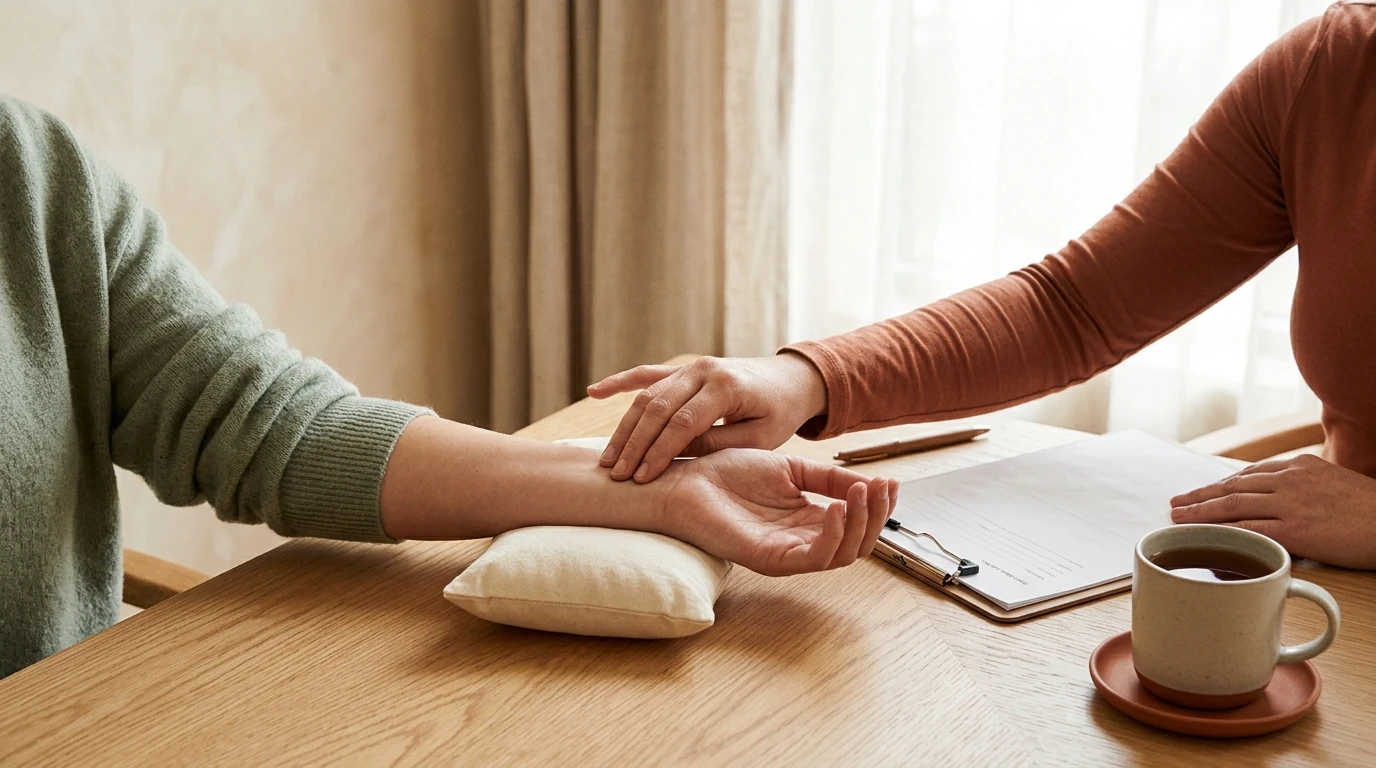
- Traditional assessment. Your acupuncturist will ask detailed questions and may check your tongue and pulse. This is a traditional Chinese medicine assessment of patterns and meridians, used to tailor point selection. It is not a diagnosis of your fibroid.
- Treatment. Gentle needling, sometimes with electroacupuncture or moxibustion depending on your presentation. Points are chosen for you individually, an approach similar to our work on acupuncture for hormone balance.
- Goals and a reassessment point. Together we write down what you want to change and when we’ll check whether it’s working. If it isn’t, we say so.
- Coordination. With your consent, notes go to the other clinicians involved in your care, inside our clinic and outside it.
Fibroid Symptom Care in Chicago That Works Alongside Your OB-GYN
If you’re searching for acupuncture for fibroids in Chicago, here is what is different about Copper Wellness:
- A coordinated team under one roof. Acupuncture, herbal medicine, pelvic floor therapy, massage and Nurse Practitioner-led hormone care share one care plan, and our specialists talk to each other about it.
- Honest expectations. We set symptom goals, not size promises, and we reassess on a schedule.
- Real clinical credentials. Doctorate-level acupuncturists, a board-certified herbalist, a Herman & Wallace-certified pelvic floor therapist and a board-certified FNP.
- An accessible neighborhood clinic. One location at 1654 W. North Ave. in Bucktown/Wicker Park (see acupuncture in Wicker Park), easy to reach from Lincoln Park, West Town and Logan Square. We offer wheelchair-accessible facilities, an assistive hearing loop and bilingual English/Spanish care.
Acupuncture for Fibroids: Frequently Asked Questions
Can acupuncture shrink fibroids?
Not reliably. The Cochrane review found no double-blind trials good enough to include, and the 2023 meta-analysis that reported smaller fibroid volume pooled highly heterogeneous trials, all from China, without long-term follow-up.
How does acupuncture shrink fibroids? Is that real?
The premise isn’t established. Mechanisms proposed online are theories, not demonstrated effects, and the pilot that tried to measure size by ultrasound couldn’t determine any change. The evidence leans toward symptom relief rather than size, and even that is limited.
Can acupuncture help with heavy periods caused by fibroids?
Acupuncture hasn’t been shown to reduce menstrual blood loss from fibroids. Heavy periods that cause anemia or disrupt your life need medical treatment, such as the medications or procedures in the table above. Acupuncture can be used for comfort alongside that treatment.
How many acupuncture sessions are needed for fibroids?
There’s no research-backed number for fibroid symptoms, so we don’t quote one. Instead, we agree with you on a defined trial period and a reassessment point at the first visit. If your symptom goals aren’t moving by then, we change the plan or tell you honestly that acupuncture may not be the right fit.
What acupuncture points are used for fibroids?
There’s no single standard protocol; even the research trials used very different acupuncture schemes. At Copper Wellness, points are chosen for each patient from their symptoms and a traditional Chinese medicine assessment, so we don’t publish a fixed list.
What naturally shrinks uterine fibroids?
Menopause is the most reliable natural change: fibroids usually shrink after it. No supplement, diet or herbal remedy has been proven to shrink fibroids.
How do Chinese medicine practitioners treat fibroids?
Usually with a pattern-based assessment, acupuncture and often herbal formulas. The research on both is limited, as the scorecard above shows, so a responsible practitioner uses TCM alongside gynecologic care, not instead of it.
What should you avoid if you have fibroids?
Avoid starting estrogen-containing medications, including some birth control pills and hormone therapy, without medical advice, because ACOG notes they may cause fibroids to grow. Avoid unregulated herbal products, and don’t let any complementary therapy delay a needed evaluation. For diet questions, talk to your gynecologist or primary care clinician.
Can I get acupuncture for fibroids while trying to get pregnant?
Often, yes, as long as your gynecologist or fertility specialist is involved. ACOG notes that fibroids may cause infertility, although other causes are more common, so a fertility workup comes first. Read how we approach this in fertility acupuncture: how it works and acupuncture for IVF.
Is acupuncture for fibroids covered by insurance?
Coverage depends on your plan. Copper Wellness accepts Blue Cross Blue Shield and Aetna, as well as FSA and HSA, and our billing team verifies coverage before treatment. See our insurance page and our breakdown of how much acupuncture costs.
Ready to talk through your fibroid symptoms with a team that works alongside your OB-GYN? Schedule your complimentary consultation at Copper Wellness: call (872) 267-1717, email Hello@CopperWells.com, or book online at copperwellness.janeapp.com.