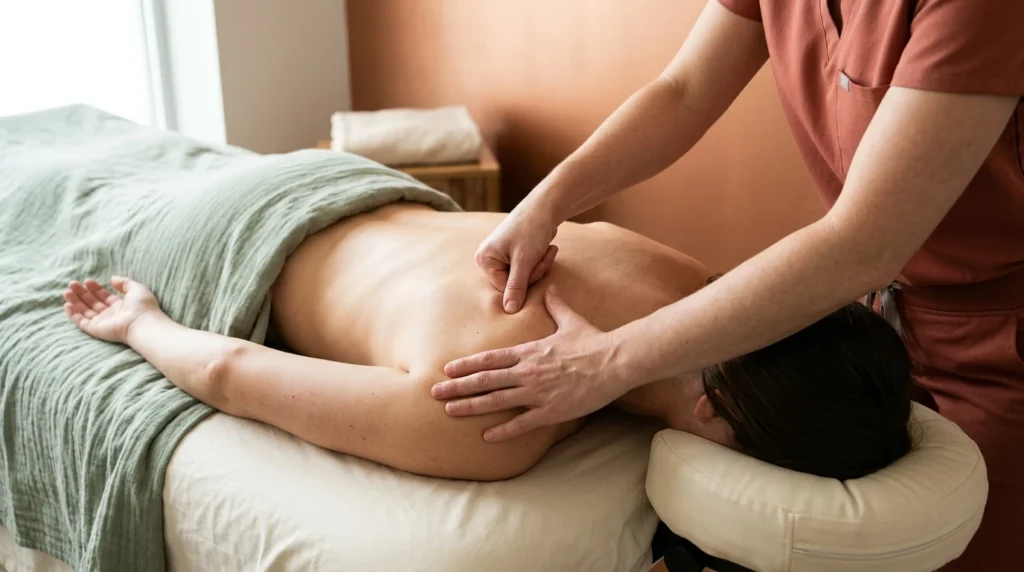
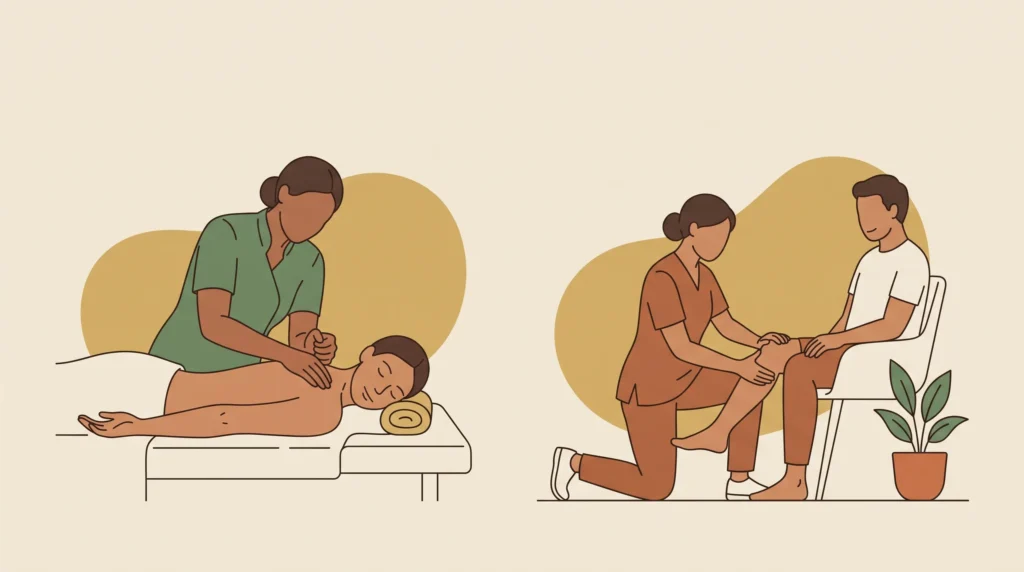
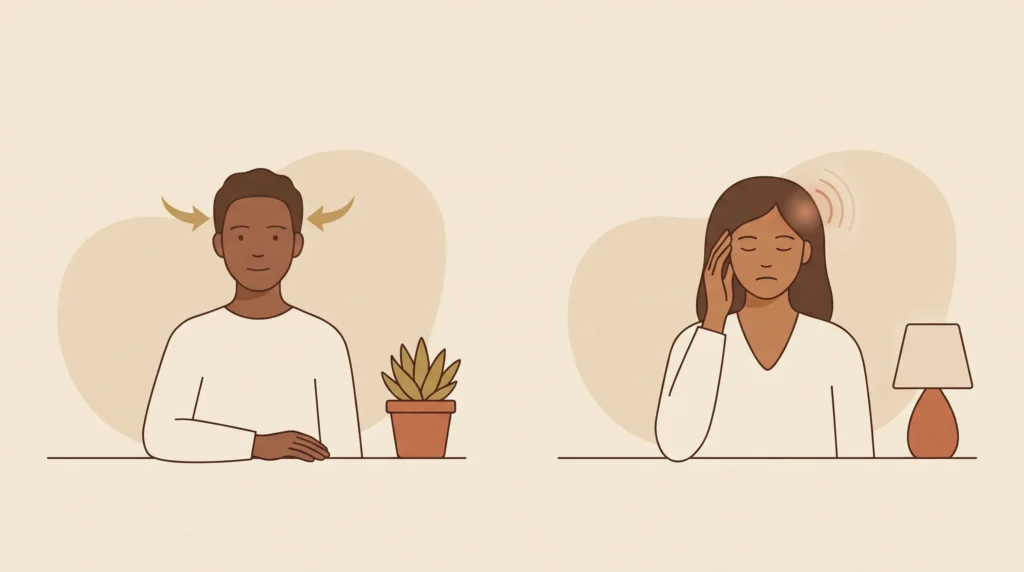
What is a prenatal massage? It's a massage adapted to a pregnant body. You lie on your side with pillows or bolsters instead of on your stomach. The therapist keeps pressure off your belly and works gently on your legs. In the randomized trials gathered in a 2021 systematic review of massage during pregnancy, women …

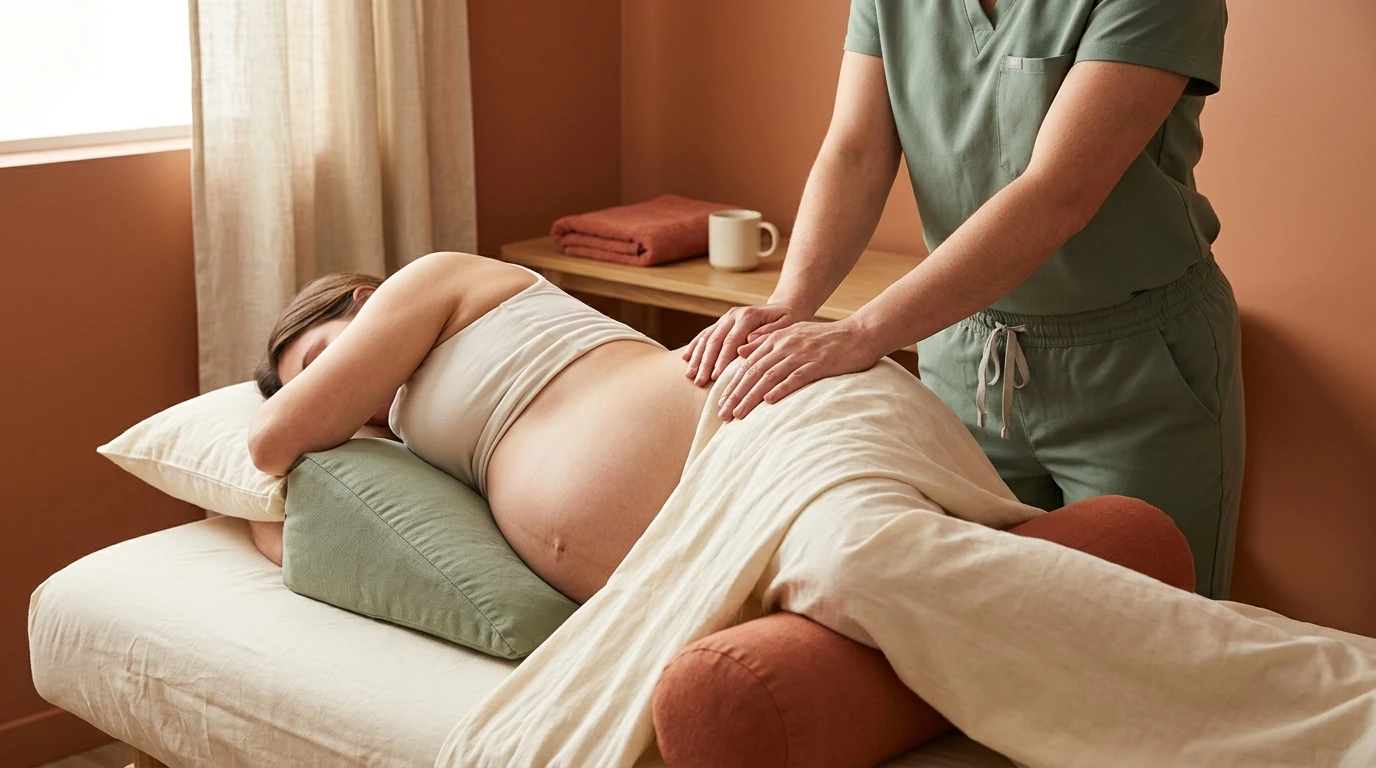
What is a prenatal massage? It’s a massage adapted to a pregnant body. You lie on your side with pillows or bolsters instead of on your stomach. The therapist keeps pressure off your belly and works gently on your legs. In the randomized trials gathered in a 2021 systematic review of massage during pregnancy, women who received it reported “reduced stress, back and leg pain, depression and anxiety.” That’s the honest scope of what it does. It can ease the muscle side of pregnancy pain and help you relax. It doesn’t fix every cause of pain, and there’s no evidence it starts labor. If you’re one of the many people with back pain in pregnancy (a 2023 meta-analysis puts it at 40.5% worldwide), this guide explains what a pregnancy massage can and can’t do, when it’s safe, and when another clinician is the better call. If you already know you want one, see prenatal massage at Copper Wellness.
This article is for general education and isn’t medical advice. Check with your OB or midwife before starting any new treatment during pregnancy. Everyone’s pregnancy is different, and results vary.
Key Takeaways
- Positioning is the main difference. The American College of Obstetricians and Gynecologists (ACOG) says the best position is “lying on your side, rather than facedown,” ideally with a therapist trained to work with pregnant clients.
- The evidence is encouraging but limited. The 2021 review found less stress, back and leg pain, depression and anxiety. Only 2 of the trials reported side effects, and those were “minor and transient.”
- Timing: the review reports that women in those trials were at least 12 weeks pregnant when the studies began, so there’s essentially no trial data from the first trimester.
- No deep work on the legs. According to the CDC, pregnant women are five times more likely to have a dangerous blood clot. The 2021 review advises avoiding deep tissue work, especially on the legs, “to prevent detaching blood clots.”
- It won’t induce labor. The review found “no scientific indications to support that claim.”
- Some symptoms mean calling your provider, not booking a massage. These include one swollen, warm, painful leg, or swelling of the face or hands with a headache that won’t go away.
Prenatal Massage by Trimester at a Glance
| Trimester | How common back pain is | What usually changes | How the massage adapts |
|---|---|---|---|
| First | 28.3% | Fatigue and nausea; the body has barely changed shape | The trials started at around 12 weeks or later, so there’s almost no study data from early pregnancy. Ask your OB or midwife first, and tell the therapist you’re pregnant even if you’re not showing yet. |
| Second | 36.8% | Your bump grows, your center of gravity shifts, and lower-back and hip muscles start working harder | Side-lying or seated work. Lying on your back only for short stretches. Gentle pressure on the legs. |
| Third | 47.8% | The most load on the back and pelvis; sleep and comfort get harder | Side-lying with more bolsters and frequent comfort check-ins. Nothing on the belly or deep in the legs. Close to your due date, keep your provider in the loop. |
Back-pain figures are global pooled estimates from the 2023 meta-analysis. Positioning guidance comes from ACOG and the 2021 systematic review.
What Is a Prenatal Massage?
A prenatal massage is hands-on soft-tissue work, much like a Swedish-style massage, done by a therapist who changes positioning, pressure and focus for pregnancy. ACOG describes massage in pregnancy as “a good way to relax and improve circulation,” and notes that many places offer “special prenatal massages done by therapists who are trained to work on pregnant women.” The training matters. A prenatal session isn’t a regular massage with a few extra pillows. The whole session is planned around how a pregnant body changes and the specific risks that come with it.
At Copper Wellness, prenatal massage is one part of our broader massage therapy program. The same therapists also do postnatal, myofascial and therapeutic work, so the techniques can follow you after birth.
Prenatal Massage vs Regular Massage
| Regular massage | Prenatal massage | |
|---|---|---|
| Position | Face down and face up | On your side (lateral) or seated. The 2021 review says pregnant women “should not be massaged while lying on their stomachs.” Some tables have a belly cut-out, which ACOG says can let you lie face down comfortably. |
| Lying on your back | For as long as the session needs | Only briefly. The review advises that pregnant women “should not remain in a supine position for an extended period of time.” |
| Pressure on the legs | Can be deep | Light. The review states “no massages should be performed on the deep muscle tissue of the arms and especially not the legs.” |
| Deep tissue work | Common for knots and chronic tension | Generally avoided “to prevent detaching blood clots” |
| Belly | Not usually a focus | No pressure on the abdomen |
| Intake questions | Injuries and pain areas | Also how many weeks along you are, any complications, and whether your provider has cleared you |
If you’ve had regular massage before, our posts on Swedish vs deep tissue massage and deep tissue massage for muscle and joint pain explain the techniques. During pregnancy, the gentler end of that range is the starting point. Firm work on your back and hips is still possible if it’s comfortable, but deep work on your legs is not.
How Does a Prenatal Massage Work?
Most pregnancy aches are partly mechanical. As your bump grows, your center of gravity moves forward. Your lower back, glutes and hip muscles work harder to keep you upright, and your neck and shoulders often tighten as your posture adjusts. A prenatal massage works on those overworked muscles. The aim is to ease tension, take pressure off sore spots and make it easier to rest.
The second part is the relaxation response. In one of the trials covered by the 2021 review, “significantly reduced cortisol and increased IgA levels were measured” immediately after each massage. Cortisol is a stress hormone, and IgA is an immune marker. These measurements were taken right after the sessions, so they show a short-term change. They don’t prove a lasting change in your hormones or your baby’s development.
Circulation is the third commonly cited effect, and ACOG names it directly. Be careful with swelling, though. Mild ankle swelling late in pregnancy is common. Sudden swelling, swelling in only one leg, or swelling in your face or hands needs a call to your provider before any massage. If you’ve read about lymphatic drainage massage, ask your OB or midwife before booking it during pregnancy.
Why Pregnancy Hurts: Back, Pelvic and Leg Pain in Numbers
Pain in pregnancy is common enough that researchers have measured it many times. The 2023 meta-analysis estimated back pain at 40.5% across pregnancy. It rises from 28.3% in the first trimester to 36.8% in the second and 47.8% in the third. A Cochrane review of interventions for pregnancy-related low-back and pelvic pain puts it higher: “More than two-thirds of pregnant women experience low-back pain and almost one-fifth experience pelvic pain.” The numbers differ because studies define and measure pain differently. Either way, if you’re hurting, you’re far from alone.
The pain usually falls into a few patterns:
- Low-back pain: aching across the lower back that gets worse as the day goes on or after long periods of standing. This is where massage has the most support. See our page on massage for back pain.
- Pelvic girdle pain: pain at the back of the pelvis or over the pubic bone, often sharper when you turn in bed, climb stairs or stand on one leg.
- Sciatica-like leg pain: pain running from the buttock down the back of the leg. Work on the glutes and hips can help some people. Our sciatica massage page explains how we approach it outside pregnancy.
- Neck, shoulder and upper-back tension: from posture changes, a heavier chest and broken sleep.
Prenatal Massage Benefits: What the Research Actually Shows
Many lists of prenatal massage benefits mix well-supported findings with hopeful ones. Here’s how the claims hold up against the research we reviewed:
| Claim | What the research found | How strong |
|---|---|---|
| Eases back and leg pain | Reduced back and leg pain in the randomized trials in the 2021 systematic review | Promising: repeated across randomized trials |
| Lowers stress, anxiety and depression | Reduced stress, depression and anxiety in the same review | Promising: repeated across randomized trials |
| Lowers stress hormones | Lower cortisol and higher IgA immediately after each session | Short-term marker only |
| Eases pain during labor | A Cochrane review found lower pain scores in the first stage of labor (six trials, 362 women) | Possible: the reviewers say massage “may have a role” |
| Prevents preterm birth / raises birth weight | Some studies reported “higher fetal birth weight and reduced risk of preterm delivery” | Unproven: the review says these effects “need further investigation” |
| Improves sleep | Often reported by clients, but not measured in the sources we reviewed | Not established |
| Can start labor | “No scientific indications to support that claim” | Not supported |
| Side effects | Only 2 trials reported any, and they were “minor and transient” | Low risk with proper positioning |
In those trials, sessions “lasted approximately 20 min, were performed a total of 5 to 10 times.” That’s a useful benchmark: the benefits came from a series of sessions, not a single visit. Results vary from person to person. A massage that eases your back in week 24 may help less in week 36, when the load on your spine and pelvis is much heavier. Treat the findings above as what’s reasonable to hope for, not a promise.
Which Pregnancy Pain Massage Helps — and When Another Specialist Fits Better
Massage is one tool. For some kinds of pregnancy pain it’s the right first step. For others it works best alongside another therapy, and some symptoms shouldn’t be massaged at all. The Cochrane review on pregnancy back and pelvic pain found that for low-back pain, “any land-based exercise significantly reduced pain.” It also found that “evidence from single studies suggests that acupuncture or craniosacral therapy improves pregnancy-related pelvic pain.” Here’s how our team usually sorts it out. This isn’t a diagnosis. It’s a guide for your conversation with a clinician.
| Your pain | What massage can do | Who else may help |
|---|---|---|
| Aching lower back | Ease tight back and hip muscles; best-supported use | Guided exercise with physical therapy; a prenatal chiropractor for joint-related pain |
| Pelvic girdle or pubic pain | Relax the glutes and hip muscles around the pelvis; limited direct effect on the joints | Pelvic floor therapy for pregnancy; acupuncture |
| Leaking, heaviness or pain with pressure “down there” | Little. This isn’t a massage problem. | A pelvic floor therapist (see pelvic floor dysfunction symptoms) |
| Sciatica-like pain down one leg | Gentle work on the glutes and hips; no deep pressure on the leg | Chiropractic or physical therapy. If the leg is also swollen, warm or red, call your provider. |
| Neck and shoulder tension | Good fit: relaxation and easing muscle tension | If you have a headache that won’t go away, call your provider (see red flags below) |
| Worried about a breech baby | None of the sources we reviewed show massage changes the baby’s position | Your OB or midwife first. Ask whether Webster Technique chiropractic care fits your plan. |
Gentle movement at home helps too. Our guide to pelvic floor exercises during pregnancy is a good starting point to pair with hands-on care.
When Can You Get a Prenatal Massage?
First trimester. The 2021 review reports that women in its trials were at least 12 weeks pregnant when the studies began. That doesn’t mean massage before 12 weeks is dangerous. It means there’s essentially no trial data for that period. Many therapists and clients wait until the second trimester. If you want a massage earlier, check with your OB or midwife, and tell your therapist you’re pregnant. ACOG says to do this even “if you’re not showing yet.”
Second trimester. This is the most common time to start. Lying on your side is still easy to adjust, and back pain is becoming more common (36.8% in this trimester). If you’re wondering when you can get a prenatal massage with the fewest unknowns, this is it, as long as your pregnancy is uncomplicated.
Third trimester and the final weeks. Massage is still possible right up to your due date, with more support pillows and close attention to comfort. If you’re 36 to 38 weeks along, it’s a good idea to keep your provider updated. A prenatal massage won’t start labor, but your provider may want to know about any new symptoms first.
Is Prenatal Massage Safe? What to Clear With Your OB or Midwife First
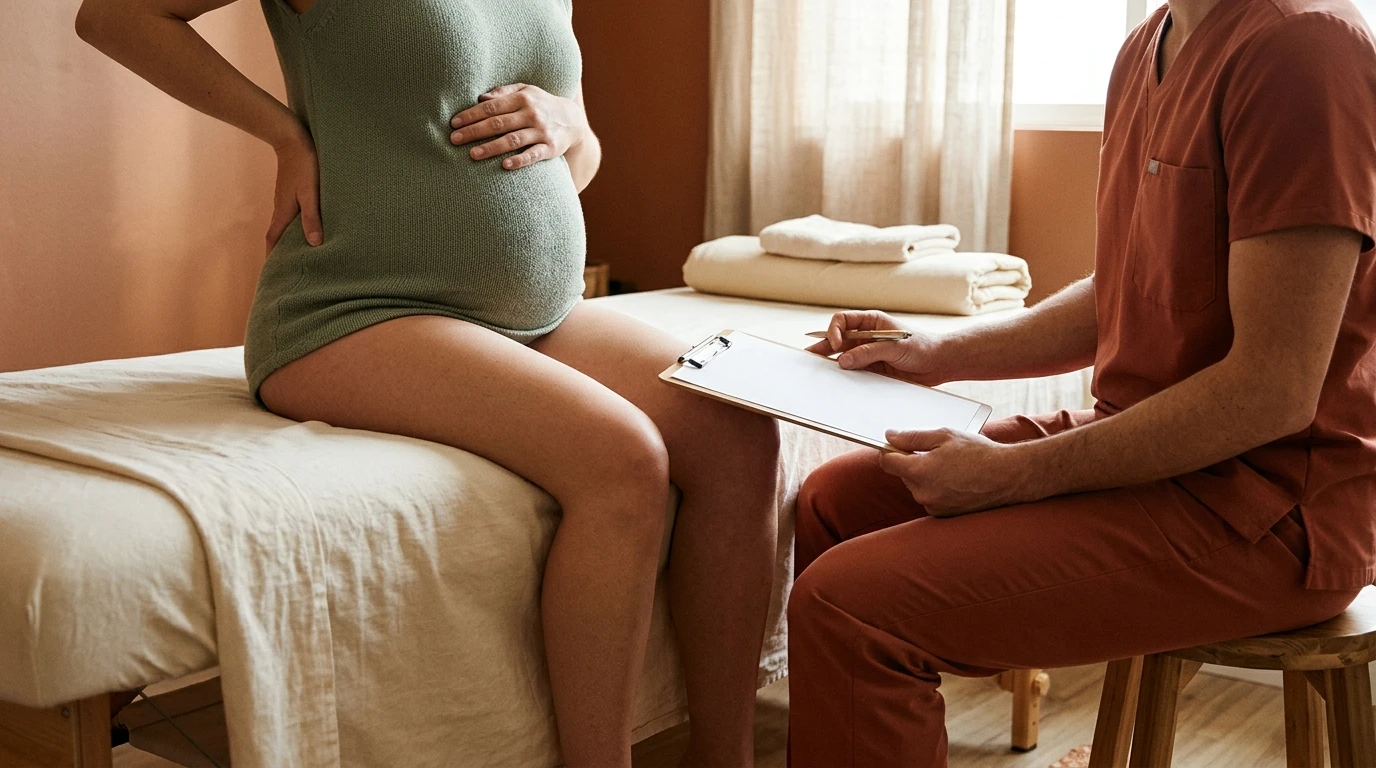
For most uncomplicated pregnancies, yes. The National Center for Complementary and Integrative Health (NCCIH) says “the risk of harmful effects from massage therapy appears to be low.” It adds that “there have been rare reports of serious side effects, such as a blood clot, nerve injury, or bone fracture,” and that some of these involved “vigorous types of massage, such as deep tissue massage.” That’s why prenatal technique stays gentle on the legs. The CDC notes that pregnancy makes a dangerous blood clot five times more likely.
The 2021 review states that “women with difficult pregnancies or preexisting complications should only be massaged upon consultation” with their provider. Before you book, check with your OB or midwife if you have any of the following:
- Placenta previa
- Premature labor, now or in the past
- A blood clotting disorder or a history of blood clots
- Diabetes, including gestational diabetes
- High blood pressure or a preeclampsia diagnosis
- Any pregnancy your provider has called high-risk
The first four come straight from the review’s list (“placenta previa, premature labor, blood clotting disorders or diabetes”). The last two fall under its “difficult pregnancies or preexisting complications.” Clearance doesn’t have to be complicated. Usually a quick message to your care team is enough, and it gives your massage therapist what they need to plan the session.
Stop and Call Your Provider: Red Flags That Rule Out a Massage Today
NCCIH puts it simply: “Don’t use massage therapy to postpone seeing a health care provider about a medical problem.” Use this three-step check before any session:
Go ahead and book if your pregnancy is uncomplicated, your pain is muscular (aching back, tight hips, stiff neck) and none of the symptoms below apply.
Ask your OB or midwife first if any condition from the list in the section above applies, or if this is a new or worsening pain you haven’t mentioned to your provider yet.
Call your provider now, and don’t book a massage, if you notice:
- Signs of a blood clot in a leg or arm. The CDC lists swelling, “pain or tenderness not caused by injury,” “skin that is warm to the touch,” and “redness or discoloration of the skin,” and advises: “alert your doctor as soon as possible.” Massaging a possible clot is exactly what to avoid.
- Possible preeclampsia warning signs. ACOG’s preeclampsia guidance lists “swelling of face or hands,” a “headache that will not go away,” “pain in the upper abdomen or shoulder,” “nausea and vomiting (in the second half of pregnancy),” “sudden weight gain,” “difficulty breathing” and “changes in vision.”
- Vaginal bleeding, leaking fluid, regular or painful contractions earlier than expected, or your baby moving noticeably less than usual. These aren’t massage questions. Contact your OB or midwife.
For trouble breathing, sudden changes in vision, or a severe headache that won’t ease, get emergency care right away. Don’t wait for an office appointment. Our article on urgent care vs primary care explains which setting fits which kind of problem. If a symptom is pregnancy-related, call your OB or midwife first.
Can Prenatal Massage Induce Labor? The Pressure-Point Myth
You’ve probably heard that pressing certain points on the ankles, hands or shoulders can bring on labor. It’s the most common prenatal massage question online. The evidence doesn’t back it up. The 2021 systematic review addressed the claim directly and found “there are no scientific indications to support that claim.” In a study that tested acupressure on these points, “no effects on the onset of labor could be determined as a result of acupressure within 97 h.”
Two practical points follow. First, a prenatal massage at 38 or 39 weeks won’t get labor going. If you’re past your due date, talk to your provider about your options. Second, many therapists still avoid sustained pressure on those points as a precaution. That’s a habit of caution, not evidence that the points are dangerous, and you don’t need to worry if one is touched in passing.
What Happens During a Prenatal Massage at Copper Wellness, Step by Step
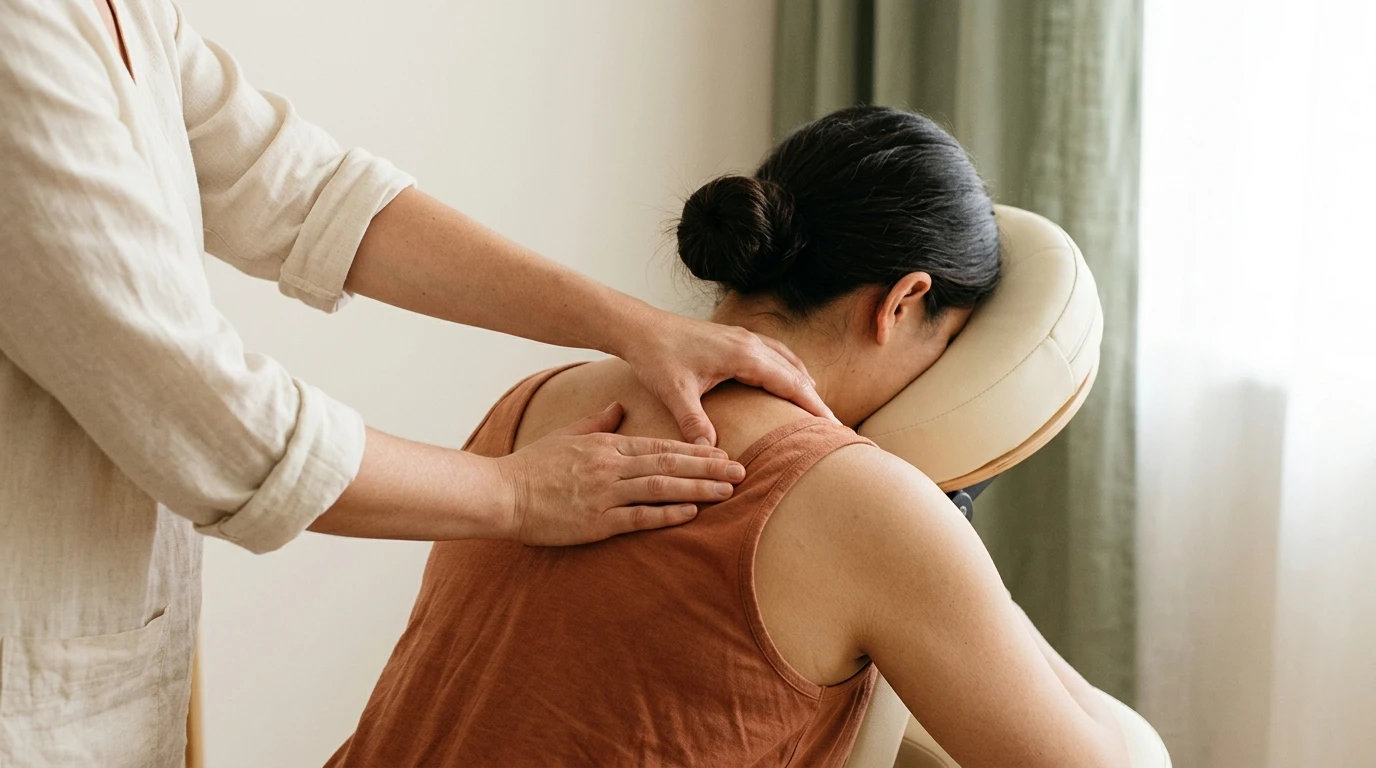
A common question in online pregnancy forums is simply what happens once you’re in the room. Here’s how a session with our team usually goes:
- Intake. Your therapist asks how many weeks along you are, about any complications, whether your OB or midwife has cleared you, and where you hurt. Mention any new symptom here, even if it seems minor.
- Positioning. You’ll mostly lie on your side, supported by pillows or bolsters between your knees, under your bump and behind your back. You may also sit for neck and shoulder work. You’ll spend only short stretches on your back.
- Pressure check-ins. Your therapist asks about pressure often. Firm work on the back, hips and shoulders is fine if it feels good. Leg strokes stay light, and your belly isn’t worked on.
- Focus areas. Usually the lower back, glutes, hips, upper back, neck and shoulders, wherever your intake showed the most tension.
- Afterward. Sit up slowly with help, drink some water, and notice how your pain changes over the next day or two. That tells you and your therapist whether to keep going and how often.
Prenatal clients at Copper Wellness can work with Benicia Blue, a massage therapist trained at The Soma Institute in Chicago. Her practice includes deep tissue and myofascial release, and her clients include athletes, performers and prenatal clients. She also uses aromatherapy. Smell sensitivity often changes in pregnancy, so tell her if a scent bothers you or you’d rather skip it.
Massage During Labor and After Birth
Massage can still help after your due date. A Cochrane review of manual methods for labor pain included 14 trials, 10 of which (1,055 women) contributed data. Women who received massage reported lower pain scores during the first stage of labor (six trials, 362 women), and “one trial reported less anxiety during the first stage of labour.” The authors conclude that massage and related methods “may have a role in reducing pain,” which is a careful conclusion, not a promise. If you’d like your partner or doula to use massage during labor, talk it through with your birth team ahead of time.
After birth, your body’s needs change: feeding posture, carrying a car seat and broken sleep all take their toll. Our postpartum massage service picks up where prenatal care leaves off. Our postpartum pelvic floor recovery guide covers the recovery that massage alone can’t address.
Prenatal Massage That Talks to the Rest of Your Pregnancy Care Team
Pregnancy pain rarely has a single cause, and it rarely needs only one kind of care. What sets Copper Wellness apart is how our team works together. Massage, chiropractic, pelvic floor therapy, physical therapy and acupuncture are all under one roof, and our clinicians share a care plan instead of treating you separately.
- Massage with prenatal experience. Benicia Blue’s practice includes prenatal clients, and every session is adjusted to your stage of pregnancy and your provider’s guidance.
- Webster-certified chiropractic in the same clinic. Dr. Adam Mohr is Webster Certified for prenatal and postnatal care. When joint or pelvic alignment seems to be part of the problem, he can see you in the same building, and your massage therapist knows what he’s working on.
- Pelvic floor expertise for what massage can’t reach. Dr. Lisa Lagomarcino holds a specialized pelvic-health certification from the Herman & Wallace Pelvic Rehabilitation Institute. Her doctoral training focused on pelvic rehabilitation and chronic pain.
- Practical details. Our single clinic is at 1654 W. North Ave., on the border of Bucktown and Wicker Park, and also serves patients from Lincoln Park, West Town and Logan Square. It’s wheelchair accessible, and bilingual English/Spanish service is available. We accept Blue Cross Blue Shield and Aetna depending on the service, plus FSA and HSA payments. Our billing team verifies coverage before treatment (see our insurance page).
We work alongside your OB or midwife, not in place of them. Treatment plans are built around your pregnancy, your symptoms and your provider’s guidance.
Prenatal Massage: Frequently Asked Questions
What do you wear to a prenatal massage? Do you take your bra off?
Wear whatever is comfortable to change out of. You undress only as much as you’re comfortable with, and you’re covered with a sheet the whole time except the area being worked on. Many people take their bra off for back work, but it’s entirely your choice, and the session can be adapted either way.
What areas can’t be massaged during pregnancy?
Your belly isn’t worked on with pressure, and deep pressure on the legs (and arms) is avoided because of the higher blood clot risk in pregnancy. Lying face down is also off the table unless you’re on a special belly cut-out table. Your back, hips, glutes, neck and shoulders can all be massaged.
What week is best to start a prenatal massage?
The research trials enrolled women from about 12 weeks onward, and many people start in the second trimester. Before that, ask your OB or midwife. If you have a high-risk pregnancy, get clearance first whatever week you’re in.
Can I lie on my back during a pregnancy massage?
Only briefly. Researchers advise that pregnant women not stay on their backs for long, so most of the session happens lying on your side or sitting. Tell your therapist right away if you feel dizzy, short of breath or uncomfortable in any position.
How often should I get a prenatal massage?
It depends on your pain, your budget and your schedule. In the trials, people had 5 to 10 sessions of about 20 minutes each, so a regular series is more likely to help than a single visit. Your therapist can help you plan a rhythm that fits.
Can a prenatal massage induce labor at 38 weeks?
No. There’s no scientific evidence that massage or pressure points start labor. A massage at 38 weeks can help with comfort and rest, but talk to your provider about anything related to timing labor.
Does insurance cover prenatal massage?
It depends on your plan. Copper Wellness accepts Blue Cross Blue Shield and Aetna depending on the service, plus FSA and HSA payments, and our billing team checks your specific coverage before treatment. Ask us to verify before your first appointment so you know what to expect.
Can my partner give me a massage at home?
Yes, gentle massage at home is a nice option. Your partner should stick to your back, shoulders, neck and feet with moderate pressure, skip your belly, keep leg strokes light, and stop if anything hurts. Don’t massage a leg that’s swollen, warm, red or tender. Call your provider instead.
Is a prenatal massage safe if I have swelling?
Mild, even ankle swelling late in the day is common in pregnancy, and gentle massage is usually fine once your provider knows about it. Sudden swelling, swelling in your face or hands, or swelling in only one leg is different. Those can be signs of preeclampsia or a blood clot, so call your OB or midwife before booking.
If pregnancy pain is getting in the way of sleep, work or simply enjoying these months, our team can help you work out whether prenatal massage, chiropractic care, pelvic floor therapy or a combination fits you, alongside your OB’s or midwife’s care. Start with a free consultation, call us at (872) 267-1717, or email Hello@CopperWells.com. Copper Wellness serves patients from Bucktown, Wicker Park, Lincoln Park, West Town and Logan Square, all from our single Chicago clinic at 1654 W. North Ave.