Lymphatic drainage massage is a gentle, rhythmic manual technique designed to encourage the natural movement of lymph fluid through your body, and the honest answer to "does it work" depends on what you're using it for: the evidence is genuinely strong for certain kinds of medical swelling — like lymphedema after breast cancer surgery or …

Lymphatic drainage massage is a gentle, rhythmic manual technique designed to encourage the natural movement of lymph fluid through your body, and the honest answer to “does it work” depends on what you’re using it for: the evidence is genuinely strong for certain kinds of medical swelling — like lymphedema after breast cancer surgery or chronic venous insufficiency — and considerably more modest for general “detox” or weight-loss claims you’ll see on spa marketing pages. At Copper Wellness, our licensed massage therapists offer lymphatic drainage as part of an integrative approach to swelling, circulation, and recovery, and we’d rather tell you plainly where the research is solid and where it isn’t than oversell it. Below, we cover the real lymphatic drainage massage benefits the evidence supports, honestly answer whether lymphatic drainage massage actually works for what you’re hoping it helps with, and walk through exactly what to expect in a session.
Key Takeaways
- Lymphatic drainage massage uses light, rhythmic strokes — not deep pressure — to help move lymph fluid toward areas where your body can process it.
- The strongest evidence supports its use for post-surgical swelling, chronic venous insufficiency, and certain cases of lymphedema, especially when started early and continued over multiple sessions.
- A 2020 meta-analysis of 17 randomized controlled trials (1,911 patients) found manual lymphatic drainage did not significantly reduce or prevent breast cancer-related lymphedema overall — though patients under 60 and shorter treatment windows showed stronger benefit signals.
- A typical session runs 45–90 minutes, and most people need a course of multiple sessions rather than a single visit to see meaningful change.
- Certain conditions — active blood clots, infection, fever, and some heart or kidney conditions — are contraindications, so a health-history conversation always comes first.
- “Detox” and significant weight-loss claims for lymphatic massage are not well supported by current evidence; general comfort, relaxation, and circulation support are the realistic, honest expectations for most healthy clients.
| Good candidate for | Talk to your provider first | Not clinically supported for |
|---|---|---|
| Post-surgical or post-op swelling | Active blood clots (DVT) or clotting disorders | Significant weight loss |
| Chronic venous insufficiency-related swelling | Active infection, cellulitis, or fever | “Toxin removal” or general detoxification |
| Early-stage or mild lymphedema (as part of a care plan) | Heart or kidney disease | Fat reduction or body sculpting |
| Postpartum fluid retention | Recent stroke | Curing or reversing lymphedema on its own |
| General stress relief and mild puffiness | Active cancer or radiation-damaged skin without medical clearance | — |
What Is Lymphatic Drainage Massage?

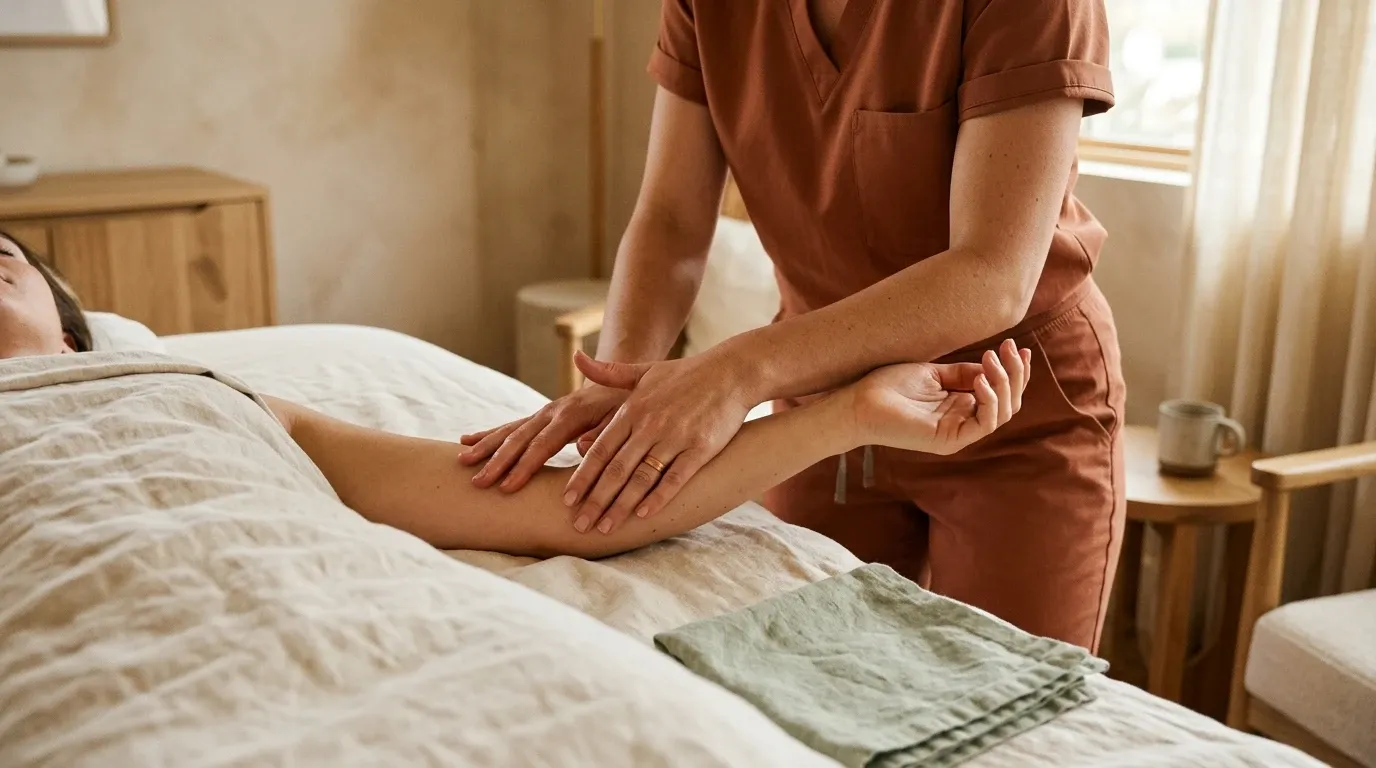
Lymphatic drainage massage — sometimes called manual lymphatic drainage (MLD) — is a specific, light-touch technique developed to support the lymphatic system: the network of vessels and nodes that carries fluid, proteins, and immune cells through your body and back into your bloodstream. Unlike deep tissue massage, which works muscle layers with firm, sustained pressure, MLD uses very light, rhythmic, wave-like strokes, generally starting near major lymph node clusters (neck, underarms, groin) and working outward, following the actual direction of lymphatic flow. According to Cleveland Clinic, this technique is used clinically for conditions including lymphedema after breast cancer surgery, chronic venous insufficiency, fibromyalgia, lipedema, rheumatoid arthritis, and general swelling — and it typically feels closer to a slow, gentle stroking sensation than the “muscle work” people associate with a deep tissue massage.
The style most massage therapists train in traces back to the Vodder method, developed in the 1930s specifically for lymphatic conditions, and it remains the clinical basis most modern manual lymphatic drainage protocols draw from.
It helps to understand what the lymphatic system actually does before you can judge whether massaging it makes sense. Per MedlinePlus (U.S. National Library of Medicine), the lymph system is a network of organs, nodes, ducts, and vessels that moves lymph fluid from body tissues back into the bloodstream, while also serving as a major part of the immune system — lymph nodes filter fluid, remove bacteria and other foreign material, and store the immune cells that respond to infection. That dual fluid-transport and immune role is exactly why manual techniques that support lymph flow are used clinically for swelling-related conditions, not just as a relaxation add-on.
This is also the foundation for the “manual lymphatic drainage” terminology you’ll see used interchangeably with “lymphatic drainage massage” — they refer to the same clinical technique.
What the Evidence Actually Shows
This is where we think it’s worth being more careful than most clinic websites are. If you’re asking “does lymphatic drainage massage work,” the honest answer is: it depends on what you’re using it for. The research on manual lymphatic drainage is genuinely mixed, and a responsible answer depends on which specific benefit you’re asking about.
On the positive side, a randomized controlled crossover study published on PubMed found that MLD significantly reduced excess limb volume and dermal thickness in patients with breast cancer-related lymphedema in the upper arm, alongside meaningful quality-of-life improvements — including emotional function, breathing comfort, and sleep. That’s real, measured evidence that the technique can do something physiologically meaningful for a specific, well-studied population.
At the same time, a larger 2020 meta-analysis of 17 randomized controlled trials covering 1,911 patients, published on PubMed Central, found that overall, MLD did not significantly reduce lymphedema (standardized mean difference −0.09) or significantly prevent it (risk ratio 0.61) across the pooled data. The nuance worth noting: subgroup analysis found a stronger benefit signal in patients under 60 and in treatment windows around one month — suggesting timing and patient selection may matter more than a blanket “does it work” answer can capture. A related systematic review of the same evidence base, summarized on PubMed (Journal of Cancer Survivorship, 2020, 869 participants across 17 studies), similarly found mixed results with some benefit in early-stage or mild cases, while flagging methodological limitations across the underlying trials.
Our honest read, and the one we give patients at Copper Wellness: manual lymphatic drainage has real, evidence-backed value for supporting comfort and circulation in specific conditions — especially when started early and used consistently — but it is not a guaranteed fix for lymphedema, and claims that it “melts fat,” “flushes toxins,” or produces dramatic detox effects go well beyond what the current research supports.
Who Benefits Most
Post-Surgical or Post-Op Swelling
Swelling after surgery — particularly procedures involving lymph node removal, such as breast cancer surgery — is one of the best-supported uses of MLD, per the evidence above. It’s often introduced as part of a broader recovery plan alongside guidance from your surgical team.
Chronic Venous Insufficiency
When leg veins aren’t efficiently returning blood to the heart, fluid can pool in the lower legs. According to a clinical overview on NCBI’s StatPearls, chronic venous insufficiency is a progressive vascular disorder caused by faulty venous valves, and the resulting elevated pressure commonly produces lower-extremity edema, discomfort, and fatigue — with leg elevation and compression therapy named as core conservative treatments. Cleveland Clinic separately lists chronic venous insufficiency among the conditions manual lymphatic drainage is used to support, working alongside — not replacing — compression therapy and movement.
Postpartum Fluid Retention
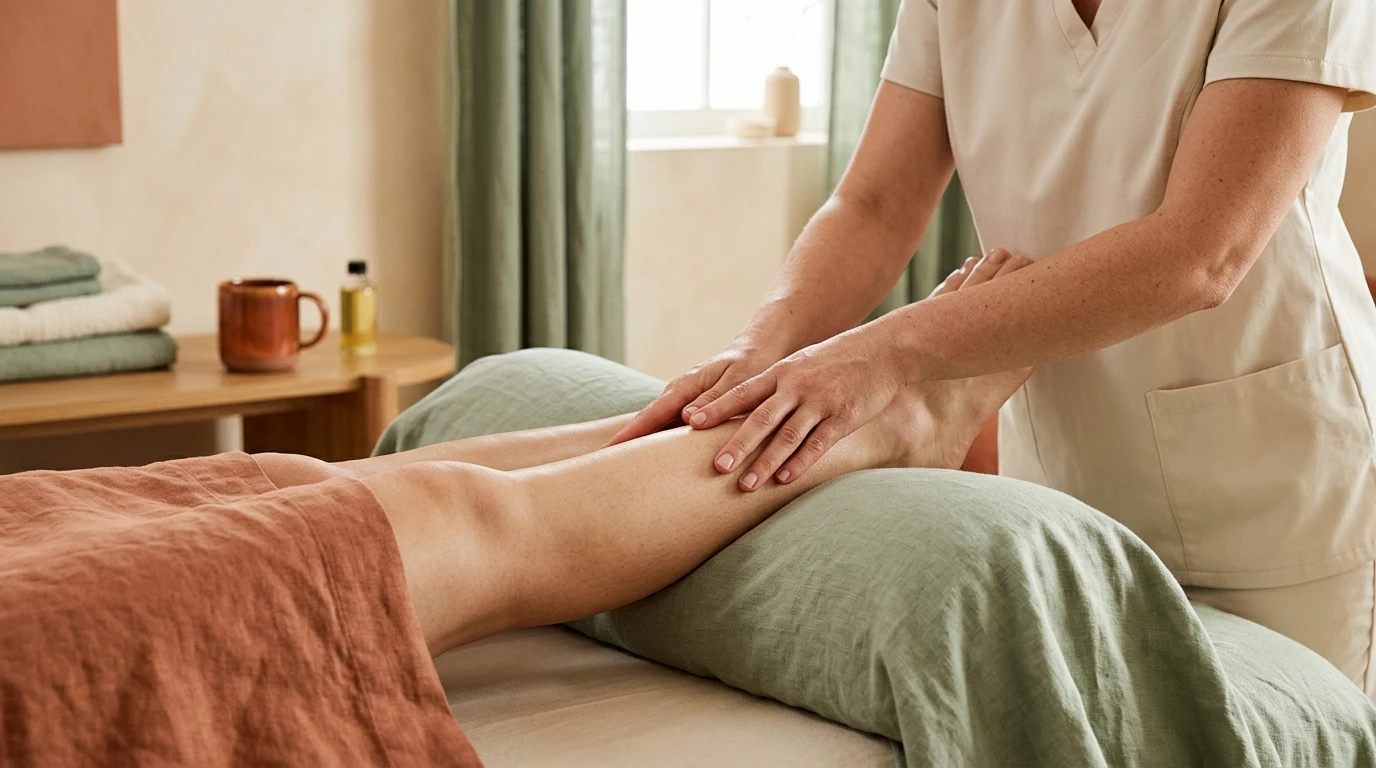
Postpartum swelling — especially in the legs, hands, and feet — is a common, expected part of recovery as your body redistributes the extra fluid volume it carried during pregnancy back toward baseline over the following weeks. Our postpartum massage sessions often incorporate lymphatic drainage technique specifically to support this fluid shift, and pair naturally with a broader postpartum pelvic floor recovery plan for clients working on full-body postpartum healing.
Pregnancy-Safe Considerations
Swelling in the hands and feet during pregnancy is extremely common, and lymphatic-style techniques can be adapted safely for pregnant clients — but the positioning, pressure, and areas worked are modified compared to a postpartum or general session. If you’re pregnant, always tell your therapist up front; our prenatal massage protocols are built around these adjustments from the start.
General Stress, Relaxation, and Mild Puffiness
For healthy clients without a specific medical swelling condition, lymphatic drainage is still a legitimately relaxing, low-pressure session that many people find helps with mild puffiness and general “heavy” feeling — this is a genuine, reasonable expectation, distinct from (and more modest than) the aesthetic-clinic “detox and sculpting” framing you’ll see elsewhere.
Who Should Avoid It — Talk to a Provider First
Lymphatic drainage massage is gentle, but it is not appropriate for everyone, and this is not a section to skip. Per Cleveland Clinic’s clinical guidance, you should talk to your doctor before booking if you have:
- Active blood clots or a history of deep vein thrombosis (DVT)
- An active infection, cellulitis, or fever
- Heart or kidney disease
- Had a recent stroke
- Active cancer, or skin that has been damaged by radiation treatment, without medical clearance first
Reported side effects are uncommon and generally mild — Cleveland Clinic notes occasional fatigue, headache, or nausea after a session — but the contraindications above are real medical considerations, not a formality. We ask every new client about their health history before the first session for exactly this reason.
What to Expect During a Session
If you’ve never had a lymphatic drainage massage, here’s the realistic walkthrough, step by step:
- Health history intake. Your therapist will ask about any surgeries, medical conditions, medications, and the contraindications listed above before beginning.
- Area-specific technique starting near lymph nodes. Work typically begins near major lymph node clusters (neck, underarms, or groin, depending on the area of focus) and moves outward, following the body’s actual lymphatic pathways.
- Light, rhythmic strokes — no deep pressure. Unlike a deep tissue session, you should not feel firm kneading or intense pressure; the technique is deliberately light and wave-like.
- Typical duration: 45–90 minutes, depending on whether the session is full-body or focused on a specific area.
- How you’ll likely feel afterward. Most people feel relaxed, sometimes mildly fatigued, and may notice increased urination in the hours after as the body processes the moved fluid — this is a normal response, not a concerning one.
- A course of sessions, not a one-time fix. For medical swelling conditions especially, benefit tends to build over a series of sessions rather than a single visit — your therapist will talk with you about a realistic course based on what you’re working on.
How It Compares to Other Copper Wellness Massage Modalities
Lymphatic drainage sits at the gentlest end of our massage therapy offerings — a useful distinction if you’re used to deep tissue or sports massage and expecting similar pressure. Where deep tissue massage works muscle layers directly to release tension and adhesions, lymphatic drainage works the much more superficial fluid system just under the skin, and the two serve genuinely different purposes rather than one being a “lighter version” of the other. If your primary concern is tension headaches or migraine, our massage for migraine approach uses a different technique entirely, focused on the neck and scalp rather than lymphatic pathways.
It also pairs naturally with other modalities in our integrative approach: gua sha is another technique that can support lymphatic flow as a secondary effect of its scraping motion, and cupping therapy is sometimes used in a complementary way for circulation and muscle recovery. None of these replace the others — they address different layers of the same underlying goal of supporting your body’s circulation and recovery.
The Copper Wellness Integrative Advantage for Lymphatic Health
Lymphatic drainage massage at Copper Wellness is provided by Benicia Blue, a licensed massage therapist trained at The Soma Institute in Chicago, with specific experience in deep tissue and myofascial release, prenatal clients, and aromatherapy-integrated sessions. That combination matters for lymphatic work in particular — prenatal and postpartum clients need a therapist who genuinely understands how to adapt pressure and positioning safely, not a generic spa protocol.
What sets an integrative clinic apart from a single-modality lymphatic studio is coordination: if swelling is connected to a broader issue — inflammation, a musculoskeletal imbalance, or a hormonal factor — our massage therapists can loop in our acupuncture team or chiropractic specialists as part of one shared care plan, rather than you having to piece together separate, uncoordinated providers. And because Copper Wellness serves Bucktown, Wicker Park, Lincoln Park, West Town, and Logan Square from a single accessible clinic location, you get that coordinated team without needing to travel between offices — if you’ve been searching for lymphatic drainage massage in Chicago, this integrative, one-location model is the practical difference from a single-modality studio. Our patient testimonials reflect that same emphasis on real, personalized care rather than a one-size-fits-all protocol.
FAQ
How often should I get lymphatic drainage massage?
It depends on why you’re getting it. For a specific medical concern like post-surgical swelling, your therapist will typically recommend a course of sessions over several weeks. For general relaxation or mild puffiness, many clients find every few weeks or monthly works well — we’ll build a realistic plan based on what you’re working on, not a fixed schedule.
Does lymphatic drainage massage hurt?
No — it should feel notably gentler than a deep tissue massage. The technique uses light, rhythmic strokes rather than firm pressure, so most clients describe it as relaxing rather than intense.
Can I get lymphatic drainage massage while pregnant or postpartum?
Yes, with adaptations. Our prenatal and postpartum massage sessions incorporate lymphatic technique with positioning and pressure modified for pregnancy and recovery — always tell your therapist about your pregnancy or delivery so the session can be adjusted appropriately.
How much does lymphatic drainage massage cost, and does insurance cover it?
Lymphatic drainage massage cost varies by session length and whether it’s billed as a standalone service or part of a broader treatment plan, so we recommend confirming current pricing directly with our front desk. Insurance coverage varies by plan and by whether the treatment is tied to a documented medical condition. Check our insurance page for the plans we currently work with, and our billing team can help verify your specific coverage before your appointment. For other general logistics questions, our clinic FAQ covers scheduling, cancellations, and what to expect on your first visit.
Will lymphatic drainage massage help me “detox” or lose weight?
Realistically, no — current evidence doesn’t support meaningful weight loss or “toxin removal” from lymphatic drainage massage, and we won’t market it to you that way. What it can genuinely help with is supporting circulation and reducing certain types of fluid-related swelling and puffiness, which is a real but more modest benefit than the detox marketing you may have seen elsewhere.
How soon will I see results?
For general relaxation and mild puffiness, many people notice a difference right after a session. For medical swelling conditions, meaningful change tends to build over a course of multiple sessions rather than appearing after one visit — results vary by individual and by condition, and we’ll set realistic expectations with you based on what you’re treating.
Is it safe to get lymphatic drainage massage after surgery — should I wait?
Timing matters and depends on your specific procedure and your surgeon’s guidance — always get clearance from your surgical team before starting lymphatic drainage massage after an operation. Once cleared, many patients find it a genuinely helpful part of their recovery plan for post-surgical swelling.
Ready to talk through whether lymphatic drainage massage is a good fit for what you’re dealing with? Start with a free consultation, or schedule your complimentary consultation at Copper Wellness — call (872) 267-1717 or email Hello@CopperWells.com, or book online at copperwellness.janeapp.com.