A knot that won't go away is usually a myofascial trigger point. The American Family Physician review of the subject describes trigger points as "discrete, focal, hyperirritable spots located in a taut band of skeletal muscle." Most muscle knots stick around for a simple reason: whatever created them, such as posture, repetitive strain, poor sleep …

A knot that won’t go away is usually a myofascial trigger point. The American Family Physician review of the subject describes trigger points as “discrete, focal, hyperirritable spots located in a taut band of skeletal muscle.” Most muscle knots stick around for a simple reason: whatever created them, such as posture, repetitive strain, poor sleep or inactivity, is still feeding them. Trigger point massage presses steadily on that spot and then lengthens the muscle. Research shows it reliably makes the area less sensitive to pressure, while its effect on everyday pain scores is mixed. A lump that is new or growing is a different story. It needs a doctor, not a massage. This guide explains why knots persist, what trigger point massage can and can’t do, and how to tell when a knot isn’t a knot at all.
This article is for general education and isn’t a diagnosis or medical advice. Everyone’s body is different, and results vary.
Key Takeaways
- A “knot” is usually a trigger point: a tender, irritable spot inside a tight band of muscle that can send pain to nearby areas.
- Knots persist when their cause persists. The AFP review names lack of exercise, prolonged poor posture, vitamin deficiencies, sleep disturbances and joint problems as factors that may predispose to the muscle micro-trauma behind trigger points, and says predisposing and perpetuating factors “must be eliminated, if possible.”
- The evidence is honest but modest. A 2022 meta-analysis of ischemic compression for myofascial pain found pressure on trigger points raised pain tolerance in 11 studies with 427 subjects, but found no significant difference in pain scores compared with controls after treatment.
- Massage is low-risk for most people. The NIH’s National Center for Complementary and Integrative Health (NCCIH) says the risk of harmful effects “appears to be low,” with rare reports of serious side effects.
- A new or growing lump is a red flag, whether it hurts or not. Get it examined instead of massaging it.
Knot That Won’t Quit? A Quick Decision Guide
This is how our clinicians think through a stubborn knot before anyone starts pressing on it. It’s a starting point, not a diagnosis.
| What you notice | What it suggests | Next step |
|---|---|---|
| A tender spot that feels better when you move, and it started a few days ago | Everyday muscle tension | Self-care: movement, heat, posture breaks (see “How to Get Rid of Muscle Knots Between Sessions” below) |
| The same spot keeps returning for weeks, or the pain spreads in a pattern (into your head, shoulder blade or arm) | A likely trigger point with a perpetuating factor still active | Trigger point massage plus the self-audit below |
| Numbness, tingling or pain shooting down an arm or leg | Possible nerve or disc involvement | A chiropractic or physical therapy evaluation (see herniated disc vs. muscle strain) |
| A new or growing lump, a hot or red spot, or pain that wakes you at night or keeps getting worse | Something other than a muscle knot needs to be ruled out | See a doctor or nurse practitioner promptly, not a massage therapist |
What Are Muscle Knots?
“Muscle knot” is a lay term. Clinicians usually call the same thing a myofascial trigger point. A 2015 review in PM&R by Shah and colleagues defines it as “a discrete, hyperirritable nodule in a taut band of skeletal muscle.” The same review notes that myofascial pain “is prevalent and a frequent cause of visits to primary care physicians and pain clinics.” So if you have one, you have plenty of company.
What are muscle knots like in daily life? They tend to show up where muscles hold you upright or repeat the same job all day: the upper trapezius between your neck and shoulder, the muscles along the shoulder blade, the low back, the hips and the glutes.
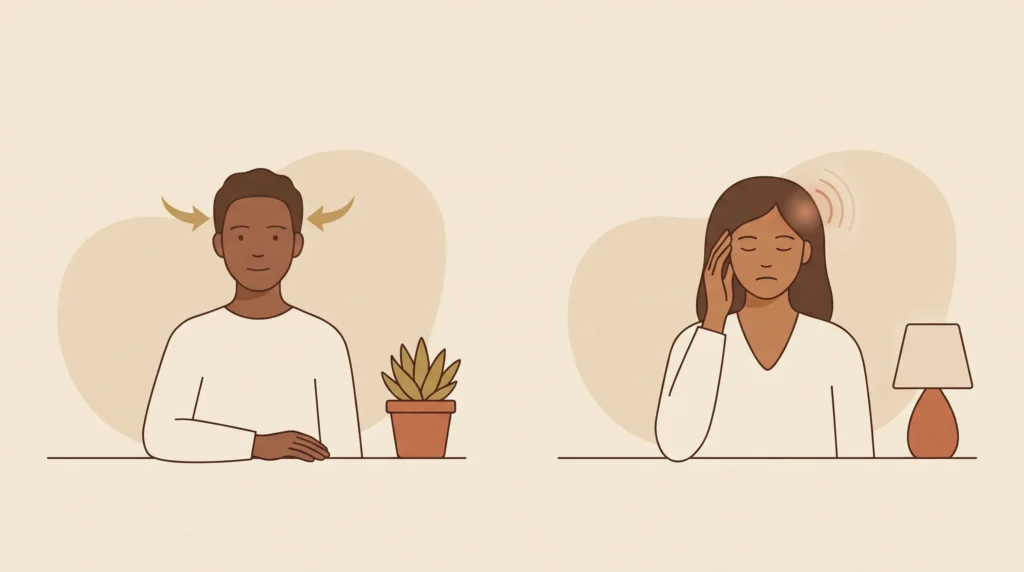
The confusing part is referred pain. The AFP review explains that with trigger points, “This referred pain is felt not at the site of the trigger-point origin, but remote from it.” Shah’s review adds that the spread is “usually contiguous or adjacent rather than remote.” In practice, we often see knots at the top of the shoulder and neck show up as a headache rather than as shoulder pain. That’s one reason it helps to understand the difference between a tension headache and a migraine, and why massage for headaches and migraine often focuses on the neck and shoulders, not just the head.
Active vs. Latent Trigger Points
Not every knot hurts on its own. Shah’s review separates two kinds. “An active MTrP is clinically associated with spontaneous pain”: it aches even when nobody is touching it. A latent one is a spot where “the MTrP is physically present but not associated with a spontaneous pain complaint.” You only notice it when someone presses on it, or when it limits how far you can turn your head or reach overhead. In our clinic we often see a “quiet” spot like this flare up during a week when that muscle is suddenly asked to do more.
What Do Muscle Knots Feel Like?
Most people describe a pea- or marble-sized tender spot, or a rope-like band, that feels tighter than the muscle around it. If you’re wondering what muscle knots look like, the honest answer is that you usually can’t see them. Knots are felt, not seen. Pressing on the right spot often reproduces the familiar ache, sometimes with spreading pain. Clinicians also look for a local twitch response, which the AFP review describes as “a transient visible or palpable contraction or dimpling of the muscle and skin” when the band is snapped or pressed. If you can clearly see a raised lump under the skin, that’s a reason to get it checked (more on that in the red-flags section).
What Causes Muscle Knots and How Do They Form?

There’s rarely one single cause. The AFP review notes that many researchers link trigger points to acute trauma or repetitive microtrauma, and that “Lack of exercise, prolonged poor posture, vitamin deficiencies, sleep disturbances, and joint problems may all predispose to the development of micro-trauma.” In our Bucktown and Wicker Park clinic, the patterns we see most often add a few everyday ones to that list:
- Long hours at a desk or on a phone, with the head pushed forward and the shoulders creeping up.
- Repetitive tasks such as carrying a child on the same hip, a single-sided commute bag, or a repeated motion at work.
- Sudden jumps in training load, for example a new running plan, a lifting program or a weekend sports season.
- Stress, which often shows up as clenched jaws, shallow breathing and raised shoulders.
- A nearby joint problem, where muscles guard a stiff or painful joint. Shoulder knots that come with pain when lifting your arm are a good example, and shoulder pain often needs the joint assessed as well as the muscle.
How do muscle knots form? The exact mechanism is still being studied. One leading explanation, described in Shah’s review, is that “As a result of sustained low-level contractions, a decrease in intramuscular perfusion has been postulated.” In plain terms, a small part of the muscle stays slightly switched on for too long, its blood flow drops, and the chemistry around it changes in ways that make nearby nerves more sensitive. Note the word “postulated.” It’s a working theory, not a settled fact, and that matters for the next question.
Do Muscle Knots Go Away on Their Own?
Often, yes. Many everyday tension spots ease within days once you move more, sleep better or take a break from the task that strained them. The knots that don’t go away are usually the ones whose cause is still active. Shah’s review frames lasting relief around “addressing the perpetuating factors that maintain this common pain syndrome.” If the desk setup, the training spike or the poor sleep is still there, the knot tends to come back, no matter how many times it’s rubbed out.
How Long Do Muscle Knots Last?
There’s no reliable number. It ranges from a few days to much longer, depending mostly on whether the cause is still present. Our clinicians use a practical rule of thumb: if a knot hasn’t improved after a couple of weeks of sensible self-care, or it keeps returning to the same spot, it’s worth having someone assess it rather than waiting it out.
Why the Same Knot Keeps Coming Back (a 2-Minute Self-Audit)
Run through this checklist before your next massage. Every “yes” is a perpetuating factor worth working on, and it’s often the missing piece when muscle knots won’t go away:
- Workstation: Is your screen below eye level, or do you work from a laptop on a couch or bed?
- Phone posture: Do you spend long stretches looking down at your phone?
- Repetition: Do you do one motion, or carry one load on the same side, for hours?
- Training load: Did your exercise volume or intensity jump recently?
- Movement: Do you sit for most of the day without moving your neck, shoulders and hips through their full range?
- Sleep: Do you wake up stiff, or sleep in a position that twists your neck?
- Stress and jaw: Do you clench your jaw or grind your teeth? Jaw tension often travels into the neck, and TMJ massage treats that link directly.
- Health factors: Do you have a known joint problem, or possible nutritional gaps worth raising with a clinician? The AFP review lists both vitamin deficiencies and joint problems among the factors that may predispose to the micro-trauma behind trigger points.
If the knot sits in your neck and keeps returning, our guide to neck pain that won’t go away covers when a chiropractic evaluation makes sense.
Are Muscle Knots Real? What the Science Says
This is a fair question, and the research doesn’t give a neat answer. On one side, trigger points are a widely used clinical concept, and myofascial pain is a common reason people see a doctor. On the other side, the evidence for how knots work, and even how to find them reliably, is weaker than many websites suggest.
Shah’s review acknowledges that “there is no consensus regarding the physical findings associated with MPS” (myofascial pain syndrome). It also notes that finding trigger points by hand “lacks adequate sensitivity and specificity,” so two examiners can disagree about where a knot is. A more critical 2015 paper in Rheumatology by Quintner, Bove and Cohen goes further, concluding that “the theory of MPS caused by TrPs has been refuted.” Even those critics add, though, that “This is not to deny the existence of the clinical phenomena themselves.”
So are muscle knots real? The pain, tenderness and stiffness are real, and nobody serious disputes that. What’s debated is the exact mechanism, and whether a “knot” is a physical lump in the muscle or an area of sensitized tissue and nerves. Our stance at Copper Wellness follows from that: we treat the person and the factors keeping the pain going, rather than promising to “break up” a lump.
What Is Trigger Point Massage?
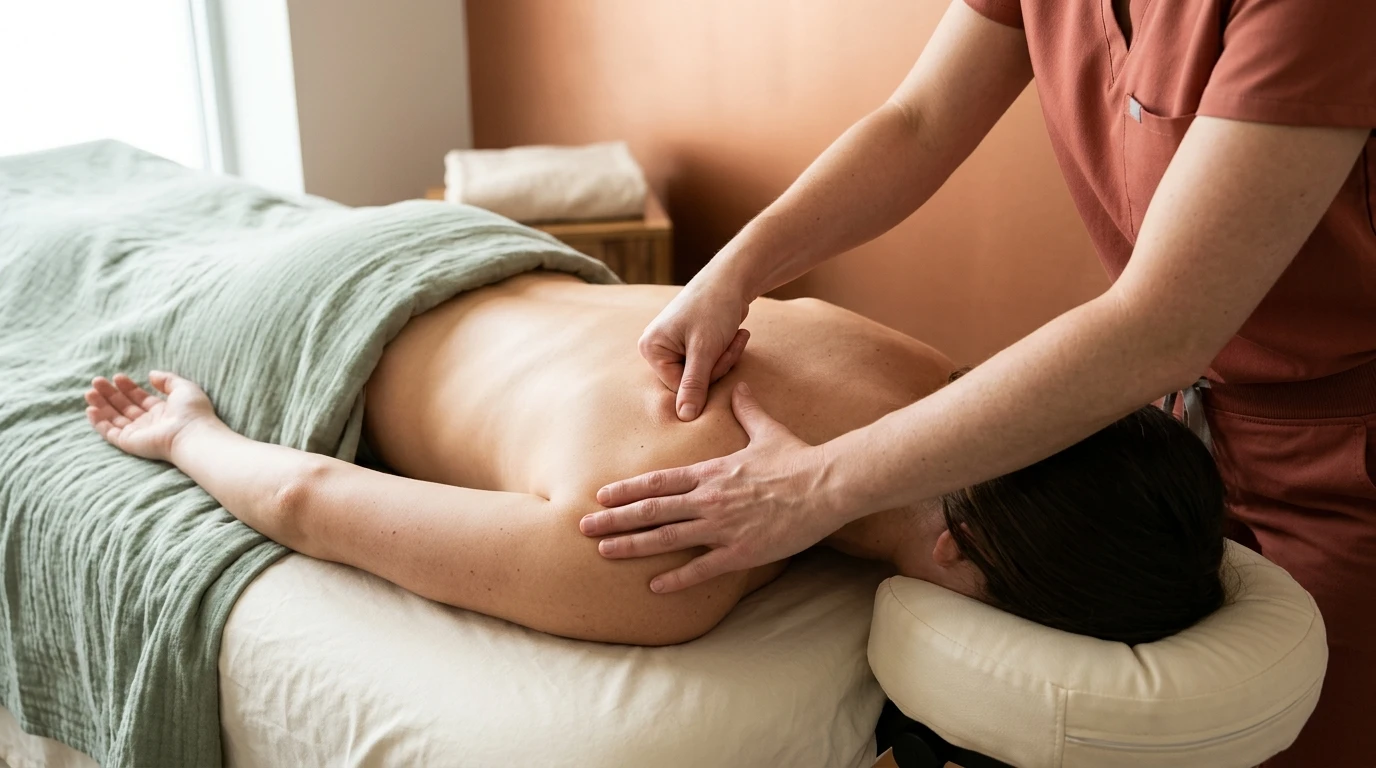
What is trigger point massage, exactly? It’s a focused massage technique in which the therapist finds a tender spot in a tight band of muscle and applies steady, sustained pressure to it until the tension and tenderness ease. Researchers often call the pressure part ischemic compression. The 2022 meta-analysis described below defines it as “a noninvasive manual therapy technique.” In a full trigger point massage therapy session, the pressure is usually combined with slower lengthening strokes and gentle stretching of the same muscle, so it doesn’t just feel looser on the table but moves better afterward.
“Trigger point therapy” is the broader umbrella term. It includes massage and also needle-based treatments done by other kinds of providers, which we cover further down. At Copper Wellness, trigger point massage is one of the focused techniques our licensed therapists use at our Bucktown/Wicker Park clinic (see massage therapy in Bucktown for local details). It’s rarely a whole session on its own. Most sessions blend it with other approaches, depending on what the muscle needs.
Trigger Point Massage vs. Deep Tissue (and Swedish)
The comparison of trigger point massage vs deep tissue comes down to focus. Trigger point work is precise: one spot at a time, with sustained pressure and frequent check-ins about what you’re feeling and where it spreads. Deep tissue massage works broader areas and deeper layers with slow, firm strokes. Swedish massage is lighter and more general, aimed at circulation and relaxation. If you’re choosing between the last two, our comparison of Swedish vs. deep tissue massage explains the trade-offs. In practice, a therapist might use Swedish strokes to warm the area, deep tissue for the surrounding muscle, and trigger point pressure for the one spot that keeps referring pain.
Does Trigger Point Massage Work? What the Evidence Shows
The best summary we found is the 2022 systematic review and meta-analysis of ischemic compression for myofascial pain syndrome mentioned above. “Seventeen studies were included in the systematic review, and 15 studies were included in the meta-analysis.” Here’s what it, and the NIH, actually report:
| Outcome | What the research found | Source |
|---|---|---|
| Sensitivity to pressure (pressure pain threshold) | Improved. Pooled data from “11 studies and 427 subjects demonstrated statistically significant differences” in favor of ischemic compression. | 2022 meta-analysis |
| Self-reported pain scores | “there was no significant difference between ischemic compression and controls posttreatment” | 2022 meta-analysis |
| Authors’ overall conclusion | Ischemic compression “only enhanced tolerance to pain in MPS subjects compared with inactive control” | 2022 meta-analysis |
| Massage for neck or shoulder pain (all massage styles) | “Massage therapy may be helpful for neck or shoulder pain, but the benefits may only last for a short time.” | NCCIH (NIH) |
| Massage for low back pain (all massage styles) | “Several evaluations of massage for low-back pain have found only weak evidence that it may be helpful.” | NCCIH (NIH) |
The neck, shoulder and low back findings come from NCCIH and apply to massage in general, not trigger point work specifically.
What does that mean for you? The most consistent trigger point massage benefits in the research are a less sensitive, less reactive muscle: the spot hurts less when pressed, and many people find they move more freely afterward. Those changes are useful because they open a window to stretch, strengthen and fix whatever is feeding the knot. They’re less useful if massage is the only thing that changes. That’s why we pair it with movement and the self-audit above, whether the knot is in the neck, the low back or the glutes and hips, where tight muscles are sometimes involved in sciatica-like pain. Results vary from person to person, and no massage technique can promise a specific outcome.
What Happens During a Trigger Point Massage Session
Here’s what a first visit for a stubborn knot typically looks like at Copper Wellness. Your therapist adjusts every step to you.
- Intake. Where does it hurt, and where does the pain spread? What makes it worse or better? What do your work, sleep, stress and exercise look like? This is where perpetuating factors usually surface.
- Finding the spot. Your therapist feels for the taut band and the tender point, asks whether pressing it reproduces your familiar pain, and notes any referral pattern or twitch response. Because hand examination of trigger points isn’t perfectly reliable, your description of what you feel guides the work as much as what the therapist’s hands find.
- Sustained pressure. The therapist presses steadily and checks in with you. Firm, “good hurt” pressure that eases as it’s held is the goal. Sharp, burning, electric or tingling pain isn’t. Say so right away and the therapist will change the pressure or the angle.
- Lengthening. After the spot softens, slower strokes and gentle stretching take the muscle back toward its normal length.
- A home plan. The AFP review puts the goal plainly: “The goal of manual therapy is to train the patient to effectively self-manage the pain and dysfunction.” Expect a few simple things to do between visits.
- Reassessment. Over the next visits, we check whether the knot is changing. If it isn’t, the plan changes, and that may mean bringing in a chiropractor, physical therapist or acupuncturist from our team.
Our massage therapists bring different strengths to this work. Benicia Blue trained at The Soma Institute in Chicago and focuses on deep tissue work and myofascial release, with athletes, performers and prenatal clients among the people she works with. Andy Holsteen, a graduate of The New School for Massage in Chicago with 200-hour yoga training, combines myofascial release with corrective exercise and breathwork. That’s a natural fit for knots driven by posture and shallow, stressed breathing.
How to Get Rid of Muscle Knots Between Sessions

Massage works best when the rest of the week is helping too. Here’s how to get rid of muscle knots, or at least keep them from returning, between visits:
- Keep moving. Even after trigger-point injections, the AFP review says patients “are encouraged to remain active, putting muscles through their full range of motion,” and the same principle holds between massage sessions. Gentle neck rolls, shoulder circles and hip openers spread through the day beat one long stretch session.
- Gentle self-pressure. Leaning into a tennis ball against a wall, or pressing with your thumb, can calm a knot for a while. Keep it moderate. If it bruises or the pain gets sharper, back off.
- Heat for chronic tightness. A warm shower or heating pad can relax a muscle that has been tight for a while. Follow the product’s directions and never sleep on a heating pad.
- Micro-breaks. Stand up, roll your shoulders back and look away from the screen every so often. Raising your screen to eye level often matters more than any stretch.
- Sleep and stress. Sleep disturbances are on the AFP review’s list of predisposing factors. A supportive pillow, a steady bedtime and slow breathing before bed are worth the effort.
- Strengthen what’s weak. Muscles that are overloaded because their neighbors aren’t doing their share keep re-forming knots. A physical therapy program can target exactly that.
Other Treatments for Stubborn Trigger Points
Massage is one option among several. The AFP review notes that “Nonpharmacologic treatment modalities include acupuncture, osteopathic manual medicine techniques, massage, acupressure” and other approaches. Here’s how the wider field of trigger point therapy breaks down.
Options within our clinic:
- Chiropractic care. When a stiff joint is part of the picture, chiropractic care addresses the joint while massage handles the muscle. Dr. Mimosa Nguyen, a Logan University-trained chiropractor, uses the Graston Technique, a form of instrument-assisted soft tissue mobilization (IASTM), alongside sports-medicine-informed care.
- Physical therapy. Best for knots driven by weakness, movement habits or a past injury. Not sure which one fits? Our guide to chiropractor vs. physical therapist walks through the differences.
- Acupuncture. Acupuncture is on the AFP list of nonpharmacologic options. Our acupuncturists often see it in patients with neck and shoulder knots; see acupuncture for neck pain.
- Cupping and gua sha. These traditional soft-tissue techniques are sometimes added for tight upper back and shoulder muscles. Learn more about cupping therapy and gua sha. They’re complementary approaches, not a substitute for finding the cause.
Options outside our clinic:
- Trigger point injections. These are given by a physician or other qualified medical provider. Per the AFP review, “Trigger-point injection is indicated for patients who have symptomatic active trigger points.” Copper Wellness doesn’t offer them.
- Dry needling. This is performed by trained providers such as some physical therapists. Copper Wellness doesn’t offer dry needling either. If you’re curious how it compares with acupuncture, read dry needling vs. acupuncture.
- Medication. Decisions about pain relievers or muscle relaxants belong with your doctor or pharmacist.
Is Trigger Point Massage Safe? Soreness, Bruising and Who Should Check First
For most people, yes. According to NCCIH, “The risk of harmful effects from massage therapy appears to be low.” It also notes that “there have been rare reports of serious side effects, such as a blood clot, nerve injury, or bone fracture.”
Some tenderness in the treated area the next day is common after focused pressure, and it usually feels like the ache after a workout. Bruising after trigger point massage can happen occasionally, especially if you bruise easily or the pressure was strong. Mild, small bruising that fades on its own is not unusual. Large, spreading or very painful bruising, or bruises that appear without much pressure, should be mentioned to your doctor.
Tell your therapist before the session, and check with your medical provider first if needed, if any of these apply:
- You take blood thinners or bruise very easily.
- You’ve had recent surgery, a recent injury or a fracture.
- You have, or have had, a blood clot, or a leg that is swollen, warm and painful.
- You have osteoporosis, or you’re in active cancer treatment.
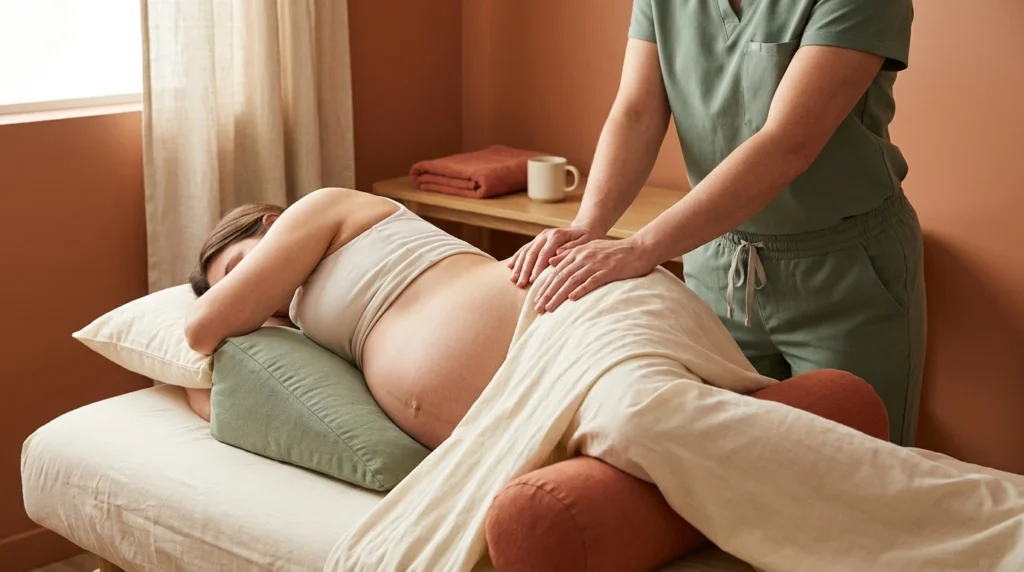
- You’re pregnant. Pressure and positioning need to be adjusted, and prenatal massage is designed for exactly that.
When a Knot Isn’t a Knot: Red Flags to Get Checked
Not every lump or sore spot is muscular. The AFP review warns that trigger point pain “must be differentiated from fibromyalgia syndrome, which involves multiple tender spots or tender points,” and that “pain in the shoulders may resemble visceral pain or mimic tendonitis and bursitis.” Use this table as a guide to what can be mistaken for muscle knots:
| What you notice | What it might be | Who to see |
|---|---|---|
| A new lump, or a lump that’s getting bigger, whether it hurts or not | Needs medical evaluation to rule out a soft-tissue growth | A doctor or nurse practitioner, promptly |
| A hot, red, swollen area, especially with fever or drainage | Possible infection | Medical care the same day |
| Many tender spots all over the body, with fatigue and poor sleep | Possibly fibromyalgia, which needs a different approach | A medical evaluation |
| Shoulder pain that doesn’t behave like a muscle problem | Tendonitis, bursitis, or pain referred from an internal organ | A clinician’s assessment before deep work |
| Pain shooting down an arm or leg, numbness or weakness | A nerve or disc problem | A chiropractic or PT evaluation, or medical care if it’s severe or getting worse |
| Chest pain spreading to the arm or jaw, or sudden severe pain after a fall or accident | A possible emergency | Call 911 or go to the emergency room |
On lumps specifically, the American Cancer Society lists “A new lump or a lump that’s growing anywhere on your body” among the reasons to see a doctor. It notes that “Most people notice a lump that’s grown over a few weeks or months” and that “The lump may or may not hurt.” It also stresses that these symptoms “are more often caused by things other than soft tissue sarcomas,” so a lump is a reason to get checked, not to panic.
NCCIH’s advice applies here too: “Don’t use massage therapy to postpone seeing a health care provider about a medical problem.” If a clinician decides a lump or pain pattern needs testing, Copper Wellness can coordinate labs and imaging. If you’re unsure where to go for a new symptom, our guide to urgent care vs. primary care can help.
Why Stubborn Knots Get a Team Approach at Copper Wellness
A knot that keeps coming back is rarely just a massage problem. At Copper Wellness, massage therapists, chiropractors, physical therapists and acupuncturists work under one roof and share one care plan. If your knot isn’t responding, it gets re-evaluated by the team rather than simply pressed harder.
- Root cause first. The perpetuating-factor audit is part of care, not an afterthought. We look at how you sit, sleep, train and breathe.
- Real clinical training. Our massage therapists trained at Chicago’s Soma Institute and The New School for Massage. Co-owner Dr. Adam Mohr, a chiropractor trained at the National University of Health Sciences, works with athletes from recreational to professional level, and Dr. Nguyen adds Graston Technique for stubborn soft-tissue restrictions.
- Honest about limits. If a knot looks like something other than muscle, we’ll say so and point you to the right clinician.
- Practical details. One clinic at 1654 W. North Ave., serving Bucktown, Wicker Park, Lincoln Park, West Town and Logan Square. We accept Blue Cross Blue Shield and Aetna, plus FSA and HSA. See our insurance page for details.
Trigger Point Massage: Frequently Asked Questions
Is it good to rub out muscle knots?
Moderate pressure and movement usually help a tight spot feel better. Aggressive rubbing that leaves you bruised or sharper the next day doesn’t do more good. A knot that keeps needing to be rubbed out is a sign to look for what’s feeding it.
How long does it take to massage out a trigger point?
There’s no fixed time. Within a session, your therapist holds pressure until the spot eases and then moves on. Across sessions, it depends on how long the knot has been there and whether its cause is still active. Some people notice a change after one visit, while others need a few. Results vary.
Does trigger point therapy actually work?
For pressure techniques, the best evidence says it reliably reduces sensitivity to pressure. A 2022 meta-analysis found improvement across 11 studies and 427 subjects. The effect on pain scores was not significantly different from controls after treatment, though. It works best as part of a plan that also addresses posture, movement and strength.
Is bruising after trigger point massage normal?
Occasional mild bruising can happen, especially if you bruise easily or the pressure was firm. Tell your therapist so they can adjust. Large, painful or unexplained bruising should be checked by a doctor, particularly if you take blood thinners.
How long do muscle knots last?
Simple tension spots often ease within days. Knots with an ongoing cause, like a desk setup, sleep position or training load, can last for weeks or return repeatedly until that cause changes. If one hasn’t improved after a couple of weeks of good self-care, get it assessed.
What can be mistaken for muscle knots?
Lymph nodes, cysts and other soft-tissue lumps, fibromyalgia tender points, tendonitis, bursitis, nerve or disc problems, and occasionally pain referred from internal organs. A lump that’s new or growing should always be examined by a doctor, whether it hurts or not.
How often should I get trigger point massage?
It depends on how stubborn the knot is and how you respond. Our therapists usually suggest a short series of closer-together visits, then spacing them out as you take over with your home plan. The goal is needing massage less, not more.
Should trigger point massage hurt?
It can feel intense, the kind of “good hurt” that eases while the pressure is held. It shouldn’t feel sharp, burning or electric, and you shouldn’t have to brace or hold your breath. You’re always in charge of the pressure.
Can I do trigger point massage on myself?
Yes, gentle self-pressure with your thumb or a ball against a wall can help between sessions. Keep it moderate and brief, avoid the front and sides of the neck, and stop if you feel numbness, tingling or sharper pain.
If a knot has been hanging around longer than it should, our team can help you work out whether trigger point massage, chiropractic care, physical therapy or a combination fits, and whether it’s a knot at all. Start with a free consultation, call us at (872) 267-1717, email Hello@CopperWells.com, or book online. Copper Wellness serves patients from Bucktown, Wicker Park, Lincoln Park, West Town and Logan Square, all from our single Chicago clinic at 1654 W. North Ave.