The best-supported dandelion root tea benefits are modest ones. Europe's medicines regulator, the European Medicines Agency (EMA), recognises dandelion root in its EU herbal monograph as a traditional remedy for mild digestive complaints, temporary loss of appetite and gently increasing urine output, and it states that these uses are "exclusively based upon long-standing use", not …

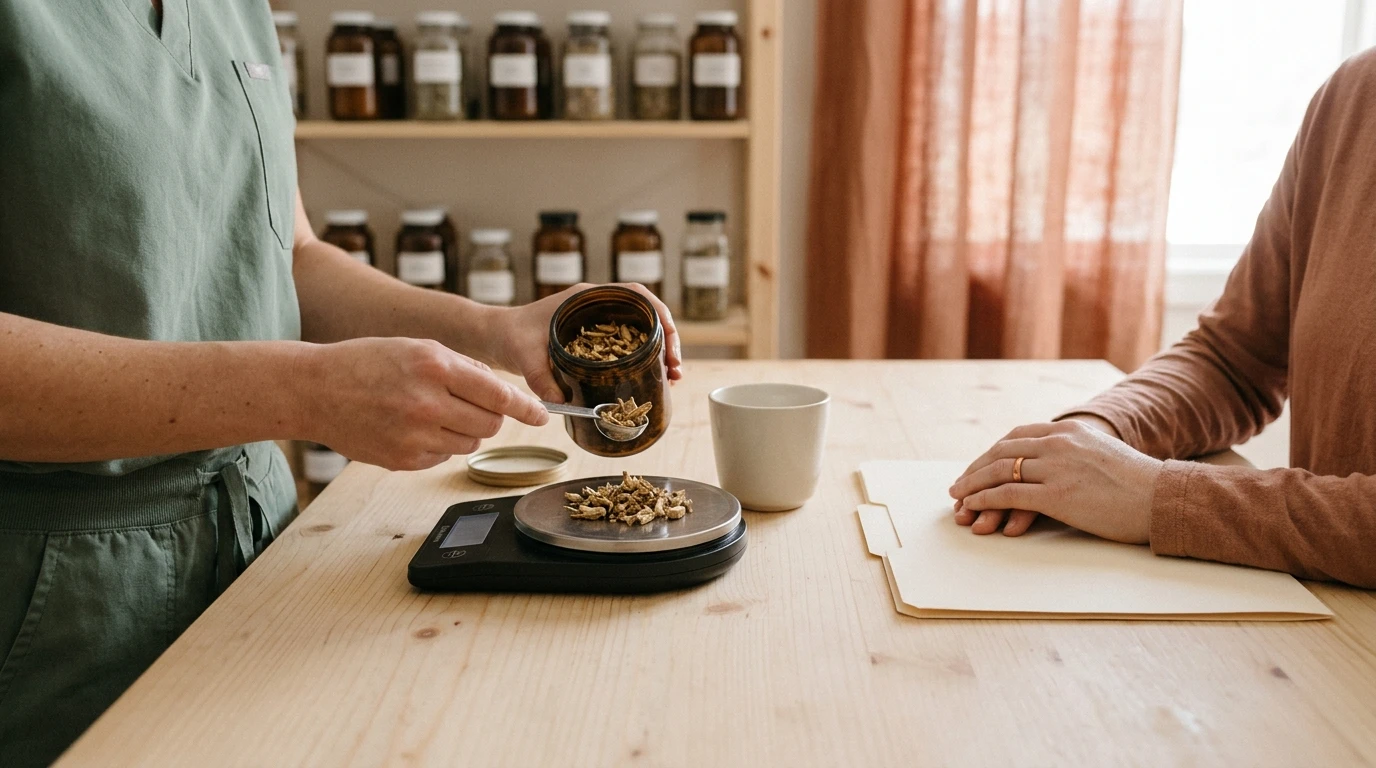
The best-supported dandelion root tea benefits are modest ones. Europe’s medicines regulator, the European Medicines Agency (EMA), recognises dandelion root in its EU herbal monograph as a traditional remedy for mild digestive complaints, temporary loss of appetite and gently increasing urine output, and it states that these uses are “exclusively based upon long-standing use”, not clinical trials. The tea’s reputation for hepatic (liver) support has far less human evidence behind it than most articles suggest, and the only human study of dandelion’s diuretic effect we could find used a leaf extract, not root tea. So the dandelion tea benefits you read about are real but small, root tea is not a liver treatment, and some people should skip it altogether. Below, the herbal medicine team at Copper Wellness walks through what each claim actually rests on, how much is reasonable to drink, and who should check with a clinician first.
This article is educational. It isn’t a diagnosis or a treatment plan, and it doesn’t replace an evaluation by a licensed clinician who knows your health history and medications.
Key Takeaways
- EMA recognises dandelion root, on the basis of long-standing traditional use only, for mild digestive complaints (fullness, flatulence, slow digestion), temporary loss of appetite, and increasing urine flow as an add-on in minor urinary complaints.
- The only human diuretic study we could find enrolled 17 healthy women and used a dandelion leaf extract. Urination frequency rose after the first dose and the excretion ratio after the second; the third dose changed nothing.
- Liver, blood-sugar and heart claims rest on very little human evidence. The U.S. National Institutes of Health’s integrative-medicine center says, “We know very little about dandelion’s effect on human health.”
- EMA’s tea dose is a single dose of 1–5 g of dried root in 150 ml of water, 2–3 times daily. See a clinician if symptoms persist longer than 2 weeks.
- Skip it with gallstones or bile duct problems, liver disease, a ragweed-family (Asteraceae) allergy, pregnancy or breastfeeding, or under age 12. Ask first if you take a prescription diuretic, lithium or diabetes medicine.
Dandelion Root Tea Benefits at a Glance: What the Evidence Actually Shows
Most pages list the benefits of dandelion root tea side by side, as if each one were equally proven. They aren’t. This table sorts each common claim by the best evidence we could verify for it.
| Claim | Best evidence available | Human data on root tea? | Source |
|---|---|---|---|
| Eases mild digestive complaints (fullness, flatulence, slow digestion) | Traditional use recognised by EMA | No trials; long-standing use only | EMA monograph |
| Helps temporary loss of appetite | Traditional use recognised by EMA | No trials; long-standing use only | EMA monograph |
| Mild diuretic (more urine) | One small, unblinded human study of a leaf extract in 17 women; the root by traditional use | Not for root tea | Clare et al. 2009; EMA monograph |
| Liver support / “detox” | No human trial of root tea we could verify; EMA advises against the root in liver disease | No | NCCIH; EMA monograph |
| Lowers blood sugar | Mouse and lab studies; human trials still needed | No | Wirngo et al. 2016 review |
| Blood pressure, cholesterol, heart health | Cardiovascular effects “only been observed in animal models” | No | Olas 2022 review |
| Cancer | Case reports with unclear attribution; “Clinical trials are needed” | No | Memorial Sloan Kettering |
| Weight or belly-fat loss | No evidence; any quick drop on the scale from extra urination is water | No | — |
The rest of this article explains each row, then turns to dosing, side effects and who shouldn’t drink it.
What Is Dandelion Root Tea?
Dandelion root tea is made from the dried root of Taraxacum officinale, the common dandelion. It’s an herbal infusion rather than a “true” tea, and it’s often sold roasted as a coffee alternative. The same plant also gives us dandelion leaf tea and flower preparations, and those are not interchangeable with the root. That distinction matters more than most articles admit, because the research on one part of the plant often gets quoted as if it applied to all of them.
Root vs. leaf vs. flower: why the part matters
A 2022 review in Nutrients by Beata Olas notes that “the roots are also rich in inulin” and that “the inulin-rich roots are used as substitutes for coffee or tea.” The leaves have a different profile: the same review reports a high potassium content of 397 mg per 100 g for dandelion leaves, a figure that describes the leaf, not a cup of root tea. Root tea, leaf tea and a serving of raw greens are three different things.
What’s inside: the compounds behind the claims
So what does dandelion root do once you drink it? The honest answer starts with what’s in it. A 2016 review in The Review of Diabetic Studies by Wirngo and colleagues explains that “the root of dandelion contains inulin which includes fructo-oligosaccharides (FOS)” and lists the plant’s bioactive compounds as “chicoric acid, taraxasterol (TS), chlorogenic acid, and sesquiterpene lactones.” The Olas review adds that dandelion “is a rich source of phenolic acids (chicoric acid, chlorogenic acid).” These compounds are why researchers study dandelion root benefits in the first place. What they haven’t yet done is show, in people, that a cup of tea delivers enough of them to change a health outcome.
Hepatic Support: What Dandelion Root Can and Can’t Do for Your Liver

“Hepatic support” is the most common reason people reach for dandelion root, and it’s also where the gap between reputation and evidence is widest. Is dandelion root good for your liver? It’s fair to say it has a long traditional role in digestion. It isn’t fair to call it a proven liver treatment.
The traditional rationale: a bitter root and bile flow
Dandelion root is bitter, and in herbal practice it has long been used for sluggish digestion. EMA’s monograph reflects that history. Its first indication is “relief of symptoms related to mild digestive disorders (such as feeling of abdominal fullness, flatulence, and slow digestion),” and the monograph refers to the root’s “possible stimulation on bile secretion.” That is the closest thing to an official basis for the “liver tea” idea: a traditional digestive use linked to bile flow, not a demonstrated effect on liver health.
What the research shows in people
When we looked for human trials of dandelion root tea for liver health while preparing this article, we did not find one we could verify. The National Center for Complementary and Integrative Health (NCCIH), part of the NIH, sums up the situation plainly: “We know very little about dandelion’s effect on human health.” Any article that promises your liver will be “cleansed” or “detoxified” by a daily cup is going well beyond the evidence.
The “liver detox tea” problem
Here’s the part competitors leave out. EMA states that, “due to possible stimulation on bile secretion, dandelion root is not recommended in case of” “obstruction of the bile duct, cholangitis, liver disease, gallstones and any other biliary diseases.” In other words, the people most likely to buy a “liver tea” because they’re worried about their liver are the people Europe’s regulator says should not use it. Memorial Sloan Kettering Cancer Center’s About Herbs database also records a case of acute liver injury “in a 36-year-old woman after drinking an herbal liver detox tea containing dandelion.” A single case report doesn’t prove dandelion caused it, since detox blends contain several herbs, but it’s a good reason not to treat these products as harmless.
Worried about your liver? Start with labs, not tea
If you’re thinking about a liver tea because of fatigue, digestive discomfort, a past abnormal result or heavy medication use, the useful first step is finding out what your liver is actually doing. At Copper Wellness, our nurse practitioner, Elise Sterritt, FNP-BC, can review your history and medications and order the appropriate bloodwork through our labs and imaging service. If you’re unsure who should manage that kind of question, our guide to nurse practitioners vs. doctors for primary care explains how the roles compare. An herb can be part of a plan after that. It shouldn’t replace the evaluation.
The Mild Diuretic Effect: What the Only Human Study Found
Dandelion has a long folk reputation as a “water herb.” The modern evidence for that effect is thinner than the folklore.
Inside the 2009 study
The only human trial of dandelion as a diuretic we could find is a 2009 pilot study by Clare and colleagues in the Journal of Alternative and Complementary Medicine. It was run “with a group of healthy female subjects aged 18–65” (n = 17), who took three doses of a fresh leaf extract over one day. The researchers found:
- “a significant (p < 0.05) increase in the frequency of urination in the 5-hour period after the first dose”;
- “a significant (p < 0.001) increase in the excretion ratio in the 5-hour period after the second dose of extract”;
- and “the third dose failed to change any of the measured parameters.”
The authors concluded that the extract “shows promise as a diuretic in humans,” and they were candid about the weaknesses: “lack of blinding, small numbers of subjects.” That’s a promising signal from a small study, not proof, and it was a leaf extract. Many articles cite it as evidence for dandelion root tea without mentioning either point.
What EMA recognises for the root
For the root, EMA’s third indication is as a “traditional herbal medicinal product to increase the amount of urine to achieve flushing of the urinary tract as an adjuvant in minor urinary complaints.” Two conditions come with it. First, “adequate fluid intake is required during treatment.” Second, if you develop “fever, dysuria, spasms or blood in urine” while using it, you should see a doctor or qualified practitioner. Dandelion root tea doesn’t prevent or treat urinary tract infections. At most, it’s a traditional add-on to drinking enough fluid when the complaint is minor.
Water weight isn’t fat loss
Dandelion tea often gets marketed for weight loss or “belly fat.” We found no evidence for either. A herb that makes you urinate more can move the scale for a day, but that’s water, and it comes back. If weight is the real goal, our explainer on how GLP-1 weight loss works covers a medically supervised option, and our clinicians also offer acupuncture for weight loss as part of a broader plan. Both start with an evaluation, not a product.
Digestion, Appetite and Bloating
If you’re asking what is dandelion root tea good for, digestion is the most defensible answer. Two of EMA’s three traditional indications are digestive: the mild digestive complaints described above, and the “traditional herbal medicinal product for temporary loss of appetite.” For appetite, the monograph advises that “preparations are to be taken ½ hour before meal.”
The root’s inulin and fructo-oligosaccharides are fermentable fibers, which is why dandelion root is often discussed alongside gut health. That’s a reasonable theory. It isn’t a demonstrated clinical result for the tea, and a cup of tea delivers only a small amount of root.
Occasional fullness after a heavy meal is one thing. Bloating, constipation or bowel changes that keep coming back are another, and they deserve an evaluation rather than a tea. Depending on what’s driving them, our clinicians may suggest acupuncture for IBS or pelvic floor therapy for constipation, which addresses the muscle coordination problems that can make bowel movements difficult. For self-care in the meantime, see our guide to pressure points for constipation.
Blood Sugar, Heart Health and Other Claims You’ll See Online
Beyond the liver and the diuretic effect, dandelion root is credited with a long list of other benefits. Here is where each stands.
Blood sugar
The Wirngo review notes that “in mice, dandelion leaf extract has been shown to reduce serum glucose, cholesterol, and triglyceride levels,” and concludes that “there is a need for more research on the effects of dandelion components in human clinical trials.” Mouse data on leaf extract doesn’t tell you what root tea does in a person. If you have diabetes, the more practical point runs the other way. NCCIH notes that “there are theoretical reasons to suspect that dandelion might interact with antidiabetes” medicines, so talk with your prescriber before adding it.
Blood pressure and cholesterol
The Olas review discusses dandelion’s possible cardiovascular effects, but notes that “they have only been observed in animal models.” No human data supports drinking dandelion root tea to lower blood pressure or cholesterol.
Inflammation and antioxidants
Dandelion does contain phenolic acids such as chicoric and chlorogenic acid, and these compounds are the basis of most antioxidant and anti-inflammatory claims. Whether a cup of root tea changes inflammation in the human body is unknown. Given NCCIH’s “very little” summary, it’s best treated as unproven.
Cancer
Dandelion root shows up in cancer-related searches, and Memorial Sloan Kettering’s database discusses it. Its assessment of the reported cases is that “it is unclear whether this was definitively due to dandelion supplementation,” and it states that “clinical trials are needed.” If you’re in cancer treatment, discuss any herbal product with your oncology team before using it.
Skin, immunity and UTI claims
We found no human evidence that dandelion root tea clears acne, strengthens immunity or prevents urinary tract infections. For persistent breakouts, an evaluation-based approach such as acupuncture for acne alongside dermatology care is a better place to put your effort. For urinary symptoms, the EMA warning signs above apply.
Roasted Dandelion Root Tea Benefits: Does Roasting Change Anything?
Roasted dandelion root has a dark, slightly bitter, coffee-like flavor, which is why, as the Olas review notes, the roots “are used as substitutes for coffee or tea.” Many people drink it to cut back on coffee and enjoy the ritual of a warm, dark drink.
What we couldn’t find is a study comparing the composition of roasted and unroasted dandelion root. That means any claim that roasting boosts or destroys particular benefits is a guess. Our practical advice is to treat the roasted dandelion root tea benefits as the same modest, traditional ones described above, choose the version you enjoy, and apply the same safety rules to both.
Dandelion Root Tea Benefits for Women
Searches for dandelion root tea benefits for women usually involve bloating, menstrual symptoms or breastfeeding. Here’s what the evidence supports.
- The diuretic study was all women. The 2009 trial enrolled only healthy women aged 18–65, so it is directly relevant to women, but it still used a leaf extract and tracked people for just one day.
- Pregnancy and breastfeeding. Memorial Sloan Kettering lists “help with lactation” among dandelion’s potential uses. EMA, however, states, “In the absence of sufficient data, the use during pregnancy and lactation is not recommended.” We follow the regulator here: skip it while pregnant or breastfeeding unless your own clinician has advised otherwise.
- PMS, period bloating and perimenopause. We found no dandelion-specific research on these. Cyclical bloating or new symptoms in your 40s are worth evaluating, not just treating with a tea. Our clinicians offer acupuncture for period pain and PMS and acupuncture for hormone balance. If you think you’re in the menopause transition, our guide to perimenopause vs. menopause is a good starting point. Any hormone therapy is prescribed only after a medical evaluation and labs with our nurse practitioner, and it stays under her supervision.
How to Make Dandelion Root Tea and How Much Is Reasonable
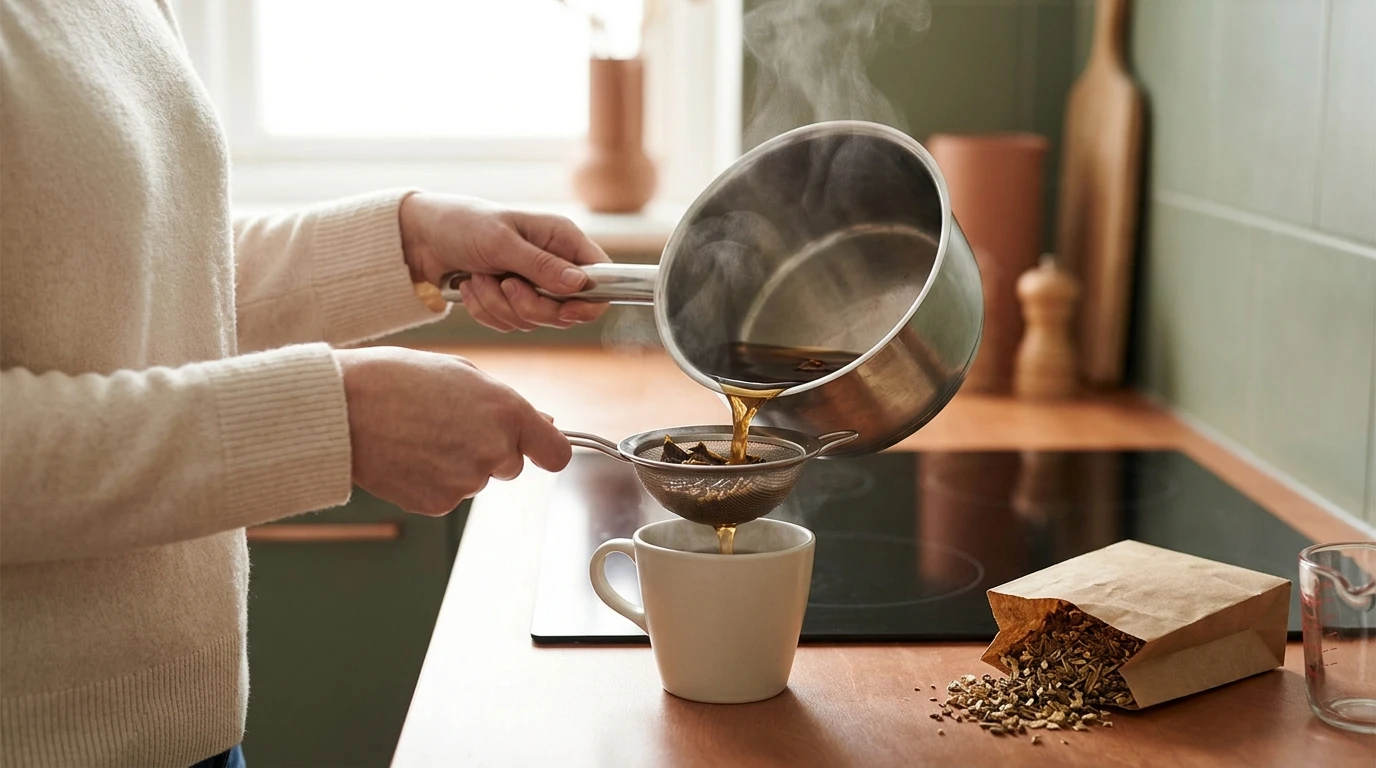
EMA’s monograph gives one of the few measured dosing references available for dandelion root tea. Here’s how our herbalists translate it into a routine you can use today.
- Buy dried, cut root from a reputable supplier. Don’t dig roots from lawns, parks or roadsides that may have been sprayed with weed killer.
- Weigh it. EMA’s single dose is 1–5 g of dried root in 150 ml of water (about 5 fl oz). A small kitchen scale is more reliable than spoon measures, because cut root varies in size. Start at the low end.
- Simmer rather than just steep. Roots are dense, so herbalists usually simmer them gently in a covered pan for several minutes (a decoction), then strain.
- Drink it 2–3 times daily at most. That’s EMA’s frequency. If appetite is the goal, take it about ½ hour before a meal.
- Keep drinking enough fluid overall. EMA says “adequate fluid intake is required during treatment,” which matters because the root is used to increase urine.
- Set a 2-week check-in. EMA advises that if symptoms “persist longer than 2 weeks,” you should consult a doctor or qualified practitioner. Don’t keep self-treating a problem that isn’t resolving.
EMA also states that “the use in children under 12 years of age is not recommended,” so this routine is for adults and older children only after a clinician’s advice.
Morning or night?
Because dandelion root is used to increase urine output, drinking it late in the evening may mean more trips to the bathroom overnight. Most people do better with a morning or early-afternoon cup. If you’re using it for appetite or after-meal fullness, take it about half an hour before a meal, as EMA describes.
Dandelion Root Tea Side Effects and Drug Interactions
NCCIH notes that “the use of dandelion in the amounts commonly found in food is considered likely safe,” but adds that “little is known about whether it’s safe to use dandelion in amounts greater than those found in foods.” The main dandelion root tea side effects reported are:
- Allergic reactions. EMA says, “Allergic reactions may occur. The frequency is not known.” NCCIH notes “there is conflicting evidence about whether dandelion causes an allergic reaction,” but EMA contraindicates the root for anyone with hypersensitivity “to plants of the Asteraceae (Compositae) family,” which includes ragweed.
- Digestive upset. Memorial Sloan Kettering lists “heartburn, stomach inflammation, dyspepsia; mild diarrhea with overdosage.”
Drug interactions are where sources disagree, and that disagreement is itself useful to know. EMA’s monograph lists interactions as “None reported.” U.S. references flag several theoretical concerns:
| Medication | Why it matters | Source |
|---|---|---|
| Prescription diuretics (“water pills”) | Dandelion root is traditionally used to increase urine, so the two may add together; Memorial Sloan Kettering notes that “animal and human studies suggest dandelion may have additive effects due to its diuretic activity.” Clear it with your prescriber first. | EMA monograph (indication); Memorial Sloan Kettering |
| Lithium | MedlinePlus advises lithium users to “tell your doctor if you are taking diuretics (‘water pills’)” and to disclose all herbal products. | MedlinePlus |
| Diabetes medicines | NCCIH notes “theoretical reasons” to suspect an interaction with antidiabetes drugs. | NCCIH |
| Drugs metabolised by CYP1A2 or CYP3A4 enzymes | In animal and lab studies, dandelion inhibited these enzymes, “which may result in altered blood levels of substrate drugs.” | Memorial Sloan Kettering |
Blood thinners and antibiotics are among the drugs patients most often ask us about, and we couldn’t verify reliable human data for either. Rather than guess which of your prescriptions are affected, bring your full medication and supplement list to a pharmacist or clinician before adding dandelion root tea.
Who Should Skip Dandelion Root Tea, and When to Get Help Now
Use this three-tier checklist before you start, and come back to it if anything changes.
Skip it if you have:
- An allergy to ragweed or other plants in the Asteraceae (Compositae) family
- Bile duct obstruction, cholangitis, gallstones or any other biliary disease
- Liver disease
- A condition where your doctor has told you to limit fluids, which EMA lists as a reason not to use it
- Pregnancy or breastfeeding
- A child under 12
Ask a clinician or pharmacist first if you take:
- A prescription diuretic
- Lithium
- Diabetes medicines
- Any daily prescription, especially drugs processed by the CYP1A2 or CYP3A4 enzymes
Seek medical care promptly if you notice:
The National Institute of Diabetes and Digestive and Kidney Diseases (NIDDK) lists these among the symptoms of gallstone complications. Get medical care promptly if you notice any of them:
- “Pain in your abdomen lasting several hours”
- “Fever—even a low-grade fever—or chills”
- “Yellowish color of your skin or whites of your eyes, called jaundice”
- “Tea-colored urine and light-colored stools”
Also stop the tea and see a clinician if you develop fever, painful urination, spasms or blood in your urine, the urinary warning signs in EMA’s monograph. If you’re not sure whether a symptom needs same-day attention, our guide to urgent care vs. primary care can help you decide. For severe pain, a high fever or yellowing skin, go to an emergency room.
Using Dandelion Root Wisely: How Copper Wellness’s Herbalist Builds It Into a Plan
A single herb bought online and drunk daily for months is very different from an herb chosen for you after an evaluation. Here’s how our team approaches it.
- A board-certified herbalist leads herbal care. Dr. Stephanie Madden, our founder, is a Doctor of Acupuncture from AOMA Graduate School of Integrative Medicine and a board-certified herbalist. She has worked in VA, Seton and fertility clinics and specializes in complex, undiagnosed cases and hormonal imbalance. Before recommending any herb, she reviews your full list of medications and supplements.
- Herbs as part of a formula, not a daily tonic. In Dr. Madden’s practice, dandelion, known as pu gong ying in Chinese herbal medicine, is usually one ingredient chosen within an individual formula for a specific pattern, alongside other herbs, rather than something every patient takes on its own every day. That’s how we approach it clinically, not a claim about outcomes.
- Multimodal care in one plan. Dr. Anais Jackson-Gonzalez combines acupuncture, cupping, gua sha and moxibustion and sees patients in English or Spanish. When digestive or fluid complaints have a root cause beyond what an herb can address, she and Dr. Madden can bring in our nurse practitioner for labs and medication review, or our pelvic floor and physical therapists.
- Specialists who actually talk to each other. Our whole team works from a shared care plan, so your herbalist knows what your nurse practitioner prescribed and why.
- Practical details. We’re a single clinic at 1654 W. North Ave., between Bucktown and Wicker Park, and we serve patients from Lincoln Park, West Town and Logan Square as well. You can read more about herbal medicine in Bucktown. We accept Blue Cross Blue Shield and Aetna, plus FSA and HSA, and our billing team verifies coverage before treatment (see our insurance page). New patients can start with a free 15-minute virtual consultation.
Dandelion Root Tea: Frequently Asked Questions
What is dandelion root tea good for?
Its best-supported uses are traditional ones: mild digestive complaints such as fullness, flatulence and slow digestion, temporary loss of appetite, and gently increasing urine flow as an add-on in minor urinary complaints. EMA recognises these on the basis of long-standing use, not clinical trials.
Is dandelion root good for you?
For most healthy adults, dandelion in food amounts is considered likely safe, according to NCCIH. But NCCIH also says very little is known about its effects on human health, so think of it as a gentle traditional herb rather than a health treatment. It isn’t right for everyone; see the checklist above.
Is it safe to drink dandelion root tea every day?
EMA’s monograph describes use 2–3 times daily and advises seeing a clinician if symptoms persist longer than 2 weeks. NCCIH notes that little is known about safety above food amounts. Short-term daily use within that range is reasonable for most adults who don’t fall into a “skip it” group. Long-term daily use is better discussed with a clinician.
Is dandelion tea good for belly fat?
No evidence shows that dandelion tea reduces belly fat or body fat. Any quick change on the scale from extra urination is water weight. If you want to lose fat, a medical evaluation is a better starting point. Our GLP-1 weight loss program begins with an assessment, labs and ongoing supervision by our nurse practitioner, and it isn’t right for everyone.
Should you drink dandelion tea at night or in the morning?
Morning or early afternoon is usually better, because the root is used to increase urine output and an evening cup may wake you at night. For appetite, EMA suggests taking it about half an hour before a meal.
Who should not drink dandelion root tea?
People with a ragweed-family (Asteraceae) allergy, bile duct obstruction, gallstones or other biliary disease, liver disease, a doctor’s instruction to limit fluids, pregnancy or breastfeeding, and children under 12, per EMA. If you take diuretics, lithium, diabetes medicines or other daily prescriptions, ask a clinician first.
What does dandelion root do in the body?
The root contains inulin (including fructo-oligosaccharides), phenolic acids such as chicoric and chlorogenic acid, taraxasterol and sesquiterpene lactones. Traditionally it’s used to support digestion and increase urine, and EMA notes a possible stimulation of bile secretion. Most other effects have only been seen in animal or lab studies.
Does dandelion root tea really detox the liver?
No human study we could verify shows that it does. EMA actually advises against dandelion root for people with liver disease or gallbladder problems, and Memorial Sloan Kettering records a case of acute liver injury after an herbal “liver detox” tea containing dandelion. If you’re worried about your liver, bloodwork is the right first step.
Can I drink dandelion root tea if I take medication?
Possibly, but check first. EMA lists no reported interactions, while U.S. references flag theoretical ones with diuretics, lithium, diabetes medicines and drugs processed by the CYP1A2 and CYP3A4 enzymes. Bring your full medication and supplement list to a clinician or pharmacist.
Is roasted dandelion root tea as good as unroasted?
We couldn’t find a study comparing their composition, so there’s no evidence that one is better. Roasting changes the flavor toward a coffee-like taste. Choose the one you enjoy and follow the same dosing and safety guidance for both.
If digestive discomfort, fluid retention or a liver concern has you reaching for herbal tea, we can help you work out what’s behind it and whether herbs belong in your plan. Schedule your complimentary consultation at Copper Wellness — call (872) 267-1717, email Hello@CopperWells.com, request a free consultation, or book online at copperwellness.janeapp.com. Our clinic at 1654 W. North Ave. in Chicago serves patients from Bucktown, Wicker Park, Lincoln Park, West Town and Logan Square.