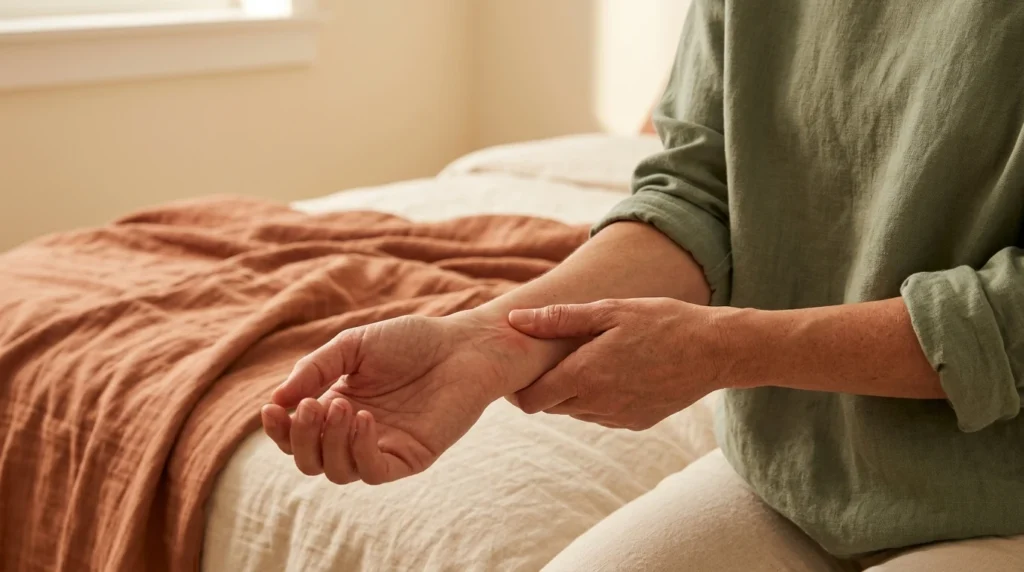

The pressure points for constipation used most often are ST25 and SP15 beside the navel, LI4 in the web of the hand, TE6 on the outer forearm and LI11 at the elbow. Pressing each one gently for 1 to 3 minutes, and finishing with a slow clockwise massage of the abdomen, may ease symptoms over …

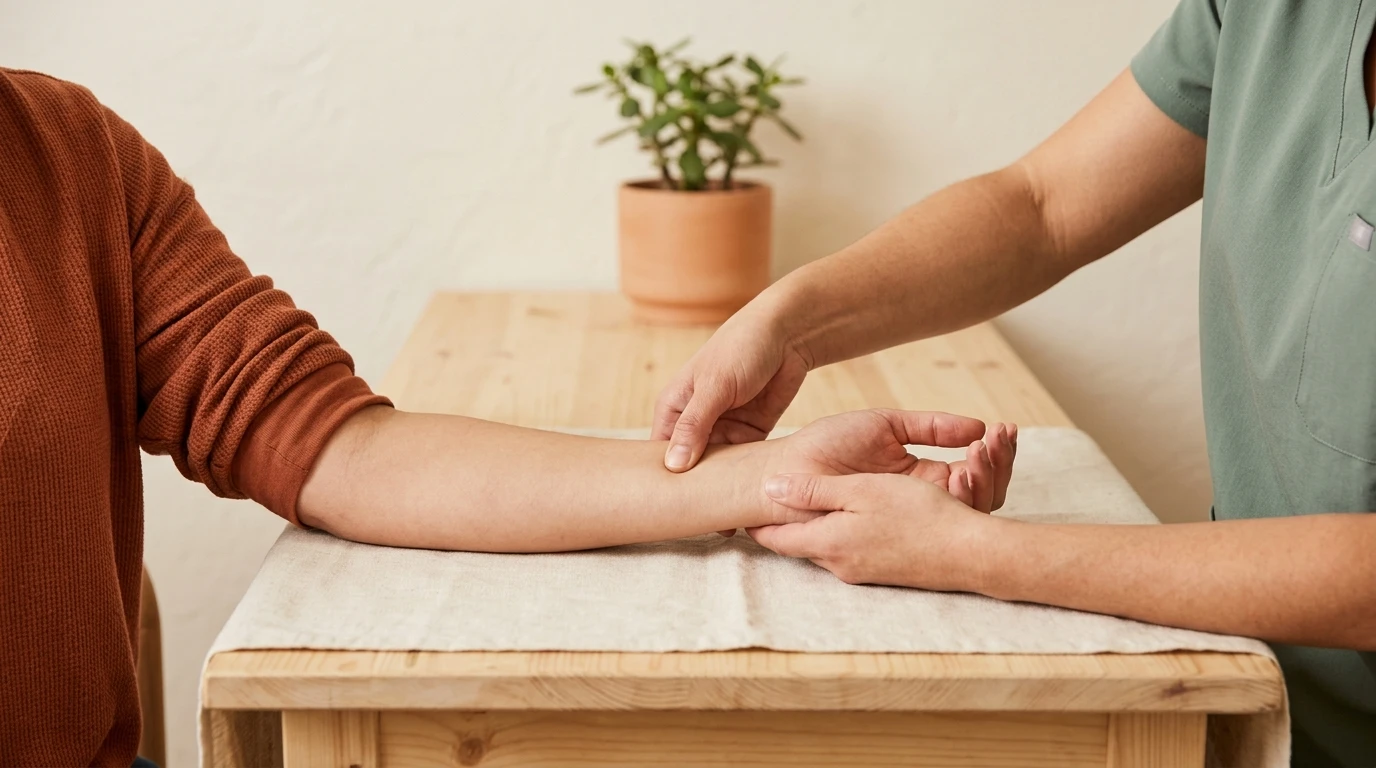
The pressure points for constipation used most often are ST25 and SP15 beside the navel, LI4 in the web of the hand, TE6 on the outer forearm and LI11 at the elbow. Pressing each one gently for 1 to 3 minutes, and finishing with a slow clockwise massage of the abdomen, may ease symptoms over days to weeks. The honest part: the research on acupressure for constipation is small and mixed in quality, no point works on demand, and results vary from person to person. Constipation itself is common. The National Institute of Diabetes and Digestive and Kidney Diseases (NIDDK) defines it as fewer than three bowel movements a week, or stools that are hard, dry, lumpy, or difficult or painful to pass, and estimates that about 16 in 100 adults have symptoms, rising to about 33 in 100 adults aged 60 and older. At Copper Wellness these are the same points our clinicians use in acupuncture sessions, so this guide covers where they are, how to press them, what the trials actually found and when to stop self-care and get checked.
This article is for general education and isn’t a diagnosis or a treatment plan. If you’re unsure whether your symptoms are serious, contact your doctor or an urgent care clinic.
Key Takeaways
- Five points cover most routines. ST25 and SP15 on the abdomen, LI4 on the hand, TE6 on the forearm and LI11 at the elbow. LV3 on the foot and KI6 at the ankle are traditional additions.
- Gentle, circular pressure for 1 to 3 minutes per point is the usual convention, on both sides of the body, once or twice a day. It is a convention, not a proven dose.
- Abdominal massage has the broadest evidence. A 2023 meta-analysis in Heliyon pooled 13 randomized trials with 830 adults and found more frequent bowel movements with massage, though the trials were small and inconsistent.
- One technique was tested at UCLA. In a randomized trial in the Journal of General Internal Medicine, 100 adults taught perineal self-acupressure improved more on quality-of-life and bowel-function scores than those given standard options alone. The trial was not blinded.
- In pregnancy, skip LI4 and abdominal pressure and ask your OB or midwife first.
- Some symptoms are not for self-care. Blood in the stool, constant abdominal pain, vomiting, fever, inability to pass gas or unexplained weight loss need a doctor right away.
Constipation pressure points at a glance
This table is the quick reference. Each constipation pressure point is listed with its code, so you can match it against any acupuncture chart. Durations follow the 1 to 3 minutes that Healthline’s medically reviewed guide gives for each point, and most of the locations follow the University of Minnesota’s Earl E. Bakken Center for Spirituality & Healing.
| Point | Where it is | How to press | What’s known | In pregnancy |
|---|---|---|---|---|
| ST25 (Stomach 25, Tianshu) | About two finger-widths to each side of the navel | Lying down, knees bent. Fingertips, slow circles, 1–3 minutes per side | The most-studied abdominal point. Part of a sham-controlled self-acupressure trial | Skip |
| SP15 (Spleen 15, Daheng) | Level with the navel, at the outer border of the abdominal muscle, about four finger-widths to each side | Same position. Gentle circles, 1–3 minutes per side | In the University of Minnesota sequence. Not among the points tested in the trials below | Skip |
| LI4 (Large Intestine 4, Hegu) | In the web between thumb and index finger, at the highest point of the muscle bulge when the two are pressed together | Opposite thumb, circular pressure, 1–3 minutes per hand | In both the Minnesota and Healthline sequences. Not tested on its own for constipation in the trials below | Skip (traditionally avoided) |
| TE6 (Triple Energizer 6, Zhigou; also written SJ6 or TW6) | Outer forearm, four finger-widths above the wrist crease, in the depression between the two forearm bones | Opposite thumb, circular pressure, 1–3 minutes per arm | Listed by four of the guides we reviewed. Not tested on its own in the trials below | Ask first |
| LI11 (Large Intestine 11, Quchi) | Outer end of the elbow crease with the elbow bent, in the soft depression between the biceps tendon and the bony point on the outside of the elbow | Opposite thumb, 1–3 minutes per arm | Part of the same sham-controlled trial as ST25 | Ask first |
| LV3 (Liver 3, Taichong) | Top of the foot, in the soft area between the big toe and second toe | Thumb or index finger, 1–3 minutes per foot | Traditional use. No constipation self-acupressure trial found | Ask first |
| KI6 (Kidney 6, Zhaohai) | Just below the inner ankle bone | Thumb or index finger, 1–3 minutes per foot | Traditional use. No constipation self-acupressure trial found | Ask first |
| Perineal pressure (not a classical point) | The perineum, the area between the anus and the genitals | External fingertip pressure, as taught to participants by trial staff | Randomized trial at UCLA, 100 adults, not blinded | Ask first |
You may see ST36 below the knee and several other points on longer lists. We left out any point that only a single guide recommends and that has no constipation trial behind it.
How acupressure is thought to help a sluggish bowel
Acupressure uses the same points as acupuncture, with fingers instead of needles. In traditional Chinese medicine, most constipation points sit on the Large Intestine and Stomach channels, and pressing them is said to move stagnation in the bowel. That is a traditional framework, not a description of anatomy.
The biomedical picture is less tidy. The National Center for Complementary and Integrative Health (NCCIH) says that how acupuncture works is not fully understood, and that its effects may come from the nervous system, from other body tissues and from nonspecific (placebo) effects. None of that is specific to constipation, and it is one reason the quality of each study matters so much further down this page.
At our clinic, point selection is the job of clinicians trained to doctoral level. Dr. Stephanie Madden, our founder, holds a Doctor of Acupuncture from AOMA Graduate School of Integrative Medicine and is a board-certified herbalist. What follows is the self-care version of that knowledge: simpler, gentler and safe to try at home for most adults. For a wider look at what needling is used for, see our overview of acupuncture benefits.
The acupressure points for constipation, one by one
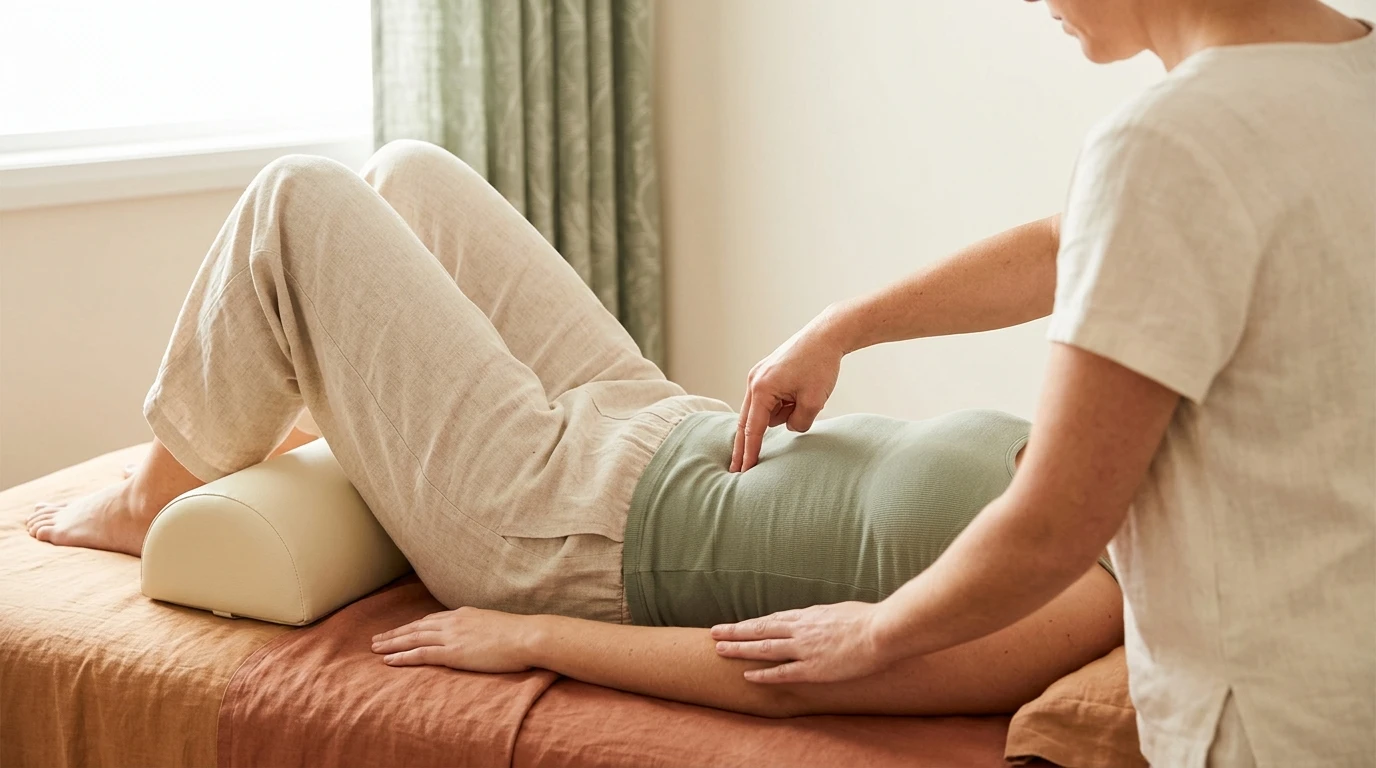
Because acupressure borrows its map from acupuncture, these are also the acupuncture points for constipation you would see on a practitioner’s chart. Dr. Anais Jackson-Gonzalez, who holds a Doctorate in Acupuncture and Chinese Medicine from National University of Health Sciences, works with the same points in clinic alongside cupping, gua sha and moxibustion.
Abdominal points: ST25 and SP15
ST25 sits about two finger-widths to each side of the navel. SP15 is on the same horizontal line, further out, where the long abdominal muscle (the rectus abdominis) ends, roughly four finger-widths from the navel. Lie on your back with your knees bent so the abdominal wall is soft. Use two or three fingertips rather than a thumb, sink in slowly as you breathe out and make small circles. Pressure here should feel like a firm touch, never a jab.
If you try only one pressure point for constipation, ST25 has the most research attached to it. It was one of three points in the sham-controlled self-acupressure trial described below, and a 2020 meta-analysis in Evidence-Based Complementary and Alternative Medicine pooled 10 randomized trials with 1,568 participants that used ST25 as the main point. One caution about that review: it studied needles, not finger pressure, its authors noted that trial quality was not high, and every trial came from China.
Hand and arm points: LI4, TE6 and LI11
These are the convenient ones, because you can use them at a desk. For people searching for pressure points for constipation on the hand, LI4 is the answer: press your thumb and index finger together, find the top of the muscle bulge in the web, then relax the hand and press there with the opposite thumb. TE6 is on the back of the forearm, four finger-widths above the wrist crease, in the groove between the two bones. LI11 is at the outer end of the elbow crease when your arm is bent.
LI4 is the one to leave alone in pregnancy. It is on the list of points that are traditionally avoided, which we cover in the safety section.
Leg and foot points: LV3 and KI6
LV3 lies on top of the foot in the soft hollow between the big toe and second toe. KI6 is just below the inner ankle bone. Both appear in popular guides to pressure points on the feet for constipation, and both are comfortable to press. We could not find a constipation trial of self-acupressure at either point, so treat them as traditional additions, not the core of a routine.
Pressure points for constipation and bloating
Bloating and trapped gas often travel with constipation. There is no separate, tested set of acupressure points for gas and constipation. The abdominal points above and the clockwise massage described below are the ones aimed at that same region, and the trials that included them measured constipation outcomes, not gas specifically. One warning matters here: a swollen abdomen with severe pain, vomiting or an inability to pass gas at all is not ordinary bloating. It needs urgent medical attention.
How to do acupressure for constipation: a step-by-step routine
Many people arrive at this topic hoping for a single poop pressure point, a pressure point to make you poop on the spot. No trial supports that. What has been tested is a short daily routine kept up for one to four weeks. If you want to try pressure points to relieve constipation at home, a reasonable routine looks like this:
- Pick a consistent time. The trial protocol described below had people do abdominal points at least 2 hours after a meal. Hand and arm points can be done any time.
- Get comfortable. Sit for the arm points. Lie on your back with knees bent for the abdominal points. Breathe slowly through your nose and let your belly rise and fall.
- Start at the arms. LI4, then TE6, then LI11. Use the opposite thumb, press until you feel a dull ache or heaviness, and make small circles for 1 to 3 minutes. Repeat on the other side.
- Move to the abdomen. ST25, then SP15, fingertips only, 1 to 3 minutes per side. Ease off if anything feels sharp.
- Finish with clockwise abdominal massage for 5 to 10 minutes (steps in the next section).
- Add the foot points if you like. LV3 and KI6, 1 to 3 minutes each side.
- Repeat once or twice a day and give it one to two weeks. If nothing has changed by then, or symptoms are getting worse, stop and move to the “when to see a doctor” section.
Pressure should be firm but comfortable. Pain, bruising or lightheadedness means you are pressing too hard or too long. And keep the basics going alongside: these pressure points to help you poop are an add-on to fiber, fluids and movement, not a replacement for them.
Abdominal massage for constipation: the clockwise “I-L-U” method
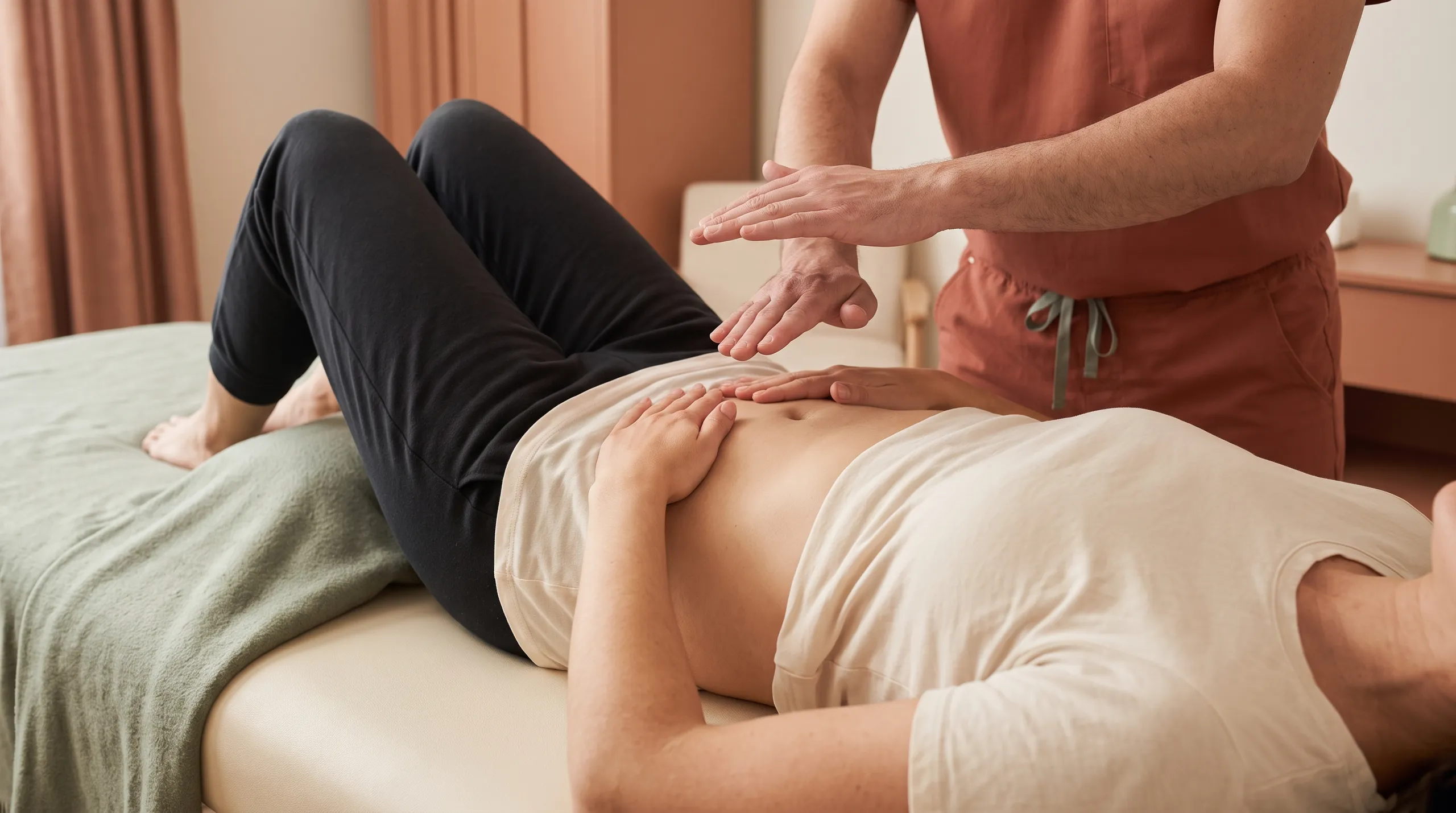
Abdominal massage is the hands-on technique with the largest body of evidence, and it pairs naturally with the abdominal points. It is sometimes called stomach massage for constipation, colonic massage or the “I Love U” massage. The direction matters: strokes follow the path of the colon, which runs up the right side of the abdomen, across under the ribs and down the left side. Moving clockwise (as you look down at your own belly) follows the direction stool travels.
The clearest description of the strokes comes from Nicklaus Children’s Hospital, and the same pattern is used for adults:
- “I” stroke. Start just under the left rib cage and stroke straight down toward the left hip bone. Repeat 10 times.
- “L” stroke. Start just below the right rib cage, move across the upper abdomen to the left rib cage, then down the left side to the left hip. Repeat 10 times.
- “U” stroke. Start at the right hip, move up to the right rib cage, across to the left rib cage and down to the left hip. Repeat 10 times.
- Finish with gentle clockwise circles around the navel for 1 to 2 minutes, keeping your fingers about 2 to 3 inches out from it.
The hospital’s guidance is 5 to 15 minutes, once or twice a day, with pressure that is firm but comfortable and never painful, ideally after a meal or before a planned trip to the toilet. Use a flat hand or the pads of your fingers, and a little lotion if skin drags.
What the evidence says about massage for constipation
The Heliyon meta-analysis pooled 13 randomized trials with 830 adults who had functional constipation. Compared with control groups, abdominal massage increased how often people had a bowel movement (a standardized mean difference of 1.05, 95% CI 0.63 to 1.46), reduced difficulty passing stool and improved stool form and quality of life. Programs lasted from 3 days to 6 weeks, and the massage techniques differed from trial to trial (at least one used the I-L-U pattern). The authors concluded that abdominal massage might be an effective and safe option, but the review did not pool side-effect data, so it can’t put a number on safety. The limits are real: every trial was single-center, most did not describe how allocation was concealed and results varied widely from trial to trial. It is encouraging evidence, not a settled answer.
If you would like a professional to check your pressure and direction, that is a fair question to bring to a massage therapy appointment. Benicia Blue, one of our massage therapists, trained at The Soma Institute in Chicago and works in deep tissue and myofascial release. A constipation massage done at home should stay much gentler than deep tissue work.
Does acupressure for constipation work? What the research shows
Three different things tend to get blurred together online: self-applied acupressure, abdominal massage and needle acupuncture. Each has its own studies, and the strength of those studies differs. Results also vary between individuals in every trial below, so none of these figures predicts what will happen for you.
Perineal self-acupressure: the UCLA trial
Researchers at UCLA randomized 100 adults with functional constipation to standard treatment options alone or standard options plus training in perineal self-acupressure: external fingertip pressure on the perineum, the area between the anus and the genitals. After 4 weeks, quality-of-life scores (PAC-QOL) had improved by 0.76 points in the acupressure group versus 0.17 in the control group, and a bowel-function index improved by 18.1 points versus 4.2. The quality-of-life difference was statistically significant (p<0.01). The main limitation is that participants knew which group they were in, so expectation may account for part of the effect. People searching for perineum massage for constipation are usually looking for this study; the technique it tested was pressure, taught in person, and if you want to try it, ask a pelvic floor therapist to show you.
Self-acupressure on body points
A sham-controlled trial published in Chinese Medicine is the closest thing to a tested home protocol. Seventy-eight hospitalized psychiatric patients with constipation were taught to press CV12 (Zhongwan, a point on the abdomen), ST25 on both sides and LI11 on both arms, then rub the abdomen clockwise with the palm for about 8 minutes. They did this once a day for 10 days, at least 2 hours after a meal. Two weeks later, symptom severity and constipation-related quality of life had improved significantly more than in the group taught a sham routine (P=0.0003 and P=0.0004). The caveats: this was a specific inpatient population, follow-up was only 14 days, and the protocol bundled points with massage, so it can’t tell us which part did the work.
Ear acupressure
Auricular acupressure applies pressure to points on the outer ear. A 2023 meta-analysis in Frontiers in Physiology pooled 34 randomized trials with 2,465 adults and found about 1.22 more complete spontaneous bowel movements per week (95% CI 0.68 to 1.77) and a higher response rate (risk ratio 1.27), with only minor side effects such as skin irritation. The authors rated the certainty of that evidence as low to very low and found signs of publication bias. The ear is also treated with needles in clinic; our auricular acupuncture page explains how that works.
What acupressure can and can’t do
What the evidence supports:
- Modest improvements in symptom scores and quality of life over 2 to 4 weeks in small trials (the UCLA and Chinese Medicine studies).
- More frequent bowel movements with abdominal massage across 13 trials.
- A low-risk addition to fiber, fluids, movement and, where needed, laxatives.
What it doesn’t support:
- A bowel movement on demand. No trial measured or showed that.
- Treating a blockage, bleeding or any other red-flag symptom. Those need a medical work-up.
- Assuming needle research applies to finger pressure, or that results for one condition carry over to another. For irritable bowel syndrome, NCCIH reports that a 2019 review of 41 studies (3,440 participants) found acupuncture no more effective than sham acupuncture for symptoms.
The evidence side by side
| Technique | What was tested | What happened | How solid is it? |
|---|---|---|---|
| Perineal self-acupressure | 1 randomized trial, 100 adults, 4 weeks | Quality-of-life score improved 0.76 vs. 0.17; bowel-function index 18.1 vs. 4.2 | Single trial, not blinded |
| Self-acupressure at CV12, ST25, LI11 plus abdominal rubbing | 1 sham-controlled trial, 78 inpatients, 10 days | Better symptom and quality-of-life scores than sham at 2 weeks | Sham-controlled, but a special population and short follow-up |
| Ear (auricular) acupressure | Meta-analysis, 34 trials, 2,465 adults | About 1.22 more complete spontaneous bowel movements per week | Low to very low certainty; publication bias |
| Abdominal massage | Meta-analysis, 13 trials, 830 adults | More frequent bowel movements, easier passage, better stool form | Small single-center trials, very inconsistent results |
| Electroacupuncture (needles, in clinic) | Sham-controlled trial, 1,075 adults, 15 hospitals, 8 weeks | 31.3% vs. 12.1% reached three or more complete spontaneous bowel movements per week | Large, multicenter, sham-controlled; severe chronic constipation only |
| Laxatives and fiber | 2023 gastroenterology guideline | Strong recommendation for polyethylene glycol; conditional for fiber, senna and magnesium oxide | Guideline-graded; the guideline doesn’t assess acupressure or massage |
| Biofeedback for pelvic floor dyssynergia | Review of randomized trials | Major symptom improvement in 70–80% of patients | Randomized trials; applies to pelvic-floor-related constipation |
Who should skip or modify these techniques
Acupressure and gentle massage are low-risk for most adults, but not for everyone. Healthline’s guide lists soreness, bruising and lightheadedness as possible side effects. This guide is written for adults; constipation in an infant or child belongs with the pediatrician.
During pregnancy
Constipation is common in pregnancy, which makes this the situation where people most want a drug-free option and most need to be careful. A review in Acupuncture in Medicine lists the points most often cited as traditionally avoided in pregnancy, at least before 37 weeks: SP6, LI4, BL60, BL67, GB21 and LU7, plus points on the lower abdomen and the sacral area. The same review found no objective evidence that needling them causes harm across 15 trials with 823 women. So the honest summary is caution by tradition, not proven danger. Separately, WebMD’s medically reviewed guide to massage for constipation lists pregnancy among the situations in which abdominal massage should not be done.
| Technique | In pregnancy | Also skip or ask first if you have | Why |
|---|---|---|---|
| LI4 (hand) | Skip | Broken or inflamed skin at the point | On the list of points traditionally avoided in pregnancy |
| ST25, SP15 (abdomen) | Skip | Recent abdominal surgery, wounds or stitches; inflammatory bowel disease | Direct pressure on the abdomen; lower-abdominal points are traditionally avoided in pregnancy |
| Abdominal (I-L-U) massage | Skip unless your OB or midwife agrees | Inflammatory bowel disease, an unstable spine injury, abdominal wounds or stitches | Listed by WebMD as reasons not to do abdominal massage |
| TE6, LI11, LV3, KI6 | Ask first | Broken or inflamed skin at the point | Not on the most-cited avoid list, but general caution applies |
| Perineal pressure | Ask first | Pain, bleeding or recent surgery in the area | Tested in a single trial of adults with functional constipation; have a clinician show you |
If you are pregnant and constipated, the better route is a conversation with your OB or midwife about fiber, fluids and pregnancy-safe options, plus support that is designed for pregnancy, such as pelvic floor therapy during pregnancy or prenatal massage with a therapist trained for it.
Other situations to check first
Healthline’s guide names lung, kidney or heart disease, a pacemaker and inflamed or injured skin as situations where acupressure may not be appropriate, so talk with your clinician before starting. WebMD adds inflammatory bowel disease, an unstable spine injury and abdominal wounds or stitches for abdominal massage specifically. And if pressing anywhere on the abdomen produces sharp or worsening pain, stop. That is a symptom to report, not to push through.
When constipation needs a doctor — and when it’s urgent
Constipation is usually manageable at home. Sometimes it is a sign of something that pressure points and massage should never be used to delay. NIDDK’s guidance on symptoms and causes says to see a doctor right away if constipation comes with any of these:
- Bleeding from the rectum
- Blood in the stool
- Constant pain in the abdomen
- Inability to pass gas
- Vomiting
- Fever
- Lower back pain
- Losing weight without trying
NIDDK also advises seeing a doctor if symptoms don’t go away with self-care, or if you have a family history of colon or rectal cancer. WebMD lists waves of severe cramping, vomiting, severe pain and being unable to pass gas as emergency signs.
| Try self-care first | Book an evaluation | Seek urgent or emergency care |
|---|---|---|
|
|
|
Not sure which setting fits? Our guide to urgent care vs. primary care explains who handles what. When a work-up is the right next step, a primary care clinician or gastroenterologist decides which tests are needed; our clinic offers labs and imaging as part of integrative primary care.
What else helps: fiber, fluids, movement and laxatives
Anyone looking into how to relieve constipation should start where the guidelines start. NIDDK’s treatment guidance lists the first-line steps: more fiber, plenty of liquids, regular physical activity and bowel training, which means trying to have a bowel movement at the same time each day. Acupressure fits alongside these, not ahead of them.
Medicines are a common and overlooked cause. NIDDK names iron supplements, some antacids, anticholinergics, calcium channel blockers, diuretics and narcotic pain medicines among the drugs that can cause constipation. If yours started with a new prescription, talk with the prescriber. Don’t stop a medicine on your own.
Over-the-counter laxatives come in several classes: fiber supplements, osmotic agents, stool softeners, lubricants and stimulants. The 2023 joint guideline from the American Gastroenterological Association and the American College of Gastroenterology, published in Gastroenterology, gives a strong recommendation to polyethylene glycol and conditional recommendations to fiber, senna and magnesium oxide for chronic constipation in adults. It is a guideline about medicines and does not assess acupressure or massage. Ask your pharmacist or clinician which option suits you and for how long. Prescription medicines also exist for constipation that doesn’t respond; those are managed by a primary care clinician or a gastroenterologist.
When pressure points aren’t enough: what a clinician can add
When the problem is the pelvic floor, not the colon
Some constipation has little to do with how fast the colon moves. In dyssynergic defecation, the pelvic floor muscles tighten or fail to relax when you try to pass stool, so you strain against a closed door. A review in Alimentary Pharmacology & Therapeutics reports that this pattern is found in as many as 40% of patients investigated for chronic constipation, and that randomized trials show major symptom improvement in 70 to 80% of patients who have biofeedback therapy for chronic constipation that has not responded to standard medical treatment, with 55 to 82% maintaining the improvement long term. NIDDK likewise lists biofeedback to retrain the muscles as a treatment for this type. No amount of pressing on ST25 changes a coordination problem, and this is not only a women’s issue: it is one of the reasons people seek pelvic floor therapy for men too.
At Copper Wellness this work is led by Dr. Lisa Lagomarcino, who earned her doctorate at Midwestern University and holds specialized pelvic-health certification from the Herman & Wallace Pelvic Rehabilitation Institute. A first visit for pelvic floor therapy for constipation generally goes like this:
- A detailed conversation about your symptoms, daily habits, medical history and how constipation affects your life.
- A gentle external exam of how the muscles of the pelvic region, abdomen and hips work together.
- An optional internal exam, offered only if appropriate and only with your consent, to see how well you coordinate the muscles used for a bowel movement.
- A plan for follow-up sessions: breathing, posture and simple exercises that retrain the pelvic floor to relax at the right moment.
- Clear at-home guidance so you know what to practice between visits.
Wear comfortable clothing and bring notes on your symptoms and medical history. Constipation rarely shows up alone when the pelvic floor is involved, so it is worth reading through the other pelvic floor dysfunction symptoms. If yours began after childbirth, postpartum pelvic floor therapy looks at it along with the rest of recovery.
Acupuncture and electroacupuncture
The strongest single trial in this whole field used needles. In a study published in the Annals of Internal Medicine, 1,075 adults with chronic severe functional constipation at 15 hospitals in China received 28 sessions of electroacupuncture or sham electroacupuncture over 8 weeks. Complete spontaneous bowel movements rose by 1.76 per week with real treatment versus 0.87 with sham, and 31.3% versus 12.1% reached three or more per week during treatment (37.7% versus 14.1% during follow-up to week 20). Adverse events were infrequent and mild or transient. That is evidence for a course of electroacupuncture in severe chronic constipation. It is not evidence that pressing the same points with a finger does the same thing.
If your constipation comes with recurrent abdominal pain, irritable bowel syndrome may be part of the picture. Our page on acupuncture for IBS covers that pattern, and the NCCIH finding mentioned above is a fair reminder to keep expectations measured.
Chinese herbal medicine
Herbal formulas are a standard part of how Chinese medicine approaches constipation. The best-studied is MaZiRenWan. In a double-blind trial in Clinical Gastroenterology and Hepatology with 291 patients, 68% had a complete response at week 8 on the formula, compared with 57.7% on senna and 33.0% on placebo; at week 16 the figures were 47.4%, 20.6% and 17.5%. The difference from placebo was statistically significant; the week-8 difference from senna was not, and the authors concluded the formula did not appear to be more effective than senna. Herbs are active substances that can interact with medicines, so they should be prescribed by a board-certified herbalist who knows your full medication list, never self-selected online. That is how herbal medicine is practiced at our clinic.
How Copper Wellness treats constipation as a whole-body problem, not one stubborn symptom
Constipation that keeps coming back usually has more than one driver: slow transit, a pelvic floor that won’t relax, a medicine, stress, too little fiber or fluid. Sorting out which ones apply to you is where a single-modality visit often falls short, and where an integrative clinic has a real structural advantage.
- One shared care plan. Our acupuncturists, pelvic floor therapist, massage therapists and nurse practitioner work under one roof at 1654 W. North Ave. in Chicago’s Bucktown/Wicker Park area and talk to each other about your case. You can see the full range on our services page.
- Root cause first. The first question is why you are constipated, not which point to press.
- Doctoral-level clinicians. Doctorates in acupuncture and Chinese medicine, a board-certified herbalist, a Herman & Wallace-certified pelvic floor therapist and a board-certified Family Nurse Practitioner. Meet the team.
- Care in English or Spanish with Dr. Anais Jackson-Gonzalez.
- Insurance handled up front. We accept Blue Cross Blue Shield and Aetna, plus FSA and HSA, and our billing team verifies coverage before treatment. Details are on the insurance page.
- A no-cost way to start. New patients can book a complimentary virtual consultation to talk through symptoms and decide which clinician to see first.
FAQ
What pressure points cause a bowel movement?
No point reliably causes one. The pressure points for bowel movement support that have actually been studied are ST25 beside the navel, LI11 at the elbow and CV12 on the abdomen, used together with clockwise abdominal rubbing, and perineal pressure in the UCLA trial. In those studies symptoms improved over 2 to 4 weeks of daily practice.
Is there a pressure point to make you poop right away?
No. Videos promise it, but no trial has tested or shown an on-demand effect. The studies measured change over days to weeks, and results varied from person to person. If you haven’t passed stool or gas and have severe pain or vomiting, that is a reason to seek urgent care, not to press harder.
What is the hand trick for constipation?
It usually means pressing LI4, the point in the web between the thumb and index finger, for 1 to 3 minutes on each hand. It is a traditional point and easy to reach, but hand massage for constipation has not been tested on its own in the trials we reviewed. Skip LI4 if you are pregnant.
Where do you rub your foot for constipation?
The two foot pressure points for constipation in traditional guides are LV3, between the big toe and second toe on top of the foot, and KI6, just below the inner ankle bone. Foot reflexology is a different practice; a meta-analysis of 7 trials in Complementary Therapies in Clinical Practice found a higher rate of treatment success with it (risk ratio 1.27), though one of those trials found no significant effect on stool frequency or consistency, and the authors called the evidence insufficient because the trials were few and small.
How long should you press, and how often?
One to 3 minutes per point with gentle circular pressure, on both sides, once or twice a day is the common convention. The sham-controlled trial used one session a day for 10 days. If nothing has changed after one to two weeks, it is time to look at other causes.
Is acupressure for constipation safe during pregnancy?
Be cautious. LI4 and points on the lower abdomen are traditionally avoided in pregnancy, and abdominal massage is on WebMD’s do-not-do list for pregnancy, even though a review found no objective evidence of harm from needling the avoided points. Ask your OB or midwife before trying any of it.
What do practitioners of Chinese medicine do for constipation?
Typically a combination: acupuncture or electroacupuncture at points such as ST25, an individualized herbal formula and advice on diet and abdominal massage. The large electroacupuncture trial and the MaZiRenWan trial described above are the best evidence for the first two. Both are done under a licensed practitioner, not at home.
Does abdominal massage really help constipation?
The pooled evidence says it may. Thirteen randomized trials with 830 adults found more frequent bowel movements and easier passage with massage. The trials were small and inconsistent, and the review did not pool side-effect data, so treat it as a reasonable, low-risk thing to try for a few weeks.
When should I stop home remedies and see someone?
Right away if you have bleeding, blood in the stool, constant abdominal pain, vomiting, fever, inability to pass gas or unexplained weight loss. Otherwise, book an evaluation if symptoms haven’t improved with self-care or you keep straining without feeling empty, which can point to a pelvic floor coordination problem that pelvic floor therapy is designed to address.
If constipation keeps returning despite your best efforts at home, we’re glad to help you work out why. Schedule your complimentary consultation at Copper Wellness — call (872) 267-1717, email Hello@CopperWells.com, or book online at copperwellness.janeapp.com. Our clinic at 1654 W. North Ave. in Chicago serves patients from Bucktown, Wicker Park, Lincoln Park, West Town and Logan Square.