Chinese herbs for erectile dysfunction have far less evidence behind them than most product pages suggest. Asian ginseng, the most-studied herb, showed only a trivial improvement over placebo in a 2022 Cochrane review, and the reviewers rated that evidence low certainty. A review of 21 trials of Chinese herbal formulas concluded that, because of the …

Chinese herbs for erectile dysfunction have far less evidence behind them than most product pages suggest. Asian ginseng, the most-studied herb, showed only a trivial improvement over placebo in a 2022 Cochrane review, and the reviewers rated that evidence low certainty. A review of 21 trials of Chinese herbal formulas concluded that, because of the trials’ risk of bias, the formulas “are not recommended for ED.” For most other popular herbs, such as horny goat weed and cistanche, the research is mainly animal studies. No herb has been shown to work like a prescription ED drug, and results vary from person to person. ED is also often a sign of something else, such as blood-vessel disease, diabetes or low testosterone. So a medical evaluation should come first, and any herbs should be prescribed and reviewed by a qualified practitioner. At Copper Wellness, herbal medicine is one part of an evaluation-first plan, not a substitute for it.
Key Takeaways
- Ginseng has the most data, but the effect is small. A Cochrane review of nine placebo-controlled ginseng trials found a “trivial effect” on erectile function (mean difference 3.52 points, pooled from the three trials that measured it), with low certainty of evidence.
- Herbal research for ED is mostly small, weak trials. A 2018 review of 24 randomized trials with 2,080 men called ginseng “encouraging.” Pine bark and maca showed “very preliminary” results, and saffron and Tribulus were mixed.
- Chinese herbal formulas are not recommended on current evidence. A review of 21 randomized trials with 2,253 patients found that bias risks “were not low,” and the authors did not recommend the formulas for ED.
- Most other herb data comes from animals. Lab findings for horny goat weed (icariin), Tribulus and cistanche come mainly from rats, not men.
- “Natural” enhancement pills carry a real risk. The FDA warns that sexual-enhancement products are likely to contain dangerous hidden ingredients, and Chinese herbal products have been found contaminated with heavy metals and undeclared drugs.
- ED is a reason to get checked. According to the NIDDK, it can be linked to heart and blood-vessel disease, diabetes, low testosterone, thyroid problems, medications and mental health.
Chinese Herbs for ED at a Glance: Evidence Table
Most pages list these herbs as if they were all equally proven. This table grades each one by the best human evidence we could find in published systematic reviews. A higher evidence level does not mean an herb is safe for you, and results vary between people.
| Herb or formula (pinyin) | Studied in men with ED? | What the best evidence found | Evidence level |
|---|---|---|---|
| Asian ginseng (Ren Shen, Panax ginseng) | Yes: nine placebo-controlled trials in a Cochrane review | Trivial effect on erectile-function scores (mean difference 3.52); men were more likely to report being able to have intercourse (RR 2.55) | Systematic review of RCTs, low certainty |
| Chinese herbal formulas (many different formulas; TCM examples include Yougui pill, Xiaoyao pill and Fufangxuanju capsule) | Yes: 21 randomized trials, 2,253 patients | Risk of bias “not low”; reviewers concluded formulas “are not recommended for ED” | Systematic review of RCTs, risk of bias not low |
| Tribulus (Bai Ji Li, Tribulus terrestris) | Yes: small randomized trials | Mixed results in human trials; positive results in animal experiments | Small RCTs, inconsistent |
| Horny goat weed (Yin Yang Huo, Epimedium; active compound icariin) | No human trials in the reviews cited here | Icariin inhibited PDE5 activity in laboratory and animal research | Animal/lab only |
| Cistanche (Rou Cong Rong) | No human trials in the reviews cited here | Shortened erection latency and prolonged erection duration in castrated rats | Animal only |
| Cnidium (She Chuang Zi), Morinda (Ba Ji Tian), goji/Lycium (Gou Qi Zi) | No human trials in the reviews cited here | Discussed in the TCM literature; supporting data mostly from animal studies | Animal/lab only |
| For comparison (non-Chinese herbs): pine bark, maca, saffron | Yes: small randomized trials | Pine bark and maca “very preliminary positive”; saffron mixed | Small RCTs, preliminary |
Sources for this table are cited in the sections below.
How Traditional Chinese Medicine Explains Erectile Dysfunction
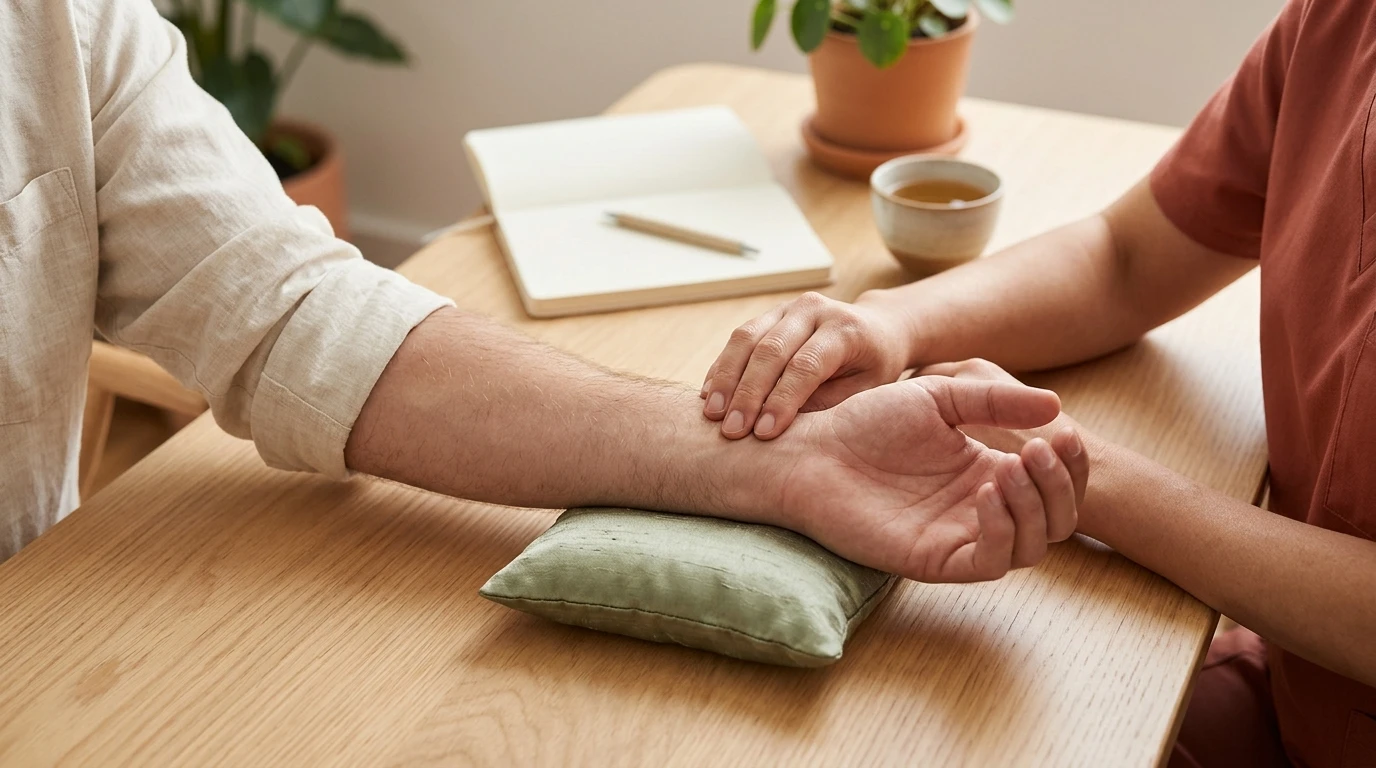
To see why Chinese herbs are used for ED at all, it helps to understand how traditional Chinese medicine (TCM) describes the problem. A 2017 review in Translational Andrology and Urology sums up the classical view: “The kidney stores the essence, while liver stores blood.” In TCM, an erection depends on both. The kidney system supplies the underlying vitality, and the liver system governs the smooth flow of blood and Qi (the body’s functional energy) through the channels. Our article on the meridians of the body explains how these organ systems connect.
In traditional Chinese medicine, erectile dysfunction is not one diagnosis. The same review says ED “commonly involves the kidney or liver patterns of disharmony.” It names three common patterns:
- Kidney yang vacuity (deficiency). In TCM terms, this means a shortage of the warming, activating side of kidney function.
- Kidney yin vacuity. This means a shortage of the cooling, nourishing side.
- Binding depression of liver Qi. This is a constrained, “stuck” flow, a pattern TCM often links with stress and emotional strain.
Practitioners also describe other patterns. The practical point is this: TCM prescribes for the pattern, not for the symptom. Two men with ED can walk out of a TCM consultation with completely different formulas. That is one reason a single “best herb for ED” doesn’t exist in TCM practice, and why buying a product off a shelf skips the step practitioners consider most important.
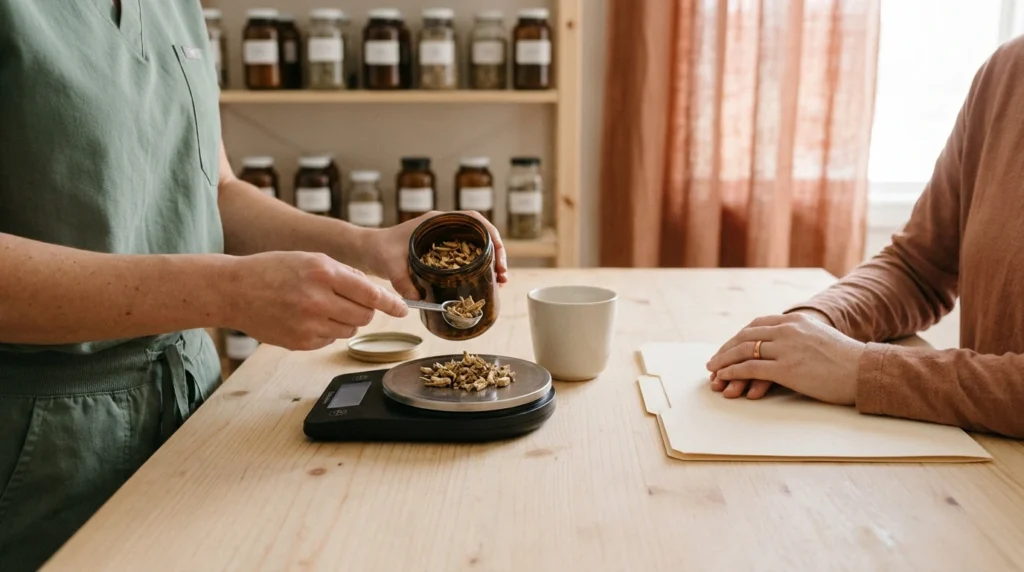
At Copper Wellness, that assessment is done by clinicians trained specifically in Chinese medicine. Dr. Stephanie Madden holds a Doctor of Acupuncture degree from the AOMA Graduate School of Integrative Medicine and is a board-certified herbalist. Her clinical background includes a VA clinic and fertility clinics, and she focuses on complex and hormonal cases. Dr. Anais Jackson-Gonzalez holds a Doctorate in Acupuncture and Chinese Medicine from the National University of Health Sciences.
Formulas, Not Single Herbs
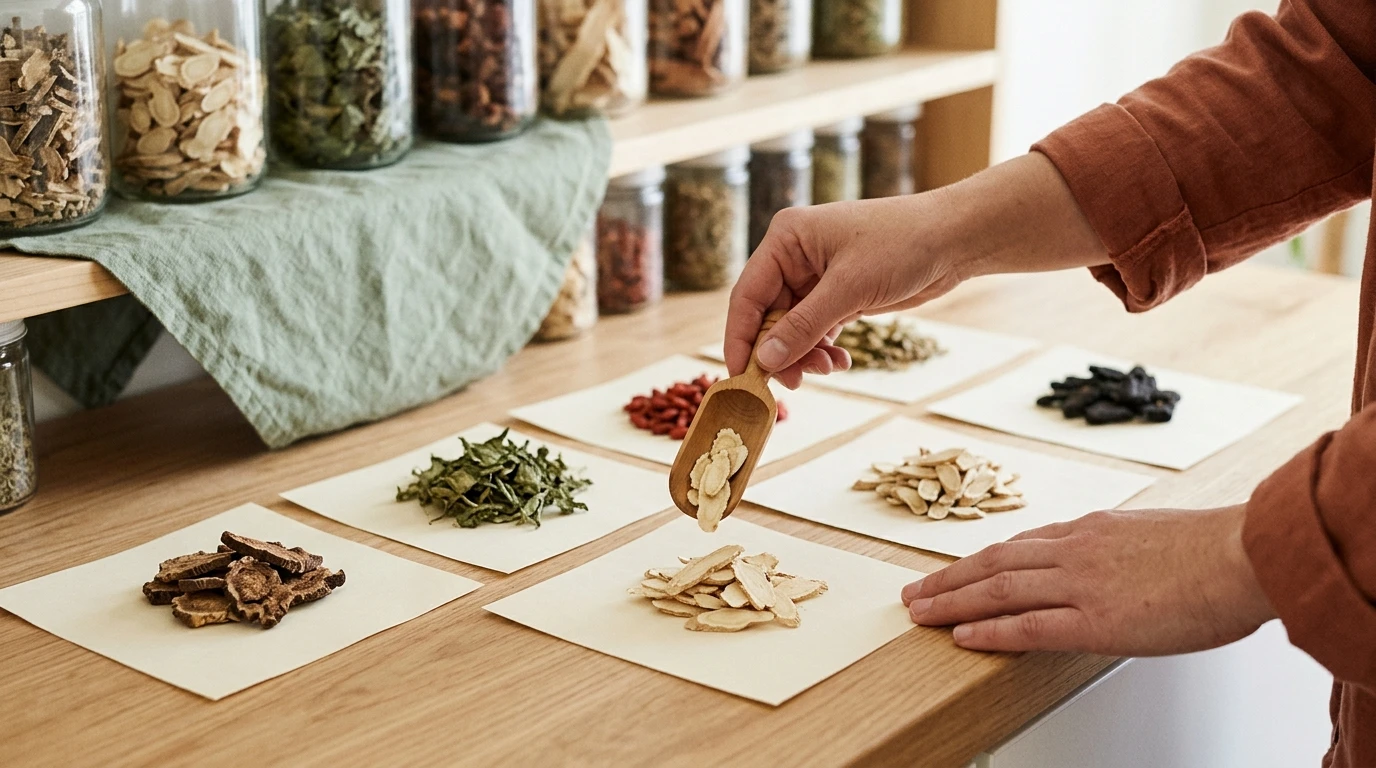
In real TCM practice, herbs are rarely given alone. They are combined into formulas, often adjusted for each patient. The 2017 review lists examples used for ED, including the “Yougui pill, Xiaoyao pill, Fufangxuanju capsule and so on.” Because each formula is matched to a pattern rather than to the symptom, men with the same complaint may be given different formulas. This is also what makes formulas hard to study. A 2014 review noted that “the compositions of CHF [Chinese herbal formulas] used were greatly complex,” so trials of different formulas are difficult to compare or combine.
Does Chinese Medicine Work for Erectile Dysfunction? What the Research Actually Shows
This is where the honest answer differs from most of what ranks online. Researchers have run dozens of trials of Chinese herbal medicine for ED, but quantity hasn’t produced high-quality evidence. The authors of the 2017 review are direct about it: “Most of the herbal remedies are used empirically and thereby are not convincing.” In other words, they are used because of tradition and clinical experience, not because rigorous trials have proven them. Here is what the systematic reviews found.
Chinese Herbal Formulas: 21 Trials, Still Not Recommended
The largest review of formulas, published in Andrologia by Xiong and colleagues in 2014, included “twenty-one randomised controlled clinical trials (involving 2253 patients).” That sounds like a lot of data. But the reviewers found that “the bias risks were not low,” meaning flaws in how the trials were designed or reported could have inflated the results. Their conclusion: “because of the generally not low risks of bias, CHF are not recommended for ED.” Eight of the trials reported mild side effects, mostly digestive.
That conclusion doesn’t prove formulas are useless. It means the trials so far can’t tell us whether they work. The 2017 review reaches the same place: “Well-designed RCTs need to be conducted.”
Ginseng: The Most-Studied Herb
Asian ginseng (Panax ginseng, Ren Shen in pinyin) has the strongest research base of any Chinese herb for erectile dysfunction. A Cochrane systematic review by Lee and colleagues, published in the World Journal of Men’s Health in 2022, included nine studies, all comparing ginseng with placebo. Its findings:
- Ginseng “appears to have a trivial effect on erectile dysfunction when compared to placebo.” On erectile-function scores, pooled from three of the trials, the mean difference was 3.52 points.
- Ginseng “may improve men’s self-reported ability to have intercourse” (risk ratio 2.55).
- Ginseng “may have little to no effect on adverse events compared to placebo.”
- The certainty of evidence was rated low.
A broader 2018 review of herbal treatments for ED in the journal Drugs, by Borrelli and colleagues, looked at 24 randomized trials with 2,080 men. It concluded: “Encouraging evidence suggests that ginseng may be an effective herbal treatment for ED.” It also added that “further, larger, and high-quality studies are required before firm conclusions can be drawn.” The National Center for Complementary and Integrative Health (NCCIH) takes a similarly cautious view: “Some research shows that taking oral Asian ginseng seems to improve sexual function in people with erectile dysfunction.”
Put together, ginseng is the herb with a real, if modest, signal. It is also the herb where the effect, measured carefully, turned out smaller than the marketing implies.
How to Read These Studies
These reviews use terms that sound technical but matter a lot for your decision:
- Erectile-function scores (IIEF). ED trials commonly measure results with the International Index of Erectile Function, a standardized questionnaire men fill in about erections, satisfaction and intercourse. A “mean difference of 3.52” means men taking ginseng scored, on average, 3.52 points higher than men on placebo. The Cochrane reviewers judged that difference “trivial,” meaning too small to count as a meaningful improvement.
- Self-reported ability vs. measured function. A risk ratio of 2.55 means men on ginseng were about two and a half times as likely as men on placebo to report being able to have intercourse. That sounds large next to a trivial score change. Both results were rated low certainty (the score came from three trials, the self-report from six), so neither should be read as proof.
- “Low certainty of evidence.” This means the true effect could be substantially different from what the studies found, often because the trials were small or had design weaknesses.
- Jadad score of 3 out of 5. The Jadad scale rates a trial’s methods: randomization, blinding and how dropouts were handled. In the 2018 review, “the median methodological quality Jadad score was three out of a maximum of five.” At least half the trials scored three or lower.
- “Risk of bias not low.” In the formula review, this was the main reason 21 trials weren’t enough to recommend treatment. Many trials that look positive but are poorly controlled can still add up to an uncertain answer.
Herb by Herb: What Each Chinese Herb for Erectile Dysfunction Has (and Hasn’t) Shown
Beyond ginseng, the evidence for each individual Chinese herb for erectile dysfunction thins out quickly. The 2017 review discusses a number of herbs and their proposed mechanisms, and then adds a key qualifier: “However, most of these studies were performed on animals.”
Horny Goat Weed (Epimedium, Yin Yang Huo)
Horny goat weed is often called a “natural Viagra.” That nickname comes from lab research on its active compound, icariin. The 2017 review reports that “Icariin could inhibit PDE5 activity and preserve the expression of NOS.” PDE5 is the same enzyme that prescription ED drugs block, which is where the comparison comes from. But this was shown in laboratory and animal research. We found no human trial of horny goat weed in the reviews cited here. An effect on an enzyme in a rat is a long way from a proven effect in a man. Horny goat weed is not equivalent to a prescription drug.
Tribulus (Bai Ji Li)
According to the 2017 review, “many animal experiments have verified that Tribulus terrestris could improve erectile function.” In people, the picture is less clear. The 2018 review in Drugs found that saffron and T. terrestris treatment “produced mixed results” in randomized trials. Some trials were positive and some were not, which is what you’d expect from a small or inconsistent effect.
Cistanche, Cnidium, Morinda and Goji Berry
These herbs appear in TCM formulas and in many supplement blends sold for men’s health. Cistanche (Rou Cong Rong) has the most specific data. The 2017 review reports that “Cistanche extract shortened the erectile latency and prolonged the erectile duration in castrated rats.” Cnidium (She Chuang Zi), Morinda (Ba Ji Tian) and goji berry (Lycium, Gou Qi Zi) are also discussed in the TCM literature on ED, mostly based on animal and tissue research. None of the four has human trial evidence in the reviews we examined. They may have a place in a formula prescribed for a specific TCM pattern. But the research does not support taking any of them on their own as an ED treatment.
Is There a “Best” Chinese Herb for ED?
People searching for the best Chinese herb for ED usually want a single answer. The research gives a qualified one. If “best” means “most human evidence,” that’s Asian ginseng. But the most careful review found its effect on erectile function trivial and the evidence low certainty. Every other Chinese herb on this list rests mostly on animal studies.
For context, the 2018 Drugs review also looked at herbs outside Chinese medicine: “P. pinaster [pine bark] and L. meyenii [maca] showed very preliminary positive results.” Saffron and Tribulus were mixed. None of these outperforms ginseng’s evidence, and none is a reason to skip a medical evaluation.
So what Chinese herb is good for erectile dysfunction? In TCM practice, the answer depends on the pattern a practitioner identifies, as described above. That’s why a qualified herbalist prescribes a formula after an assessment, rather than recommending one herb for every man. If someone offers you a ranked list of “the strongest” ED herbs, the evidence doesn’t back that ranking.
Before Any Herb: Find Out What’s Driving Your ED

Erectile dysfunction is a symptom, and the cause matters more than the remedy you pick. According to the National Institute of Diabetes and Digestive and Kidney Diseases (NIDDK), common causes include:
- “Heart and blood vessel diseases, such as atherosclerosis, high blood pressure, and stroke.”
- Diabetes.
- “Hormone issues, such as low testosterone and thyroid imbalance.”
- Medicines: “ED can be a side effect of many common prescription and over-the-counter medicines.”
- Mental health: “Some mental health or emotional issues can either cause ED or make it worse.”
- Lifestyle: “Certain lifestyle behaviors may contribute to ED.”
Some of these causes are serious on their own. A man who treats ED with an herbal supplement without getting checked may miss early signs of blood-vessel disease or diabetes. And if a medication is the cause, the fix may be a change your prescriber can make, with no herb involved.
Hormones and Labs
Low testosterone is one possible cause, and it can only be confirmed with blood work. At Copper Wellness, hormone evaluation is led by Elise Sterritt, FNP-BC, a board-certified Family Nurse Practitioner with more than 15 years in healthcare. As described on our testosterone replacement therapy page, that evaluation includes a full hormone panel: total and free testosterone, estrogen, SHBG and thyroid. Our labs and imaging services support that workup. Testosterone therapy, like all hormone therapy, is only started after a medical evaluation confirms it’s appropriate, and it requires ongoing supervision. It is never something to start on your own, and no herb is a substitute for diagnosing a hormone problem.
Pelvic Floor, Stress and Sleep
Not every cause shows up on a lab report. Some men’s ED is linked to how the pelvic floor muscles work. Our page on pelvic floor therapy for men explains how this is assessed. At Copper Wellness, that assessment is done by Dr. Lisa Lagomarcino, whose pelvic-health training includes certification through the Herman & Wallace Pelvic Rehabilitation Institute. Because the NIDDK lists mental and emotional issues among the causes, stress, low mood and poor sleep belong in the conversation too. Where they’re part of the picture, our acupuncturists can support care for anxiety, depression and insomnia, alongside your medical care.
Where Herbs Fit Next to Conventional ED Treatment
The 2017 review that describes the TCM approach also states the conventional baseline plainly: “Oral phosphodiesterase type 5 inhibitor (PDE5-Is) is the first line therapy for ED. However, its effective rate is only 60–70%.” That gap is one reason some men look for complementary options. It is not a reason to skip proven treatment.
The American Urological Association’s 2018 guideline on erectile dysfunction puts shared decision-making at the center of care. All patients “should be informed of all treatment modalities that are not contraindicated,” and the clinician “should ensure that the man and his partner have a full understanding of the benefits and risk/burdens.” Applied to herbs, that means an honest conversation about how limited the evidence is, how they could interact with your other medicines, and what you’re hoping they’ll do.
In practice, at Copper Wellness:
- Prescription ED medicines are prescribed and managed by a medical clinician, such as your primary care provider or urologist. Our article on nurse practitioners vs. doctors for primary care explains who can provide which kind of care.
- Chinese herbal medicine for ED is discussed as a possible complement, chosen for a TCM pattern after a medical evaluation and checked against your current medications.
- Herbs are never a reason to stop or change a prescribed medicine without talking to the clinician who prescribed it.
What About Acupuncture?
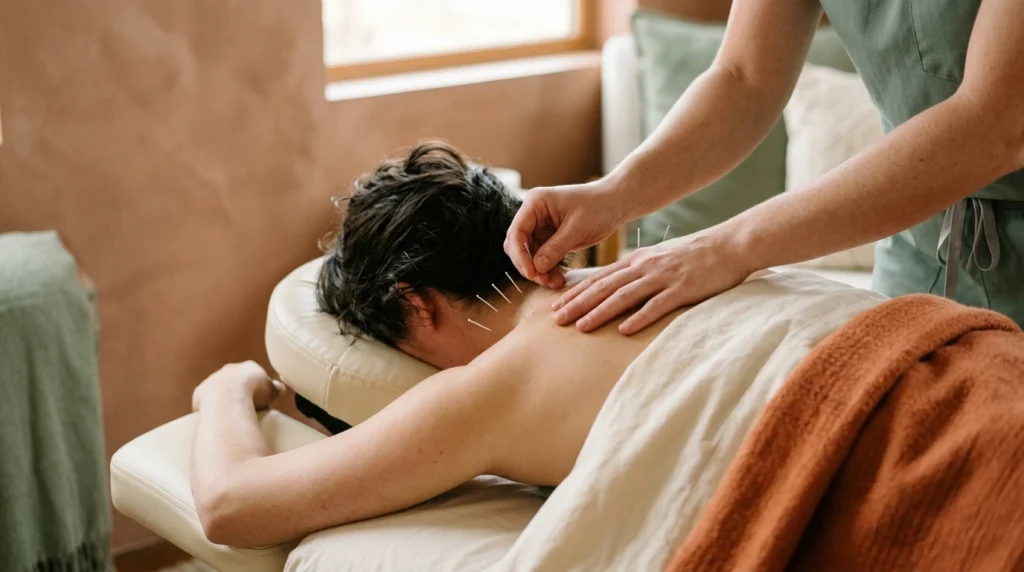
Acupuncture is often paired with herbs in TCM practice, and men commonly ask about it for ED. The research is thin here as well. According to the 2017 review, “the available evidence at present is insufficient to prove acupuncture to be an effective intervention for ED treatment.” Where we use acupuncture or electroacupuncture for men with ED, the goal is supporting related factors like stress and sleep within a coordinated plan. We don’t present it as a proven ED treatment, and results vary.
Safety: Side Effects, Interactions and Product Quality
“Natural” does not mean risk-free. Herbs are biologically active, and that’s why they can have side effects and interact with medicines. Here’s what the sources report.
- Ginseng. According to NCCIH, “Insomnia (trouble sleeping) is the herb’s most common side effect.” NCCIH also notes that “Asian ginseng might lower blood sugar levels” and “might interact with certain medications.” The Cochrane review found that ginseng “may have little to no effect on adverse events compared to placebo,” but that doesn’t rule out interactions in men who take other medicines.
- Chinese herbal formulas. In the 2014 formula review, eight trials reported mild adverse reactions, “mostly involving gastrointestinal symptoms.”
- Herbal treatments in general. In the 2018 review, adverse events were recorded in 19 of 24 trials, with no significant differences between placebo and active herbs in the placebo-controlled trials. Trials like these aren’t designed to catch rare or long-term problems, however.
Who Should Be Extra Careful
In our clinic, we review the full medication list before suggesting any herb. We take extra care with men who take:
- Diabetes medicines, because ginseng may lower blood sugar further.
- Blood thinners and other heart or blood pressure medicines.
- Prescription ED drugs, or any other medicine for a chronic condition.
If any of these apply, check with your prescribing clinician before adding an herbal product.
Contamination and the “Herbal Viagra” Problem
The biggest risk with herbs for ED often isn’t the herb. It’s what else is in the bottle. NCCIH’s guide to traditional Chinese medicine warns that “some Chinese herbal products have been contaminated with toxic compounds, heavy metals, pesticides, and microorganisms.” Some have also contained undeclared drugs “such as the blood-thinner warfarin and the nonsteroidal anti-inflammatory agent diclofenac.” NCCIH advises: “If you have a health condition, talk with your health care provider before using TCM herbal products.”
Products sold for sexual performance are a particular problem. The U.S. Food and Drug Administration keeps a public list of sexual-enhancement products found to contain hidden ingredients. It warns that such products “are likely to be contaminated with dangerous hidden ingredients” and “pose a serious health risk.” The FDA adds that its list “covers only a small fraction of the contaminated products on the market,” and that “if a product is not on the list, that does not mean it is safe.”
To be clear about regulatory status: none of the herbs or formulas discussed in this article is FDA-approved to treat erectile dysfunction. A product marketed as working “like Viagra” is either making an unproven claim or may contain a hidden drug. Neither is something to take without a clinician’s input. If you choose to try Chinese herbal medicine, get it through a qualified, board-certified herbalist who sources from reputable suppliers, not from a gas station or an online “male enhancement” shop.
Decision Checklist: Try Herbs, Book an Evaluation, or Seek Urgent Care?
Use this as a practical guide to your next step. It’s not a diagnosis. Your clinician will tailor the plan to you.
Seek emergency care now (call 911) if:
- You have chest pain or pressure, shortness of breath, or fainting, during sexual activity or at any other time.
- You have an erection that is painful and won’t go away, especially after taking any “enhancement” product.
Book a medical evaluation before trying herbs if:
- Your ED is new or getting worse.
- You have diabetes, high blood pressure, heart disease, or a history of stroke.
- You recently started a new prescription or over-the-counter medicine.
- You also have low libido, fatigue or other signs that could point to a hormone or thyroid problem.
- Stress, anxiety or low mood seem closely tied to your symptoms.
It’s reasonable to discuss Chinese herbs with a qualified herbalist when:
- A medical evaluation has checked for underlying causes.
- You can share a complete list of your medications and supplements.
- The herbs will be prescribed by a qualified practitioner and sourced from a reputable supplier, not bought as an online sexual-enhancement product.
- You understand that the evidence is limited and that results vary.
One Workup, Several Specialists: How Copper Wellness Approaches ED
Erectile dysfunction rarely has a single cause, so it rarely belongs to a single specialist. Copper Wellness brings nurse practitioner–led medical care, Chinese medicine, pelvic floor therapy and acupuncture under one roof at our clinic on North Avenue, between Bucktown and Wicker Park. Our clinicians share one care plan and talk to each other about it.
Here’s how that typically comes together for a man with ED:
- Medical evaluation first. Elise Sterritt, FNP-BC, reviews your history and medications and orders labs, including a hormone panel where indicated. If the findings point to something that needs your primary care provider, a cardiologist or a urologist, that comes before anything else.
- A TCM pattern assessment, if herbs are on the table. Dr. Stephanie Madden, a board-certified herbalist, assesses your pattern and checks any proposed formula against your medication list. She’ll also be candid about what the evidence does and doesn’t show. Learn more about our herbal medicine in Bucktown.
- Supporting care where it fits. This may mean pelvic floor therapy, or acupuncture for stress and sleep, coordinated with everything else rather than added on separately.
- Shared follow-up. Because your clinicians work from one plan, changes in one area, such as a new medication or new lab result, are visible to everyone treating you.
We focus on finding the cause rather than selling a remedy, and we won’t promise a particular outcome. You can see the full range of our services and meet our clinical team. For coverage, Copper Wellness accepts Blue Cross Blue Shield and Aetna, as well as FSA and HSA, though coverage depends on the type of service. Our billing team verifies coverage before treatment. Details are on our insurance page.
Chinese Herbs for ED: Frequently Asked Questions
What is the most powerful Chinese herb for erectile dysfunction?
No Chinese herb has been shown to be “powerful” for ED in high-quality trials. Asian ginseng has the most human research. A Cochrane review of nine trials found a trivial effect on erectile function and rated the evidence low certainty. Other herbs, such as horny goat weed and cistanche, rely mostly on animal studies.
Is there a Chinese natural equivalent to Viagra?
No. Horny goat weed’s compound icariin inhibited the same enzyme (PDE5) in laboratory and animal research, but that hasn’t been shown to translate into an equivalent effect in men. Be especially wary of “herbal Viagra” products: the FDA warns that sexual-enhancement products are likely to contain dangerous hidden ingredients.
Is there a traditional Chinese formula commonly used for ED?
Yes. Formulas such as Yougui pill, Xiaoyao pill and Fufangxuanju capsule are among those used in TCM for ED, and they are chosen for the patient’s pattern. The same review that lists them notes that prescription PDE5 inhibitors are first-line therapy and that most herbal remedies are used empirically. A separate review of 21 trials of Chinese herbal formulas did not recommend formulas for ED because of the trials’ risk of bias.
Can I take Chinese herbs together with Viagra or Cialis?
Don’t combine them without a clinician’s review. Herbs such as ginseng “might interact with certain medications,” according to NCCIH, and ED drugs carry their own interaction risks, especially with heart medicines. Bring your full medication and supplement list to both your prescriber and your herbalist.
Are herbal ED pills from gas stations or online shops safe?
They’re a real risk. The FDA warns that sexual-enhancement products are likely contaminated with dangerous hidden ingredients and that its public list covers only a small fraction of them. NCCIH has also reported Chinese herbal products contaminated with heavy metals and undeclared drugs.
How can I improve blood flow for erections naturally?
Start with the causes the NIDDK lists. Heart and blood-vessel disease, high blood pressure and diabetes all affect erections, and certain lifestyle behaviors can contribute. Getting those conditions diagnosed and managed with your clinician is the most evidence-based “natural” step. Herbs can’t fix an untreated blood-vessel problem.
Can low testosterone cause ED, and should I try herbs first?
Low testosterone is one of the hormone causes the NIDDK lists, but it can only be confirmed with blood tests. Get evaluated first. At Copper Wellness, that means a hormone panel and review with our nurse practitioner. Any testosterone therapy requires a medical evaluation and ongoing supervision.
Does acupuncture help erectile dysfunction?
The evidence is limited. A 2017 review concluded that current evidence is insufficient to prove acupuncture is an effective ED treatment. Some men use it to support related factors such as stress and sleep, as part of a broader plan, and results vary.
Want an honest, evidence-first look at what’s behind your ED and whether Chinese herbal medicine has a place in your plan? Schedule your complimentary consultation at Copper Wellness, at our single clinic at 1654 W. North Ave. in Chicago, serving Bucktown, Wicker Park, Lincoln Park, West Town and Logan Square. Call (872) 267-1717, email Hello@CopperWells.com, or book online at copperwellness.janeapp.com.