In Traditional Chinese Medicine (TCM), the meridians of the body are 12 primary pathways, plus eight "extraordinary" vessels, through which qi (vital energy) is said to circulate in one continuous 24-hour loop. Each primary meridian is linked to an organ system, each yin organ is paired with a yang partner, and the pairs are grouped …


In Traditional Chinese Medicine (TCM), the meridians of the body are 12 primary pathways, plus eight “extraordinary” vessels, through which qi (vital energy) is said to circulate in one continuous 24-hour loop. Each primary meridian is linked to an organ system, each yin organ is paired with a yang partner, and the pairs are grouped into five elements that feed and balance one another. That web of pairings is how Chinese medicine explains why stress can upset digestion or why poor sleep shows up in your skin. It is important to know up front what meridians are and are not: they are a functional map TCM uses to reason about the whole body, not an anatomical structure science has confirmed. This guide walks through all 12 Chinese medicine meridians, how they connect, what each traditionally governs, practical lifestyle guidance, and what research actually shows about them. It explains a traditional framework for educational purposes and is not a diagnosis; for symptoms, see a licensed clinician.
Key Takeaways
- 12 meridians, 6 organ pairs, 5 elements, one circuit. Every yin meridian (Lung, Spleen, Heart, Kidney, Pericardium, Liver) hands off to a yang partner, and qi is said to complete the full loop every 24 hours.
- TCM organ names are not anatomical organs. A “weak Spleen” in Chinese medicine describes a digestive and energy pattern, not a problem with the fist-sized organ in your upper-left abdomen.
- The 2-hour organ clock is tradition; organ clocks themselves are real. NIH-funded research shows nearly every tissue has its own circadian rhythm, but the specific TCM time windows have not been validated.
- Meridians are not proven anatomy, but acupuncture has real evidence. An analysis of 39 trials and 20,827 patients found acupuncture outperformed both sham and no acupuncture for several chronic pain conditions.
- Much of the traditional lifestyle advice overlaps with evidence: 7+ hours of sleep, 150 minutes a week of activity, moderate alcohol. Chest pain, fever with back pain or blood in the stool are medical issues, never “meridian” issues.
The 12 Meridians at a Glance: A Meridian Chart
Use this meridian chart as a quick reference for the 12 meridians of the body, listed in the order qi is said to flow. Pathways are simplified; hours follow the traditional organ clock.
| Meridian | Yin/Yang & partner | Element | Organ-clock hours | Runs (start → end) | Traditional key functions | Traditional lifestyle focus |
|---|---|---|---|---|---|---|
| Lung (LU) | Yin · Large Intestine | Metal | 3–5 am | Chest below the collarbone → thumb | Breathing, skin, defensive qi | Breathing practice, fresh air |
| Large Intestine (LI) | Yang · Lung | Metal | 5–7 am | Index finger → beside the nose | Elimination, “letting go” | Regular morning bowel routine, fiber, water |
| Stomach (ST) | Yang · Spleen | Earth | 7–9 am | Below the eye → second toe | Receiving and “ripening” food | A real breakfast, eaten calmly |
| Spleen (SP) | Yin · Stomach | Earth | 9–11 am | Big toe → side of the chest | Turning food into qi and blood | Regular, warm, cooked meals; less overthinking |
| Heart (HT) | Yin · Small Intestine | Fire | 11 am–1 pm | Armpit → little finger | Circulation, houses the mind (shen) | Calm midday pause, connection, joy |
| Small Intestine (SI) | Yang · Heart | Fire | 1–3 pm | Little finger → in front of the ear | Sorting “pure from impure” | Unhurried lunch, clear decision-making |
| Bladder (BL) | Yang · Kidney | Water | 3–5 pm | Inner corner of the eye → little toe (via the back) | Storing and releasing fluids | Hydration, standing up and moving |
| Kidney (KI) | Yin · Bladder | Water | 5–7 pm | Sole of the foot → below the collarbone | Growth, reproduction, aging, “essence” | Rest, warmth for the lower back, avoiding burnout |
| Pericardium (PC) | Yin · Triple Burner | Fire | 7–9 pm | Chest beside the nipple → middle finger | Protects the Heart, emotional boundaries | Wind-down time, gentle social contact |
| Triple Burner (SJ/TE) | Yang · Pericardium | Fire | 9–11 pm | Ring finger → outer end of the eyebrow | Coordinating water and warmth across the torso | Screens off, preparing for sleep |
| Gallbladder (GB) | Yang · Liver | Wood | 11 pm–1 am | Outer corner of the eye → fourth toe | Decisiveness, bile, side of the body | Asleep before 11 pm |
| Liver (LR) | Yin · Gallbladder | Wood | 1–3 am | Big toe → below the ribs | Smooth flow of qi, stores blood, tendons | Deep sleep, limited alcohol, stress outlets |
Read the chart as TCM’s working model, not physiology: the “functions” column describes how practitioners reason about patterns, not what the anatomical organs do.
What Are Meridians? The Basics of Chinese Medicine’s Body Map
Qi, jingluo and the “channel” idea
The Chinese term is jingluo: jing are the main channels that run lengthwise through the body, and luo are the smaller collaterals that branch off and net them together. “Meridian” is simply the translation that stuck in English; many practitioners prefer “channel,” which better captures the idea of something that carries flow. In classical theory, qi and blood move along these channels, linking the surface of the body (skin, muscles, acupuncture points) with the internal organ systems. When flow is smooth, the systems support one another; when it stagnates or runs short, TCM expects symptoms to appear along the channel or in its linked organ system.
So what are meridians in the body, in modern terms? A widely cited review by Ted Kaptchuk in the Annals of Internal Medicine describes yin-yang, qi and related ideas as East Asian conceptual frameworks, and notes that many physician-acupuncturists set aside these “prescientific notions” while still using the needling techniques. That’s a useful way to read meridian theory: a sophisticated system of observation and pattern-recognition, built long before modern anatomy, that practitioners still use to organize what they see.
How many meridians are there?
TCM counts 12 primary (regular) meridians, each tied to an organ system; eight extraordinary vessels that act more like reservoirs; and a network of smaller collaterals, divergent channels and muscle regions. Acupuncture points sit along these pathways. The count of points has grown over time: the Huangdi Neijing describes about 160 points, according to a study of the early literature in Evidence-Based Complementary and Alternative Medicine, while the standard published by the World Health Organization’s Western Pacific office in 2008 recognizes 361, as summarized in a review of the WHO standard. Even that standard involved debate: 92 point locations were controversial, and 6 remained unresolved.
Where meridian theory comes from
The same study of unearthed texts traces the meridian system to silk manuscripts found in the Mawangdui tombs in Hunan, China, from a burial dated to 168 BC. Those texts describe “eleven vessels,” which the authors identify as the precursor of the 12 standard meridians. The meridians themselves were first described in the Yellow Emperor’s Classic of Internal Medicine (Huangdi Neijing), which built on those earlier vessel treatises. Moxibustion, a form of heat therapy, was a principal treatment in that early period, and the same authors link it to the origin of the meridians. If you’re curious what modern acupuncture is actually used for, our overview of the top benefits of acupuncture covers the outcome side; this article focuses on the meridian theory and the TCM meridians behind it.
How the 12 Meridians Are Organized: Yin, Yang, Arms and Legs
The meridian system is surprisingly orderly once you see the grid behind it. Six meridians are yin (linked to the solid organs) and six are yang (linked to the hollow organs). Six run through the arms and six through the legs:
- Arm yin (along the inner arm): Lung, Heart, Pericardium.
- Arm yang (along the outer arm): Large Intestine, Small Intestine, Triple Burner.
- Leg yin (along the inner leg): Spleen, Kidney, Liver.
- Leg yang (front, back and side of the leg): Stomach, Bladder, Gallbladder.
Classical texts also pair one arm and one leg meridian into six “great channels”: Taiyin (Lung + Spleen), Shaoyin (Heart + Kidney), Jueyin (Pericardium + Liver), Yangming (Large Intestine + Stomach), Taiyang (Small Intestine + Bladder) and Shaoyang (Triple Burner + Gallbladder). A practitioner who treats a point on the arm to influence the leg, or vice versa, is often using this pairing.
The circuit: how meridian pathways connect end to end
The meridian pathways form a single closed loop. Qi is said to start in the Lung, then flow Lung → Large Intestine → Stomach → Spleen → Heart → Small Intestine → Bladder → Kidney → Pericardium → Triple Burner → Gallbladder → Liver, and back to the Lung. The pattern is consistent: arm yin meridians run from the chest to the hand, where they hand off to their arm yang partners, which climb to the face; leg yang meridians run from the face to the feet, where they hand off to leg yin meridians, which rise back to the chest. That’s why the meridian lines on any traditional chart look like they meet at the fingertips, toes, face and chest: those are the handoff points. Practitioners who perform acupuncture use this map to choose points far from the area that hurts, for example on the hand for a problem in the face.
How Organ Systems Interconnect in Chinese Medicine
The title’s promise, organ systems that interconnect, rests on three layers of relationship: organ pairs, the Five Element cycles, and the daily circuit. Here are the first two.
Zang-fu partners: solid organs store, hollow organs move
TCM divides organs into zang (yin, solid organs that store vital substances: Lung, Spleen, Heart, Kidney, Pericardium, Liver) and fu (yang, hollow organs that receive, transform and move things along: Large Intestine, Stomach, Small Intestine, Bladder, Triple Burner, Gallbladder). Each zang organ is paired with a fu organ through their connected meridians, and the pair shares an element. The logic is practical: the Lung takes in air and the Large Intestine lets go of waste, so a TCM practitioner looking at chronic constipation may also ask about breathing, posture and grief, because the zang fu organs of the Metal pair are thought to influence each other.
The Five Elements: generating and controlling cycles
The second layer is the Five Element (Wu Xing) model, which TCM uses to describe how the pairs regulate each other. In the generating cycle, each element nourishes the next: Wood → Fire → Earth → Metal → Water → Wood. In the controlling cycle, each element keeps another in check: Wood → Earth → Water → Fire → Metal → Wood. When one system is overactive, the theory says it can “overact” on the element it controls; when one is depleted, it can fail to nourish the next.
| Element | Organ pair (yin / yang) | Season | Emotion | Taste | Sense organ |
|---|---|---|---|---|---|
| Wood | Liver / Gallbladder | Spring | Anger, frustration | Sour | Eyes |
| Fire | Heart / Small Intestine (+ Pericardium / Triple Burner) | Summer | Joy (or its excess) | Bitter | Tongue |
| Earth | Spleen / Stomach | Late summer | Worry, overthinking | Sweet | Mouth |
| Metal | Lung / Large Intestine | Autumn | Grief | Pungent | Nose |
| Water | Kidney / Bladder | Winter | Fear | Salty | Ears |
These correspondences are traditional teaching, not tested physiology. Their clinical value is as a reasoning tool: they prompt a practitioner to ask about sleep, mood, appetite and seasonal patterns instead of looking at one symptom in isolation.
An example: stress and digestion
A classic TCM pattern is “Liver overacting on Spleen”: in Five Element terms, an overactive Wood (stress, frustration) restrains Earth (digestion), producing bloating, irregular bowels and appetite swings that flare with stress. Modern medicine describes a parallel idea in different language. A review in the Annals of Gastroenterology describes the gut-brain axis as two-way communication between the brain and the gut through neural, endocrine, immune and humoral links, with irritable bowel syndrome as an example of what happens when it’s disrupted. The two models don’t prove each other; they reach a similar observation from different directions. It’s also worth being honest about the limits: the National Center for Complementary and Integrative Health (NCCIH) notes in its acupuncture overview that acupuncture has not performed better than sham acupuncture for IBS symptoms. At Copper Wellness, Dr. Stephanie Madden, a Doctor of Acupuncture trained at AOMA Graduate School of Integrative Medicine and a board-certified herbalist who focuses on complex and undiagnosed cases, approaches a stress-digestion picture as a whole pattern, sleep, stress load, diet and cycle included, and coordinates with your medical providers when a gut workup is needed. Our page on acupuncture for IBS explains how that supportive care fits alongside a diagnosis.
Same name, different organ
The single biggest source of confusion about Chinese medicine meridians is vocabulary. TCM borrowed anatomical names for functional systems, and the two don’t line up:
| Name | The anatomical organ (biomedicine) | The TCM organ system |
|---|---|---|
| Spleen | A fist-sized organ in the lymphatic system that contains germ-fighting white blood cells, helps control the amount of blood in the body and destroys old and damaged cells, per MedlinePlus. | The center of digestion: “transforms and transports” food into qi and blood; linked to worry and muscle tone. |
| Kidney | Two organs that filter about half a cup of blood every minute (roughly 150 quarts a day) and make hormones for blood pressure, red blood cells and bone health, according to the NIDDK. | The root of growth, reproduction and aging; stores “essence”; linked to the lower back, knees, ears and fear. |
| Liver | Processes nutrients, makes bile, breaks down drugs and alcohol. | Ensures the “smooth flow” of qi and emotions, stores blood, governs tendons and the menstrual cycle. |
| Pericardium | The sac-like covering around the heart, as MedlinePlus describes it. | The Heart’s “protector,” associated with emotional boundaries, chest tightness and nausea. |
| Triple Burner | No anatomical counterpart. | A functional system coordinating fluids and warmth across the upper, middle and lower torso. |
Practical takeaway: if a practitioner says you have “Kidney deficiency,” that is a TCM pattern description, not a finding about your kidney function. Only blood and urine tests can tell you how your actual kidneys are working.
The 12 Meridians One by One: Functions, Imbalance Patterns and Lifestyle Guidance
Below are the 12 meridians of the body, grouped by organ pair, with their functions, organs, and diet and lifestyle recommendations from the TCM tradition. The “imbalance patterns” describe how TCM reads symptoms; they are not diagnoses, and any persistent or severe symptom needs medical evaluation (see the red-flag table below).
Lung and Large Intestine (Metal)
The lung meridian begins on the chest just below the collarbone and runs down the inner arm to the thumb. In TCM, the Lung governs breathing, the skin and “defensive qi,” the body’s first line of protection, which is why seasonal sniffles and skin flare-ups are often read through this pair. Its emotion is grief. The large intestine meridian starts at the index finger and climbs the outer arm and neck to end beside the nose; LI-20 there is a point many people know from our guide to sinus pressure relief points. TCM imbalance patterns include frequent colds, shallow breathing, dry skin and sluggish bowels. Traditional guidance: slow breathing practice, time outdoors, pungent foods such as ginger and scallion in moderation, and a regular morning bowel routine; self-acupressure ideas are in our pressure points for constipation article. Evidence anchor: NCCIH lists seasonal allergy symptoms among the areas where acupuncture may help, which is the focus of our page on acupuncture for allergies.
Stomach and Spleen (Earth)
The stomach meridian is one of the longest: it starts below the eye, runs over the face, down the front of the torso and the front of the leg, and ends at the second toe. The spleen meridian starts at the big toe, rises along the inner leg and abdomen, and ends at the side of the chest. Together they form TCM’s digestive center: the Stomach “receives and ripens” food and the Spleen “transforms and transports” it into energy. Its emotion is worry, or overthinking. Imbalance patterns include bloating, loose stools, fatigue after meals, sugar cravings and a foggy, heavy feeling. Traditional diet advice is consistent across schools: regular meal times, mostly warm and cooked food, not too much raw or ice-cold food, eating without screens or stress, and stopping before you’re overly full. Chinese herbal medicine formulas aimed at digestion are among the most common prescriptions in this tradition; any herbal product should be prescribed by a qualified herbalist who knows your medications (more on safety below).
Heart and Small Intestine (Fire)
The heart meridian begins in the armpit and runs down the inner arm, on the little-finger side, to the tip of the little finger. Its partner, the Small Intestine meridian, travels from the little finger up the back of the arm, across the shoulder blade, to the front of the ear. In TCM, the Heart governs circulation and “houses the shen,” the mind and spirit, so sleep, memory and emotional steadiness all sit under this pair; its emotion is joy, and its imbalance is either agitation or flatness. The Small Intestine is said to sort the “pure from the impure,” both in digestion and in judgment. Patterns include restless sleep, vivid dreams, palpitations and anxiety. Traditional guidance: protect the evening wind-down, take a calm midday break, and keep up the relationships that bring real joy. For self-care, our guide to pressure points for sleep includes a Heart-meridian point, and our page on acupuncture for insomnia explains clinical care. One important caveat: palpitations, chest pain or shortness of breath are medical symptoms first; see the red-flag section before reading them as a “Heart pattern.”
Bladder and Kidney (Water)
The bladder meridian is the longest in the body: it starts at the inner corner of the eye, runs over the top of the head, travels down the back in two parallel lines on each side of the spine, and continues down the back of the leg to the little toe. That path explains why practitioners treating back pain work so heavily along it. The kidney meridian starts on the sole of the foot, rises along the inner leg and abdomen, and ends just below the collarbone. In TCM, the Kidney is the root of growth, reproduction and aging, stores “essence,” and governs the lower back, knees, bones and ears; its emotion is fear. Imbalance patterns include low back and knee weakness, feeling cold, frequent urination, low stamina and burnout. Traditional guidance: rest before you’re depleted, keep the lower back warm, move every day and don’t overwork. The evidence overlaps here: the American College of Physicians’ low back pain guideline lists acupuncture among first-line non-drug options for chronic low back pain (moderate-quality evidence), alongside exercise, tai chi and yoga. Our page on acupuncture for back pain explains our approach. The Kidney system is also where TCM places reproductive and hormonal patterns, which is why acupuncture for hormone balance and fertility acupuncture often draw on this pair; they are supportive care alongside reproductive medicine, and NCCIH notes acupuncture hasn’t outperformed sham for IVF outcomes or hot flashes. Suspected hormonal or menopausal changes need a real medical evaluation with labs, which our Nurse Practitioner, Elise Sterritt, FNP-BC, provides through menopause treatment under ongoing clinical supervision.
Pericardium and Triple Burner (Fire, “minister fire”)
The pericardium meridian starts on the chest beside the nipple and runs down the middle of the inner arm to the middle finger. In TCM, the Pericardium protects the Heart, absorbing emotional strain before it reaches the mind; patterns include chest tightness with stress, anxiety, nausea and difficulty letting people in or keeping boundaries. PC-6 (Neiguan), on the inner forearm about three finger-widths above the wrist crease, is the traditional nausea point, and NCCIH notes that experts generally agree acupuncture helps with treatment-related nausea and vomiting in people with cancer, though that conclusion rests mostly on older research. The triple burner meridian (also called San Jiao or Triple Energizer) runs from the ring finger up the back of the arm, over the shoulder, around the ear and to the outer end of the eyebrow. It’s the only meridian with no anatomical organ at all: TCM describes it as the system that coordinates water and warmth across the upper, middle and lower torso. Traditional guidance for this pair centers on the evening: social connection that feels safe, a gentle routine and screens off as bedtime approaches. For a stress-driven pattern, see our page on acupuncture for anxiety.
Gallbladder and Liver (Wood)
The gallbladder meridian starts at the outer corner of the eye, zigzags across the side of the head, runs over the top of the shoulder, down the side of the body and outer leg, and ends at the fourth toe. Tension headaches at the temples and tight shoulders are often read along this channel, which is why it features in our pages on acupuncture for migraines and acupuncture for neck pain. The liver meridian starts at the big toe, rises along the inner leg and groin, and ends below the ribs. In TCM, the Liver keeps qi and emotions flowing smoothly, stores blood, governs tendons and regulates the menstrual cycle; its emotion is anger or frustration. Patterns include irritability, headaches, rib-side tension, PMS and cramping (see acupuncture for period pain and PMS), and waking between 1 and 3 am. Traditional guidance: be asleep by the Gallbladder hours (11 pm–1 am), move daily to “release” stuck qi, find outlets for frustration, and go easy on alcohol, which TCM considers especially hard on the Liver; the CDC’s moderate drinking guidance agrees in its own terms: no more than 2 drinks a day for men or 1 for women, and less is better. Evidence anchor: an individual patient data meta-analysis in The Journal of Pain found acupuncture superior to both sham and no acupuncture for chronic headache.
The Two Midline Vessels and the Eight Extraordinary Meridians
Besides the 12 primary channels, TCM describes eight extraordinary vessels that aren’t tied to a single organ. Classical texts compare the 12 meridians to rivers and the extraordinary vessels to lakes or reservoirs that absorb excess and release reserves when needed. Two of them have their own acupuncture points and are used constantly in practice:
- Governing Vessel (Du Mai): runs up the midline of the back along the spine and over the head; called the “sea of yang,” it’s associated with the spine, brain and overall vitality.
- Conception Vessel (Ren Mai): runs up the front midline of the body from the pelvis to the chin; called the “sea of yin,” it’s associated with reproduction, pregnancy and the lower abdomen.
The other six, the Penetrating (Chong), Girdle (Dai), Yin and Yang Linking (Wei) and Yin and Yang Heel (Qiao) vessels, borrow points from the primary meridians. Counting the 12 regular meridians plus these 8 gives the “20 channels” you’ll see in some textbooks, before the smaller collaterals are added.
The Chinese Organ Clock: What the 24-Hour Cycle Claims and What Circadian Science Shows
The Chinese organ clock (often searched as the Chinese body clock) takes the meridian circuit and puts it on a timetable: qi is said to peak in each organ system for two hours, starting with the Lung at 3–5 am and ending with the Liver at 1–3 am (see the hours column in the chart above). In practice, a TCM practitioner might notice that someone always wakes at 2 am, or crashes every afternoon, and consider which system “peaks” at that time.
| The TCM organ clock says | Circadian research shows |
|---|---|
| Each organ system has a daily peak and low. | Correct in spirit: according to the NIH’s circadian rhythms fact sheet, nearly every tissue and organ has its own circadian rhythm. |
| The organs hand off to one another in a fixed sequence. | A master clock in the brain (the suprachiasmatic nucleus) keeps the organ clocks in sync; there’s no evidence for the specific 2-hour handoffs. |
| Timing of meals, rest and activity matters. | Supported: light has the biggest influence on the clocks, but food, stress, activity and temperature also affect them; chronic disruption is linked to obesity and diabetes. |
| Waking at 1–3 am points to the Liver; 3–5 am to the Lung. | Not validated. Night waking is far more often linked to stress, alcohol, caffeine, late meals or a sleep disorder. |
The discovery of the molecular machinery behind these rhythms earned Jeffrey Hall, Michael Rosbash and Michael Young the 2017 Nobel Prize, so the broad idea that your organs keep time is now mainstream biology. The specific TCM windows are best used as a prompt for reflection, not a diagnosis. If you regularly wake at 3 am, start with the CDC’s sleep guidance: adults need 7 or more hours, a consistent bed and wake time, devices off 30 minutes before bed, and no caffeine in the afternoon or large meals and alcohol close to bedtime. Insomnia that persists despite good habits deserves an evaluation, and acupuncture can be part of a broader plan.
Are Meridians Real? What the Research Actually Shows
This is the question people most often type after “meridians of the body,” and it deserves a straight answer: no study has shown body meridians to be distinct anatomical structures like nerves or blood vessels. But “not proven anatomy” is not the same as “nothing there,” and it says little about whether acupuncture helps. Kaptchuk’s review notes that research has shown acupuncture activates the body’s own opioid (pain-relief) mechanisms. Here is the evidence, question by question.
The anatomy question
The most interesting findings involve connective tissue. In a study in the Anatomical Record, Helene Langevin and colleagues mapped acupuncture points on serial anatomical sections of the human arm and found an 80% correspondence between acupuncture point sites and connective-tissue planes between and within muscles; they proposed that meridians may reflect the body’s interstitial connective-tissue network. A 2019 cadaver study in Evidence-Based Complementary and Alternative Medicine dissected 10 lower legs at 100 acupuncture points along the stomach and gallbladder meridians: nerve-and-vessel bundles were present at only 2 of the 100 points, while fascia appeared to follow meridian courses on the lower leg (but not the thigh or forefoot). The authors acknowledge they couldn’t trace the fascia of an entire meridian, and with only 10 lower legs the sample is small. Langevin later proposed, explicitly as a hypothesis in Medical Hypotheses, that loose connective tissue might work as a body-wide signaling network interacting with many organ systems. And in 2018, researchers writing in Scientific Reports described a previously unrecognized, fluid-filled interstitial space throughout the body, in the gut wall, skin, lungs, arteries and fascia. That paper doesn’t mention meridians and doesn’t prove them; it simply shows modern anatomy is still discovering body-wide networks.
The electrical question
Many sources claim acupuncture points and meridian lines have lower electrical resistance. A systematic review in Bioelectromagnetics examined 18 studies: 5 of 9 point studies and 7 of 9 meridian studies reported lower impedance, but the studies were generally poor in quality, and the authors concluded the evidence does not conclusively support the idea that points or meridians are electrically distinct.
The clinical question
Whether acupuncture helps is a separate question from whether meridians exist, and the evidence here is stronger. The Journal of Pain meta-analysis pooled individual data from 39 trials and 20,827 patients and found acupuncture superior to sham and to no acupuncture for musculoskeletal pain, osteoarthritis, chronic headache and shoulder pain, with only about a 15% decrease in effect after one year; the authors concluded the effects can’t be explained solely by placebo, though non-specific factors also contribute. The ACP guideline backs acupuncture for low back pain. The honest counterpoint comes from a 638-patient trial in Archives of Internal Medicine: individualized, standardized and simulated (non-penetrating) acupuncture all improved back function by roughly 4.4–4.5 points on a standard scale versus 2.1 for usual care, with clinically meaningful improvement in 60% versus 39%. The researchers noted that tailoring the points and penetrating the skin appeared to be unimportant, which raises real questions about whether exact meridian locations matter. That’s one reason Western, anatomy-based approaches have grown alongside traditional ones; our comparison of dry needling vs. acupuncture explains the difference.
| Claim | Best evidence | What it found | Verdict |
|---|---|---|---|
| Meridians are distinct anatomical structures | Cadaver study (2019); electrical review (2008) | No dedicated structure; nerve bundles at 2 of 100 points | Not established |
| Points and meridians follow connective-tissue planes | Langevin 2002 (arm); Maurer 2019 (10 lower legs) | 80% point correspondence; fascia tracked meridians on the lower leg | Suggestive, small studies |
| Meridians have lower electrical resistance | Systematic review of 18 studies | Mixed results from poor-quality studies | Inconclusive |
| Acupuncture helps chronic pain | 39 trials, 20,827 patients; ACP guideline | Better than sham and usual care; guideline-recommended for low back pain | Supported |
| The exact point and meridian location matters | 638-patient back pain trial | Simulated acupuncture did about as well as real | Uncertain / contradicted for back pain |
| Acupuncture helps IBS, hot flashes, IVF outcomes | NCCIH evidence summary | Not better than sham | Not supported |
Bottom line: you don’t need to believe qi flows through literal tubes for acupuncture to be a reasonable, guideline-supported option for some conditions. Meridian theory is best understood as the map practitioners use to organize treatment; the clinical evidence, not the map, tells you what it’s likely to help. Individual results vary.
A Meridian-Inspired Lifestyle Checklist (With the Evidence Behind Each Habit)
This is the “usable today” part: for each organ pair, the classical TCM habit next to the evidence-based habit that overlaps with it. The TCM column is tradition; the evidence column is what’s actually been shown.
| Organ pair | Traditional TCM habit | Evidence-based overlap |
|---|---|---|
| Lung / Large Intestine | Daily breathing practice; time outdoors | NCCIH’s qigong overview: breathing plus gentle movement appears safe and may help some people with COPD when added to standard care; evidence for pain is conflicting |
| Stomach / Spleen | Regular, warm, cooked meals at consistent times | NIH circadian research: food intake is one of the cues that affect your body’s clocks |
| Heart / Small Intestine | Calm evenings; protect sleep and joy | CDC: 7+ hours of sleep; enough sleep helps lower the risk of heart disease, high blood pressure, stroke and type 2 diabetes |
| Bladder / Kidney | Keep the lower back warm and moving; avoid overwork | ACP guideline: exercise, tai chi, yoga and acupuncture for chronic low back pain |
| Pericardium / Triple Burner | Wind down after 9 pm | CDC: devices off 30 minutes before bed; consistent schedule |
| Gallbladder / Liver | Asleep by 11 pm; limit alcohol; move daily | CDC: ≤1 drink/day (women), ≤2 (men); the CDC’s adult activity guidelines: 150 minutes of moderate activity plus 2 days of muscle strengthening each week |
| All channels | Gentle flowing movement (tai chi, qigong) | NCCIH’s tai chi overview: may reduce falls in older adults; strongly recommended for knee osteoarthritis by 2019 American College of Rheumatology/Arthritis Foundation guidelines |
Tradition-only advice, such as the “warming” or “cooling” nature of foods or the five flavors, is offered here as tradition, not proven nutrition science. If you have a medical condition, are pregnant or take medications, check with your clinician before changing your diet or starting a new practice; NCCIH specifically advises pregnant people to consult a provider before starting qigong.
How Practitioners Work With Meridians: From Diagnosis to Treatment

A TCM assessment typically starts with a detailed history: sleep, digestion, energy, mood, menstrual cycle, temperature preferences and the timing of symptoms. Traditional practitioners also look at the tongue and feel the pulse at the wrist. It’s fair to know the limits of those tools: a systematic review in the Journal of Alternative and Complementary Medicine found that pulse diagnosis showed acceptable reliability between practitioners only when methods were clearly defined, and poor reliability where classical definitions were vague. That’s why good practitioners combine TCM pattern assessment with your medical history and any conventional diagnoses, rather than replacing them.
Once a pattern is identified, practitioners have several ways to work with the acupuncture meridians:
- Acupuncture: fine, sterile, single-use needles at selected meridian points, often far from the painful area.
- Electroacupuncture: a gentle electrical current between paired needles, often used for pain.
- Auricular acupuncture: points on the ear, where TCM maps the whole body.
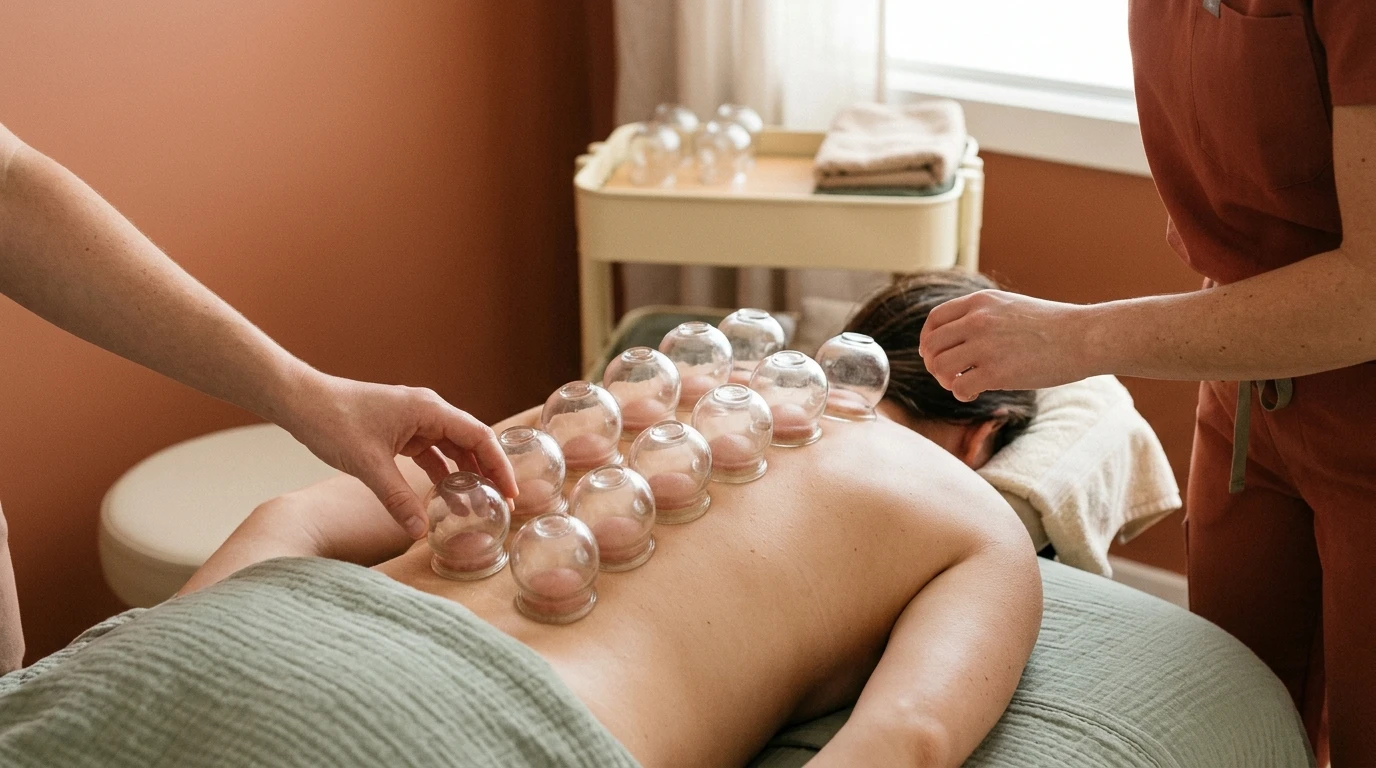
- Cupping therapy: suction cups along a channel, frequently the Bladder meridian on the back.
- Gua sha: a smooth-edged tool stroked along the skin over a channel.
- Moxibustion: warming points with the herb mugwort, one of the oldest techniques tied to the origins of meridian theory.
- Chinese herbal medicine: formulas chosen for the pattern, not just the symptom.
At Copper Wellness, Dr. Anais Jackson-Gonzalez, who holds a Doctorate in Acupuncture and Chinese Medicine from National University of Health Sciences, focuses on pain management and women’s health and combines acupuncture with cupping, gua sha and moxibustion; she sees patients in English and Spanish. New patients can start with a free 15-minute consultation. Acupuncture sessions typically last 30 to 60 minutes, and many plans begin with one or two sessions a week before tapering as you improve. Response varies from person to person and by condition, and no specific outcome is promised.
Safety First: When a “Meridian Symptom” Needs a Medical Doctor
Online meridian charts often list symptoms next to each organ system. That’s useful for understanding TCM, but dangerous if it delays care. These patterns need conventional medical attention first:
| Meridian pattern you may read about | Symptoms that must not be self-treated | What to do |
|---|---|---|
| Heart / Pericardium: “palpitations, chest tightness” | Chest pain, heaviness or discomfort; pain in one or both arms, the back, shoulders, neck or jaw; shortness of breath; sweating a lot for no reason; nausea or light-headedness (warning signs listed by the NHLBI) | Call 911 |
| Pericardium: “chest constraint” | Sharp chest pain that worsens lying flat or breathing deeply (possible pericarditis) | Contact a medical provider promptly |
| Large Intestine / Spleen: “sluggish bowels, poor digestion” | Blood in the stool, black stools, unexplained weight loss, persistent change in bowel habits | Book a medical evaluation |
| Kidney / Bladder: “low back weakness, urinary issues” | Back pain with fever; inability to urinate; new loss of bladder or bowel control or numbness in the groin | Same-day urgent or emergency care |
| Gallbladder / Liver: “headaches, irritability” | Sudden, severe “worst-ever” headache; headache with confusion, weakness or trouble speaking; yellowing of the skin or eyes | Emergency care (headache with neurological signs) or prompt medical evaluation |
| Heart / Liver: “low mood, emotional stagnation” | Thoughts of self-harm or suicide | Call or text 988 (Suicide & Crisis Lifeline) |
Safe acupuncture and herbal care
According to NCCIH, the FDA regulates acupuncture needles as medical devices that must be sterile and used once; serious complications such as infections or punctured organs have mostly been linked to nonsterile needles or improper technique, and Kaptchuk’s review concludes properly performed acupuncture seems to be a safe procedure. Herbs deserve more caution. NCCIH’s Traditional Chinese Medicine overview notes that some Chinese herbal products have been found contaminated with toxic compounds, heavy metals, pesticides, microorganisms or drugs such as the blood thinner warfarin, and that because many studies have been of poor quality, no firm conclusions can be made about their effectiveness. Tell your practitioner about every medication and supplement you take, and say if you are pregnant or trying to conceive, since some points and herbs are traditionally avoided in pregnancy. Above all, don’t use acupuncture or herbs to postpone seeing a health care provider about a new or worsening problem.
Meridian Theory, Modern Teamwork: How Copper Wellness Puts the Whole-Body Map Into Practice
Chinese medicine’s core idea is that organ systems don’t work in isolation. Copper Wellness is built the same way: acupuncturists, chiropractors, physical therapists, a pelvic floor therapist, massage therapists and a Nurse Practitioner work from one shared care plan at our clinic at 1654 W. North Ave., on the edge of Bucktown and Wicker Park in Chicago. In practice, that means a neck-and-shoulder problem read along the Gallbladder channel can be treated with acupuncture while a chiropractor addresses joint mechanics, or a stress-digestion pattern can be supported with acupuncture and herbs while our Nurse Practitioner orders the labs that rule out a medical cause.
- Doctorate-level TCM care. Dr. Stephanie Madden (Doctor of Acupuncture, board-certified herbalist) and Dr. Anais Jackson-Gonzalez (Doctorate in Acupuncture and Chinese Medicine) lead our Chinese medicine work; meet the full Copper Wellness team.
- Root-cause, personalized plans. Treatment follows your pattern and goals, not a one-size protocol.
- Evidence-honest guidance. We’ll tell you where acupuncture has strong evidence and where it doesn’t, and refer out when something needs conventional care.
- Practical access. Women-owned, bilingual English/Spanish care, a wheelchair-accessible clinic, and Blue Cross Blue Shield and Aetna plans plus FSA and HSA accepted; our billing team verifies coverage before treatment (see insurance).
FAQ
What are the 12 major meridians in the body?
The 12 major meridians are six yin-yang pairs: Lung and Large Intestine, Stomach and Spleen, Heart and Small Intestine, Bladder and Kidney, Pericardium and Triple Burner, and Gallbladder and Liver. Each is linked to an organ system and an element, and together they form one continuous circuit. The chart near the top of this article summarizes them.
Are meridian lines in the body real?
Meridians haven’t been found as distinct anatomical structures. Some small studies show acupuncture points tend to sit on connective-tissue planes, which is intriguing but not proof. Separately, acupuncture itself has good evidence for several chronic pain conditions, so the treatment can be useful even though the map behind it is a traditional model.
How many meridians are there?
TCM describes 12 primary meridians and 8 extraordinary vessels, plus a network of smaller collaterals. The WHO’s 2008 standard places 361 acupuncture points along these channels.
Which are the yin meridians?
The six yin meridians are the Lung, Heart and Pericardium (running along the inner arm) and the Spleen, Kidney and Liver (running along the inner leg). They connect to the solid “zang” organs, which TCM says store vital substances.
What organ “resets” at 3 am in Chinese medicine?
On the TCM organ clock, 1–3 am belongs to the Liver and 3–5 am to the Lung, so waking at 3 am sits right at the handoff. Circadian science hasn’t validated those windows, and night waking is more often tied to stress, alcohol, late meals or a sleep disorder. Start with consistent sleep habits, and get evaluated if it persists.
What are the symptoms of blocked meridians?
In TCM, “blockage” or stagnation is a pattern rather than a disease. It’s typically described as aching or distending pain, tension, digestive upset or emotional frustration that shifts with stress. These descriptions are not a medical diagnosis, and severe or persistent symptoms should be checked by a clinician first.
How do you unblock or open your meridians?
Traditional advice and modern evidence point in the same direction: regular movement, tai chi or qigong, slow breathing, enough sleep and stress management. Professional options include acupuncture, cupping and gua sha with a licensed practitioner. Simple self-acupressure, like the points in our guide to pressure points for headaches, is a gentle place to start. Be wary of any “detox” product that claims to open meridians.
What is the difference between chakras and meridians?
They come from different traditions. Chakras are energy centers described in Indian yogic and tantric traditions, usually seven points along the spine; meridians are Chinese medicine’s network of channels connecting organ systems across the whole body. Neither has been established as an anatomical structure.
What are the main acupuncture points on the liver meridian?
The best-known is LR-3 (Taichong), on the top of the foot in the hollow between the first and second toes, traditionally used for stress, headaches and menstrual complaints. LR-14 (Qimen), on the rib cage below the nipple, is another commonly used point. Acupressure on LR-3 is easy at home; needling should only be done by a licensed acupuncturist.
Are there acupuncture points practitioners avoid?
Yes. Some points are traditionally avoided or used with caution during pregnancy, and practitioners also adjust care for bleeding disorders, blood thinners or pacemakers (especially with electroacupuncture). Always tell your acupuncturist if you are pregnant, trying to conceive or taking medications.
Do I need to believe in qi for acupuncture to help?
No. Large trial analyses found acupuncture outperformed sham for several chronic pain conditions in a way that placebo alone doesn’t explain, and the American College of Physicians recommends it for low back pain. Many patients simply treat meridian theory as their practitioner’s map and judge the treatment by how they respond.
Curious how your own sleep, digestion and stress patterns map onto the meridians? Schedule your complimentary consultation at Copper Wellness, at our clinic at 1654 W. North Ave. in Chicago’s Bucktown/Wicker Park: call (872) 267-1717, email Hello@CopperWells.com, or book online at copperwellness.janeapp.com.