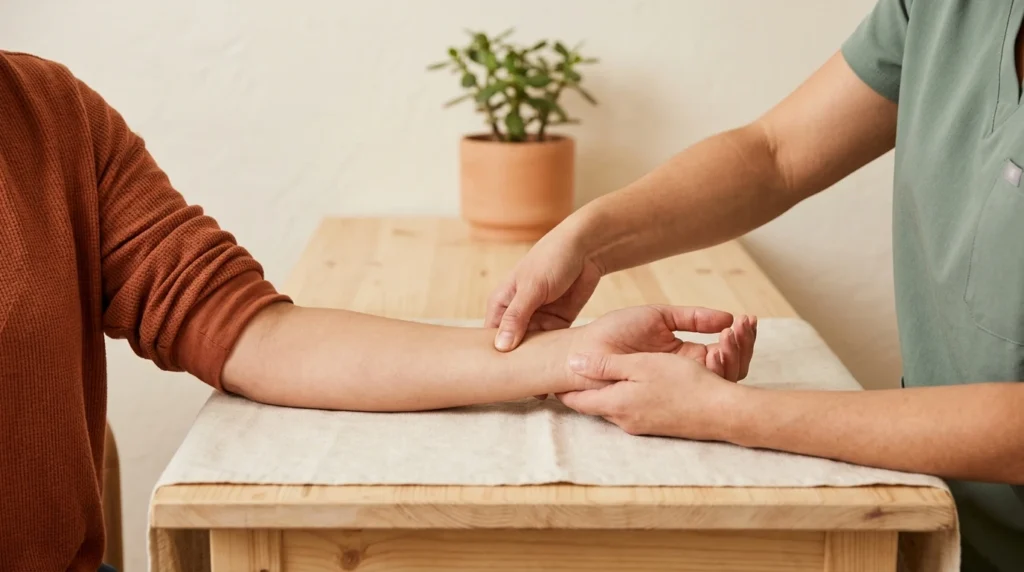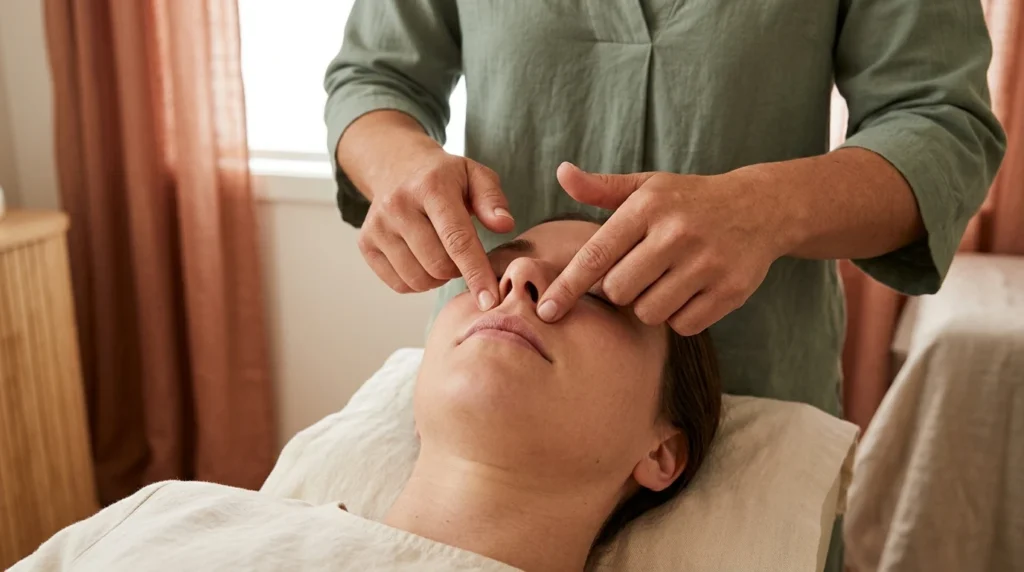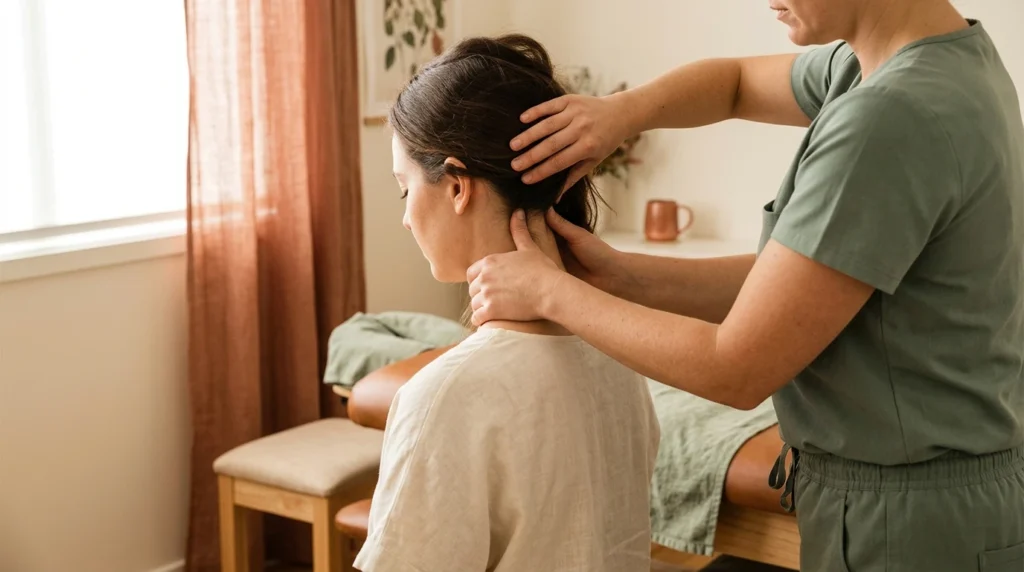

The pressure points for sleep that are used most often are HT7 (Shen Men) on the wrist crease, An Mian behind the ear, Yintang between the eyebrows, SP6 above the inner ankle and KD1 on the sole of the foot. Press each one gently for 30 seconds up to about 3 minutes as part of …

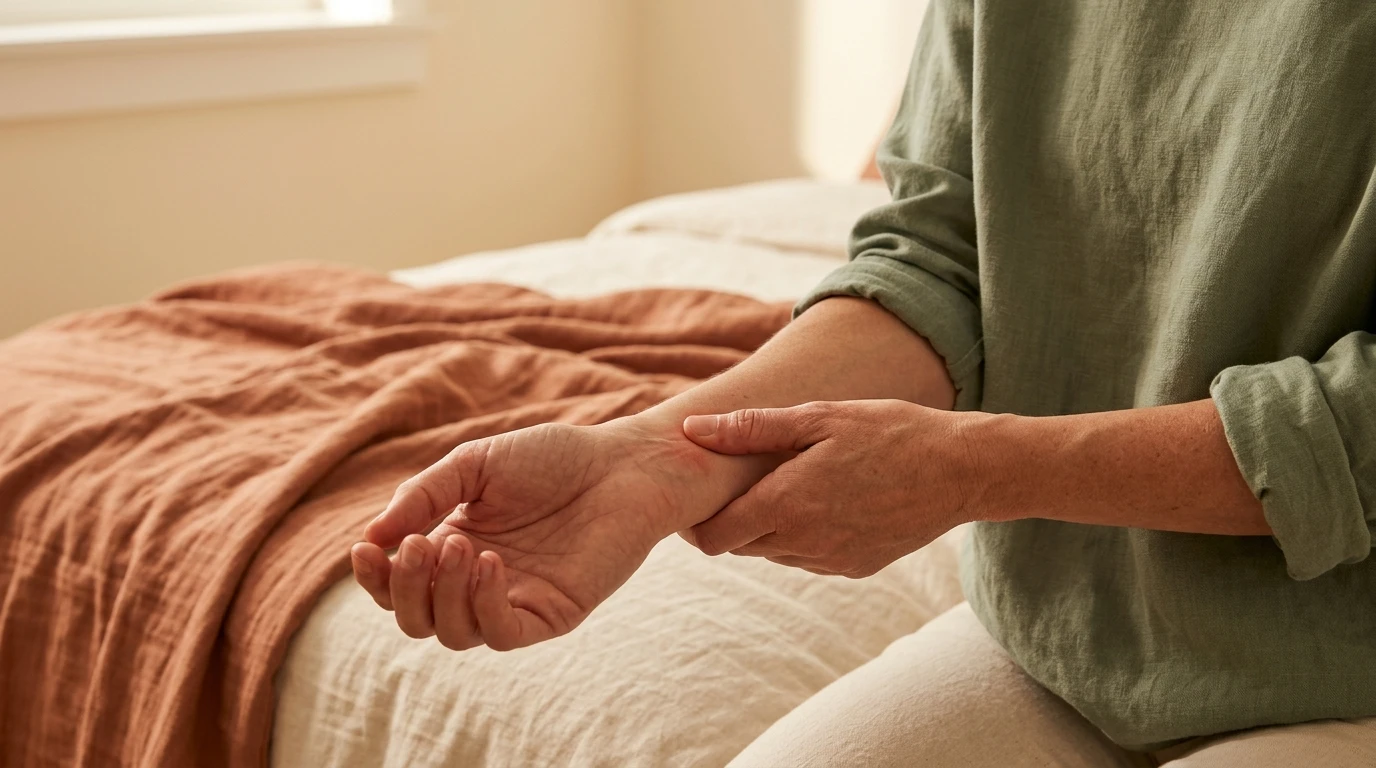
The pressure points for sleep that are used most often are HT7 (Shen Men) on the wrist crease, An Mian behind the ear, Yintang between the eyebrows, SP6 above the inner ankle and KD1 on the sole of the foot. Press each one gently for 30 seconds up to about 3 minutes as part of a bedtime routine. In trials, that kind of nightly acupressure for sleep has improved sleep-quality scores over four to eight weeks — so think of these as pressure points to help you sleep by settling down first, not a switch that turns sleep on. They are the same points our acupuncturists use in acupuncture at Copper Wellness, pressed with a fingertip instead of needled.
This article is for general education and isn’t a diagnosis or a treatment plan. If poor sleep is affecting your health, mood or safety, talk with a healthcare professional.
Key Takeaways
- Five points cover most sleep routines. HT7 (wrist), An Mian (behind the ear), Yintang (between the eyebrows), SP6 (inner lower leg) and KD1 (sole). GB20, PC6, KI3 and LV3 are useful additions.
- Press for 30 seconds to 3 minutes per point. Thirty seconds is what the U.S. Department of Veterans Affairs “Acupressure for Sleep” handout suggests; 3 minutes per point, once a day, is what a University of Michigan trial published in JAMA Oncology used.
- The best self-care trial showed a modest benefit. In a randomized trial of 200 adults with insomnia in Phytomedicine, people taught self-acupressure improved their Insomnia Severity Index scores by 2.89 points more than people given sleep-hygiene education at week 8.
- Pooled results look good, with caveats. A systematic review in Sleep Medicine Reviews found acupressure beat sham pressing by 3.41 points on a standard sleep-quality questionnaire (7 trials, 385 patients) — but most trials couldn’t blind participants and many enrolled older adults or dialysis patients.
- Pregnant? Skip SP6, LV3, LI4 and KD1 and ask your prenatal clinician before using acupressure at all.
- Know when self-care isn’t the answer. Trouble sleeping 3 or more nights a week for more than 3 months fits the National Heart, Lung, and Blood Institute (NHLBI) description of chronic insomnia. That, or loud snoring with gasping, deserves an evaluation.
Sleep Pressure Points at a Glance
People who search for pressure points for sleep with pictures want to see exactly where to put a finger. This table is the text version of that map: nine acupressure points for sleep grouped by body area, each with a landmark you can find on yourself, how to press it, and which published sleep protocol actually used it. Locations follow the University of Minnesota’s Bakken Center acupressure sequence for insomnia unless noted.
| Point | Where it is | How to press | Used in which sleep protocol | Pregnancy |
|---|---|---|---|---|
| Head and neck | ||||
| Yintang | The midpoint between the eyebrows | Thumb or one fingertip, slow small circles | University of Michigan trial; menopause trial; VA handout | Not on the traditional avoid-list; check with your prenatal clinician first |
| An Mian (“peaceful sleep”) | Behind the ear: about one-third of the way along a line from the soft hollow behind the earlobe to where the spine meets the skull | One finger, light pressure only, both sides | University of Michigan trial; VA handout; University of Minnesota sequence | Light pressure; check first |
| GB20 — Feng Chi, Wind Pool | Where the base of the skull meets the neck, about a finger-width out from the spine, in a small hollow | Both thumbs, pressing up and in; head relaxed | Menopause trial | Check first |
| Hand and wrist | ||||
| HT7 — Shen Men, Spirit Gate | Palm side of the wrist, on the crease at the pinky side, in the small hollow just inside the tendon | Opposite thumb, steady hold or small circles, both wrists | The point used in most acupressure sleep trials; VA handout; University of Minnesota sequence | Not on the avoid-list; check first |
| PC6 — Nei Guan, Inner Gate | Inner forearm, three finger-breadths up from the wrist crease, between the two tendons | Opposite thumb, steady pressure, both arms | VA handout; University of Minnesota sequence | Not on the avoid-list; check first |
| Leg and foot | ||||
| SP6 — San Yin Jiao | Inside of the lower leg, four finger-widths above the highest point of the inner ankle bone | Thumb, firm but comfortable circles, both legs | University of Michigan trial; menopause trial; VA handout; University of Minnesota sequence | Avoid |
| KI3 — Tai Xi | Behind the inner ankle, in the soft hollow between the ankle bone and the Achilles tendon | Thumb, gentle hold, both ankles | University of Minnesota sequence | Check first |
| LV3 — Tai Chong | Top of the foot, between the bones leading to the first and second toes, about one-third of the way from the toes toward the ankle | Thumb or index finger, both feet | University of Michigan trial; University of Minnesota sequence | Avoid |
| KD1 — Yong Quan, Bubbling Spring | Sole of the foot, in the hollow where the ball of the foot meets the arch, about one-third of the way down from the base of the toes | Thumb, firm pressure, both feet | VA handout | Skip as a precaution |
The codes (HT7, SP6) are the standard point names. The University of Minnesota page adds a note worth repeating: licensed acupuncturists choose points for the individual, so a general sequence like this is a starting place, not a personal prescription.
How Acupressure May Help You Wind Down
Acupressure uses the same point locations as acupuncture, with fingers doing the work that needles do in the clinic. In traditional Chinese medicine, difficulty sleeping is often described as an unsettled “shen” — loosely, the mind or spirit — which is why the most-used sleep point, HT7, is called Spirit Gate and An Mian translates as “peaceful sleep.”
The biomedical explanation is less tidy, and it’s better to say so. How acupressure affects sleep isn’t established. The National Center for Complementary and Integrative Health (NCCIH) overview of sleep disorders and complementary approaches discusses acupuncture, relaxation techniques and supplements, but doesn’t mention acupressure at all. What we can say is that several minutes of slow, steady pressure paired with slow breathing is a relaxation practice, and relaxation therapy carries a conditional recommendation for chronic insomnia in the American Academy of Sleep Medicine (AASM) clinical practice guideline. That guideline did not assess acupressure itself.
One more honest data point: in a sham-controlled trial of 120 menopausal women in the Iranian Journal of Medical Sciences, women pressing real points improved significantly more than women pressing sham points — but the sham group also slept better than the no-treatment group. Part of the benefit seems to come from the ritual itself: stopping, touching, breathing, doing the same calming thing each night.
At Copper Wellness, point selection is the daily work of Dr. Stephanie Madden, a Doctor of Acupuncture trained at AOMA Graduate School of Integrative Medicine and a board-certified herbalist, and of Dr. Anais Jackson-Gonzalez, who holds a Doctorate in Acupuncture and Chinese Medicine from National University of Health Sciences. If you’re curious how needling differs from pressing, our overview of the benefits of acupuncture covers the clinic side.
The Pressure Points for Sleep, One by One
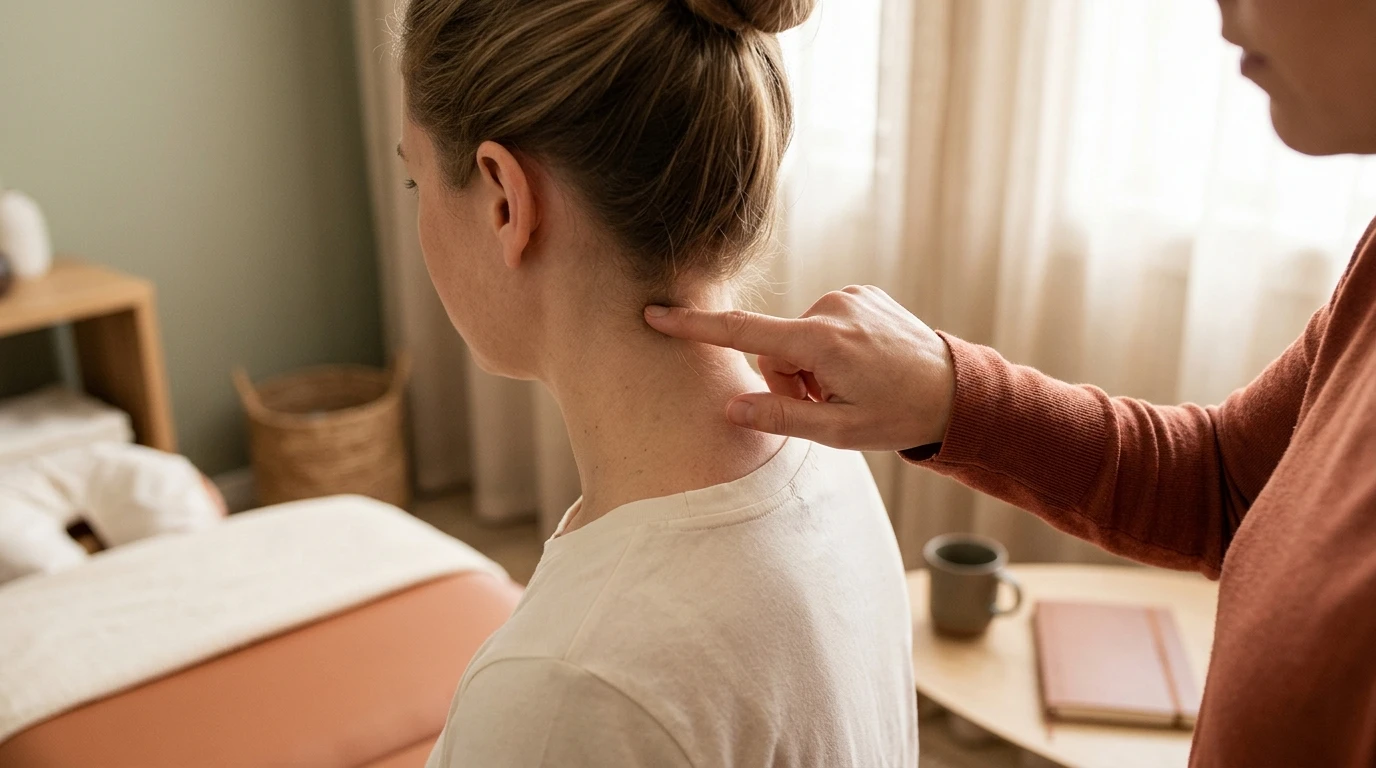
You don’t need all nine. Most published routines use four to six points. Read through the groups, find the ones you can locate confidently, and build from there.
Head and Neck: Yintang and GB20
Yintang sits, in the words of Memorial Sloan Kettering Cancer Center’s acupressure guide for stress and anxiety, “at the midpoint (the center) between your eyebrows.” MSK suggests pressing with the thumb in a circular motion for 2 to 3 minutes, firmly but never hard enough to hurt. It’s the easiest point on the list to find and the natural place to start a routine.
GB20 (Wind Pool) is where the base of the skull and the neck meet, about one finger-width outward from the edge of the spine, in a depression the University of Minnesota’s acupressure sequence for mental health describes as feeling like a small pool. Cradle the back of your head in both hands and let your thumbs sink up and in. People who carry a desk day in their neck tend to like this one; it was part of the four-point set in the menopause trial. If neck stiffness or pain is what actually wakes you, that’s a mechanical problem worth its own look — see our page on chiropractic care for neck pain. And if tightness at the base of the skull comes with recurring headaches, our comparison of tension headache vs. migraine can help you sort out which you’re dealing with.
People sometimes ask about sleep pressure points in the neck beyond GB20. For self-care, we’d keep it to GB20 and An Mian and stay away from the front and sides of the throat.
One more head point you’ll see named is GV20 (Baihui), at the crown. It was used in 56.3% of the trials in a 2026 network meta-analysis of 95 acupoint-stimulation trials for primary insomnia in Frontiers in Psychiatry, second only to HT7. Those trials tested practitioner-delivered therapies — needling, electroacupuncture, moxibustion and similar — rather than self-applied finger pressure, so we mention it as a point practitioners reach for rather than give a self-press instruction.
The An Mian Point (“Peaceful Sleep”) Behind the Ear
The An Mian pressure point is the one sleep point with no meridian code — it’s an “extra” point named for what it’s used for. To find it, feel for the soft depression just behind your earlobe, then imagine a line from there to the spot where your spine meets your skull. The An Mian point is about one-third of the way along that line, starting from the ear, often on the ropey muscle that runs down the side of the neck (the sternocleidomastoid).
Use one fingertip and go lightly: the University of Minnesota sequence specifically says to avoid firm pressure here. Small circles on both sides at once work well. If you were looking for ear pressure points for sleep, this spot behind the ear is the one you can safely work yourself; the points on the ear itself are usually treated with ear seeds placed by a practitioner, covered further down.
An Mian was one of the five points in the University of Michigan “relaxing acupressure” set, it appears in the VA handout, and it was used in 45.8% of the primary-insomnia trials in the Frontiers in Psychiatry analysis — again, trials of practitioner-delivered therapies rather than finger pressure, which tells you clinicians and researchers favor the point, not that pressing it has been proven on its own.
Hand and Wrist: HT7 and PC6
If you only learn one pressure point for sleep on the hand side of the body, make it HT7 (Shen Men). Turn your palm up and find the wrist crease. At the pinky end of the crease there’s a tendon you can feel when you flex the wrist; HT7 is the small hollow just to the thumb side of it. Press with the opposite thumb, hold or circle slowly, then switch wrists.
This wrist pressure point for sleep has the most research behind it. The Sleep Medicine Reviews authors noted HT7 was “used in most procedures” across the 32 trials they reviewed, and it appeared in 62.1% of trials in the Frontiers in Psychiatry analysis. In a randomized trial of 50 long-term-care residents with insomnia in the International Journal of Nursing Studies, five weeks of HT7 acupressure on both wrists improved Athens Insomnia Scale scores compared with light touch at the same spot, and the difference held for up to two weeks afterward. In that study a practitioner did the pressing and the participants were elderly residents, so it isn’t a direct preview of home results.
PC6 (Inner Gate) is three finger-breadths up the inner forearm from the wrist crease, between the two tendons. It’s best known for nausea rather than sleep, but both the VA handout and the University of Minnesota insomnia sequence include it, and it’s a comfortable one to hold while lying down.
Other hand pressure points for sleep get mentioned online, chiefly LI4, in the webbing between thumb and index finger. It isn’t a core sleep point in any of the trials above; practitioners sometimes add it when neck and shoulder tension is part of the picture. LI4 is on the traditional list of points avoided in pregnancy, so skip it if you’re pregnant.
Leg and Foot: SP6, KI3, LV3 and KD1
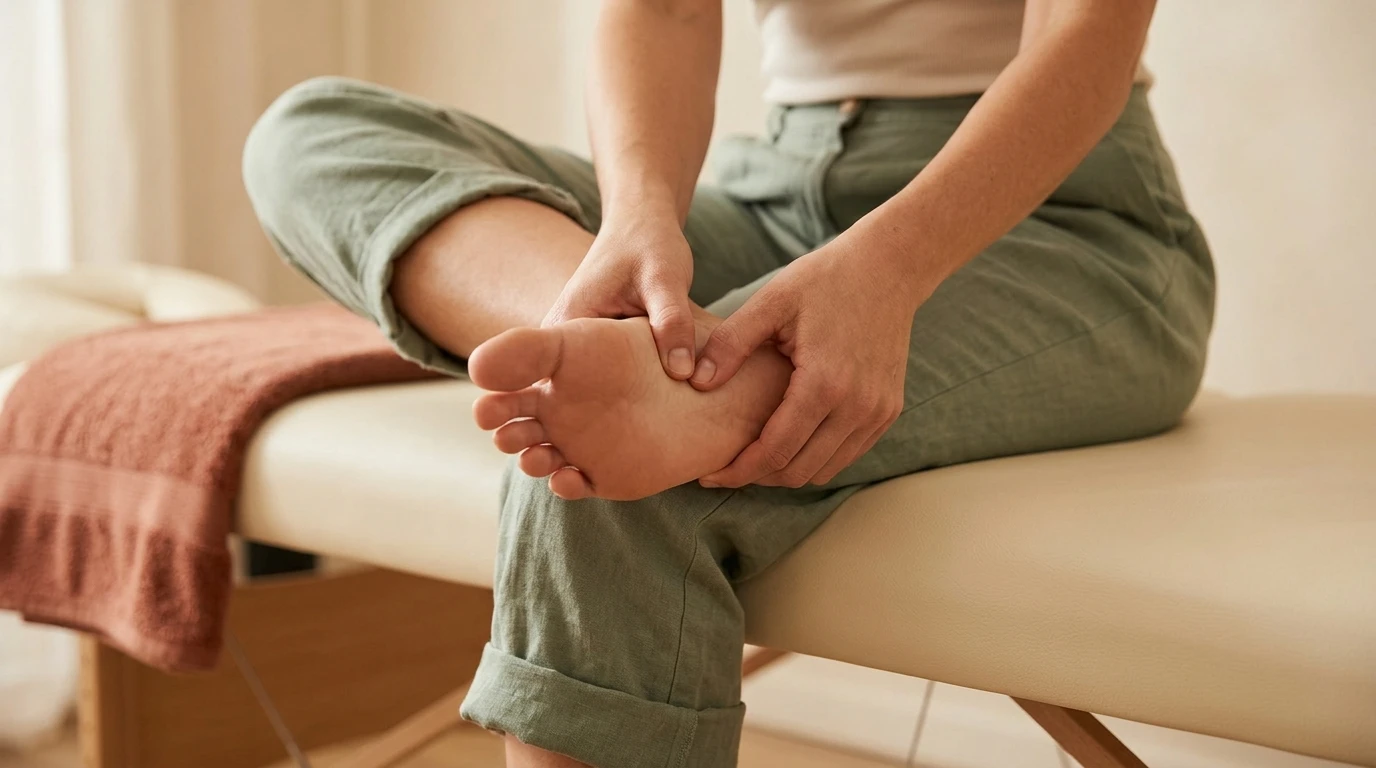
These are easiest sitting on the edge of the bed with one ankle resting on the opposite knee.
- SP6 (San Yin Jiao) — on the inside of the lower leg, four finger-widths up from the highest point of your inner ankle bone. It was used in both the University of Michigan trial and the menopause trial. Not for use during pregnancy.
- KI3 (Tai Xi) — the soft hollow between the back of the inner ankle bone and the Achilles tendon. Gentle, steady pressure.
- LV3 (Tai Chong) — on top of the foot, between the bones leading to the first and second toes, roughly one-third of the way from the base of the toes to the ankle. Avoid in pregnancy.
- KD1 (Bubbling Spring) — on the sole, in the depression where the ball of the foot meets the arch, roughly one-third of the way down from the base of the toes. The Cleveland Clinic’s acupressure explainer suggests holding it for one to two minutes while taking slow breaths.
Foot pressure points for sleep are popular partly because working on your feet pulls attention about as far from a busy head as it can go. Of the pressure points for sleep on the feet, KD1 appears in the VA handout and LV3 in the University of Michigan set. Dr. Anais Jackson-Gonzalez, who works with pain, women’s health and multimodal care (acupuncture, cupping, gua sha, moxibustion) and sees patients in English and Spanish, is one of the clinicians here who can show you these locations in person if you can’t find them from a description.
How to Press: Technique That Applies to Every Point
The same handful of rules covers all of the pressure points to fall asleep with.
- Get comfortable first. Sitting on the bed or lying down, shoulders dropped.
- Use the pad of a thumb or fingertip, not the nail.
- Firm but comfortable. The VA handout puts it as “pressure that feels good and not painful.” The Cleveland Clinic is blunter: never press so hard that you would bruise yourself. Trials typically used 3–5 kg of pressure, according to the Sleep Medicine Reviews analysis — you don’t need to measure it; a dull, pleasant ache is the target, and An Mian gets less than that.
- Hold steady or make small, slow circles. The menopause trial used circles about 1 cm across.
- Breathe slowly while you press. Let the exhale be longer than the inhale.
- Do both sides for every point except Yintang.
- Time it loosely. The VA suggests 30 seconds per point; trials in the Sleep Medicine Reviews analysis typically used one to five minutes per point, three to seven times a week, for three to four weeks.
- Stop if you feel dizzy, uncomfortable or notice anything unusual.
Consistency matters more than precision. Pressure points to help sleep were tested as a nightly habit over weeks, not as a one-off.
A 10-Minute Wind-Down Routine Built From Trial Protocols
Most online routines invent their timings. This one borrows from what trials actually did. The five points are the “relaxing acupressure” set from the University of Michigan trial (Yintang, An Mian, HT7, SP6, LV3). The 10-minute total and the timing come from the menopause trial, where women practiced for 10 minutes, one to two hours before sleep, every night for four weeks. It’s a description of what was tested, not a prescription, and results vary from person to person.
- Set the room. Dim the lights and put the phone away. The Centers for Disease Control and Prevention (CDC) recommends turning off electronic devices at least 30 minutes before bedtime.
- Yintang — 1 minute. Thumb between the eyebrows, slow circles, eyes closed.
- An Mian — 1 minute per side (or both at once). One finger, light.
- HT7 — 1 minute per wrist.
- SP6 — 1 minute per leg.
- LV3 — 1 minute per foot.
- Finish with a minute of slow breathing, hands resting.
That’s roughly 10 minutes. The Michigan trial went longer — 3 minutes per point, once a day, for six weeks — so if you have time and it feels good, extend each point.
Short version for a 3 a.m. waking: stay in bed and press Yintang, An Mian, HT7 and PC6 for 30 seconds each, the duration the VA handout uses. A companion VA News article on managing sleep with acupressure notes its routine can be done multiple times a day as well as before bed.
If you’re pregnant: drop SP6 and LV3 and use Yintang, An Mian (light), HT7 and PC6 instead — and only after your OB or midwife has said acupressure is fine for you.
How long before judging it: give it four weeks of nightly practice. That’s how long most of the trials ran before measuring anything.
If slow breathing doesn’t come naturally, it’s a skill that can be taught. Andy Holsteen, a licensed massage therapist at our clinic with 200-hour yoga training, incorporates breathwork into his sessions, and some people find a hands-on massage therapy appointment is the easiest way to learn what “relaxed” is supposed to feel like before trying to reproduce it at home.
Do Pressure Points for Sleep Work? What the Trials Show
The honest summary: there is real trial evidence that acupressure for insomnia and poor sleep quality helps modestly over several weeks, and the evidence has consistent weaknesses. Here’s who was actually studied.
Self-Acupressure in Adults With Insomnia
The most relevant study for anyone reading this is the Phytomedicine trial: 200 adults with insomnia disorder were randomized to a self-acupressure training course (two sessions of two hours each) or to sleep-hygiene education. Insomnia Severity Index scores improved more in the acupressure group — by 1.89 points at week 4 and 2.89 points at week 8 — and anxiety, depression and quality-of-life scores were also better at week 8. The limits: the comparison was education, not sham pressing; the trial was run by a Hong Kong research team; and follow-up stopped at eight weeks.
An earlier pilot by the same research group in the Journal of Sleep Research (31 adults) found lower insomnia scores at week 8, but the result didn’t hold up after statistical correction for multiple comparisons. Its more useful finding was about habit: 92.3% of those who completed the lessons were still practicing at week 8.
Other Groups: Menopause, Cancer Survivors, Older Adults, Hospital Patients
Most acupressure points for insomnia have been tested in specific populations, and results shouldn’t be stretched past them.
- Menopausal women. In the 120-woman sham-controlled trial, four weeks of nightly self-acupressure on HT7, SP6, GB20 and Yintang improved sleep-quality scores significantly more than sham points and more than no treatment.
- Breast cancer survivors. In the JAMA Oncology trial (288 women randomized; fatigue was the primary outcome, not sleep), relaxing acupressure improved sleep quality versus usual care at week 6 — but not at week 10, four weeks after the women stopped.
- Older adults. A meta-analysis of 11 trials and 722 older adults in Explore found a 1.71-point improvement on the Pittsburgh Sleep Quality Index; when people were trained and pressed the points themselves, the improvement was smaller, 0.86 points.
- Hospital inpatients. A 2025 meta-analysis of 41 trials and 3,680 inpatients in Nursing & Health Sciences found a large pooled effect that shrank after correcting for publication bias, and practitioner-delivered acupressure outperformed self-administered. Thirty-six of the 41 trials came from China, and the authors wrote that “no definitive conclusions can be drawn about the optimal protocol.”
Ear Acupressure and Ear Seeds
Ear (auricular) acupressure is a different technique: small seeds or beads are taped onto ear points and left in place. A meta-analysis of 23 trials and 1,689 patients in Frontiers in Sleep found improved sleep-quality scores with no serious adverse events, though results varied widely between trials. The counterweight: a review of 13 trials and 961 cancer survivors in Frontiers in Oncology found no evidence that acupuncture or auricular acupressure improved sleep disturbance compared with sham.
Ear seeds aren’t risk-free, either. In a 2025 review in Medicine of women with breast cancer, the trials that reported side effects (5 trials, 259 people) recorded skin allergic reactions in 3.9%, bruising in 2.7%, pain in 1.2% and local pressure sores in 0.8%. At our clinic, ear seeds are placed by the acupuncturist as part of an auricular acupuncture session rather than sold as a kit.
The Evidence in One Table
| Who was studied | What was done | What happened | How solid |
|---|---|---|---|
| 200 adults with insomnia (Phytomedicine, 2022) | Self-acupressure taught in a two-session course | Insomnia Severity Index better by 2.89 points vs. education at week 8 | Randomized; education control, not sham; 8-week follow-up |
| 31 adults with insomnia (Journal of Sleep Research, 2018) | Daily self-acupressure for 4 weeks | Lower scores at week 8; 92.3% still practicing | Small pilot; not significant after correction |
| 288 breast cancer survivors (JAMA Oncology, 2016) | Yintang, An Mian, HT7, SP6, LV3; 3 min per point daily for 6 weeks | Better sleep quality vs. usual care at week 6; not at week 10 | Large; sleep was a secondary outcome; effect faded after stopping |
| 120 menopausal women (Iranian Journal of Medical Sciences, 2015) | HT7, SP6, GB20, Yintang; 10 min nightly for 4 weeks | Better than sham and than no treatment | Sham-controlled; sham group also improved |
| 50 long-term-care residents (International Journal of Nursing Studies, 2010) | HT7 only, practitioner-applied, 5 weeks | Better insomnia scores, lasting up to 2 weeks after | Small; elderly residents; not self-applied |
| Pooled sham-controlled trials (Sleep Medicine Reviews, 2018) | Mostly HT7; 1–5 min per point, 3–4 weeks | 3.41-point improvement vs. sham (7 trials, 385 patients) | High risk of bias from lack of blinding |
| 3,680 hospital inpatients (Nursing & Health Sciences, 2025) | Varied widely; from a few seconds to several minutes per point | Large pooled effect; practitioner-delivered worked better than self-administered | Publication bias; 36 of 41 trials from one country |
| Ear acupressure, mixed patients (Frontiers in Sleep, 2024; Frontiers in Oncology, 2022) | Seeds taped to ear points | One analysis positive; one found no benefit over sham in cancer survivors | Conflicting; a different technique from finger pressure |
| Not acupressure: needle acupuncture (NCCIH; Cochrane) | Needling by a practitioner | “May help improve insomnia, but the studies were small” | Cochrane: not rigorous enough to support or refute |
| For comparison: CBT-I | 6–8 week structured behavioral program | Recommended first treatment for chronic insomnia | Strong guideline recommendation |
What Acupressure Can and Can’t Do for Sleep
What the evidence supports:
- Modest improvements in insomnia-severity and sleep-quality scores over four to eight weeks of regular practice.
- A low risk profile. The Sleep Medicine Reviews analysis reported no adverse effects; in the JAMA Oncology trial the six related adverse events were all mild bruising at the points, and one participant withdrew because of it.
- It’s a habit people keep — more than nine in ten pilot participants who finished the training were still doing it at eight weeks.
What it doesn’t support:
- Falling asleep on the spot. No trial measured or showed that; they measured change over weeks.
- Lasting benefit without continued practice. The effect was gone four weeks after stopping in the Michigan trial.
- A place in insomnia guidelines. Neither the AASM guideline nor the American College of Physicians guideline recommends it, and the NCCIH sleep page doesn’t list it.
- Treating sleep apnea or any other sleep disorder, or replacing the recommended treatment for chronic insomnia.
The Cochrane review of acupuncture-type treatments for insomnia (33 trials, 2,293 participants) shows the pattern well. Its acupressure comparisons pointed toward better sleep quality, but they rested on two small studies each, with very wide confidence intervals and a high risk of bias throughout. So insomnia pressure points are a reasonable, low-risk thing to try. No one can promise a result, and how much they help varies from person to person.
Who Should Skip or Modify These Points
During Pregnancy
The VA handout’s advice is the right starting point: if you are pregnant or might be, talk to your provider before using acupressure. Beyond that, caution differs by point.
| Point | In pregnancy | Why |
|---|---|---|
| SP6 | Avoid | University of Minnesota sequence: “avoid use during pregnancy”; on the traditional list of points avoided before 37 weeks |
| LV3 | Avoid | University of Minnesota sequence: “avoid use during pregnancy” |
| LI4 | Avoid | On the traditional avoid-list |
| KD1 | Skip | A precaution our clinicians take with strong foot points in pregnancy; not based on a trial |
| Yintang, An Mian, HT7, PC6 | Only after checking with your prenatal clinician | Not on the traditional avoid-list; An Mian with light pressure only |
To be accurate about the evidence: a review in Acupuncture in Medicine that looked at 15 trials and 823 pregnant women found “no objective evidence of harm” from needling the traditionally avoided points, including SP6 and LI4. The caution is traditional, not proven — but with other points available, skipping them costs nothing. For hands-on relaxation during pregnancy, prenatal massage with a therapist trained for it is the better route.
Other Situations
- Skin or circulation problems at the point. The VA handout says not to press where you have numbness, a wound, severe swelling, an active infection or a recent blood clot. MSK adds peeling, blistering, a rash, redness, warmth or pus.
- Varicose veins near SP6. Our clinicians’ approach is to skip direct pressure over visible varicose veins and use a different point.
- Easy bruising. Mild bruising was the one side effect reported in the Michigan trial. Lighten up, or skip the point for a few days.
- Dizziness or anything unusual. Stop.
- Babies and children. This is an adult guide. A child’s sleep problem belongs with their pediatrician.
Pair the Points With the Basics of Good Sleep
Acupressure points for relaxation and sleep work best as the last step of an evening that’s already heading toward bed. The CDC says adults aged 18 to 60 need 7 or more hours a night, and its FastStats on adult sleep show that in 2022 the share of adults falling short ranged from 30% in Vermont to 46% in Hawaii — so at least three in ten adults in every state.
The habits the NHLBI lists alongside insomnia treatment and the CDC recommends are the usual ones:
- Go to bed and get up at consistent times.
- Keep the bedroom cool, quiet and dark.
- Avoid caffeine, nicotine and alcohol close to bedtime.
- Manage stress before bed with something quiet — reading, music, a bath, massage, meditation or yoga.
According to the NHLBI’s page on insomnia causes and risk factors, the things that commonly get in the way include stress and worry, shift work, noise and light, long daytime naps, little physical activity, and TV or electronic devices close to bedtime. Insomnia is also more common in women and with age, and hormone changes in pregnancy and menopause play a part.
One caveat: the AASM guideline suggests against sleep hygiene as a stand-alone treatment for chronic insomnia. Good habits and a wind-down routine are natural ways to fall asleep more easily when sleep is a bit off. They aren’t a treatment for a sleep disorder.
When Poor Sleep Needs a Clinician — and When It’s Urgent
The Chronic-Insomnia Threshold
Short-term insomnia, the NHLBI explains, “may be caused by stress or changes in your schedule or environment” and lasts days or weeks. Chronic insomnia “occurs 3 or more nights a week, lasts more than 3 months, and cannot be fully explained by another health problem” — and it raises the risk of high blood pressure, coronary heart disease, diabetes and cancer, and affects memory and concentration. If you’re at or near that threshold, pressure points for insomnia aren’t enough on their own. The NHLBI’s symptoms page suggests keeping a sleep diary and sharing it with a healthcare professional.
Signs of a Different Sleep Disorder
Acupressure does nothing for sleep apnea. The NHLBI lists sleep apnea symptoms as breathing that starts and stops during sleep, frequent loud snoring, gasping for air, daytime sleepiness, headaches, a dry mouth and waking often to urinate; a sleep study may be needed. Restless legs at night, or a body clock that’s hours out of step with your schedule, also call for an evaluation rather than a routine.
A Decision Checklist
Keep going with self-care if:
- You’ve had a few rough nights tied to stress, travel or a schedule change.
- You function reasonably well during the day.
Book an evaluation if:
- You have trouble sleeping 3 or more nights a week and it has gone on for more than 3 months.
- Someone has noticed loud snoring, gasping or pauses in your breathing.
- Daytime sleepiness is affecting your focus or reactions — including behind the wheel.
- Sleep trouble started with a new medicine, during pregnancy or around menopause.
- Poor sleep comes with feeling anxious, depressed or unusually irritable.
Get help now if:
- You’re having thoughts of harming yourself. The National Institute of Mental Health directs people to call or text 988, the Suicide & Crisis Lifeline, which is confidential and open 24 hours.
- It’s a life-threatening situation: call 911 or go to the nearest emergency room.
Not sure where a non-emergency sleep concern should go first? Our guide to urgent care vs. primary care explains which door fits which problem.
What’s Keeping You Up, and Who Can Help
These are possible contributors to discuss with a clinician, not diagnoses.
| What you notice | What may be behind it | Who can help |
|---|---|---|
| Racing mind, can’t switch off at bedtime | Stress and worry | A behavioral sleep specialist for CBT-I (ask your primary care provider for a referral); an acupuncturist as complementary care |
| Loud snoring, gasping, unrefreshed despite enough hours | Possible sleep apnea | Primary care provider; sleep study |
| Hot flashes or night sweats waking you in your 40s or 50s | Hormone changes around menopause | A medical evaluation. At Copper Wellness, menopause and perimenopause care is led by Elise Sterritt, FNP-BC, and any hormone treatment requires an evaluation, labs and ongoing supervision by the Nurse Practitioner |
| Neck or back pain that wakes you when you turn over | A musculoskeletal problem | Chiropractic care or physical therapy |
| Low mood or anxiety alongside poor sleep | A mood or anxiety problem that needs its own care | Primary care or a mental-health professional first; acupuncture for depression is complementary to that care, not a substitute |
| Night shifts, rotating schedule, frequent jet lag | Body-clock disruption | Primary care or a sleep medicine clinic |
When Pressure Points Aren’t Enough: What a Clinician Can Add
CBT-I: The First-Line Treatment
Cognitive behavioral therapy for insomnia (CBT-I) is, in NCCIH’s words, the treatment “most strongly recommended” for insomnia. The NHLBI describes it as a 6- to 8-week plan combining cognitive therapy, relaxation, sleep education, sleep restriction and stimulus control. The American College of Physicians guideline in Annals of Internal Medicine recommends it as the initial treatment for all adults with chronic insomnia disorder (a strong recommendation), with a shared decision about short-term medication only if CBT-I alone doesn’t work (a weak recommendation).
CBT-I is delivered by behavioral sleep specialists and isn’t a service we offer; your primary care provider can refer you. Sleep medicines are your prescriber’s territory. As for supplements, the NHLBI notes that research has not proven melatonin is an effective treatment for insomnia, and NCCIH reports that it may help with how quickly you fall asleep but not other aspects of sleep. Tell your healthcare providers about anything complementary you’re using.
Acupuncture for Ongoing Sleep Trouble
Needle acupuncture has its own, separate evidence. NCCIH summarizes it this way: a 2021 review of 11 studies and 775 participants “suggested that acupuncture may help improve insomnia, but the studies were small.” The Cochrane reviewers concluded the evidence was “not sufficiently rigorous to support or refute” it. So: plausible, low-risk, not settled.
Here’s how a first visit for sleep goes at our clinic:
- Your acupuncturist reviews your health history and current symptoms — sleep pattern, stress, pain, digestion, cycle or hormonal changes.
- You agree on a plan together.
- Treatment sessions run about 45–60 minutes.
- Where it makes sense, care is coordinated with other options such as herbal support, massage and lifestyle advice. Ear seeds may be placed as part of a session.
Some people notice a change after a few treatments; for others it takes several weeks or more, and results vary. The details are on our acupuncture for insomnia page. If the thing keeping you awake is mostly bedtime worry, acupuncture for anxiety may be the more relevant starting point.
Massage, Herbs and Hormones
Massage. The NHLBI includes massage among the ways to manage stress before bed. We won’t put a number on its effect on sleep, but if you’re weighing styles, our comparison of Swedish vs. deep tissue massage explains which is the gentler, relaxation-oriented choice.
Chinese herbal medicine. Classical formulas are part of how Chinese medicine approaches insomnia. A meta-analysis of 12 trials and 1,311 patients in the European Review for Medical and Pharmacological Sciences found Suanzaoren decoction improved sleep-quality scores in chronic insomnia, with the authors noting the trials varied in quality. Herbs are not harmless because they’re plants — NCCIH notes kava has been linked to serious liver injury — and they can interact with medicines. Herbal medicine here is prescribed individually by a board-certified herbalist, never self-selected from a shelf.
Hormones. When sleep fell apart alongside cycle changes or hot flashes, that’s a medical question first. It calls for an evaluation and labs with the Nurse Practitioner, not something to self-start. Some patients also use acupuncture for hormone balance as complementary care alongside that.
Why a Team That Treats Stress, Pain and Hormones Under One Roof Helps When Sleep Won’t Settle
Copper Wellness is set up for the fact that poor sleep rarely has a single cause. The person lying awake is often dealing with a stressed nervous system, a sore neck and a shifting hormonal picture all at once, and sending each of those to a different office means nobody sees the whole pattern.
- One shared care plan. Acupuncturists, chiropractors, massage therapists, a pelvic floor therapist and a nurse practitioner work from the same plan at one location, 1654 W. North Ave. in Bucktown/Wicker Park. You can see the full list of services in one place.
- Root cause first. The question isn’t only “which point helps you sleep” but “what’s keeping you up” — stress, pain, hormones, habits — and which clinician should take the lead.
- Named, credentialed clinicians. Doctorates in acupuncture and chiropractic, a board-certified herbalist, a board-certified Family Nurse Practitioner. Meet the team and their training.
- Care in English and Spanish.
- Straightforward coverage. We accept Blue Cross Blue Shield and Aetna, plus FSA and HSA, and a billing team verifies coverage before treatment — details are on the insurance page.
- A no-cost first conversation. New patients can start with a free virtual consultation with Dr. Madden to work out whether acupuncture, another service here, or a referral elsewhere is the right next step.
FAQ
Where do you press to fall asleep?
The most commonly used spots are the wrist crease on the pinky side (HT7), just behind the earlobe toward the back of the skull (An Mian), between the eyebrows (Yintang), four finger-widths above the inner ankle (SP6) and the sole of the foot (KD1). Press gently for 30 seconds to a few minutes each. The table near the top gives exact landmarks.
What pressure point puts you to sleep instantly?
None does. No trial has shown a point that makes a person fall asleep on the spot; studies measured changes in sleep quality over four to eight weeks of nightly practice. Treat the points as part of winding down rather than an off switch.
Is there a pressure point that makes you sleep?
There’s no single switch, but HT7 on the wrist is the most studied — it was used in most of the 32 trials reviewed in Sleep Medicine Reviews. Most routines combine it with three or four other points.
Can acupressure help you fall asleep in 5 minutes?
A few minutes of slow pressure and breathing can help you feel calmer, and for some people that’s enough to drift off. But no study has tested or shown a five-minute result, so it’s better not to put a timer on it.
How long should you press each point, and how often?
Anywhere from 30 seconds (the VA handout) to 3 minutes (the University of Michigan trial) per point, once a day, ideally in the hour or two before bed. Trials generally ran three to six weeks of regular practice before measuring results.
Which pressure points should you avoid during pregnancy?
Skip SP6, LV3 and LI4, and as a precaution KD1. Yintang, An Mian, HT7 and PC6 aren’t on the traditional avoid-list, but check with your OB or midwife before using any acupressure while pregnant.
Can I use pressure points if I wake up at 3 a.m.?
Yes. Stay in bed, keep the lights off and press Yintang, An Mian, HT7 and PC6 for about 30 seconds each with slow breathing. If you’re waking like this three or more nights a week for more than three months, that meets the NHLBI’s description of chronic insomnia and is worth an evaluation.
What does Chinese medicine use for insomnia?
Typically acupuncture at points such as HT7, GV20 and An Mian, plus individually prescribed herbal formulas like Suanzaoren decoction, alongside lifestyle advice. The research on both is promising but limited in quality, and herbs should come from a licensed practitioner rather than self-prescribing.
Can pressure points put someone else to sleep?
Acupressure is a relaxation technique, not a way to make anyone lose consciousness. It’s fine to gently press these points for a partner as part of a bedtime wind-down, using the same light-to-moderate pressure and the same cautions.
When should I see someone about my sleep?
The CDC advises talking to a healthcare provider if you regularly have problems sleeping or notice signs of a sleep disorder. In practice that means trouble sleeping most nights for weeks, loud snoring or gasping, or daytime sleepiness that affects your work, mood or driving.
If you’ve given a wind-down routine a fair try and sleep still isn’t settling, we’re glad to help you work out why. Schedule your complimentary consultation at Copper Wellness — call (872) 267-1717, email Hello@CopperWells.com, or book online at copperwellness.janeapp.com. Our clinic at 1654 W. North Ave. in Chicago serves patients from Bucktown, Wicker Park, Lincoln Park, West Town and Logan Square.