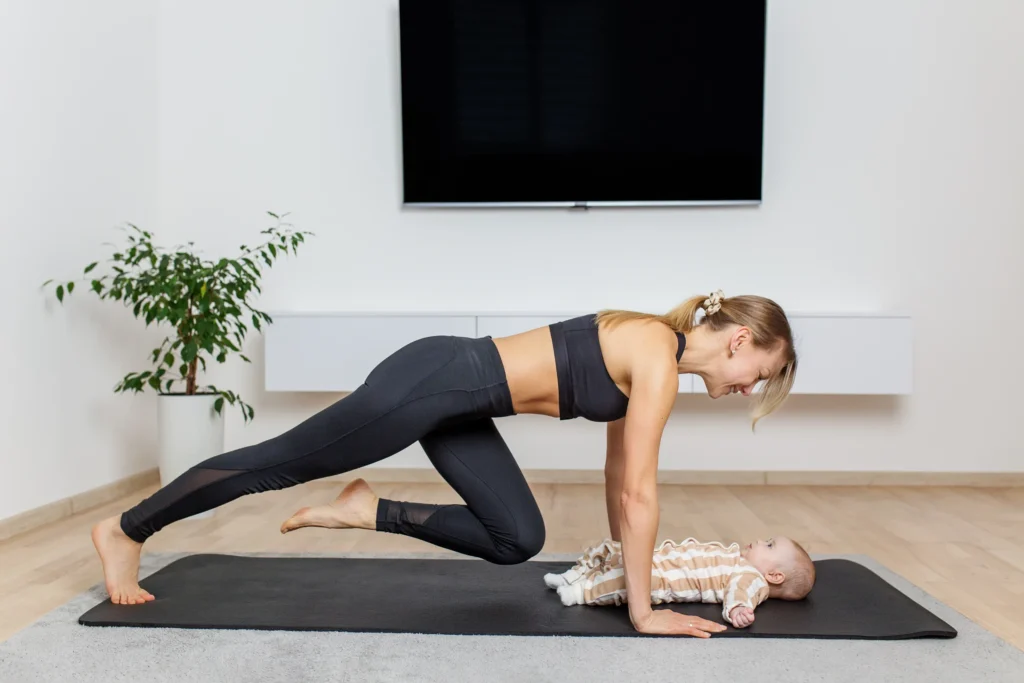
Yes, pelvic floor exercises for prolapse help most people with mild-to-moderate symptoms. Supervised pelvic floor muscle training is the standard first non-surgical option. The UK's National Institute for Health and Care Excellence (NICE) recommends at least 16 weeks of supervised training for symptomatic stage 1-2 prolapse, and the largest trial on the question, the POPPY …

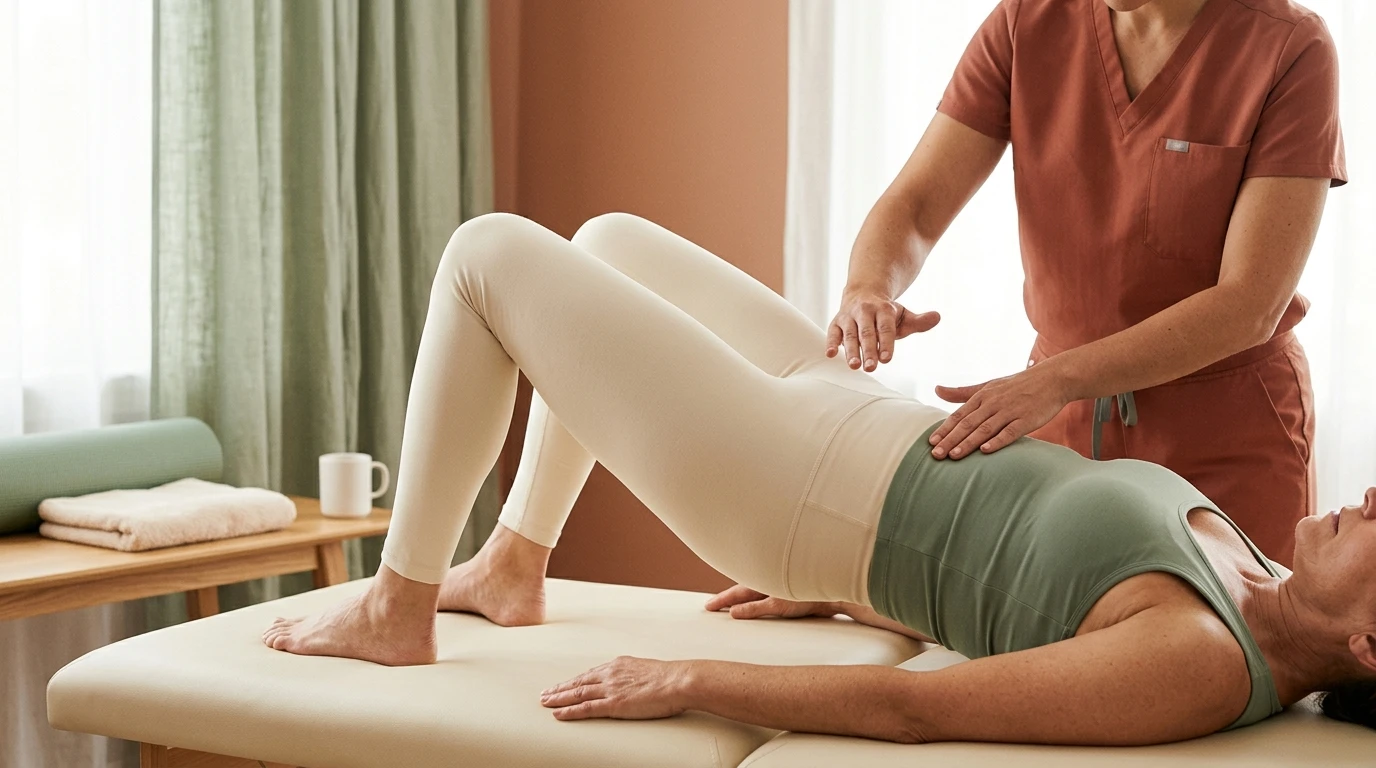
Yes, pelvic floor exercises for prolapse help most people with mild-to-moderate symptoms. Supervised pelvic floor muscle training is the standard first non-surgical option. The UK’s National Institute for Health and Care Excellence (NICE) recommends at least 16 weeks of supervised training for symptomatic stage 1-2 prolapse, and the largest trial on the question, the POPPY trial (447 women), found fewer prolapse symptoms at 12 months in women who trained. The evidence also has limits. Training mainly reduces symptoms and bother, and only a minority of women see the prolapse move up a full stage. This guide covers the exercises and how to do them correctly, which prolapse exercises to avoid, what else helps without surgery, and the red flags that mean you shouldn’t wait. It also explains what pelvic floor therapy for prolapse looks like in practice.
This article is educational and does not replace an exam. Prolapse needs to be diagnosed and staged by a qualified clinician, and the right plan depends on your own assessment.
Key Takeaways
- Supervised pelvic floor muscle training (PFMT) is a first-line option for symptomatic stage 1-2 prolapse. NICE advises giving it at least 16 weeks and continuing if it helps.
- In trials, training reduced symptoms. In one blinded trial, 19% of women who trained improved by one prolapse stage, compared with 8% of controls. Exercise usually manages prolapse rather than reversing it.
- Technique matters. After brief verbal instructions, only 49% of women did a correct Kegel, and 25% used a technique that could potentially promote leaking, which is the opposite of what you want.
- Reduce or modify heavy lifting, running, jumping and straining on the toilet. Walking is encouraged.
- If you can’t urinate, have severe lower-abdominal pain, or have a bulge that won’t go back in and is painful, bleeding or ulcerated, get medical care the same day.
Your prolapse plan at a glance
| What | Do this | Why |
|---|---|---|
| Daily prolapse exercises | 10 long squeezes (build up to about 10 seconds) plus 10 quick squeezes, 3 times a day | Standard pelvic floor training dose |
| Technique check | Have a pelvic floor therapist confirm you’re squeezing and lifting rather than bearing down | About half of women get it wrong from verbal instructions alone |
| Breathing | Breathe out on effort (lifting, standing up, pushing); don’t hold your breath | Holding your breath raises the pressure that pushes down on the pelvic floor |
| Lifting | Keep heavy lifting to a minimum; bend your knees and exhale as you lift | NICE lifestyle advice for prolapse |
| Bowels | Prevent constipation with fiber, fluids and walking; don’t strain | Straining makes prolapse worse |
| Give it time | At least 16 weeks of consistent training before judging results | NICE’s minimum trial period |
| Get checked | A bulge, heaviness, leaking or trouble emptying your bladder | Staging decides whether exercise alone is enough |
| Go now | Can’t urinate, severe abdominal pain, or a stuck, painful or bleeding bulge | Possible acute urinary retention or tissue damage |
What Pelvic Organ Prolapse Is and Why the Pelvic Floor Matters
Pelvic organ prolapse (POP) happens when one or more pelvic organs (the bladder, uterus, bowel or the top of the vagina) drop from their normal position and bulge into the vagina. Normally these organs are held up by the pelvic floor muscles together with ligaments and connective tissue. When that support weakens or is stretched, typically by childbirth, aging, the drop in estrogen after menopause or years of extra pressure, the organs can descend. According to the MedlinePlus entry on uterine prolapse from the US National Library of Medicine, the usual symptoms are pelvic pressure or heaviness, low backache, urinary leaking or urgency, and constipation. They tend to get worse with long periods of standing or sitting, exercise or lifting.
How common it is depends on how you count it. A nationally representative US study in JAMA of 1,961 women found that 2.9% reported symptoms of prolapse, meaning they could see or feel a bulge. A review in the International Urogynecology Journal puts prevalence at 3-6% when defined by symptoms and up to 50% when defined by vaginal examination. A Cochrane review notes that some degree of prolapse is seen in 50% of women who have given birth. Many women with a mild prolapse on exam never have symptoms, so treatment is aimed at symptoms and bother, not at the anatomy alone.
The types: bladder, uterine and vaginal-wall prolapse
- Cystocele (bladder prolapse): the bladder bulges into the front wall of the vagina. This is the type most people mean when they search for exercises for a prolapsed bladder.
- Uterine prolapse: the uterus and cervix descend into the vaginal canal.
- Rectocele: the rectum bulges into the back wall of the vagina.
- Enterocele and vaginal vault prolapse: the small bowel or the top of the vagina drops. This is more likely after a hysterectomy.
Cystocele and rectocele are both forms of vaginal-wall prolapse, and many women have more than one type at the same time. Rectal prolapse, where the rectum itself protrudes through the anus, is a different condition and is usually managed by colorectal specialists. This article is about prolapse in women; pelvic floor problems in men are covered in our article on pelvic floor therapy for men.
Stages of prolapse (0-IV)
Clinicians grade prolapse with the POP-Q system, measured against the hymen (the tissue at the vaginal opening). The definitions below come from American Family Physician:
| Stage | Where the lowest point of the prolapse sits | What it usually means for treatment |
|---|---|---|
| 0 | No prolapse | Nothing to treat |
| I | More than 1 cm above the hymen | Often symptom-free; exercise and habits are first-line if bothersome |
| II | Within 1 cm above or below the hymen | NICE recommends supervised PFMT for at least 16 weeks first |
| III | More than 1 cm below the hymen, but not complete | Trials included stage III; a pessary or surgical opinion is often discussed too |
| IV | Complete eversion | Needs a gynecologist or urogynecologist; exercise supports care but isn’t enough alone |
The stages of prolapse matter because they help decide whether exercise alone is a reasonable first step. Only an exam can stage a prolapse, so a symptom checklist can’t do it.
Who gets prolapse and at what age
A 2022 meta-analysis in the American Journal of Obstetrics & Gynecology of 27 studies and 47,429 women confirmed vaginal delivery and number of births as risk factors, along with older age, higher BMI and higher birthweight. A levator ani injury (damage to the main pelvic floor muscle during birth) carried roughly four times the odds of prolapse. Cesarean delivery was protective. MedlinePlus adds chronic cough, obesity, repeated heavy lifting and loss of estrogen after menopause, and notes that straining from long-term constipation can make the problem worse. The NHS also lists hysterectomy and connective-tissue conditions such as joint hypermobility syndrome, Ehlers-Danlos syndromes and Marfan syndrome, which is why prolapse sometimes appears in women who have never given birth.
Age plays a clear role. American Family Physician reports that symptomatic prolapse peaks at about 5% in women aged 60-69. A long-term follow-up of the POPPY trial describes prolapse as affecting around 40% of women over 50. Prolapse can also show up much earlier, especially in the months after a vaginal birth.
Can Pelvic Floor Exercises Help Prolapse? What the Evidence Shows
This is the question most people ask first, and most exercise lists answer it without evidence. Here is what the main trials and reviews of pelvic organ prolapse exercises actually found.
| Source | Who was studied | What was found | What it means for you |
|---|---|---|---|
| NICE guideline NG123 (UK, 2019) | Guideline for women with prolapse | Consider supervised PFMT for at least 16 weeks as a first option for symptomatic stage 1-2 prolapse; continue if it helps | Exercise is a legitimate first treatment, not just a stopgap |
| POPPY trial, The Lancet (2014) | 447 women with stage I-III prolapse, 25 centres in the UK, New Zealand and Australia | One-to-one PFMT reduced prolapse symptom scores more than a lifestyle leaflet (mean reduction 3.77 vs 2.09) at 12 months | Individual coaching beat written advice |
| Brækken et al., AJOG (2010) | 109 women, stage I-III, assessor-blinded | 19% of the training group improved one stage vs 8% of controls; bladder lifted 3.0 mm and rectum 5.5 mm more than controls | A real but modest change in position for some women |
| Cochrane review (2011) | Pooled randomized trials | PFMT increased the chance of improving prolapse stage by 17% compared with no training | Consistent direction of benefit across trials |
| International Urogynecology Consultation (2022) | Review of the RCT evidence | Good evidence from 11 RCTs for reduced symptoms and/or a one-stage improvement in stage I-III; no added benefit when PFMT was added around surgery in 9 of 10 RCTs; no serious adverse effects | Strongest for mild-to-moderate prolapse treated without surgery |
| POPPY 11-year follow-up (2023) | 293 women from the original trial | 43.6% of the training group needed further prolapse treatment vs 52.8% of controls | Benefits may carry into the long term |
What exercises can do
For most women with mild-to-moderate prolapse, consistent pelvic floor training can reduce symptoms such as heaviness and dragging, and how much they bother you. In some women it modestly lifts the bladder or rectum. It may also lower the long-term odds of needing further treatment. It’s also low-risk: the Brækken trial reported that pelvic floor muscle training “is without adverse effects,” and the 2022 consultation found no serious adverse effects reported across trials. Results vary from person to person, and nobody can promise you a specific outcome.
What exercises can’t do
Can pelvic floor exercises reverse prolapse? Not reliably. American Family Physician states that training may give a small symptom improvement in mild prolapse but “does not reverse or treat pelvic organ prolapse,” and in the most precise trial only about one in five women moved up a stage. Exercise also doesn’t replace a pessary or a surgical opinion when an advanced prolapse is bothersome. NICE recommends offering surgery when non-surgical treatment hasn’t helped or isn’t wanted. Adding a training program around prolapse surgery showed no clear benefit in most trials. Exercise is a way to manage prolapse, not a way to remove it.
How long before you notice a difference
NHS inform guidance says it may take several weeks before you notice any change in pelvic floor strength. For prolapse, NICE sets the minimum supervised trial at 16 weeks, and POPPY measured its main result at 12 months. Plan for months of consistent practice rather than days. If you see no change after a full, correctly performed 16-week program, that’s useful information for your clinician, not a sign you failed.
Pelvic Floor Exercises for Prolapse: A Step-by-Step Program
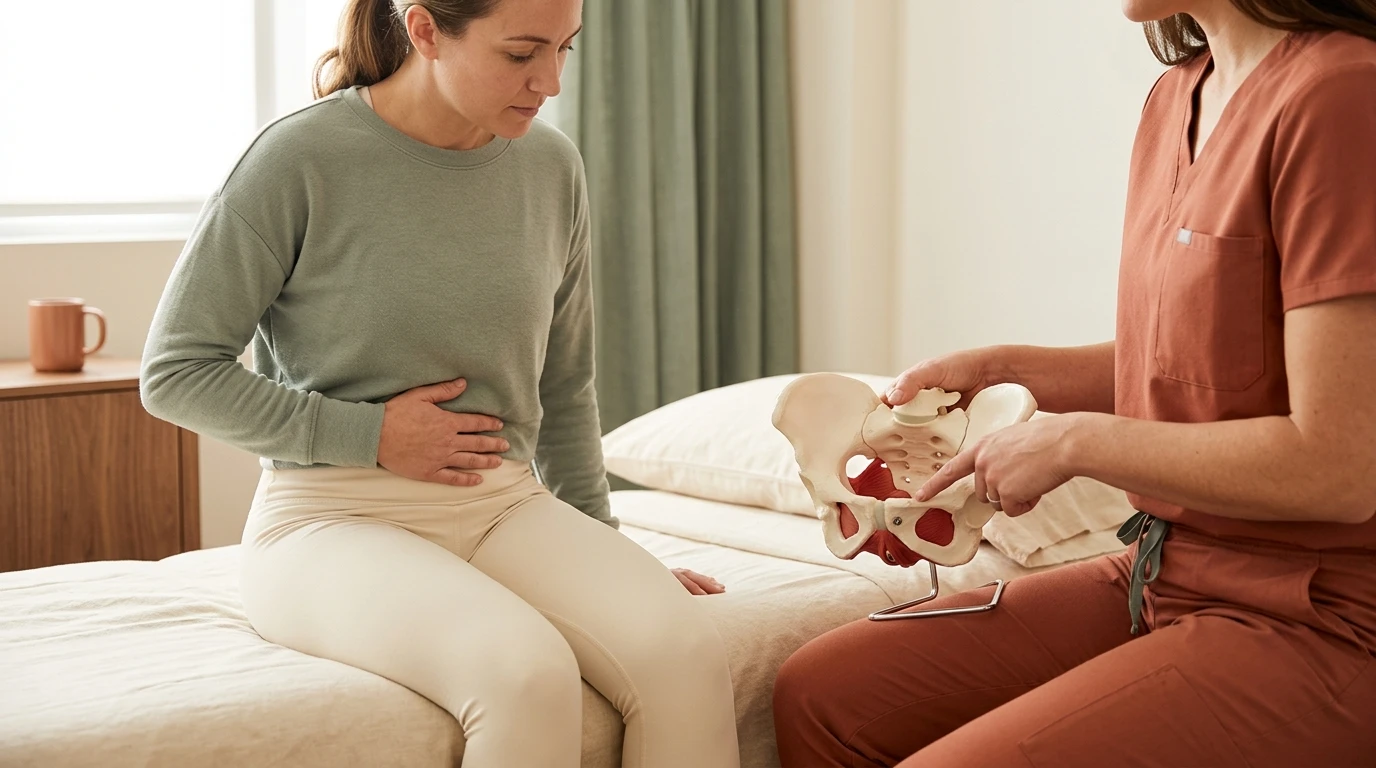
These are the core physical therapy exercises for pelvic floor prolapse. They’re the same building blocks the trials used, arranged in the order a therapist usually teaches them. Your own program should be adjusted after an assessment.
Step 1: Find the right muscles
Sit or lie comfortably with your thighs, buttocks and stomach relaxed. Imagine stopping yourself from passing wind, and at the same time stopping the flow of urine. The squeeze should feel like a lift up and in, not a push down. You shouldn’t clench your buttocks, squeeze your thighs together or hold your breath. Getting this right is harder than it sounds. In a classic study by Bump and colleagues, only 49% of 47 women performed an ideal pelvic floor contraction after brief verbal instruction, and 25% used a technique that could potentially promote incontinence. The authors concluded that simple verbal or written instruction isn’t adequate preparation. That’s why a hands-on check by a pelvic floor therapist is worth it before you put in months of practice.
Step 2: The Kegel, done correctly
Kegel exercises for prolapse use two kinds of squeeze. NHS inform describes the standard routine:
- Long squeezes: squeeze and lift, hold for up to 10 seconds (work up to it), then fully relax for about 5 seconds. Repeat up to 10 times.
- Quick squeezes: squeeze and lift strongly for 1 second, then let go. Repeat up to 10 times.
- Frequency: 10 long plus 10 quick squeezes, 3 times a day.
American Family Physician notes that good results are generally achieved with 45-60 contractions a day, divided into two or three sets. That’s consistent with the NHS routine once you’ve built up. The relaxation between squeezes is just as important as the squeeze itself. A muscle that never lets go tires quickly and can become tight and painful.
Step 3: Breathe out on the effort (pressure management)
Every time you hold your breath and strain, whether you’re lifting a toddler, getting up from a low chair or pushing a heavy door, pressure inside your abdomen pushes down on the pelvic floor. The habit our pelvic floor therapist teaches is simple: breathe in to prepare, then breathe out as you exert, gently lifting the pelvic floor as you exhale. Relaxed diaphragmatic (belly) breathing is the base for this.
Breathing-focused programs support training rather than replace it. A 2023 review of seven randomized trials found that adding hypopressive (breathing-and-posture) exercise to pelvic floor training added no extra benefit. Pelvic floor training was more effective than hypopressives alone, and there was no evidence that any other exercise program beats pelvic floor training for prolapse.
Step 4: “The Knack”: brace before you cough, sneeze or lift
The Knack is a quick, strong pelvic floor contraction made right before a cough, sneeze, laugh or lift, as Cleveland Clinic describes it. It braces the pelvic floor against the sudden downward pressure. Both groups in the Brækken trial were taught it. It’s one of the most practical skills to carry into everyday life, especially if you also leak with coughing. According to American Family Physician, about 40% of women with prolapse also have stress urinary incontinence.
Step 5: Supporting strength: bridges, side-lying hip work, supported squats
Once you can do a reliable squeeze, these moves help you get back to everyday loads. They support the pelvic floor program but don’t replace it, since no other exercise program has been shown to outperform pelvic floor training itself:
- Glute bridge: lie on your back, knees bent. Breathe out, lift the pelvic floor, then lift your hips. Lower slowly while breathing in. Start with 8-10.
- Side-lying clam: lie on your side with your knees bent. Keep your feet together and open the top knee, exhaling as you lift. This builds hip strength that helps with stairs and lifting.
- Supported mini squat: hold a counter, sit back partway, and breathe out as you stand. This is practice for getting up from a chair or lifting from a low surface.
When the pelvic floor is one piece of a larger strength or rehab picture, such as after an injury or with weak hips, a broader physical therapy program can be built around it.
Do exercises differ for bladder, uterine or vaginal-wall prolapse?
Mostly no. The POPPY and Brækken trials enrolled women by prolapse stage (I-III) rather than by prolapse type, and the core program was the same pelvic floor training. Exercises for a prolapsed bladder, exercises for uterine prolapse and vaginal prolapse exercises therefore all share the same foundation. What changes is the habit focus:
- Bladder prolapse: emptying the bladder fully, for example by leaning forward or waiting and trying again, and watching for urinary symptoms.
- Rectocele: bowel habits, posture on the toilet and avoiding straining.
- Uterine prolapse: paying close attention to symptoms after long periods of standing and lifting.
A therapist may also adjust how the squeeze is cued, depending on which area is weakest on exam.
When Kegels are the wrong place to start
Not every pelvic floor is weak. Some are too tight (overactive), and Cleveland Clinic notes that in that case strengthening exercises can make symptoms worse and relaxation work is recommended first. Signs that this may apply to you include pain with sex, pain with pelvic floor exercises, difficulty starting urination or a feeling that you can’t fully let go. Our article on pelvic floor dysfunction symptoms explains the difference between a weak and an overactive pelvic floor in more detail.
A 16-Week Progression Plan
NICE’s 16-week minimum gives a natural timeframe for a structured program. The table below shows how our pelvic floor therapist typically stages safe exercises for pelvic floor prolapse. It’s a general framework only: your own plan depends on your assessment, your stage and what your body tolerates.
| Weeks | Position | Daily dose | Focus | Move on when… |
|---|---|---|---|---|
| 1-2 | Lying down | Short holds (3-5 s) plus quick squeezes, 2-3 times a day | Learning and checking the correct lift-and-relax; diaphragmatic breathing | You can squeeze and fully relax without bearing down, holding your breath or clenching your buttocks |
| 3-6 | Lying, then sitting | Build to 10 long (about 10 s) plus 10 quick, 3 times a day | Endurance and full relaxation between reps | You can complete the full set without the squeeze fading |
| 7-12 | Standing; add bridges, clams and mini squats | Same dose, plus 1 set of supporting strength moves | The Knack; breathing out on effort during daily tasks | You use the Knack automatically when you cough or lift, with no increase in heaviness |
| 13-16+ | Functional: lifting, stairs, your chosen activity | Maintenance sets daily | Getting back to the activities you care about, with modifications | Symptoms are stable or better; continue afterwards if it’s helping, as NICE advises |
One rule applies at every stage: if heaviness, bulging or leaking gets worse after a new step, go back to the previous level. If it keeps getting worse, get checked.
Prolapse Exercises to Avoid or Modify
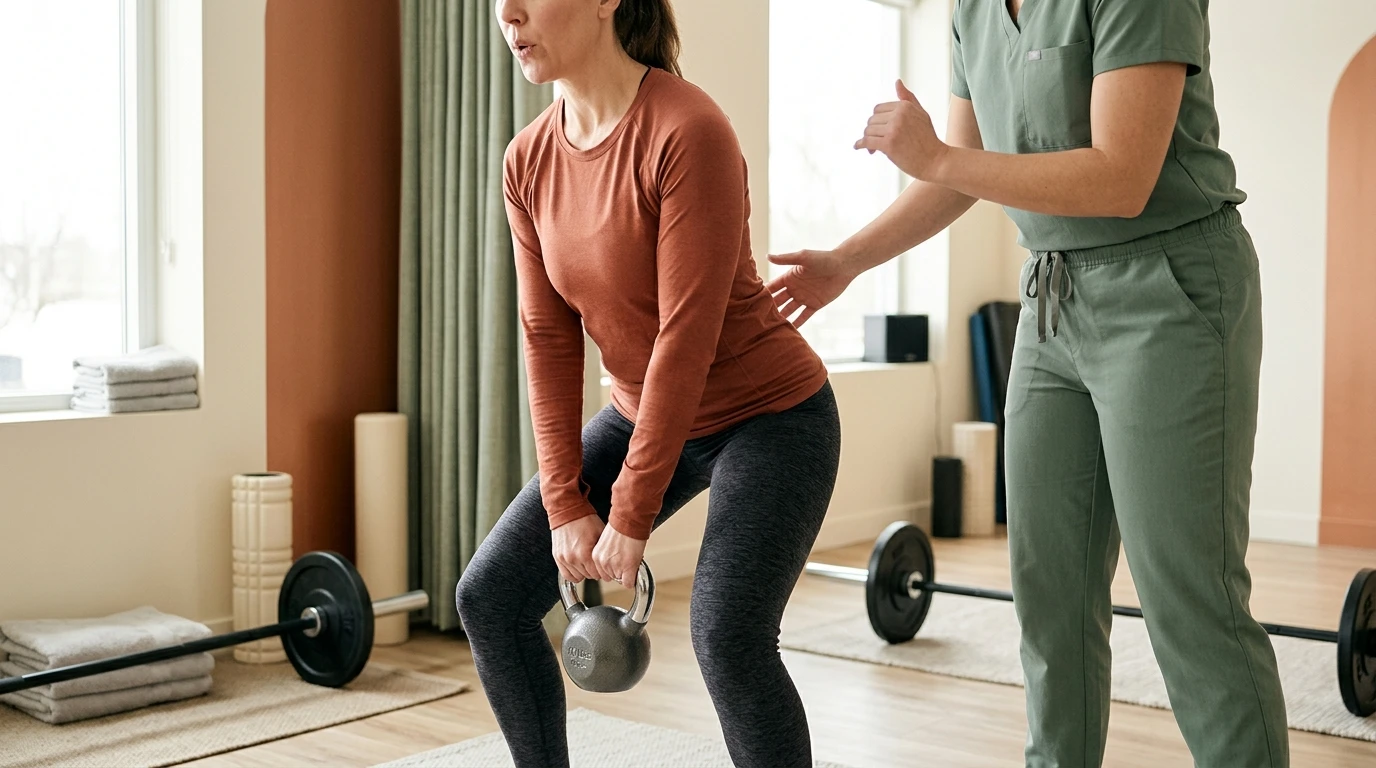
The biggest worry people with prolapse share online is making it worse. Fear often leads them to stop exercising altogether, which isn’t the goal. The NHS advises avoiding activities that put a lot of strain on the pelvic floor, such as heavy lifting, running and trampolining, while actively recommending gentle exercise like walking. The aim is to modify, not to stop moving. The same principles apply whether you’re searching for prolapsed uterus exercises to avoid or bladder prolapse exercises to avoid:
| Activity | Why it can aggravate symptoms | Lower-pressure swap |
|---|---|---|
| Heavy lifting (groceries, kids, weights, moving furniture) | Raises abdominal pressure; NICE advises minimizing it, and MedlinePlus lists repeated heavy lifting as a cause | Lighter loads, carrying closer to the body, bending your knees and breathing out as you lift |
| Running, jumping, trampolining, jump rope | Repeated impact loads the pelvic floor many times a minute | Brisk walking, swimming, cycling, elliptical |
| Crunches, sit-ups, heavy planks | Strong forward bracing pushes pressure downward | Deep core work coordinated with breathing (supine marching, modified side planks) |
| Deep heavy squats, leg press, burpees | A heavy load plus breath-holding at the bottom of the movement | Mini or supported squats with lighter weight, exhaling on the way up |
| Straining on the toilet | MedlinePlus notes straining from constipation makes prolapse worse | See the bowel habits section below |
None of these pelvic floor prolapse exercises to avoid are banned forever. The table describes what to scale back while symptoms are active and what to return to gradually with guidance.
Can you still strength train with prolapse?
Often, yes. The guidance doesn’t ban lifting; NICE says to minimize heavy lifting. Many women continue strength training by lowering the load, breathing out on the effort, avoiding breath-holding and stopping a set when they feel heaviness. In our clinicians’ experience, how you lift often matters as much as what you lift, so a few sessions with a pelvic floor therapist to plan your program is a good idea if lifting is important to you.
The symptom rule
Your symptoms are the best feedback. Prolapse symptoms typically worsen with exercise, lifting and long periods of standing. If heaviness, dragging, bulging or leaking is clearly worse after an activity or by the end of the day, scale that activity back. If symptoms keep worsening despite changes, book an assessment.
What Else Helps Prolapse Without Surgery
If you’ve searched how to fix a prolapsed bladder without surgery, or how to fix a prolapse without surgery in general, the honest answer is that no exercise or habit reliably makes a prolapse disappear. Several non-surgical steps can reduce symptoms, though, often enough that surgery never becomes necessary. Pelvic floor therapy for prolapse is one of them. The others are below.
Daily habits that lower pelvic pressure
- Weight: NICE suggests losing weight if your BMI is over 30, and higher BMI is a confirmed prolapse risk factor.
- Bowels: eat more fiber, drink enough water and walk regularly to prevent constipation, and don’t strain. If straining is a constant problem, pelvic floor therapy for constipation works on toilet posture and how the muscles coordinate during a bowel movement.
- Cough: get a chronic cough treated, and if you smoke, quitting reduces the persistent coughing that pushes on the pelvic floor.
- Lifting: minimize heavy lifting and use the Knack and exhale-on-effort for the lifting you can’t avoid.
Pessaries
A pessary for prolapse is a removable silicone device placed in the vagina to support the prolapsed organs. NICE lists it as an option on its own or alongside supervised pelvic floor training. A 2016 randomized trial in Obstetrics & Gynecology of 276 women found that adding a pessary to pelvic floor exercises improved prolapse symptoms and quality of life more than exercises alone over 12 months, with low and similar complication rates. American Family Physician reports that more than 85% of women who choose a pessary are successfully fitted, and up to 77% are still using one after a year.
Pessaries have downsides worth knowing about. NICE notes that more than one fitting may be needed, that the pessary should be removed at least every 6 months, and that complications include discharge, bleeding, difficulty removing it and the pessary falling out. Bacterial vaginosis occurs in up to 30% of pessary users, and MedlinePlus lists irritation and ulcers as possible side effects. Many women learn to remove and reinsert their own pessary. The TOPSY trial of 340 women found that self-management after a teaching session gave similar quality of life at 4 years to clinic-based care, with complications in 17.7% vs 22.0% of women, a difference that wasn’t statistically significant. Pessaries are fitted by a gynecologist or urogynecologist; Copper Wellness does not fit them. Pelvic floor therapy can run alongside one.
Vaginal estrogen around menopause
For women with prolapse who also have menopause-related vaginal or urinary symptoms, NICE says vaginal estrogen can be considered, and the NHS describes it as a cream, tablet or hormone-releasing ring placed in the vagina. It’s a prescription treatment and requires a prescriber’s evaluation; it isn’t something to start on your own. If you’re also dealing with broader menopause symptoms, menopause care at Copper Wellness starts with a full evaluation and labs by Elise Sterritt, FNP-BC, and any hormone treatment is a decision made after that evaluation. Prolapse staging itself belongs with a gynecologist.
When surgery comes into the conversation
NICE recommends offering surgery when non-surgical treatment hasn’t improved symptoms or a woman doesn’t want it. Several types of repair exist, and the choice belongs with a urogynecologist or gynecologic surgeon. Two points are useful to know beforehand. First, adding a pelvic floor program around surgery showed no clear added benefit in 9 of 10 trials. Second, the NHS no longer performs vaginal mesh surgery for prolapse unless there’s no alternative. Return to exercise after surgery depends on your surgeon’s protocol, so ask them directly.
When to Get Help: Symptoms, Stages and Red Flags
Symptoms worth an appointment
Book an assessment if you notice any of the following:
- A feeling of heaviness, dragging or “something coming down” in the vagina, often worse at the end of the day and easing when you lie down
- Seeing or feeling a bulge at or past the vaginal opening, which American Family Physician calls the most specific symptom
- Leaking urine when you cough, sneeze or exercise, urgency, or needing to go more often
- A feeling that your bladder or bowel isn’t emptying fully, or needing to press on the vagina to empty
- Repeated bladder infections
- Pain, discomfort or numbness during sex
- A low backache that comes with pelvic heaviness. Back pain has many causes, and physical therapy for back pain can address the musculoskeletal side once prolapse has been assessed.
Red flags: get care the same day
Seek urgent or emergency care if you have any of the following:
- You can’t urinate at all, or you have severe pain in your lower abdomen. Prolapse, including cystocele and rectocele, is a recognized cause of urinary retention, and the National Institute of Diabetes and Digestive and Kidney Diseases (NIDDK) advises seeing a health care professional right away, because acute urinary retention can be life-threatening.
- A bulge that won’t go back in and is painful, swollen or changing color.
- Bleeding, an open sore, or foul-smelling discharge from the vagina or the prolapsed tissue. MedlinePlus notes that severe prolapse can lead to ulceration and infection.
- Fever together with any of the above.
Any vaginal bleeding without an obvious cause also needs a physician’s evaluation, especially after menopause. If you’re unsure whether something is an emergency, our guide to urgent care vs. primary care can help, but never delay care when you can’t urinate.
Symptom triage: what it may mean, who to see, how soon
| Symptom | What it may mean | Who to see | How soon |
|---|---|---|---|
| Heaviness or dragging that eases when lying down | Likely symptomatic prolapse | Gynecologist for diagnosis; pelvic floor physical therapist for exercise and habits | Routine appointment |
| Bulge at or past the vaginal opening | Prolapse that needs staging | Gynecologist or urogynecologist | Within a few weeks |
| Leaking with cough, sneeze or exercise | Stress urinary incontinence, which often coexists with prolapse | Pelvic floor physical therapist | Routine appointment |
| Bladder not emptying fully, or repeated urinary infections | Prolapse affecting bladder emptying | Physician (gynecologist, urogynecologist or primary care) | Soon, within days |
| Can’t urinate at all, or severe lower-abdominal pain | Possible acute urinary retention | Emergency department | Now |
| Bulge stuck outside with pain, discoloration, bleeding or a sore | Possible tissue damage or ulceration | Same-day medical care | Today |
| Vaginal bleeding without an obvious cause | Needs evaluation for other causes | Gynecologist | Promptly |
Who treats what
- Pelvic floor physical therapist: assessment of muscle function, exercise technique, the 16-week program, pressure management, bladder and bowel habits, and getting back to exercise.
- Gynecologist or urogynecologist: diagnosis and POP-Q staging, pessary fitting, vaginal estrogen and surgery. For advanced cases, American Family Physician recommends referral to a subspecialist board-certified in female pelvic medicine and reconstructive surgery.
- Colorectal specialist: true rectal prolapse (protrusion through the anus).
What Pelvic Floor Therapy for Prolapse Looks Like at the First Visit
Prolapse physical therapy is very different from a printed exercise sheet. That difference matters, because in the POPPY trial the comparison group was given a lifestyle leaflet, and one-to-one training did better. At Copper Wellness, pelvic floor therapy is provided by Dr. Lisa Lagomarcino, an Illinois-licensed pelvic floor physical therapist. She earned her doctorate at Midwestern University-Chicago College of Osteopathic Medicine, where her research focused on rehabilitation for pelvic health and chronic pain, and she holds a specialized pelvic health certification from the Herman & Wallace Pelvic Rehabilitation Institute. A first visit typically follows these steps:
- A conversation first. You talk through your symptoms, when they’re worse, your births and health history, your bladder and bowel habits, and the activities you want to keep doing.
- An external exam. The therapist checks muscle strength, coordination, posture and joint mobility around the pelvis, hips and lower back.
- An internal exam, only if you choose. On Copper Wellness’s pelvic floor service, internal evaluation and treatment are completely optional and always discussed in advance, and external alternatives can be used instead.
- Treatment. Depending on what’s found, this can include guided exercise, manual techniques, biofeedback to show whether you’re squeezing correctly, and bladder and bowel training.
- A home program. You leave with exercises matched to your exam, plus lifestyle advice, and a plan for how to progress them over the coming weeks.
Pelvic floor visits are 45 minutes. If the exam suggests your prolapse needs staging, a pessary or a surgical opinion, you’ll be told plainly and pointed to a gynecologist or urogynecologist. Therapy can continue alongside that care.
Prolapse After Pregnancy and Around Menopause
After birth
Vaginal delivery and number of births are among the best-established prolapse risk factors, so it’s common to notice heaviness in the months after delivery. Can postpartum prolapse heal itself? Some early symptoms do settle as tissues recover, but the evidence on early postpartum pelvic floor training for prolapse is described as sparse and inconsistent, so no one can promise how a particular case will go. The better approach is to get assessed rather than guess. Our postpartum pelvic floor recovery guide covers the general recovery timeline, and postpartum pelvic floor therapy provides a hands-on assessment after birth. If you’re still pregnant, our article on pelvic floor exercises during pregnancy and pelvic floor therapy for pregnancy focus on preparing the pelvic floor before delivery.
Perimenopause and menopause
The NHS notes that prolapse becomes more common with age, particularly after menopause, and MedlinePlus lists the loss of estrogen after menopause among its causes. Lower estrogen affects the vaginal and pelvic tissues, which is why some women first notice symptoms in their late 40s or 50s even if their births were decades earlier. The exercise program and activity modifications above still apply. Vaginal estrogen may be worth discussing with a prescriber if you also have menopause-related vaginal or urinary symptoms. If you’re not sure which stage you’re in, our article on perimenopause vs. menopause explains the difference.
Why Prolapse Care at Copper Wellness Starts With an Assessment, Not a Handout
The evidence above points in one direction: individual, supervised training does better than written advice. That shapes how prolapse care works at our clinic at 1654 W. North Ave., which serves patients from Bucktown, Wicker Park, Lincoln Park, West Town and Logan Square:
- A doctorate-trained, Herman & Wallace-certified pelvic floor therapist who checks your technique hands-on, so you aren’t left guessing whether you’re squeezing correctly or bearing down.
- You set the pace of the exam. The internal exam is optional and always discussed beforehand.
- An integrative team under one roof. Our clinicians share one care plan and talk to each other. That includes physical therapy for broader strength work, Nurse Practitioner-led menopause evaluation, and chiropractic or massage for back and hip pain that often comes with prolapse. These services address those coexisting issues; they aren’t treatments for prolapse itself.
- Honest referrals. When a pessary, staging exam or surgical opinion is the right next step, we’ll say so and point you to a gynecologist or urogynecologist.
- An easy first step. A free virtual consultation with Dr. Stephanie Madden helps match you with the right specialist. We accept Blue Cross Blue Shield and Aetna as well as FSA and HSA, and you can check your insurance coverage before your first visit.
If you’d like to know what other patients say about their care, you can read our patient testimonials. Patients who live or work nearby can also find our physical therapy in Wicker Park page useful for directions and local details.
FAQ
Can you fix a prolapse with pelvic floor exercises?
Exercises can’t reliably make a prolapse go away, but they can meaningfully reduce symptoms. In the POPPY trial, women who did one-to-one training had fewer prolapse symptoms at 12 months than women given a leaflet. American Family Physician is clear that training does not reverse prolapse, so think of it as managing the condition well rather than removing it.
Can a prolapse go back in place with exercise?
Sometimes it improves a little. In a blinded trial, 19% of women who trained improved by one stage compared with 8% of controls, and the bladder and rectum sat a few millimeters higher on average. Most women’s prolapse stays at the same stage while their symptoms improve.
What is the best exercise for prolapse?
Pelvic floor muscle training (correct Kegels with both long and quick squeezes, done consistently) is the best-studied option. A 2023 review found no evidence that any other program, including hypopressives, works better. Breathing, the Knack and supporting strength moves help you use the pelvic floor in daily life.
How can I reverse prolapse naturally?
No natural method has been shown to reverse prolapse. What does help is a combination of supervised pelvic floor training for at least 16 weeks, weight loss if your BMI is over 30, preventing constipation and straining, treating a chronic cough and minimizing heavy lifting. Together these can reduce symptoms enough that many women don’t need surgery.
What should you not do with pelvic prolapse?
Avoid or scale back heavy lifting, running, jumping, trampolining, heavy abdominal exercises and straining on the toilet, especially while symptoms are active. You don’t need to stop exercising; switch to lower-pressure options and build back up gradually.
Does walking make prolapse worse?
For most women, no. The NHS recommends regular gentle exercise like walking, partly because it helps prevent constipation. If you notice more heaviness after very long walks, shorten them and build up gradually.
What can make prolapse worse?
The main factors are anything that repeatedly raises pressure on the pelvic floor: straining from constipation, chronic cough, repeated heavy lifting and excess weight. Prolapse also tends to become more common with age and after menopause.
Can exercise make my prolapse worse?
Pelvic floor training itself is low-risk: trials reported no serious adverse effects. The risk lies in poor technique. In one study, a quarter of women used a technique that could potentially promote leaking after verbal instructions alone, which is why a technique check is worth having.
What is the average age for prolapse?
Symptomatic prolapse peaks at about 5% of women aged 60-69, and the rate of prolapse surgery also peaks in that decade. Prolapse can also appear much younger, especially after vaginal births.
Can postpartum prolapse heal itself?
Some postpartum heaviness settles as the body recovers, but research on early postpartum training for prolapse is limited and inconsistent. Rather than waiting to see, get an assessment so you know your starting point and which exercises are right for you.
Is an internal exam required for pelvic floor therapy?
No. At Copper Wellness, internal evaluation and treatment are completely optional and always discussed in advance, and external alternatives can be used instead. Your therapist will explain what each option can show before you decide.
Ready to start with an assessment instead of guessing? Schedule your complimentary consultation at Copper Wellness: call (872) 267-1717, email Hello@CopperWells.com, or book online at copperwellness.janeapp.com. We see patients at our single Chicago clinic at 1654 W. North Ave.