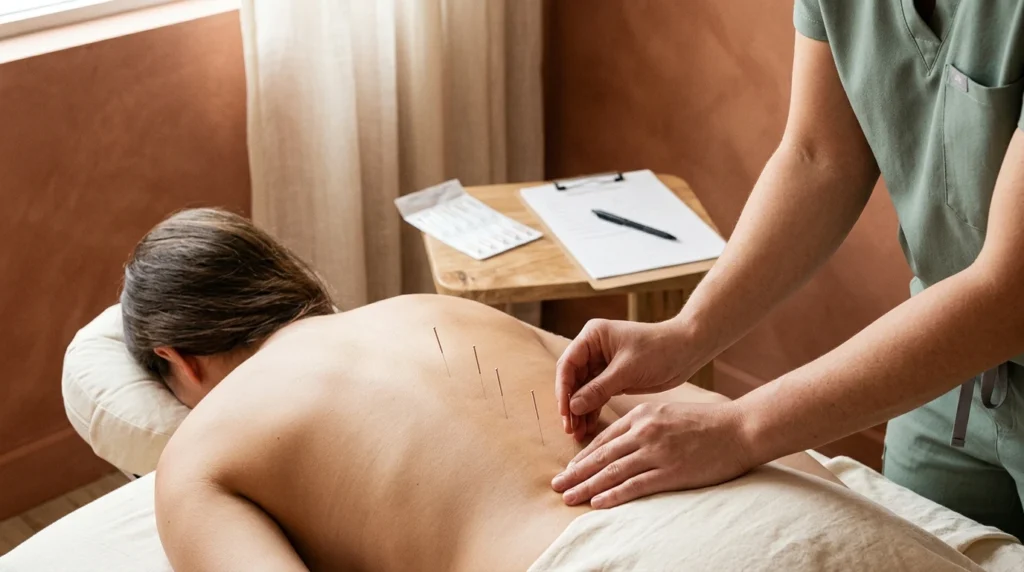
Ear seeding is a needle-free form of auriculotherapy. An acupuncturist tapes tiny seeds or metal pellets to specific points on the outer ear, and you press them gently for a few days between visits. So do ear seeds work? Systematic reviews find small-to-moderate, short-term benefits for sleep quality, chronic low back pain, period pain and …

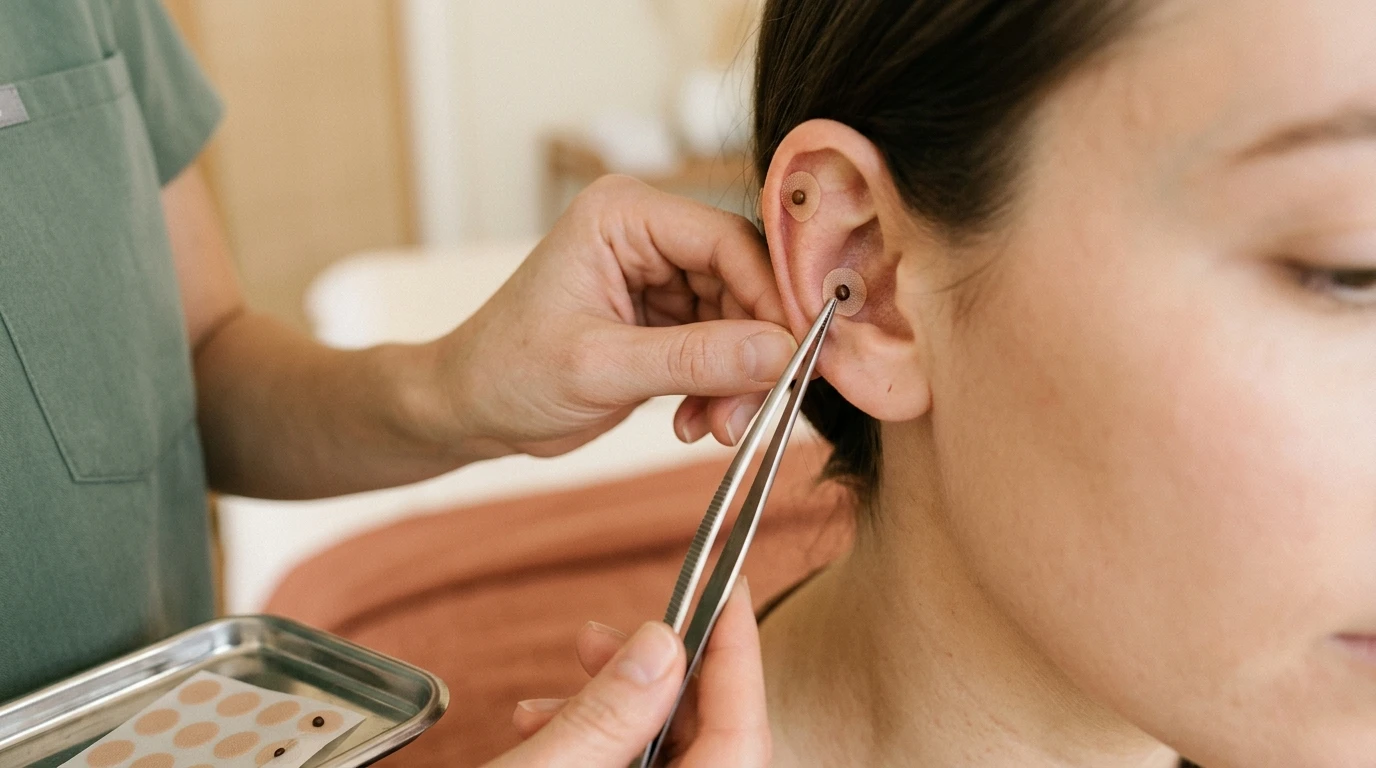
Ear seeding is a needle-free form of auriculotherapy. An acupuncturist tapes tiny seeds or metal pellets to specific points on the outer ear, and you press them gently for a few days between visits. So do ear seeds work? Systematic reviews find small-to-moderate, short-term benefits for sleep quality, chronic low back pain, period pain and some kinds of anxiety. Most of that evidence is rated low certainty, though, and the benefit shrinks when ear seeds are tested against a sham. The same body of research shows no clinically meaningful weight loss and no proof of lasting help with quitting smoking. Below, we go condition by condition through what the studies actually measured, in real numbers. We write as a clinic whose acupuncturists place ear seeds as one part of an acupuncture session.
This article is for education only. It isn’t a substitute for a diagnosis or a treatment plan from a licensed clinician who has evaluated you.
Key Takeaways
- What ear seeds are: small Vaccaria seeds or metal pellets on adhesive patches, taped to points on the outer ear. Nothing pierces the skin. The clinical literature calls this “auricular acupressure.”
- Where the evidence is best: sleep quality improved by about 3.4 points on the 21-point Pittsburgh Sleep Quality Index compared with sham. Chronic low back pain scores fell moderately by the end of treatment (standardized mean difference −0.65 to −0.78), but disability did not.
- What ear seeds don’t do: the average weight loss in trials was 0.66 kg (about 1.5 lb), which the reviewers called not clinically relevant. There is no consistent evidence of help staying smoke-free for six months or longer.
- Safety in numbers: a review of 43 studies found mostly skin irritation, tenderness and occasional dizziness, and no serious adverse events from auricular therapy.
- Best use: an add-on to a broader care plan, placed by a licensed acupuncturist. Ear seeds don’t replace diagnosis, prescribed medication or evidence-based therapy.
Ear Seeds at a Glance: What the Evidence Says, Condition by Condition
What are ear seeds used for, and which uses actually hold up? Most pages list ear seed benefits without saying how strong the evidence behind each one is. This table is built only from systematic reviews and Cochrane reviews, the highest level of evidence available, and summarizes what each one found. Each row is explained in detail, with its source, further down.
| Condition | Best evidence found | What it showed | Certainty / main limitation | Our verdict |
|---|---|---|---|---|
| Insomnia / sleep quality | Meta-analysis of 15 RCTs (1,429 adults); network meta-analysis of 25 RCTs (2,106 patients) | Sleep-quality score −3.4 points vs. sham (0–21 scale); about 56 extra minutes of total sleep (4 studies) | Mostly low to very low; one moderate-quality outcome | Can help short-term |
| Chronic low back pain | Meta-analysis of 7 RCTs (369 adults) | Pain SMD −0.65 at end of treatment (all time points pooled), −0.78 after 4 weeks of treatment; disability unchanged | Small trials | Can ease pain short-term, not function |
| Pain in general | Meta-analysis of 13 RCTs (806 participants) | SMD −1.59, falling to −0.69 once outlier trials were removed | Very high heterogeneity; only 7 of 22 trials used a sham | Might help as an add-on |
| Anxiety and stress (health workers) | Network meta-analysis of 15 studies (860 participants) | Seeds −5.20 vs. no intervention; placebo −4.42 | Low certainty | Might help; barely ahead of placebo |
| Anxiety before surgery | Reanalysis of 9 RCTs (711 patients) | −10.0 points vs. no treatment; −6.4 vs. sham, below the 8-point change patients notice | Benefit shrinks against sham | Might help; much of the effect is nonspecific |
| Period pain (dysmenorrhea) | Meta-analysis of 35 RCTs (3,960 participants) | Pain −1.45 points on a visual analog scale vs. control; used alone, no better than other active therapies | High heterogeneity | Might help, best as an add-on |
| Weight loss | Meta-analysis of 15 trials (1,333 patients) | −0.66 kg (≈1.5 lb); BMI −0.38 | Authors: not clinically relevant | No meaningful effect |
| Quitting smoking | Cochrane review, 38 studies | Short-term quit rate higher with continuous ear acupressure (RR 2.73, 7 studies); no long-term acupressure data | No consistent, bias-free evidence of sustained benefit | No evidence of lasting help |
| Cocaine dependence | Cochrane review, 7 studies (1,433 participants; ear needles) | No evidence of effectiveness | — | No good evidence |
| Addiction recovery support (NADA protocol) | Peer-reviewed narrative review (2016) | Widely used despite inconsistent research; seeds are little studied | Not a stand-alone treatment | Supportive add-on only |
| Battlefield acupuncture (ear needles) for pain | Meta-analysis of 9 RCTs (5 pooled, 344 patients) | No significant benefit vs. control groups | — | No good evidence |
| Migraine, fertility, hormone balance, allergies | No ear-seed-specific systematic review found | — | — | No good evidence for ear seeds |
These are average results across groups of trial participants, not predictions for any one person. Individual results vary, and no outcome can be promised.
What Is Ear Seeding?
Ear seeding (also called ear seeds, ear acupressure or, in clinical trials, auricular acupressure) belongs to a wider family of treatments called auriculotherapy, which stimulates points on the outer ear. So what are ear seeds, physically? With acupuncture ear seeds, a small seed or pellet sits on a piece of adhesive tape over a chosen point. The seed keeps light pressure on the skin, and you add more by pressing it with a fingertip several times a day. At our clinic, ear seeds are one technique within auricular acupuncture, which we provide as part of an acupuncture session rather than as a separate appointment.
One point of confusion is worth clearing up. Ear seeds are not piercings or ear jewelry. Social media often names ear points after piercing locations (helix, conch, rook), but seeds are taped on top of intact skin and come off when the tape is removed. They also aren’t a drug, and they don’t replace any prescribed treatment.
What Ear Seeds Are Made Of
Traditional Vaccaria seeds come from a flowering plant and are small, hard and round. Clinics also use stainless steel or gold-plated pellets, ceramic beads and small magnets. According to Cleveland Clinic’s patient guide, the adhesive pieces measure about 5 to 7 millimeters across and look like small stickers. Crystal “ear seeds” sold online are mostly decorative. We found no trial showing that gold, magnets or crystals work better than Vaccaria seeds, and we don’t claim any material has a health effect of its own. The practical differences are allergies (some people react to certain metals or tape adhesives) and how well the patch stays on.
Ear Seeds vs. Other Types of Auriculotherapy
Auriculotherapy includes several ways to stimulate the same ear points:
- Ear seeds: taped pressure, no skin penetration, worn for a few days.
- In-session ear needles: fine, sterile acupuncture needles placed for the length of a treatment and removed before you leave.
- Semi-permanent needles: tiny needles left in the ear for days. “Battlefield acupuncture,” developed for military medicine, uses this method.
- Electrical stimulation: mild current applied to needles, as in electroacupuncture, or through the skin with ear-clip devices studied as transcutaneous auricular vagus nerve stimulation (taVNS).
The distinctions matter because the evidence and the risks differ by method. Studies of one method can’t automatically be applied to another.
How Do Ear Seeds Work? Proposed Mechanisms vs. Proven Ones
What does ear seeding do inside the body? The honest answer is that nobody knows for certain. There are three main explanations, and they rest on very different amounts of evidence.
The Traditional Ear Map
Ear points have been used in Chinese medicine for a very long time. The modern ear “map” comes largely from the French physician Paul Nogier, who in the 1950s proposed that the ear represents the whole body in the shape of an upside-down fetus, so each region corresponds to an organ or body part. That map still guides how practitioners choose ear acupuncture points, including well-known points such as Shen Men. Treat it as a clinical framework that has been passed down and refined, not as proven anatomy. No imaging or dissection study has shown that a spot on the ear is wired to a specific distant organ in the way the map suggests.
The Vagus Nerve Claim, Checked
Many ear seed articles say the seeds work by stimulating the vagus nerve, which helps regulate heart rate, digestion and the stress response. Part of this is true: a branch of the vagus nerve does supply part of the outer ear. The details are much shakier than the claim suggests, though. An anatomical review in the Journal of Anatomy found that the literature “lacks a clear consensus on the auricular sites that are most densely innervated” by this branch. The underlying data come from about five cadaver studies of only 5 to 18 ears each, with considerable variation between them. The authors judged the concha (the bowl next to the ear canal) and the inner tragus to be likely vagal sites. That is a reasonable hypothesis, but it doesn’t show that pressing a seed on a given point produces a measurable vagal effect in a living person.
Why Expectation and Attention Matter
According to the National Center for Complementary and Integrative Health (NCCIH), part of the NIH, acupuncture has shown larger benefits against no treatment than against sham treatment. That pattern suggests nonspecific effects, such as patient expectation and the practitioner-patient relationship, contribute to the benefit. This doesn’t mean ear seeds are “just placebo.” It means a trial with a sham comparison is the fair test, and that is why the sham comparisons in the sections below get extra weight.
Do Ear Seeds Work? What Systematic Reviews Show
Is ear seeding legit, and do ear seeds really work? Before going through each condition, here is what the evidence generally looks like. Most ear seed trials are small and short, many come from a single country, and many compare ear seeds with no treatment rather than a sham. Systematic reviews pool those trials, so they are the best tool available, but they inherit the weaknesses of the studies they include. With that in mind, here is what ear seeds actually help with and how much.
Sleep and Insomnia
Sleep is the best-studied use of acupressure ear seeds. A meta-analysis in BMC Complementary and Alternative Medicine pooled 15 randomized trials of 1,429 adults with primary insomnia who used seeds (mostly Vaccaria) or magnetic pearls. Against sham or placebo, ear acupressure improved the Pittsburgh Sleep Quality Index by 3.41 points (5 studies). That was the only outcome rated moderate quality. Total sleep time rose by about 56 minutes (4 studies), but time to fall asleep improved by only about 10 minutes, which the authors did not consider clinically relevant. Compared with sleep medications, ear acupressure caused far fewer side effects (risk ratio 0.11). Most outcomes were still rated low or very low quality, and the authors concluded that “current evidence is not yet adequate to provide a strong support.”
A 2026 network meta-analysis in Medicine compared 11 types of auriculotherapy across 25 trials and 2,106 patients. Auricular acupressure beat control on sleep quality, but the highest-ranked approaches were all combinations, such as acupressure with other techniques, not seeds alone. The authors noted the findings still need confirmation. In practice, we see ear seeds as one tool within a broader plan for acupuncture for insomnia, alongside sleep habits and, where appropriate, self-acupressure such as the routine in our guide to pressure points for sleep. Chronic insomnia that lasts more than a few weeks deserves a medical evaluation, because other problems, such as sleep apnea, depression or medication side effects, can be behind it, and ear seeds won’t address them.
Chronic Back Pain and Other Pain
For chronic low back pain, a meta-analysis in Evidence-Based Complementary and Alternative Medicine (2017) included 7 trials and 369 adults. Ear acupressure reduced pain at the end of treatment, with a standardized mean difference of −0.65 across all end-of-treatment measurements and −0.78 after four weeks of treatment, which are moderate effects. Disability, measured with the Roland-Morris questionnaire, did not improve significantly. Pain scores improved, but people’s ability to do daily tasks did not change measurably. Side effects were mild (ear tenderness, itching, tape irritation), and no one dropped out because of them.
A more recent randomized trial in the International Journal of Environmental Research and Public Health (2023) studied 56 people with persistent pain after spinal surgery (51 analyzed). Participants pressed their seeds four times a day for two minutes, five days on and two days off, for six weeks. The comparison group wore seeds on non-target points. Back pain, leg pain and nerve-pain scores improved more with the targeted points, and so did sleep efficiency measured by a wrist device. Self-reported sleep quality, however, did not differ between groups. The trial was single-blind, meaning only the participants didn’t know their group.
Looking at pain in general, an earlier 2014 meta-analysis of auricular therapy in the same journal pooled 13 trials (806 participants) and found a large average effect (SMD −1.59). The results were extremely inconsistent, though (heterogeneity of 95%), and the effect dropped to −0.69 when outlier trials were removed. Only 7 of the 22 trials it reviewed used a sham. A 2025 network meta-analysis in Supportive Care in Cancer (37 trials, 3,066 patients) ranked auricular acupuncture and auricular acupressure highest against placebo for cancer pain. The authors list concurrent pain-medication use among the limitations, so ear acupressure there is best understood as supportive care alongside oncology treatment, never in place of it.
Pain management is a core focus for Dr. Anais Jackson-Gonzalez, who holds a Doctorate in Acupuncture and Chinese Medicine from the National University of Health Sciences and works across acupuncture, cupping, gua sha and moxibustion. For back pain, ear seeds are usually one step in a fuller course of acupuncture for back pain or acupuncture for sciatica, often coordinated with chiropractic care or physical therapy. Results vary from person to person.
Stress and Anxiety
Ear seeds for anxiety are popular, and the most detailed evidence comes from studies of health workers. A network meta-analysis in the Revista Latino-Americana de Enfermagem (2022) pooled 15 studies with 860 participants, mostly nursing staff. Against no intervention, anxiety scores fell by 7.14 points with semi-permanent needles, 6.65 with magnetic pellets, 5.20 with seeds and 4.42 with placebo. Seeds came out only modestly ahead of placebo, and the overall certainty of the evidence was rated low. The review could not draw any conclusion about burnout.
An earlier randomized trial in the Revista da Escola de Enfermagem da USP (2012) compared needles, seeds and no treatment in 75 nursing professionals over eight sessions, using the Shen Men, Kidney and Brainstem ear points. The significant difference was between control and needles. Needles did better than seeds for people with high stress scores, and the effect lasted 15 days. (The ear point Shen Men is different from the wrist point HT7, which is sometimes also called Shenmen.)
For anxiety before surgery, a 2022 reanalysis in Frontiers in Psychiatry of 9 trials (711 patients) used an 8-point threshold on the State-Trait Anxiety Inventory as the smallest change patients notice. Ear acupressure beat no intervention by 10.0 points, a clinically meaningful difference. Against sham acupressure, the gap was 6.4 points, below that threshold. For depression, the evidence specific to ear seeds is limited, and persistent low mood always warrants an evaluation by a clinician. Ear seeds can sit alongside acupuncture for anxiety or acupuncture for depression, but not in place of therapy or prescribed medication.
Period Pain
A meta-analysis in Frontiers in Endocrinology (2023) included 35 trials with 3,960 participants. Ear acupressure reduced period pain by 1.45 points on a visual analog pain scale compared with control groups. It did better than painkillers or no treatment and helped as an add-on to other care. Used alone, it showed no advantage over acupuncture, Chinese herbs, moxibustion or other active therapies, and the results varied widely between trials. That fits how we use ear seeds within acupuncture for period pain and PMS: as one part of the plan. Severe, worsening or new pelvic pain needs a medical evaluation, because conditions such as endometriosis can be involved. Pelvic floor therapy may also be part of the picture.
Weight Loss and Appetite
Ear seeds for weight loss are heavily promoted, so it’s worth being precise here. A 2024 systematic review and meta-analysis in Frontiers in Neuroscience reviewed 22 trials, 13 of which used seed or bead acupressure, and pooled 15 of them (1,333 patients) in its meta-analysis. Average weight loss was 0.66 kg (about 1.5 lb), BMI fell by 0.38 and waist circumference by 1.44 cm (about half an inch). The authors wrote that “the size of the effect does not appear to be of clinical relevance.” Side effects were minor.
Ear seeds are not a weight-loss treatment. In acupuncture for weight loss, they can play a small supporting role around stress or habit-building. If weight is a medical concern, evidence-based options include prescription medications such as those in our GLP-1 weight loss program. These always require a medical evaluation, labs and ongoing supervision by our Nurse Practitioner, Elise Sterritt, FNP-BC, and they aren’t something to start on your own.
Smoking, Addiction Recovery and the NADA Protocol
The Cochrane review of acupuncture and related therapies for smoking cessation analyzed 38 studies. Continuous ear acupressure had the largest short-term effect (7 studies, 496 participants, risk ratio 2.73), but no trial reported long-term acupressure results. The reviewers found “no consistent, bias-free evidence” that acupuncture, acupressure or laser therapy gives a sustained benefit at six months or more. A separate Cochrane review on cocaine dependence (7 studies, 1,433 participants) concluded that there is “currently no evidence that auricular acupuncture is effective” for that condition.
The best-known standardized ear protocol is NADA ear acupuncture. It was developed at Lincoln Hospital in the South Bronx under Michael Smith, MD, and the National Acupuncture Detoxification Association was incorporated in 1985. It uses five points: Shen Men, Sympathetic, Kidney, Liver and Lung. A 2016 review in Substance Abuse and Rehabilitation notes that the protocol spread “despite inconsistent research support.” Vaccaria seeds or metal beads are sometimes used as a gentler alternative to needles, but they have little peer-reviewed research behind them. The review describes NADA as “a psychosocial intervention augmenting other treatments,” not a stand-alone procedure. Dr. Stephanie Madden’s earlier clinical work included a VA clinic and a substance-use recovery center. That background shapes how we frame ear protocols for recovery support: alongside counseling and medical care, never as a substitute for them.
What Ear Seeds Cannot Do
- Prevent migraines specifically. We found no reliable systematic review of ear seeds for migraine. NCCIH does cite moderate-quality evidence that body acupuncture may reduce migraine frequency, with a small advantage over sham. That is a different treatment, described on our acupuncture for migraines page.
- Relieve pain through battlefield acupuncture. A meta-analysis in the American Journal of Chinese Medicine (2021) by Mayo Clinic-affiliated researchers (9 trials, 5 pooled, 344 patients) found “no significant efficacy” for this semi-permanent ear-needle protocol compared with control groups. NCCIH reports the same finding.
- Treat fertility, hormone imbalance, allergies or “detox.” We found no credible ear-seed-specific trial base for these uses, even though some websites list them.
- Replace real treatment. Ear seeds don’t replace a diagnosis, prescribed medication, cognitive behavioral therapy for insomnia (CBT-I) or addiction treatment.
What the Numbers Mean in Real Life
- Weight: −0.66 kg is about 1.5 lb across an entire trial. The authors themselves called it not clinically relevant.
- Sleep: −3.4 points on a 0–21 sleep-quality scale is a real but partial improvement. Someone scoring 12 might move to about 8 or 9: better sleep, but not necessarily good sleep.
- Pre-surgery anxiety: −6.4 points vs. sham is below the 8-point change patients actually notice, so much of the benefit seen against no treatment probably comes from nonspecific effects.
- Period pain: −1.45 points on a visual analog pain scale is a modest change. The review doesn’t state the scale’s range, but on the common 0–10 version, a 7/10 cramp might feel closer to a 5 or 6.
Seeds vs. Needles vs. Sham: An Honest Comparison
The most common question we get after “do ear seeds work?” is whether seed acupuncture (seeds instead of needles) is as good as needles. The head-to-head data say usually not quite, but seeds carry less risk.
| Method | What it is | Evidence signal | Main risk |
|---|---|---|---|
| Ear seeds (auricular acupressure) | Seed or pellet taped to the skin, pressed at home for days | Ranked below semi-permanent needles and magnetic pellets for anxiety; needles beat seeds for high stress | Skin irritation, tenderness, tape reactions |
| In-session ear needles | Sterile needles placed by an acupuncturist, removed at the end of the visit | Stronger short-term signal than seeds in the stress trial | Minor bleeding or soreness; rare infection if technique is poor |
| Semi-permanent needles (e.g., battlefield acupuncture) | Tiny needles left in the ear for days | No significant benefit for pain in a meta-analysis | Infection and cartilage inflammation (perichondritis, chondritis) |
| Sham | Non-target points or inactive stimulation | Often produces part of the benefit itself | — |
The safety side of this trade-off is well documented. A review of reviews and case reports in Pain Medicine (2020) found that the main serious risks of extended auricular therapy, namely infection, perichondritis and chondritis, come mostly from embedded or indwelling needles. Extended acupressure with seeds, by contrast, “provides clinical benefit without the risks associated with embedded needles.” Seeds give up some effect in exchange for that lower risk. Different needling techniques also aren’t interchangeable, a point covered in our guide to dry needling vs. acupuncture.
How to Use Ear Seeds: Wear Time, Pressing and Removal
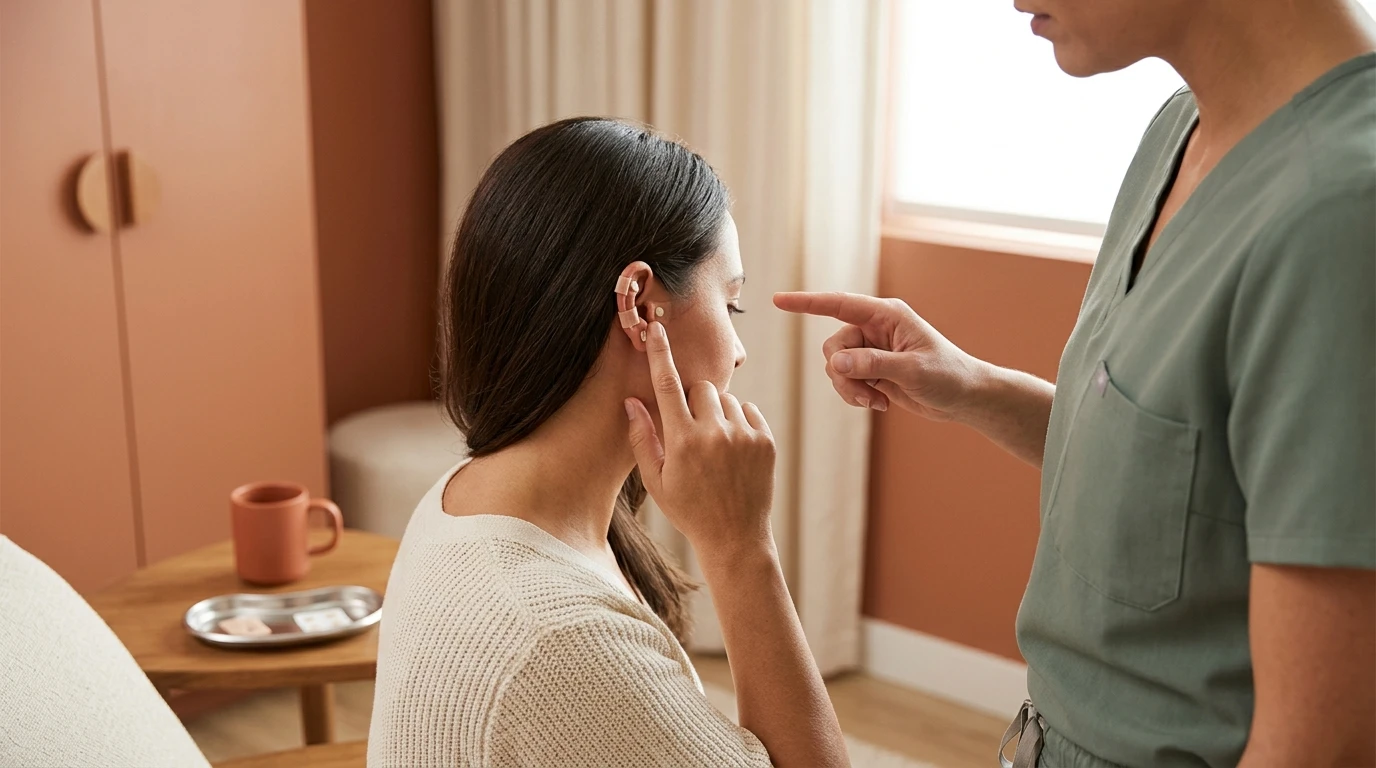
How long should you keep ear seeds on, and how often should you press them? Guidance varies between practitioners, so always follow the instructions your acupuncturist gives you for your specific plan. These are the general steps:
- Have them placed by a licensed acupuncturist. They check your skin, ask about allergies and choose points based on your assessment.
- Press gently a few times a day. Cleveland Clinic suggests rubbing 3–5 times a day in a small circular motion, firmly enough to feel it but not hard. In the spinal-pain trial above, participants pressed four times a day for two minutes.
- Keep the area clean and dry. Pat the ear dry after showering, and don’t pick at the tape.
- Remove them after about 3–5 days, or sooner if the tape loosens or the skin becomes irritated. Adhesive weakens over time.
- Give your skin a break between rounds. The spinal-pain trial used five days on and two days off.
- Remove them gently. Lift the tape from one edge, check that the seed came off with it, and look at the skin. If a seed has slipped into the ear canal, don’t dig for it (see the red flags below).
DIY Ear Seeding Kits vs. Professional Placement
You’ll find plenty of home kits with printed ear maps, and you won’t find a placement chart here. Point selection in the trials above was individualized or protocol-based and done by trained practitioners, and a home kit skips the assessment entirely. A clinician also checks first for things a kit can’t, such as broken or eczema-prone skin, recent cartilage piercings and adhesive allergies. Where to place ear seeds depends on why you want them and what your ear looks like, which is why your acupuncturist decides placement.
Ear Seed Safety: What the Adverse-Event Data Show
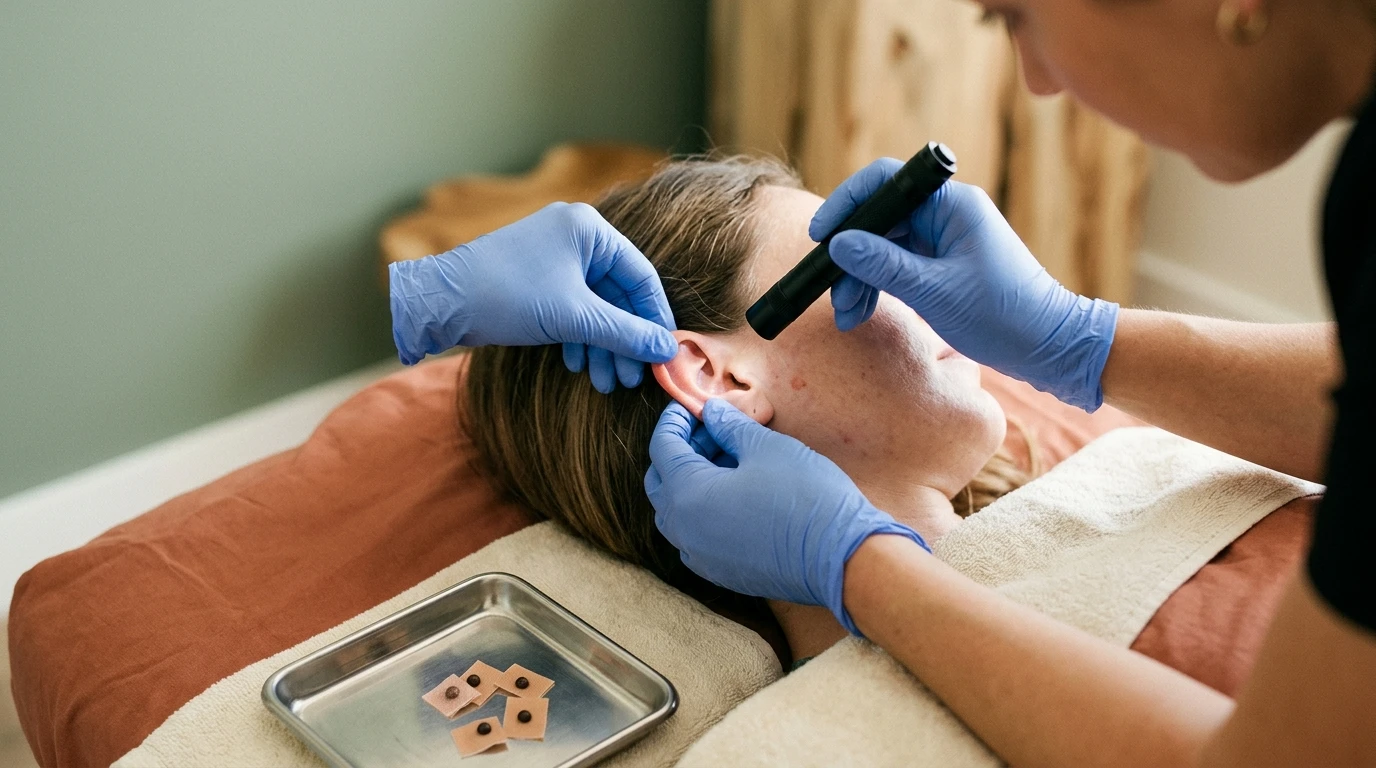
“Generally safe” is what most articles say. Here is the actual data. A systematic review of adverse events of auricular therapy (2014) covered 43 studies, 21 of them on auricular acupressure. Across the acupressure trials, it counted 63 cases of skin irritation, itching, allergy or redness in 13 studies (7 people withdrew because of them), 16 reports of tenderness or pain, 35 reports of discomfort and 3 of dizziness. One trial reported 18 pressure sores on the outer ear, all of which healed within 10 days of removing the tape. The review found no serious adverse events and called this “preliminary evidence that AT is a relatively safe approach.”
So why do ear seeds hurt sometimes? Mild tenderness when you press a seed is expected, since it is pressure on a small point. Pain that continues when you aren’t pressing, a sore spot under the tape, or redness that spreads beyond the patch is not normal. Remove the seeds and let the skin recover.
Who Should Skip Ear Seeds or Check First
- Pregnancy: Cleveland Clinic advises avoiding ear seeds during pregnancy. Its only stated exception is treatment specifically intended to stimulate labor, which is a decision for your obstetric provider, not something to try on your own. Tell your acupuncturist if you are or might be pregnant.
- Allergies to adhesive tape, latex or metals: alternative materials may be available.
- Broken, eczema-prone or infected skin on the ear.
- A recent cartilage piercing or ear surgery.
- Diabetes, a weakened immune system or slow wound healing: tell your clinician so they can decide whether ear seeds suit you.
Red Flags: When to Remove the Seeds and Get Care
- Remove the seeds and watch the skin if you have itching, mild redness under the tape or tenderness that lingers after pressing.
- Call a clinician the same day if redness spreads, the ear feels warm, swollen or painful, or a sore doesn’t start healing within a few days.
- Get urgent care if you have a fever with a hot, swollen ear (cartilage infection is the serious complication documented in the Pain Medicine review), or a seed has fallen into your ear canal (Cleveland Clinic notes you may need medical help to remove it).
- Call 911 or go to the ER for hives with swelling of the face, lips or throat, or any trouble breathing.
Not sure which level of care fits? Our guide to urgent care vs. primary care can help you decide.
What Ear Seeding Looks Like at Copper Wellness
At Copper Wellness, ear seeds are placed as part of an acupuncture session, not booked as a stand-alone service. Here is how the process works:
- Free virtual consultation. Talk through your goals and history first, in a free consultation.
- Intake and plan. Your acupuncturist, such as clinic founder Dr. Stephanie Madden, a Doctor of Acupuncture (AOMA Graduate School of Integrative Medicine) and board-certified herbalist, reviews your symptoms and decides whether ear seeds fit your plan at all.
- Acupuncture session. Body and/or ear points are treated during the visit.
- Seed placement. The ear is cleaned and the seeds are applied to the chosen points.
- Home instructions. You learn how often to press, how long to wear the seeds and when to remove them early.
- Review at your next visit. We check your skin, ask what changed (and what didn’t) and adjust the plan.
How people respond varies, and we’ll tell you honestly if ear seeds don’t seem to be adding anything for you.
Why Copper Wellness Treats Ear Seeds as One Tool in a Coordinated Plan, Not a Stand-Alone Fix
The research above points to one conclusion: ear seeds work best as one part of a plan, not as the whole plan. That is how our clinic is set up. Our acupuncturists, chiropractors, pelvic floor therapist, massage therapists and Nurse Practitioner work from a shared care plan and talk with each other about it. If ear seeds are part of your acupuncture in Bucktown, they might sit alongside herbal medicine, cupping therapy or gua sha. When symptoms call for a medical workup, our NP-led primary care and labs and imaging can look for underlying causes rather than just the symptoms.
- Evidence-first counseling: we’ll tell you which uses of ear seeds are supported and which aren’t, and say so when ear seeds aren’t the right tool.
- Real clinical credentials: both of our acupuncturists hold doctorates in acupuncture, and our team includes doctorate-trained chiropractors and a pelvic floor therapist, plus a board-certified Family Nurse Practitioner.
- Practical access: we accept Blue Cross Blue Shield and Aetna, as well as FSA and HSA payments, and our billing team verifies coverage before treatment. See our insurance page for details. Care is available in English and Spanish.
- One neighborhood clinic: a single location at 1654 W. North Ave. in Bucktown/Wicker Park, serving patients from Wicker Park, Lincoln Park, West Town and Logan Square.
FAQ
How long should you keep ear seeds on?
Most guidance says about three to five days, or less if the tape loosens or your skin gets irritated. Giving the skin a day or two of rest between rounds is common, and the spinal-pain trial above used five days on, two days off. Your acupuncturist will set the timing for your plan.
Do ear seeds hurt, and why do my ear seeds hurt?
A mild, achy tenderness when you press a seed is normal. Constant pain, a sore under the tape, or redness that spreads are signs of skin irritation or pressure injury. In that case, remove the seeds and let your clinician know.
Where should ear seeds be placed?
That depends on why you’re using them and on an assessment of your ear and skin. That’s why we don’t publish a do-it-yourself ear map. A licensed acupuncturist chooses the points and shows you how to press them.
Is ear seeding legit, or just placebo?
Both answers are partly true. Ear seeds generally beat no treatment, but the advantage shrinks against sham. For anxiety before surgery, it fell below the threshold patients would notice. Ear seeds are a real but modest tool for a few conditions, best used as an add-on.
Are ear seeds as effective as acupuncture needles?
In head-to-head data, usually not quite. Needles beat seeds for high stress in one trial, and seeds ranked below semi-permanent needles for anxiety. Seeds avoid the infection risk of needles left in the ear, so the choice is a trade-off your acupuncturist can explain.
Can ear seeds help me lose weight?
Not meaningfully. Trials averaged about 1.5 lb of weight loss, which the reviewers called clinically irrelevant. If weight is a health concern, talk with a clinician about evidence-based options, which require a medical evaluation.
Can I use ear seeds while pregnant?
Check with your acupuncturist first. Cleveland Clinic advises avoiding ear seeds during pregnancy, with an exception only for treatment specifically intended to stimulate labor, so always mention a pregnancy, or a possible one, before any ear treatment.
Are magnetic, gold or crystal ear seeds better than Vaccaria seeds?
We found no evidence that the material changes the results in any clinically important way. Choose based on skin sensitivity and allergies. For example, someone sensitive to metal may do better with Vaccaria seeds.
Can I get ear seeds without an acupuncture session at Copper Wellness?
No. At our clinic, ear seeds are placed as part of an acupuncture session, not as a separate treatment. That way, your acupuncturist can assess you first and fit them into a broader plan. Our FAQ page answers more general questions about visits.
Curious whether ear seeds belong in your care plan? Schedule your complimentary consultation at Copper Wellness. Call (872) 267-1717, email Hello@CopperWells.com, or book online. If ear seeds are a good fit, your acupuncturist will place them during your acupuncture visit at our Bucktown clinic on North Avenue.