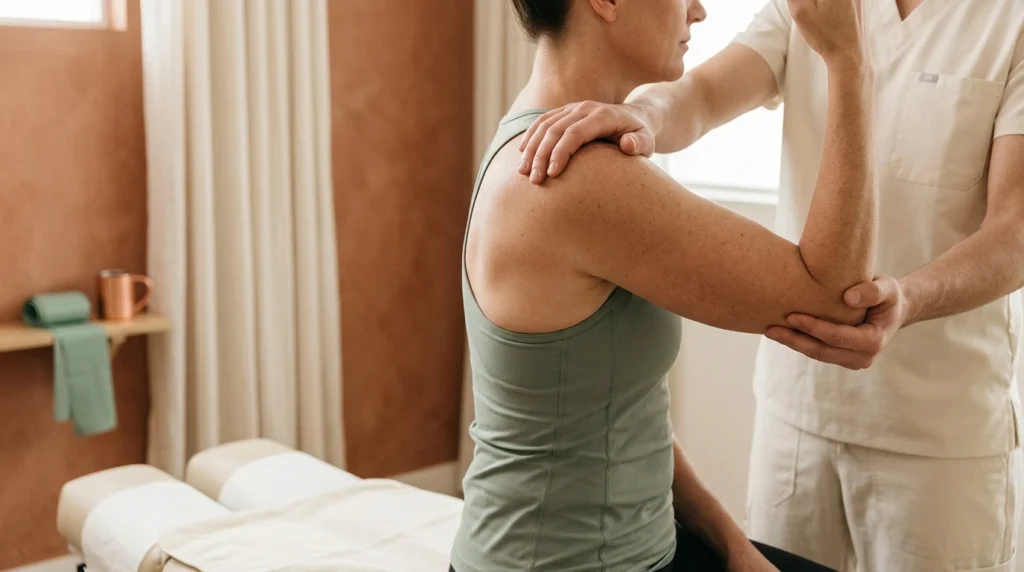
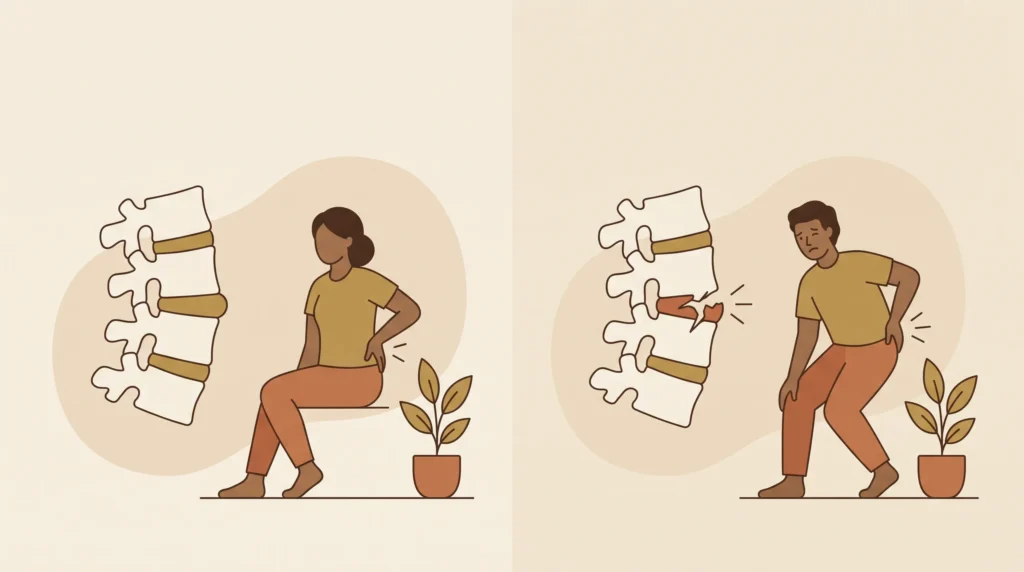
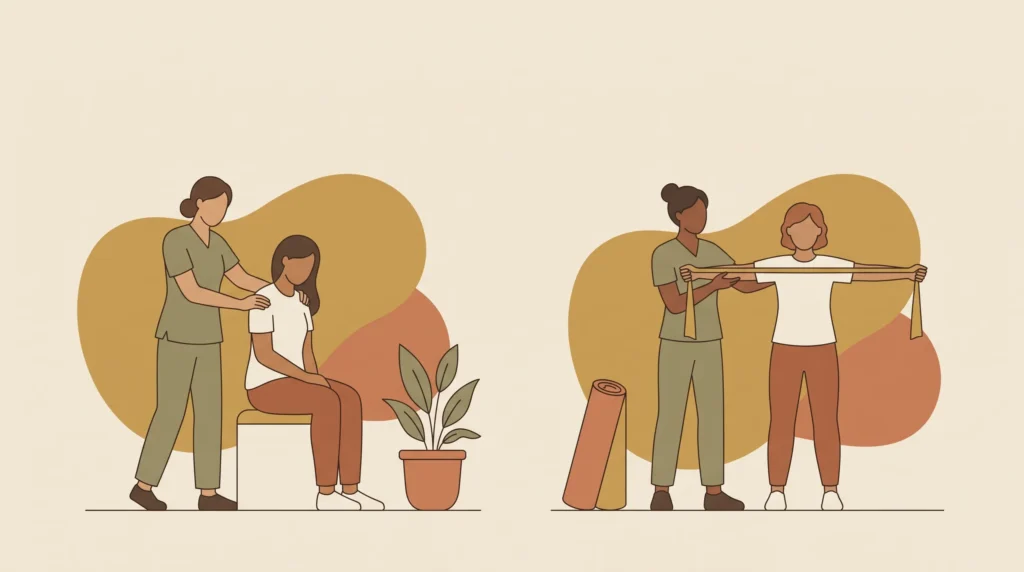
Yes, for some kinds of knee pain, and no for others. Can a chiropractor help with knee pain? A chiropractor for knee pain can reasonably help with mechanical, non-emergency problems: knee osteoarthritis and runner's knee (patellofemoral pain) when hands-on care is paired with exercise, and knee pain that is actually coming from the hip or …

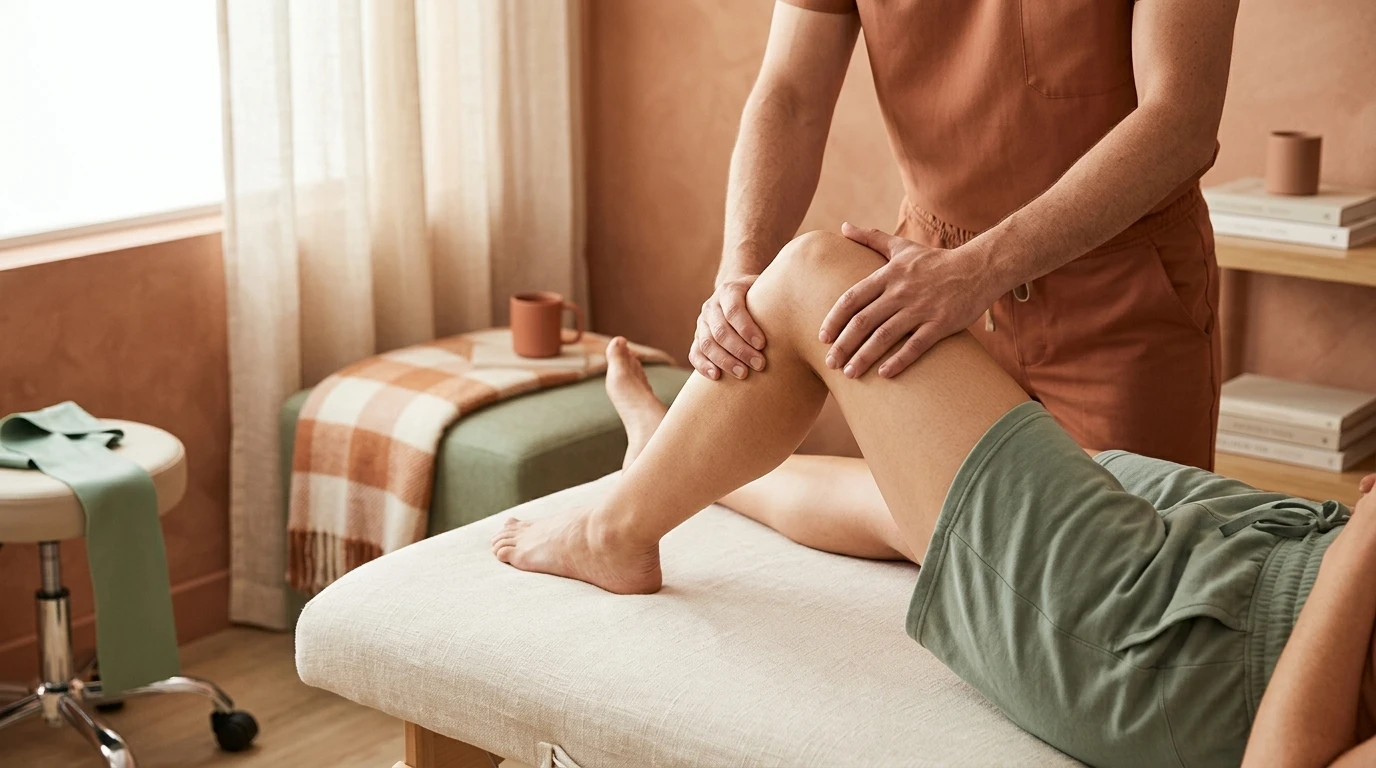
Yes, for some kinds of knee pain, and no for others. Can a chiropractor help with knee pain? A chiropractor for knee pain can reasonably help with mechanical, non-emergency problems: knee osteoarthritis and runner’s knee (patellofemoral pain) when hands-on care is paired with exercise, and knee pain that is actually coming from the hip or lower back. Other situations need a medical evaluation first: an acute injury with swelling or a knee that gives way, a hot and swollen joint, a knee that locks, and inflammatory arthritis such as gout. Below, we go condition by condition using what clinical guidelines and trials actually say.
Knee pain is common. A review in American Family Physician reports that it affects about 25% of adults, that its prevalence has risen almost 65% over 20 years, and that it accounts for nearly 4 million primary care visits a year. At Copper Wellness, chiropractic care for the knee is one part of a coordinated plan. Sometimes the most useful thing a chiropractor can do is send you to someone else.
This article is for general education and does not replace an individual evaluation. If your knee pain started with an injury, comes with fever, or stops you from bearing weight, check the red-flag list below first.
Key Takeaways
- Chiropractic care can help some knee pain, mainly osteoarthritis and runner’s knee. Guidelines say hands-on treatment belongs alongside exercise, not in place of it.
- Exercise has the strongest evidence for knee osteoarthritis. In a 2015 Cochrane review of 44 trials, it reduced pain by about 12 points on a 0–100 scale; a 2024 update of 139 trials still found benefit, with lower certainty.
- For runner’s knee, an international consensus recommends combined hip and knee exercise. It does not recommend patellofemoral, knee or lumbar mobilisations.
- The knee isn’t always the source. In one study, 47% of people with hip arthritis felt pain below the knee.
- Get care the same day if you can’t take four steps after an injury, if the knee is hot, red and swollen, or if your calf is swollen and tender.
- In middle-aged adults, degenerative meniscus tears often do as well with supervised exercise as with arthroscopic surgery.
Quick Guide: Can a Chiropractor Help Your Knee Situation?
| Your knee situation | Can a chiropractor help? | Who should lead care |
|---|---|---|
| Gradual, activity-related ache, age 45+, little or no morning stiffness (typical osteoarthritis) | Yes, within an exercise-led plan. Manual therapy alone isn’t recommended. | Conservative care (chiropractic or physical therapy) built around exercise |
| Pain around or behind the kneecap with stairs, squats or running (runner’s knee) | Yes, if care centers on hip and knee strengthening | Exercise-led conservative care |
| Outer-knee pain in runners or cyclists (IT band) or tendon pain at the front of the knee | Possibly, as an adjunct to load management and strengthening | Exercise-led rehab; sports medicine if it isn’t improving |
| Knee pain plus groin, hip or low back pain, or tingling down the leg | Often a good fit, once the hip and lower back are screened | Chiropractor or primary care; spine or hip specialist if nerve symptoms worsen |
| Degenerative meniscus tear (middle-aged, no major injury) | Can support an exercise program, but can’t “fix” the tear | Exercise therapy first; orthopedics if the knee truly locks |
| Injury with a pop, fast swelling, giving way, or inability to bear weight | No, not as the first stop | Urgent care or ER, then orthopedics |
| Hot, red, swollen knee (with or without fever), or several swollen joints | No | Same-day medical care; primary care or rheumatology for inflammatory arthritis |
What a Chiropractor Actually Does for a Knee
Chiropractors assess and treat musculoskeletal problems with hands-on care, movement and exercise. The care is drug-free and non-surgical, and a responsible chiropractor refers out when a problem falls outside that scope. The National Center for Complementary and Integrative Health (NCCIH) notes in its overview of chiropractic that manipulation is most commonly done on the spine, but other parts of the body may also be treated this way. That includes the knee, hip and ankle. The same page reports that 11.0% of U.S. adults used chiropractic care in 2022.
Can chiropractors help with knee pain when nothing is “out of place”? Usually, yes. A good knee chiropractor doesn’t look for a bone to put back; chiropractic for knee pain works on three things at once: how the knee joint moves, how the hip, ankle and lower back load the knee, and which exercises let you keep improving between visits. Our comparison of a chiropractor vs. physical therapist covers how the two professions differ in general. For knees, the overlap is large, because both should be exercise-led.
Knee cases at Copper Wellness are seen by the clinic’s chiropractors, including Dr. Adam Mohr. He earned his Doctor of Chiropractic at National University of Health Sciences in Lombard, Illinois, and works with athletes from recreational to professional. His approach pairs adjustments with guided rehabilitation.
Why Your Knee Hurts: A Pain-Location Map
The knee is really two joints. The tibiofemoral joint is where the thighbone meets the shinbone, and the patellofemoral joint is where the kneecap glides over the thighbone. Two cartilage pads (the menisci) cushion the main joint, and four major ligaments (ACL, PCL, MCL, LCL) keep it stable. Where the pain sits is one of the best early clues to what’s involved. This table summarizes the location-based differential from the American Family Physician review.
| Where it hurts | Common causes | Typical first stop |
|---|---|---|
| Front (around or under the kneecap) | Patellofemoral pain syndrome, patellar or quadriceps tendinopathy, Osgood-Schlatter disease (adolescents), prepatellar bursitis | Exercise-led conservative care. See a physician for a hot, red bursa or a teen with pain at rest. |
| Inner side (medial) | Meniscus tear, MCL sprain, pes anserine bursitis, osteoarthritis | Conservative care for gradual onset; medical evaluation after a twisting injury with swelling |
| Outer side (lateral) | IT band syndrome, lateral meniscus tear, LCL sprain | Conservative care for overuse; medical evaluation after trauma |
| Back of the knee (posterior) | Baker’s cyst, PCL injury, hamstring tendinopathy | Medical evaluation first if the calf is also swollen or tender, to rule out a clot |
| Whole knee (diffuse) | Osteoarthritis (usually over 50), septic arthritis, gout, rheumatoid arthritis, ACL tear after trauma | Depends on the signs. A hot, swollen joint means same-day medical care. |
Knee pain when you walk is most often osteoarthritis after 50. In younger, active people, pain at the front of the knee on stairs is more often patellofemoral pain. Pain on the side of the knee that builds during runs points toward the IT band, but after a twisting injury it can be the lateral meniscus or LCL. These are patterns, not diagnoses. An exam is what tells them apart.
When Chiropractic Care for Knee Pain Can Help
Knee osteoarthritis: can a chiropractor help with arthritis in the knee?
Osteoarthritis is where the evidence for hands-on care is clearest, and it comes with a condition. The NICE osteoarthritis guideline (NG226, 2022) allows a clinical diagnosis without imaging in people 45 or older who have activity-related joint pain and either no morning stiffness or stiffness of 30 minutes or less. Its core treatments are therapeutic exercise and weight management. NICE says to “only consider manual therapy (such as manipulation, mobilisation or soft tissue techniques) for people with hip or knee osteoarthritis and alongside therapeutic exercise.” It adds that the evidence doesn’t support manual therapy on its own.
The U.S. guideline is more cautious still. The 2019 American College of Rheumatology/Arthritis Foundation guideline strongly recommends exercise. It conditionally recommends against adding manual therapy to exercise over doing exercise alone, because the added benefit appeared small. A review in the Journal of Manipulative and Physiological Therapeutics rated the evidence for manipulative therapy in knee osteoarthritis as fair (level B) short term and limited (level C) long term. So a chiropractor for knee arthritis makes sense when the plan is exercise-first. Adjustments alone don’t match the evidence.
Two trials show what the combined approach can do. In a randomized trial in the Annals of Internal Medicine, 83 people received either placebo ultrasound or manual therapy to the knee, plus the lumbar spine, hip and ankle as required, combined with a knee exercise program, twice weekly for four weeks. At eight weeks, the treatment group’s WOMAC score (a pain, stiffness and function scale) had improved 55.8% over baseline, and their six-minute walk distance had improved 13.1%, about 170 meters more than placebo. At one year, 5% of the treatment group had had a knee replacement, versus 20% of the placebo group. A later New England Journal of Medicine trial randomized 156 people to physical therapy or a steroid injection. At one year, the physical therapy group had less pain and disability, with WOMAC scores of 37.0 versus 55.8 (lower is better).
Both trials were delivered by physical therapists. They test a method, hands-on joint and soft-tissue work plus progressive exercise, which a chiropractor or the clinic’s physical therapy services can provide. They don’t test a profession. They are also single-trial results, not promises. Individual results vary, and no one can guarantee a score or that you’ll avoid surgery.
Runner’s knee (patellofemoral pain)
Patellofemoral pain syndrome is the ache around or behind the kneecap that flares on stairs, squats, long sitting and downhill running. The 2016 international patellofemoral pain consensus statement recommends combining hip and knee exercises to reduce pain and improve function in the short, medium and long term. It recommends foot orthoses for short-term relief, supports combined interventions, and states that “patellofemoral, knee and lumbar mobilisations are not recommended.” The JMPT review rated manipulative therapy here as fair evidence short term and limited evidence long term.
In practice, a good chiropractor for runner’s knee spends most of the visit on hip and thigh strengthening, training-load changes and foot mechanics, and uses soft-tissue work for comfort. Dr. Mimosa Nguyen (Doctorate of Chiropractic, Logan University) focuses on sports medicine and is trained in the Graston Technique and the Activator Method. That makes her a natural fit for athletes who want a sports chiropractor in Chicago who builds a strengthening plan rather than relying on adjustments.
IT band syndrome and tendon pain
IT band syndrome causes sharp outer-knee pain in runners and cyclists. Patellar tendinopathy (jumper’s knee) hurts just below the kneecap with jumping and squatting. We did not find strong trial evidence that manual therapy specifically changes either condition, so we won’t claim it does. A chiropractor for IT band syndrome can still be useful as the person organizing your rehab. Our clinicians focus on adjusting training load, progressive hip and thigh strengthening, and running or landing mechanics, and they use soft-tissue work as an adjunct. If symptoms don’t improve over several weeks of structured rehab, see a sports medicine physician.
Torn meniscus: degenerative vs. acute
Can a chiropractor help a torn meniscus? It depends on the tear. A randomized trial first published in the BMJ followed 140 adults (average age 49.5) with MRI-confirmed degenerative medial meniscus tears. It found no clinically relevant difference in knee function at two years between 12 weeks of supervised exercise and arthroscopic partial meniscectomy. The exercise group had more thigh strength at three months, and the 19% who later crossed over to surgery gained no additional benefit. A BMJ clinical practice guideline strongly recommends against arthroscopy in nearly all patients with degenerative knee disease, including degenerative meniscal tears and mechanical symptoms.
That guideline does not apply to young people with sports injuries, major trauma, acute swelling after a major injury, or a true locked knee that can’t fully straighten. Those need a medical evaluation first. Around a degenerative tear, a chiropractor can support the exercise program, but no adjustment repairs a meniscus.
When the knee is the victim, not the culprit
Sometimes the knee hurts because a stiff hip, weak hip muscles or a collapsing foot is overloading it. Sometimes the knee is fine and the pain is referred from the hip or lower back. Screening for that is one of the most useful things a chiropractor can do.
Knee Pain That Isn’t Coming From the Knee: Hip, Back and Sciatica
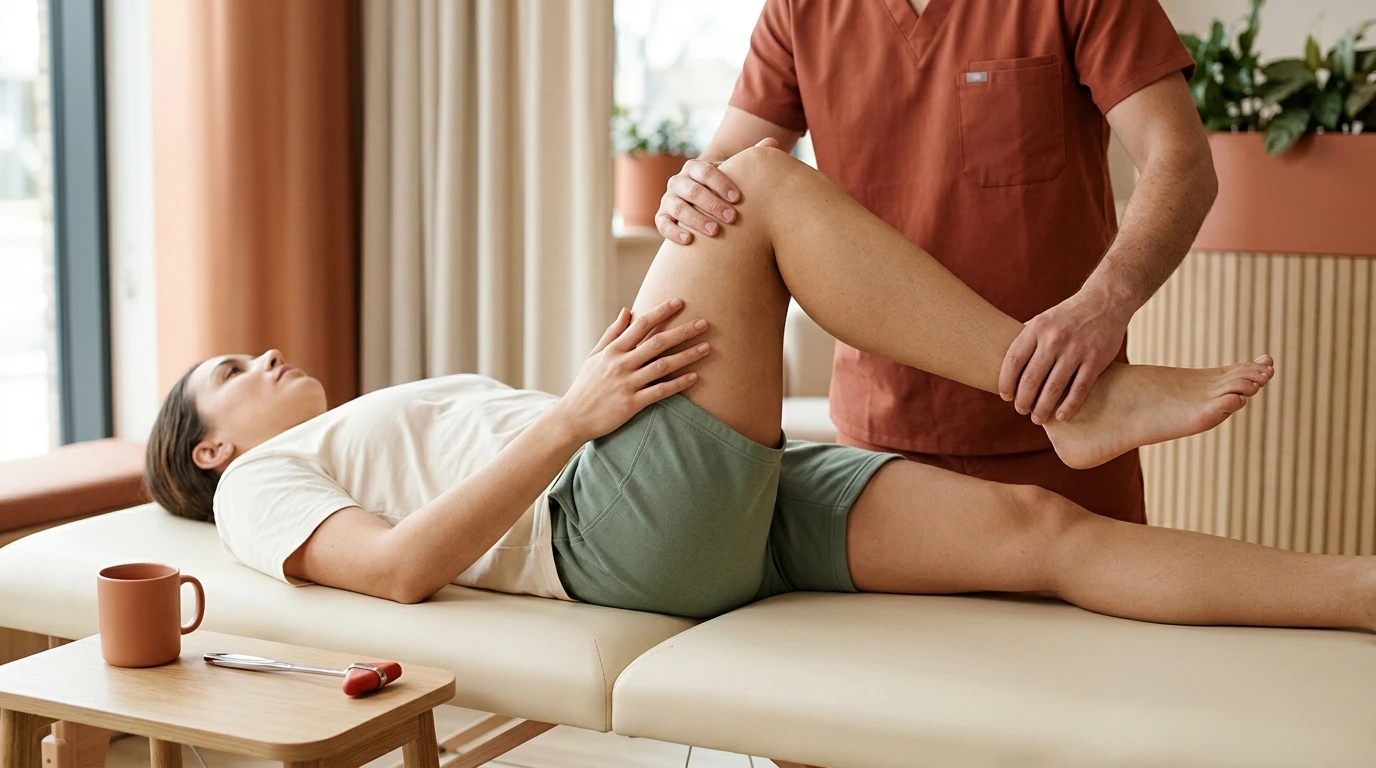
Can hip problems cause knee pain? Yes, and more often than many clinicians expect. In a study in the Annals of the Royal College of Surgeons of England, 47% of 60 patients with hip osteoarthritis had pain below the knee, yet 88.5% of orthopedic trainees surveyed believed hip pain didn’t radiate below the knee. The pain travels along the saphenous nerve, a branch of the femoral nerve. Groin pain was a useful clue, with 84.3% sensitivity for hip dysfunction in that study.
Can a pinched nerve cause knee pain? It can. A case series in Surgical Neurology described 17 older adults with compression of the L3 nerve root in the lower back. Twelve had thigh pain, five had hip or knee pain, and four were first misdiagnosed and treated for hip and/or knee joint disease. The authors advise considering L3 radiculopathy when an older patient’s joint pain doesn’t respond to joint treatment. So can lower back pain cause knee pain, and can back problems cause knee pain? Yes. A disc pressing on a nerve root is one way it happens. See our articles on chiropractic care for a herniated disc and on bulging vs. herniated discs.
Can sciatica cause knee pain? Classic sciatica comes from the lowest lumbar nerve roots. It runs from the buttock down the back of the thigh and can be felt behind or below the knee, often with tingling, numbness or weakness. When sciatica knee pain is the issue, treating the knee does little and treating the source matters. Our pages on sciatica, on how chiropractic care approaches sciatic pain, and on seeing a back pain chiropractor are better starting points. This kind of whole-chain assessment is mainstream: the Annals of Internal Medicine trial above treated the lumbar spine, hip and ankle “as required.”
Possible signs your knee pain is referred:
- You also have groin, hip or buttock pain.
- The pain changes with back position, sitting or bending, not just knee movement.
- You have numbness, tingling or weakness in the thigh, shin or foot.
- The knee looks normal (no swelling or joint-line tenderness) but still aches.
- Knee-focused treatment hasn’t helped after a fair trial.
What a clinician checks: hip range of motion, a lumbar spine screen, reflexes, sensation and strength in the leg, and how you walk and squat.
An exception for teenagers: the American Family Physician review advises that an adolescent with inner-knee pain, with or without hip pain, be evaluated for slipped capital femoral epiphysis, a hip growth-plate problem that needs a physician. A teen whose knee hurts at rest or at night also needs a physician first.
What Chiropractic Care for Knee Pain Actually Involves
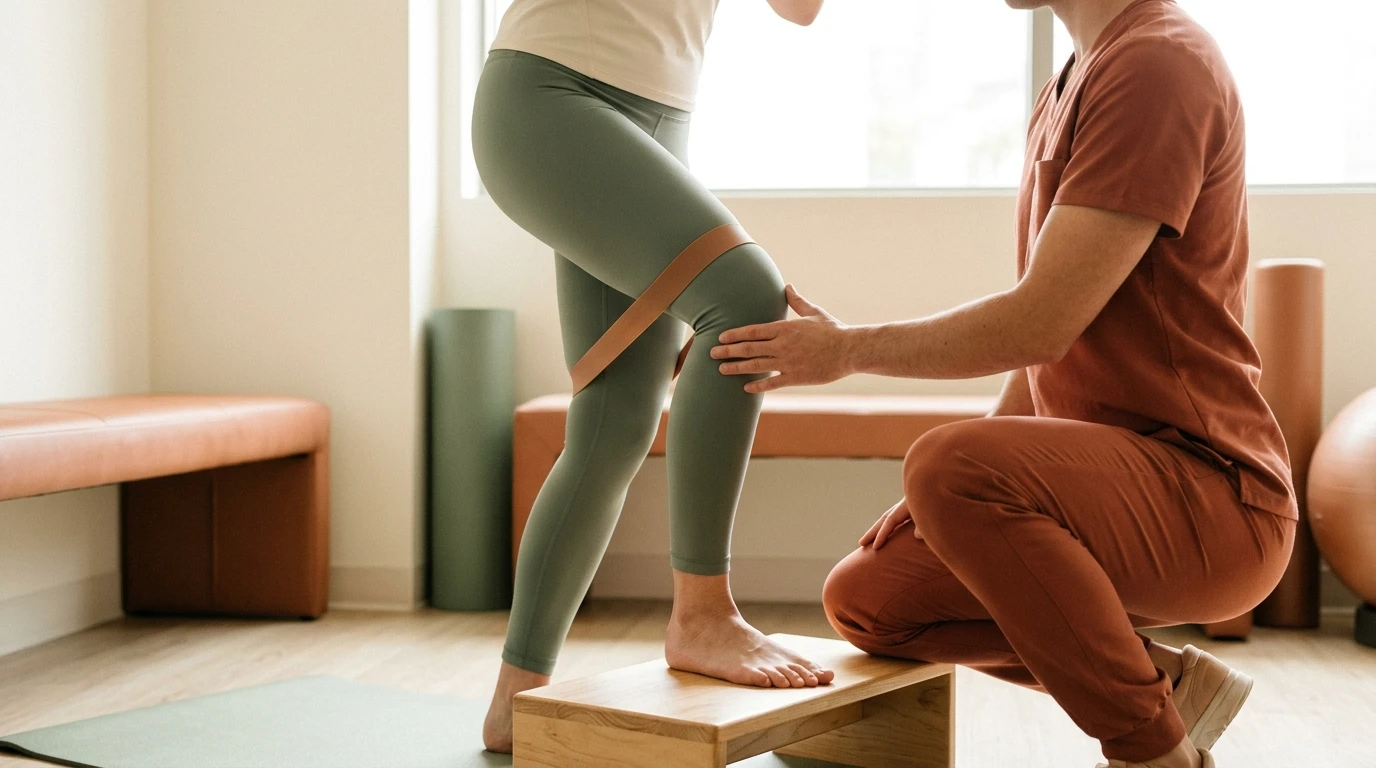
A chiropractic adjustment for knee pain does not pop a knee “back into place,” and “knee out of alignment” isn’t a real diagnosis. A chiropractor knee adjustment is either a quick, controlled movement (manipulation) or a slower, repeated one (mobilization). It aims to improve joint motion and reduce pain enough that you can exercise. A typical plan combines:
- Joint mobilization or manipulation of the knee, and of the hip, ankle or lower back when the exam points there.
- Soft-tissue work, including instrument-assisted techniques. Dr. Nguyen is trained in the Graston Technique, an instrument-assisted soft-tissue method that is conceptually similar to traditional gua sha.
- The Activator Method, a handheld instrument that delivers a low-force impulse, for people who prefer to avoid manual thrusts.
- Therapeutic exercise and a home program, always.
- Movement retraining: how you squat, step down, land and run.
On add-ons, the evidence calls for precision. Massage may ease muscle tension around a sore knee, as our article on deep tissue massage for muscle and joint pain explains. But the ACR/Arthritis Foundation guideline conditionally recommends against massage as a treatment for knee osteoarthritis. On acupuncture, guidelines openly disagree. NICE says not to offer acupuncture or dry needling for osteoarthritis. The ACR/Arthritis Foundation guideline conditionally recommends it for the knee. A 2020 chiropractic clinical practice guideline lists high-dose acupuncture (at least three times a week) among knee osteoarthritis options. If you’re curious, see our acupuncture page and our explainer on dry needling vs. acupuncture. Treat acupuncture as an optional adjunct, not a replacement for exercise.
Knee Treatments the Guidelines Don’t Support (Even Though You’ll See Them Advertised)
- Electrotherapy for osteoarthritis. NICE says not to offer TENS, therapeutic ultrasound, interferential therapy, laser, pulsed short-wave or neuromuscular electrical stimulation, citing insufficient evidence. The 2020 chiropractic guideline does list ultrasound and low-level laser and rates its overall evidence as “favorable, moderate to low.” Experts disagree, and we’d rather tell you that than present these as proven.
- Manual therapy on its own. NICE finds insufficient evidence without exercise, and the ACR/Arthritis Foundation guideline found little added benefit even with exercise.
- Massage as the main osteoarthritis treatment. The ACR/Arthritis Foundation guideline conditionally recommends against it.
- Knee mobilisations for runner’s knee. The patellofemoral consensus does not recommend them.
- Routine braces, insoles and tape. NICE advises against routine use unless there’s instability or abnormal loading. The ACR/Arthritis Foundation guideline strongly recommends a tibiofemoral brace when one is needed. Bracing is a case-by-case decision.
- Routine imaging for typical osteoarthritis. Neither NICE nor the chiropractic guideline requires it.
- Steroid injections as a long-term fix. NICE notes corticosteroid injections, which a physician may offer, give short-term relief of about 2–10 weeks. In the NEJM trial, physical therapy did better at one year.
Red Flags: When to See a Doctor for Knee Pain (or Go Today)
Before any chiropractic or rehab care, rule out problems that need a physician. These knee pain red flags come from the American Family Physician reviews, MedlinePlus and the National Heart, Lung, and Blood Institute.
| Go today (urgent care or ER) | Book a medical evaluation first | Reasonable to start conservative care |
|---|---|---|
|
|
|
The injury items come from the Ottawa Knee Rule, which helps decide when an injured knee needs an X-ray. The American Family Physician review reports that it is 98.5–100% sensitive for fractures and cuts unnecessary X-rays by 28–35%. The full rule also counts age 55 or older and being unable to bear weight both right after the injury and at the visit. Fluid swelling after an acute injury strongly suggests internal damage such as a ligament or meniscus tear.
The hot, swollen knee matters most. A separate American Family Physician review of septic arthritis notes that the knee is the joint most often infected, and that fever is a poor screen, so its absence doesn’t rule infection out. Mortality is 10–20%, and delaying antibiotics beyond 24–48 hours can permanently damage the joint. This is never something to adjust or wait out.
A swollen, tender leg that hurts to the touch can signal a deep vein thrombosis, and the National Heart, Lung, and Blood Institute advises contacting a provider right away if you suspect one. MedlinePlus adds severe pain at rest, a knee that buckles, clicks or locks, and redness or warmth around the knee to the reasons to call. Not sure where to go? Our guide to urgent care vs. primary care walks through it.
What Doctor to See for Knee Pain (and When a Chiropractor Is the Right First Call)
Here’s what kind of doctor to see for knee pain, matched to the situation:
- Urgent care or the ER: anything in the “go today” column.
- Primary care: unclear, systemic or possibly inflammatory pain, such as swelling without injury, several painful joints or fever. Primary care can come from a physician or a nurse practitioner; see nurse practitioner vs. doctor for primary care.
- Orthopedic surgeon: suspected fracture, ligament rupture or dislocation, a true locked knee, or pain that hasn’t improved after real conservative care. For degenerative knees, the BMJ guideline recommends against arthroscopy for nearly everyone, so seeing a surgeon doesn’t have to mean surgery.
- Sports medicine physician: athletic and overuse injuries that need medical assessment, imaging decisions or injections.
- Rheumatologist: suspected rheumatoid arthritis, gout or other inflammatory arthritis.
- Physical therapy and rehabilitation: structured strengthening and post-operative rehab.
- Chiropractor: mechanical, non-urgent pain, especially when the hip, back or foot may be involved, delivered as an exercise-led plan.
After surgery, follow your surgeon’s rehab protocol. Conservative care can support it but never replaces it. On imaging, NICE and the chiropractic guideline agree it isn’t routinely needed for typical osteoarthritis. When an exam suggests a structural problem, Copper Wellness arranges imaging (X-ray, MRI, ultrasound or CT) by referral to partner imaging centers after an initial evaluation with a Copper Wellness provider.
Is Chiropractic Care Safe for Your Knees? Side Effects and Limits
For spinal manipulation, the best-studied form of chiropractic care, NCCIH reports that common side effects are temporary, mild-to-moderate increases in pain, stiffness or headache. These mostly resolve within 24 hours, and serious complications are rare. Tell your practitioner about all your health conditions and medications. Some short-lived soreness after knee and hip work is also common, especially when a new exercise program starts.
Manipulation is not appropriate for a knee with a suspected fracture, a possible infection, an acute ligament rupture or instability, or any red flag that hasn’t been cleared. That’s why screening comes before treatment. A referral in those cases is good chiropractic care, not a failure of it. Progress varies with age, how long the pain has lasted, the underlying condition, body weight and how consistently you exercise. No responsible clinician can guarantee an outcome or a number of visits.
What You Can Do This Week (and the #1 Mistake That Makes Bad Knees Worse)
If your knee is in the “reasonable to start conservative care” column, here’s a starting checklist:
- Ease off what provokes it, but keep moving. For flare-ups, MedlinePlus suggests rest from painful activities, ice wrapped in a cloth, elevation and a compression sleeve. Gentle walking, cycling or range-of-motion work usually beats complete rest.
- Start strengthening. A 2015 Cochrane review of 44 trials and 3,537 participants found high-quality evidence that exercise reduces knee osteoarthritis pain, by about 12 points on a 0–100 scale right after treatment, with function improving by about 10 points. Smaller benefits were still present two to six months later, and no serious adverse events were reported. The 2024 update of that review, covering 139 trials, again found short-term improvements in pain and function (about 13 points for pain versus no treatment or usual care), but rated the evidence low to moderate certainty and called the size of the benefit of uncertain clinical importance. NICE notes exercise may increase joint pain at first. That’s expected, but tell your clinician if it persists.
- For runner’s knee, include the hip. Bridges, side-lying leg raises and controlled step-downs reflect the consensus advice to combine hip and knee work.
- Consider body weight if it’s relevant to you. In a study in Arthritis & Rheumatism of 142 adults with knee osteoarthritis, each pound lost reduced knee load by about four pounds per step. The ACR/Arthritis Foundation guideline notes that losing 5% or more of body weight can be associated with clinical improvements, with benefits continuing to grow at higher amounts, and NICE says any amount helps, with 10% likely better than 5%. For some patients, medically supervised weight management is an option. It always starts with an evaluation by Elise Sterritt, FNP-BC, the clinic’s board-certified Family Nurse Practitioner, and continues under her supervision. Medication isn’t right for everyone, and it isn’t a treatment for knee arthritis itself.
- Re-check the red-flag list. If anything in the first two columns appears, switch to medical care.
The #1 mistake: avoiding all movement, or relying only on passive treatment (adjustments, massage, machines) while skipping the exercise. Every guideline cited here puts exercise first.
What Happens at a First Knee Visit at Copper Wellness
This is how our clinicians approach a new knee patient. It is a process, not a promised outcome:
- A conversation first. New patients can book a free virtual consultation with Dr. Stephanie Madden to decide whether in-person care makes sense.
- History: how the pain started, what changes it, prior injuries, surgeries, medications and your goals.
- Red-flag screen. If anything points to fracture, infection, a clot, a locked knee or inflammatory disease, the visit becomes a referral.
- Whole-chain exam: hip motion, a lumbar and nerve screen, foot and ankle mechanics, walking, squatting and stepping down.
- Knee exam: joint-line tenderness, swelling, ligament stability, kneecap tracking and range of motion.
- A plan with an active core. Whatever hands-on care is used, it includes exercises you do between visits.
- An agreed re-check point, measured against concrete markers such as pain on stairs, walking distance or squat depth.
- A clear referral path. If progress stalls or new signs appear, we arrange imaging or refer you to primary care, orthopedics or another specialist.
Copper Wellness accepts Blue Cross Blue Shield and Aetna, as well as FSA and HSA payments. For patients using insurance, a third-party billing department verifies coverage before treatment.
Why Copper Wellness Treats the Whole Leg, Not Just the Knee
Knee pain rarely belongs to one discipline. The hip, lower back, foot and the way you load the leg all feed into it, and that’s the real case for integrative care. At Copper Wellness, chiropractors (Dr. Adam Mohr and Dr. Mimosa Nguyen), physical therapy and rehabilitation services, massage therapy and acupuncture sit under one roof, and every specialist works from the same shared care plan. If your knee pain turns out to be driven by your hip or back, the plan changes without you starting over somewhere new.
The clinic is also set up to say “this isn’t a chiropractic problem.” Red-flag screening comes first, imaging is available through partner centers, and referrals to primary care or orthopedics are part of the process. Plans are personalized to your presentation and aimed at the cause of the pain, not just the symptom.
For knee pain treatment in Chicago, the clinic is at 1654 W. North Ave., between Bucktown and Wicker Park, and also sees patients from Lincoln Park, West Town and Logan Square. That’s one location. It offers wheelchair-accessible entry, seating and restroom, an assistive hearing loop, and bilingual English/Spanish care with acupuncturist Dr. Anais Jackson-Gonzalez. It’s a knee pain chiropractor in Chicago that will also tell you when you need someone else.
FAQ
Is a chiropractor good for knee pain?
For mechanical, non-urgent knee pain such as osteoarthritis, runner’s knee or pain referred from the hip or back, it can be a good choice if the plan is built around exercise. Injuries with swelling or instability, or a hot, swollen joint, need a physician first.
Can a chiropractor adjust your knee?
Yes. Chiropractors can mobilize or manipulate the knee, hip and ankle. An adjustment doesn’t “put the knee back in place,” though. The goal is better motion and less pain so you can strengthen the leg.
Can a chiropractor help with arthritis in the knee?
For osteoarthritis, yes, as part of an exercise-led plan. NICE says manual therapy should only be used alongside exercise. Inflammatory arthritis such as rheumatoid arthritis or gout needs a medical diagnosis and treatment first.
Can a chiropractor help a torn meniscus?
With a degenerative tear, a chiropractor can support the kind of exercise program that matched surgery at two years in a BMJ trial, but no adjustment repairs the tear. A sports-injury tear, or a knee that locks, needs an orthopedic evaluation first.
Can sciatica cause knee pain?
Yes. Classic sciatica runs down the back of the thigh and can be felt behind or below the knee. Compression of the higher L3 nerve root can mimic knee joint pain so closely that, in one case series, 4 of 17 patients were first treated for hip or knee joint disease.
Can hip problems cause knee pain?
Yes. In one study, 47% of people with hip osteoarthritis had pain below the knee. Groin pain is a key clue, so a thorough knee exam always includes the hip.
What kind of doctor should I see for knee pain?
After an injury with swelling, instability or trouble bearing weight, go to urgent care or an ER, then see an orthopedist. For unexplained swelling, several painful joints or fever, start with primary care. For gradual, mechanical pain without red flags, a chiropractor or physical therapy is a reasonable start.
Should I see a chiropractor or a physical therapist for knee pain?
For knees, the approach matters more than the title: hands-on care combined with progressive exercise. The strongest knee trials were run by physical therapists using methods a well-trained chiropractor also uses. Choose the clinician who checks your hip and back and gives you an exercise plan.
Do I need an X-ray or MRI before seeing a chiropractor?
Usually not for typical osteoarthritis. After an injury, the Ottawa Knee Rule helps decide whether an X-ray is needed. At Copper Wellness, imaging is arranged through partner centers after an evaluation when the exam calls for it.
Does chiropractic treatment make you tired or sore?
Temporary soreness, stiffness or headache are the most common side effects and usually fade within 24 hours, according to NCCIH. Some people also feel tired after a session. That hasn’t been well quantified, so mention it to your clinician.
Is it safe to pop my own knee?
A painless click with movement is common and usually harmless, but don’t force your knee to crack by twisting it. A knee that catches, locks or won’t fully straighten needs an evaluation, not self-manipulation.
Will insurance cover chiropractic care for knee pain at Copper Wellness?
It depends on your plan. Copper Wellness accepts Blue Cross Blue Shield and Aetna, plus FSA and HSA payments, and a third-party billing department verifies coverage before treatment begins.
Want a clear answer on whether your knee is a chiropractic problem or a sign to see someone else? Schedule your complimentary consultation at Copper Wellness: call (872) 267-1717, email Hello@CopperWells.com, or book online at copperwellness.janeapp.com.