
Start pelvic floor exercises postpartum safely. Our clinical guide outlines recovery timelines and gentle progressions to restore your deep core.

For women recovering from childbirth, initiating the right type of movement at the right moment determines long-term structural integrity. You should begin gentle diaphragmatic breathing and passive pelvic floor relaxation within the first 24 to 48 hours following an uncomplicated vaginal delivery or Cesarean birth to promote circulation and reduce acute inflammation. However, active resistive exercises, targeted core loading, and traditional strength-building maneuvers must wait until you receive formal medical clearance, typically at your six-week postpartum assessment. Initiating rigorous workouts or repetitive muscular contractions too early can exacerbate tissue damage, worsen structural separation, and trigger pelvic organ descent. This comprehensive clinical guide outlines the phased rehabilitation of the deep core cylinder, providing safe postpartum exercise timelines, debunking common recovery myths, and detailing targeted therapeutic progressions to help you navigate postpartum healing without compromising physical safety.
Medical Disclaimer: The information provided in this guide is for educational purposes only and does not replace professional medical advice, diagnosis, or treatment. Always consult with a qualified healthcare provider or a licensed physical therapist before beginning any postpartum exercise regimen.
When to Start Pelvic Floor Exercises After Birth: The Safe Timeline
Initiating pelvic floor recovery requires a careful, phased timeline that respects the biological phases of tissue healing. During the initial weeks after delivery, the body focuses on inflammatory mediation and wound closure. ACOG notes that if you had a healthy pregnancy and an uncomplicated vaginal delivery, it’s usually safe to begin simple, low-intensity exercise a few days after birth, or as soon as you feel ready — gradually building up from there. It is highly beneficial to review pelvic floor exercises during pregnancy as a baseline to understand the difference between active contraction and passive resting states.
To guide patient recovery safely, clinicians divide the first twelve weeks postpartum into three distinct phases:
- Phase 1 (Weeks 0 to 2): Focus exclusively on localized circulation and swelling reduction. Patients should practice quiet diaphragmatic breathing to gently mobilize the pelvic diaphragm without muscular strain.
- Phase 2 (Weeks 2 to 6): Introduce gentle, non-resisted mobility work. This includes pelvic tilts and slow heel slides performed on a stable, flat surface. Focus on coordinated movement patterns where muscle activation matches your breath cycle.
- Phase 3 (Weeks 6 to 12 and beyond): Transition to active core integration and functional loading. This phase begins only after receiving direct clearance from an OB-GYN, certified nurse midwife, or pelvic floor physical therapist.
The golden rule of early postpartum recovery is to monitor sensory feedback closely. If any physical movement induces localized pain, pelvic pressure, vaginal pulling, or a sudden increase in lochia (postpartum bleeding), stop immediately. These signs indicate that the structural load exceeds the current tissue capacity, necessitating clinical evaluation. According to the APTA Academy of Pelvic Health, early access to specialized pelvic floor physical therapy can help prevent long-term complications like incontinence, pelvic pain, and pelvic organ prolapse.
Postpartum Pelvic Floor Exercises: Debunking the Kegel Myth
Standard postpartum advice frequently commands new mothers to perform hundreds of daily Kegel contractions, a recommendation that represents a fundamental clinical misconception. The term “pelvic floor exercise” is not synonymous with a pelvic contraction, or Kegel. Many postpartum patients do not suffer from simple muscular weakness. Instead, they present with a hypertonic, overactive, or guarded pelvic floor. Birth trauma, episiotomy scar tissue, and the physiological anxiety of carrying a child can cause the pelvic muscles to remain in a constant, semi-contracted state.
Performing repetitive, forceful Kegel contractions on a tight, short muscle group is highly counterproductive. It is analogous to performing continuous bicep curls on a muscle experiencing an acute cramp. This practice induces rapid muscular fatigue, worsens coordination, and directly exacerbates symptoms of pelvic floor dysfunction, such as stress urinary incontinence and dyspareunia (painful intercourse). A systematic review found that approximately 33% of women experience some degree of urinary incontinence in the first three months postpartum — nearly double the rate for those who had vaginal deliveries compared to cesarean section.
According to Dr. Lisa Lagomarcino, PT, DPT, a pelvic floor specialist at Copper Wellness, the release phase of pelvic floor movement is clinically superior to the contraction phase during early recovery. A fully functional pelvic floor must stretch, relax, and contract through its entire range of motion. To restore this coordination, patients should practice “360-degree” diaphragmatic breathing, which acts as a gentle, internal massage for the pelvic floor:
- Lie on your back with your knees bent and feet flat on the floor, or sit comfortably with your spine aligned.
- Place one hand on your lower rib cage and the other hand on your lower abdomen.
- Inhale slowly through your nose, directing the air deep into your torso. Observe your lower ribs expanding laterally and your abdomen rising naturally.
- As you inhale, consciously visualize your pelvic floor opening, widening, and dropping downward toward the surface beneath you. Do not push; simply allow the tissues to release.
- Exhale gently through your mouth, letting your belly fall and your pelvic floor return passively to its natural resting position.
Diastasis Recti Pelvic Floor Therapy: Rebuilding the Deep Core
Rebuilding the postpartum core requires treating the abdominal wall and pelvic floor as a unified, functional system. Anatomically, your torso behaves like a pressure cylinder. The respiratory diaphragm forms the top lid, the transverse abdominis (TVA) wraps around to form the front and sides, and the pelvic floor serves as the bottom support. When a structural defect occurs in one boundary, the entire pressure-management system fails.
Diastasis recti, which involves the separation of the rectus abdominis muscles along the linea alba, directly impairs this pressure cylinder. According to a landmark study published in the British Journal of Sports Medicine, up to 60% of postpartum women experience clinically diagnosable diastasis recti at six weeks postpartum. A substantial portion of these patients simultaneously struggle with pelvic floor issues, particularly stress urinary incontinence, because the compromised abdominal wall cannot assist in managing intra-abdominal pressure during coughing, sneezing, or lifting.
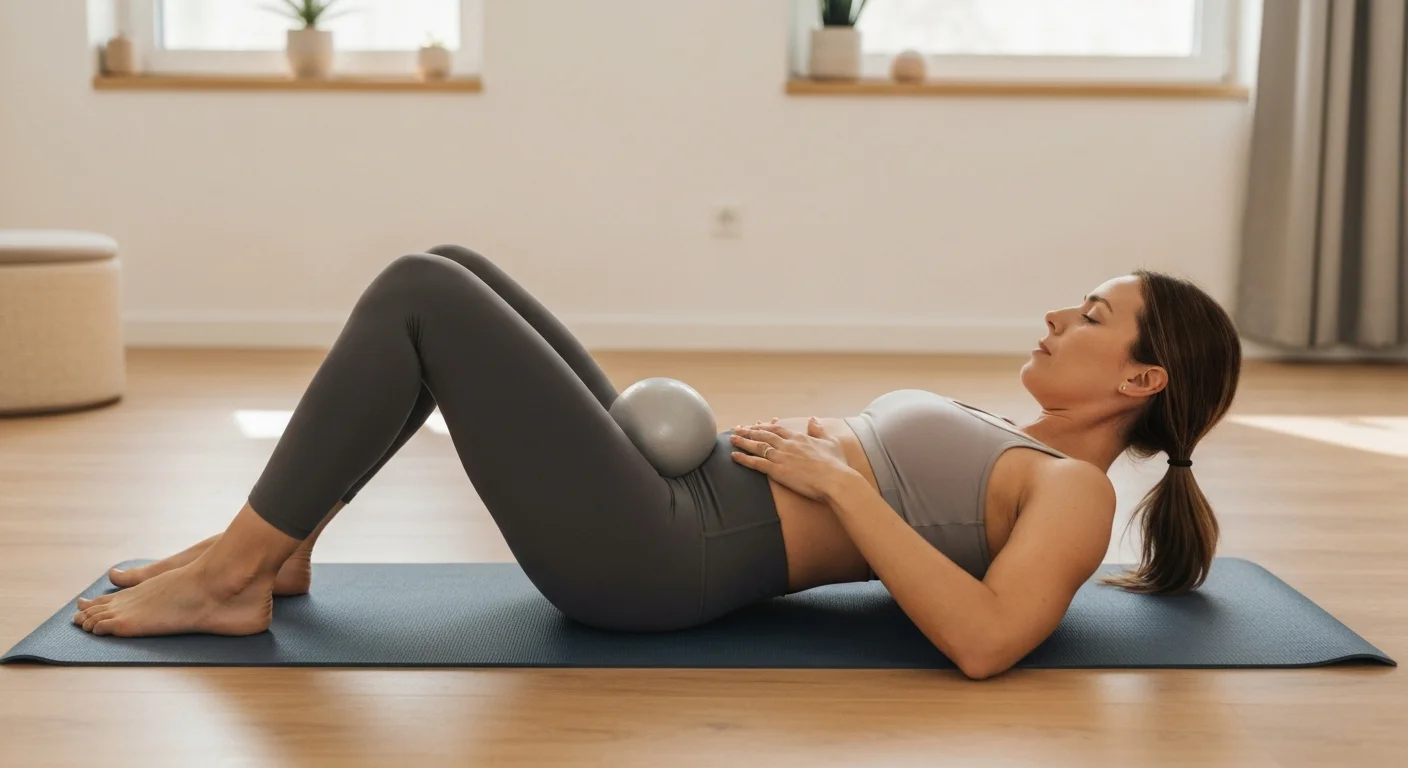
To address this structural vulnerability, clinicians utilize targeted postpartum pelvic floor therapy to safely re-establish deep core tension. The foundational exercise for this rehabilitation is the transverse abdominis (TVA) “zipper” contraction:
- Lie on your back with bent knees, maintaining a neutral spine.
- Inhale deeply using the 360-degree diaphragmatic breathing technique, allowing your abdomen to expand.
- As you begin to exhale, imagine a zipper running from your pubic bone up to your navel.
- Gently draw the lower abdominal wall inward and upward along that imaginary zipper. The movement should be subtle, pulling the hip bones slightly closer together without tilting your pelvis.
- Coordinate this exhalation with a gentle, concurrent lift of the pelvic floor, ensuring there is no outward bulging, doming, or cone-shaped protrusion along the midline of your abdomen.
Patients must avoid standard crunches, sit-ups, and aggressive twisting movements during early recovery. These exercises generate massive downward intra-abdominal pressure, which can worsen both abdominal separation and pelvic organ prolapse.
Pelvic Floor Exercises After C-Section Recovery
A common medical myth suggests that women who undergo a Cesarean delivery do not require pelvic floor rehabilitation. In reality, carrying a growing fetus for 40 weeks places continuous, heavy mechanical strain on the pelvic floor ligaments and muscles, regardless of the ultimate delivery pathway. Furthermore, according to the Centers for Disease Control and Prevention (CDC), approximately 32.3% of all deliveries in the United States are performed via Cesarean section. A Cesarean section is a major abdominal surgery that cuts through multiple tissue layers, altering the local myofascial networks and disrupting how the deep core coordinates pressure.
As the surgical wound heals, dense scar tissue often forms around the lower abdomen. This scar tissue can restrict myofascial mobility, tethering the bladder and surrounding supportive structures. The resulting lack of tissue glide frequently manifests as urinary urgency, frequency, pelvic pain, or a constant feeling of lower abdominal tightness.
To safely mobilize these tissues and restore core coordination without stressing the surgical site, patients can perform a modified pelvic tilt with a heel slide:
- Lie flat on your back on a supportive surface with your knees bent and feet flat.
- Inhale deeply to expand your ribs and relax your pelvic floor.
- As you exhale, engage your lower transverse abdominis using the “zipper” technique and gently flatten your lower back against the floor.
- While maintaining this gentle abdominal engagement, slowly slide one heel outward along the floor until your leg is fully extended. Keep your pelvis perfectly stable.
- Inhale as you slowly slide the heel back to the starting position, releasing the abdominal tension. Alternate sides for several repetitions.
This controlled movement re-educates the lower abdominal wall and pelvic floor to coordinate during limb movement, avoiding direct shear stress on the healing surgical incision.
Step-by-Step Postpartum Exercise Progression vs. Traditional Workouts
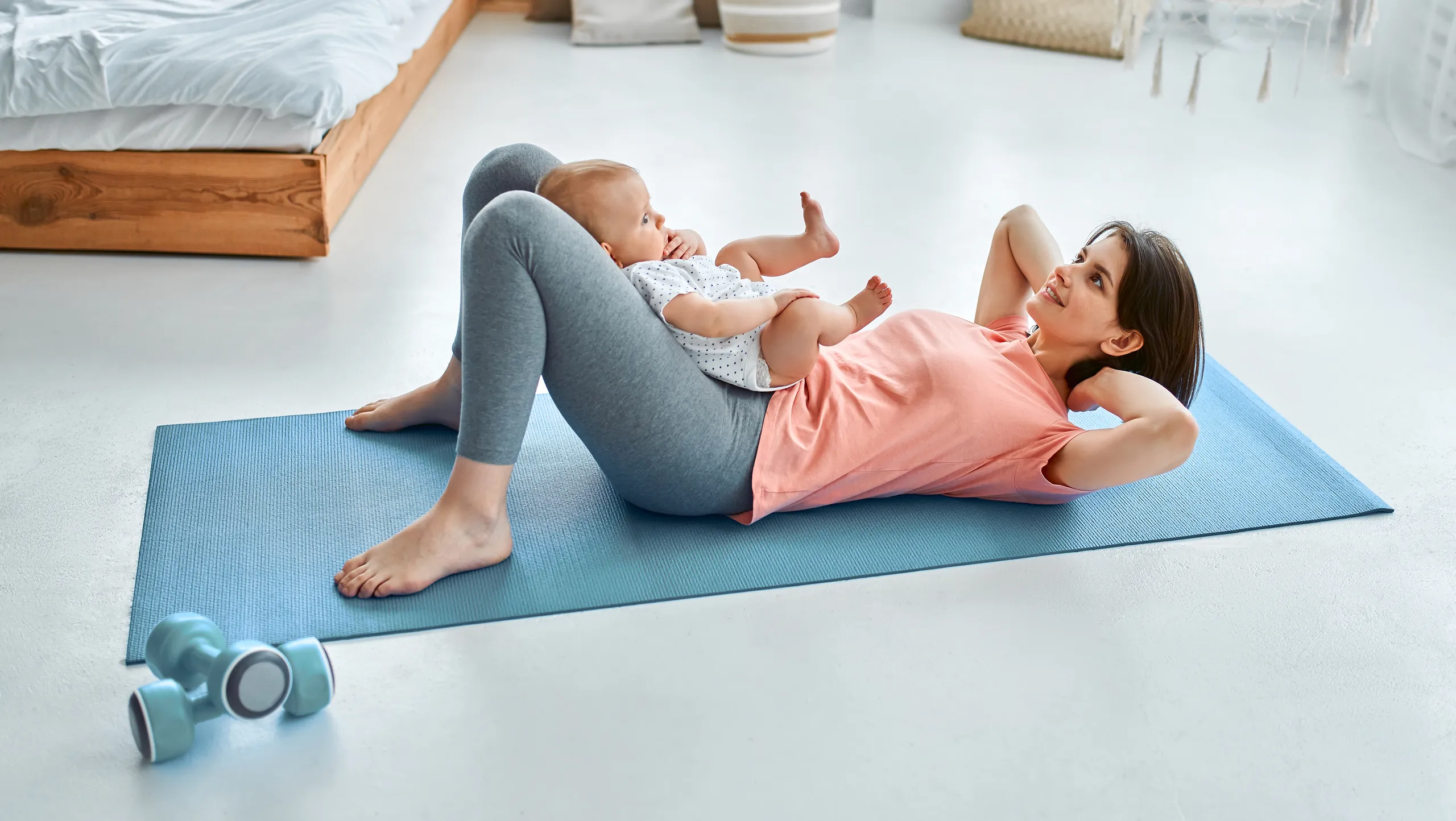
Progressing safely through postpartum recovery requires transitioning from foundational coordination exercises to dynamic, load-bearing movements over several weeks. Standard fitness routines often introduce high-impact loading before the deep pelvic support system has adequately recovered. Working with a dedicated physical therapist allows for a structured approach that avoids common setbacks. While typical clinical evaluations at specialized clinics like Copper Wellness range from $150 to $300 for a comprehensive pelvic health assessment, investing in structured rehabilitation prevents chronic physical issues. The table below outlines the appropriate progression phases and contrasts safe rehabilitation techniques with traditional fitness movements that should be avoided early in recovery.
| Postpartum Stage | Safe & Recommended Exercises | Exercises to Avoid | Primary Focus |
|---|---|---|---|
| Early Healing (Weeks 0–2) | Diaphragmatic (360) breathing, gentle pelvic floor releases, light pelvic tilts, brief walks. | Kegels (until assessed for hypertonicity), crunches, heavy lifting exceeding the baby’s weight. | Reduce swelling, improve circulation, reactivate the brain-muscle connection. |
| Functional Recovery (Weeks 2–6) | Glute bridges, pelvic tilts with heel slides, cat-cow, modified wall squats, transverse abdominis (TVA) “zipping”. | Planks, running, high-impact jumping, traditional sit-ups. | Rebuild structural support, improve pelvic and hip stability, heal abdominal gap. |
| Active Strengthening (Weeks 6–12+) | Squats with pelvic floor coordination, bird-dog, resisted band walks, light postpartum yoga/pilates. | Heavy Olympic lifts, running/jumping (prior to passing a dynamic pelvic floor assessment). | Integrate the pelvic floor into functional, everyday movements and load progression. |
For individuals seeking personalized physical therapy in Chicago, IL, Copper Wellness offers custom-tailored postpartum pelvic floor therapy. Our team coordinates closely to identify the root causes of physical limitations rather than merely managing localized symptoms. Many new mothers also add postpartum massage to ease neck, shoulder and back tension from feeding and carrying a newborn. Our clinic is located in the Bucktown and Wicker Park area, offering a highly supportive, clinical environment. Prior to your first appointment, our certified third-party billing team will provide a detailed breakdown of your insurance benefits, as we accept Blue Cross Blue Shield, Aetna, as well as FSA and HSA payments.
FAQ
What is postpartum pelvic floor therapy?
Postpartum pelvic floor therapy is a specialized branch of physical therapy focused on rehabilitating the muscles, ligaments, and connective tissues of the pelvis after childbirth. It involves external and internal muscle assessments, scar tissue mobilization (for C-section or perineal tears), biofeedback, and customized corrective exercises to resolve leaking, pain, and core weakness.
How to do pelvic floor exercises postpartum safely?
To do pelvic floor exercises postpartum safely, always pair muscle activation with your breath. Exhale during the exertion phase of an exercise (e.g., as you squeeze your pelvic floor or lift your hips in a bridge) and inhale to completely relax and stretch the pelvic floor muscles. Never hold your breath or push downward on your pelvic floor during an exercise.
Which is better for postpartum healing: Kegels or diaphragmatic breathing?
Diaphragmatic breathing is the foundational first step and is universally safer and more effective than traditional Kegels in early postpartum. Diaphragmatic breathing naturally coordinates the pelvic floor through its entire range of motion (contraction and relaxation) without the risk of over-tightening or straining healing tissues.
When should you see a pelvic floor physical therapist postpartum?
While anyone can benefit from a preventative evaluation, you should book an appointment if you experience persistent urinary or bowel leakage, painful intercourse, a feeling of heaviness or bulging in your vagina (signs of prolapse), tailbone pain, or a visible gap/doming in your abdomen (diastasis recti) past 6 weeks postpartum.
Is it true that leaking is normal postpartum?
No. While leaking urine or gas is incredibly common in the first few weeks after birth as tissues heal, it is not “normal” to experience ongoing leakage months or years down the road. This is a common, highly treatable sign of pelvic floor dysfunction that can be resolved with targeted physical therapy.
Schedule your complimentary consultation at Copper Wellness — call (872) 267-1717 or book online at copperwellness.janeapp.com.