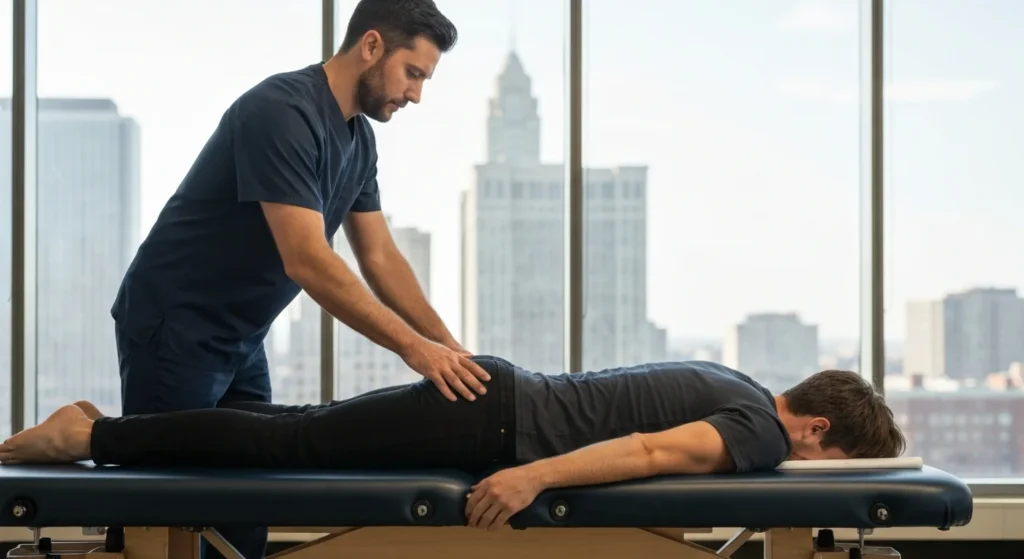

Can a chiropractor help with vertigo? Learn how structural alignment and targeted therapies address the root causes of dizziness for lasting relief.


For individuals experiencing acute or chronic dizziness, determining the primary physiological driver dictates the choice of treatment. If your vertigo arises from cervical spine restriction or muscle tension, seeking a qualified chiropractor for vertigo is the most appropriate first action. If your symptoms stem from inner-ear crystal displacement, a practitioner trained in the Epley Maneuver can provide rapid resolution. For complex cases involving persistent inner-ear inflammation or central balance system deficits, combining chiropractic care with vestibular physical therapy yields the highest clinical success rate. Identifying the precise mechanism prevents unnecessary delays in recovery and avoids reliance on symptom-masking pharmaceutical suppressants. At Copper Wellness in Chicago, our team analyzes your structural alignment and neurological pathways to deliver target-specific, coordinated care. Understanding the mechanical differences between these conditions allows you to select the correct intervention. You may book a complimentary consultation to begin your evaluation process.
Disclaimer: The clinical information provided in this article serves educational purposes only. It does not replace professional medical diagnosis, advice, or treatment. Always consult a licensed healthcare professional before commencing any new therapeutic regimen.
Can a Chiropractor Help with Vertigo? (The Quick Answer)

Clinical evidence demonstrates that specialized chiropractic care offers a highly effective, drug-free path to managing vertigo. Its efficacy depends entirely on matching the treatment to the specific type of balance disorder. Chiropractors address the physical restrictions that disrupt the body’s spatial awareness systems. By restoring normal biomechanics, these treatments help clear up conflicting sensory messages sent to the brain.
According to the Vestibular Disorders Association, one large epidemiological study estimates that approximately 35% of adults aged 40 and older in the United States have experienced some form of vestibular dysfunction. When dizziness stems from mechanical joint dysfunction in the upper neck, targeted spinal adjustments can relieve abnormal pressure on cervical nerves. For patients suffering from canalith displacement in the inner ear, manual repositioning procedures offer immediate mechanical correction. These conservative interventions avoid the side effects of sedative medications, which merely suppress symptoms rather than resolving the root cause.
Typical pricing for conservative vestibular and chiropractic management ranges from $150 to $350 for an initial comprehensive diagnostic workup. Subsequent treatment sessions generally range from $80 to $150, depending on the specific manual therapies, adjustments, or repositioning maneuvers required. Many leading insurance providers, such as Blue Cross Blue Shield and Aetna, offer coverage for these therapeutic services under chiropractic or physical therapy benefits.
Cervicogenic Vertigo vs. BPPV: How a Vertigo Chiropractor Diagnoses the Root Cause
Successful clinical outcomes require an accurate diagnostic distinction between cervical spine disorders and inner-ear mechanical failures. While both conditions present as dizziness, their underlying pathophysiologies reside in completely different anatomical structures. A skilled practitioner must isolate these systems through specific orthopedic and neurological testing before administering any manual therapy.
Cervicogenic Vertigo (The Neck Connection)
The joints, ligaments, and deep paraspinal muscles of the upper cervical spine contain the highest concentration of mechanoreceptors in the human body. These specialized sensory receptors transmit continuous proprioceptive data to the brainstem. This data details the exact position of the head relative to the body. The C1 (atlas), C2 (axis), and C3 vertebrae function as the primary structural highway for this information exchange.
When poor posture, trauma, or joint restrictions alter the alignment of these upper cervical segments, the mechanical receptors transmit distorted spatial signals. This abnormal sensory input conflicts with the visual data from your eyes and the mechanical data from your inner ear. The brainstem struggles to resolve these mismatched signals, which results in a persistent sensation of unsteadiness, floating, or disorientation. Seeking targeted chiropractic care for neck pain and mechanical restrictions directly addresses this structural mismatch. By performing gentle, high-precision adjustments, a cervical vertigo chiropractor restores normal joint glide. This alignment corrects the afferent nerve signals, allowing the brain to process spatial orientation accurately.
Benign Paroxysmal Positional Vertigo (BPPV – The Inner Ear Connection)
Benign Paroxysmal Positional Vertigo presents a purely mechanical issue within the vestibular apparatus of the inner ear. The vestibular system utilizes microscopic calcium carbonate crystals, known as otoconia, to detect gravity and linear acceleration. These crystals reside normally within the gel-like matrix of the utricle. If these crystals detach, they can migrate into the fluid-filled semicircular canals, which detect rotational head movements.
When you change your head position, these loose crystals roll through the canal fluid. This movement creates abnormal hydraulic pressure, which artificially stimulates the hair cell receptors. The brain receives a false signal that the head is spinning rapidly, resulting in intense, brief episodes of vertigo. To correct this, a chiropractor utilizes the Epley Maneuver. This structured sequence of head turnings uses gravity to guide the displaced otoconia out of the semicircular canal and back into the utricle. Once returned, the body naturally reabsorbs the crystals, resolving the spinning sensation. If mild balance deficits persist after crystal clearance, integrating specialized vestibular therapy for inner-ear vertigo helps retrain the brain’s balance pathways.
To ensure patient safety, clinical professionals emphasize a critical E-E-A-T guideline: patients must avoid performing aggressive, self-guided head shakes or unverified canalith maneuvers at home. Attempting these maneuvers without proper diagnostic mapping can inadvertently migrate the crystals into the lateral semicircular canal. This clinical error transforms a highly treatable posterior canal BPPV into a complex lateral canal variant that is far more difficult to resolve.
Can a Chiropractor Make Vertigo Worse? Safety, Risks, and Clinical Realities

Many patients feel anxious about undergoing neck adjustments when already dealing with debilitating dizziness. Understanding the difference between normal post-treatment adaptation and actual clinical risk helps patients make informed decisions about their healthcare.
Transient Vertigo After Chiropractic Adjustment
A small percentage of patients experience a temporary increase in lightheadedness or a mild flare-up of dizziness immediately following their first adjustment. This physical response is a normal adaptation process rather than an indication of injury. Restoring motion to previously restricted, locked joints suddenly changes the sensory feedback sent to the brainstem. The brain must rapidly adapt to this corrected sensory input.
Additionally, releasing chronic muscle tension around the upper neck can temporarily alter local blood flow and vascular pressure. This minor physiological shift can trigger a brief feeling of unsteadiness. This adaptation phase typically resolves within 24 to 48 hours as the nervous system stabilizes. It indicates that the joint mechanics are shifting back toward a healthy, functional state.
Mitigating Risks with Upper Cervical Specialists
Patient safety is the top priority when managing cervical spinal conditions. Experienced chiropractors utilize specialized, low-force techniques to treat the upper neck. These highly controlled adjustments target the C1 and C2 vertebrae without using aggressive rotational force. These precise, low-force methods protect the surrounding tissues while restoring correct joint mechanics.
Clinical data confirms that serious complications from neck manipulation are extremely rare. A 2014 scientific statement from the American Heart Association acknowledges that while cervical arterial dissection associated with spinal manipulation can occur, the incidence is considered low and the causal relationship remains a subject of ongoing clinical debate. This makes conservative chiropractic care, when performed by an experienced practitioner with proper screening, a highly secure option for the vast majority of patients. It compares very favorably to the long-term use of vestibular suppressant drugs, which can delay natural neurological recovery.
What to Expect During Chiropractic Treatment for Vertigo
Understanding the diagnostic and therapeutic process helps ease patient anxiety. At Copper Wellness, we guide patients through a structured clinical protocol to isolate the root cause of their symptoms.
- Comprehensive Intake and Neurological Screening: The clinician reviews your complete health history, including the onset, duration, and triggers of your dizziness. They perform cranial nerve evaluations, test your cerebellar function, and examine your eye movements.
- Orthopedic and Cervical Range of Motion Testing: The provider assesses the mobility of your neck joints and evaluates the tension in your paraspinal muscles. They perform specialized tests, such as the cervical torsion test, to determine if your neck joints are sending incorrect spatial signals.
- The Dix-Hallpike Maneuver: To check for BPPV, the chiropractor performs this diagnostic test by carefully guiding your head and torso into a reclined position. They monitor your eyes for nystagmus, an involuntary twitching that confirms crystal displacement.
- Targeted Cervical Adjustments: If your assessment reveals spinal joint restrictions, the chiropractor performs gentle, precise adjustments. Dr. Adam Mohr or Dr. Mimosa Nguyen delivers these targeted corrections to restore proper alignment.
- Canalith Repositioning (The Epley Maneuver): If BPPV is detected, the practitioner guides you through a precise series of head turns. This treatment moves the displaced inner-ear crystals back to their proper location.
- Coordinated Interdisciplinary Care: In complex cases, your chiropractor collaborates directly with our pelvic floor and vestibular physical therapist, Dr. Lisa Lagomarcino. This team approach combines structural adjustments with balance retraining to speed your recovery.
Chiropractic Adjustments vs. Vestibular Physical Therapy: Differentiating the Modalities
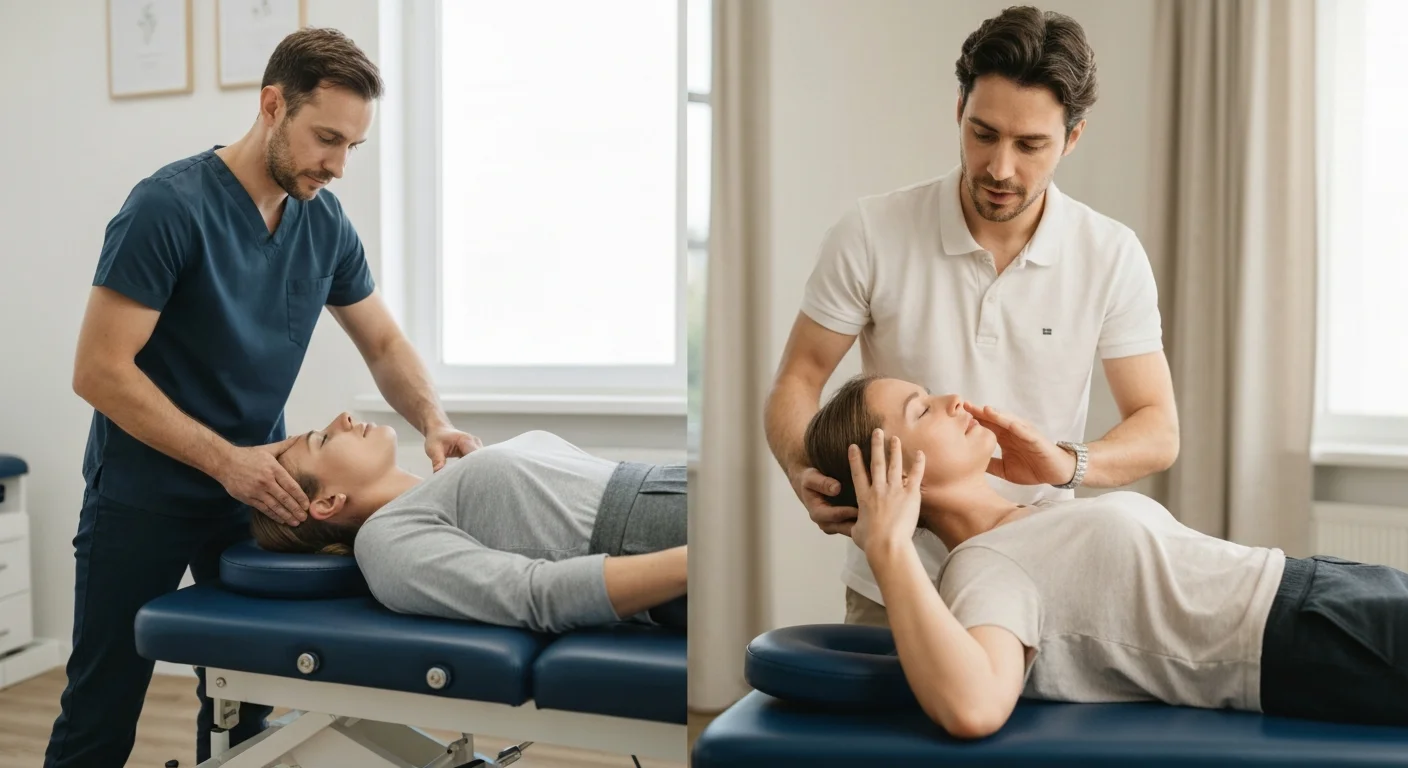
While both therapies aim to restore balance, they target different physiological systems. Chiropractic care focuses primarily on correcting joint restrictions, optimizing cervical mechanics, and resolving crystal displacement. Vestibular physical therapy focuses on central nervous system adaptation, gaze stabilization, and balance exercises. Combining these therapies offers a complete solution for complex balance disorders.
| Feature / Treatment | Chiropractic Care for Vertigo | Vestibular Physical Therapy |
|---|---|---|
| Primary Focus | Spinal alignment, joint mobility, and cervical nerve communication. | Neurological habituation, gaze stabilization, and balance training. |
| Best For | Cervicogenic vertigo, neck pain, tension headaches, and acute BPPV. | Vestibular neuritis, labyrinthitis, and chronic balance deficits. |
| Techniques Used | Cervical adjustments, soft tissue therapy, and the Epley Maneuver. | Gaze tracking, balance board exercises, and habituation protocols. |
| Insurance Compatibility | In-network with BCBS and Aetna; FSA and HSA eligible. | In-network with BCBS and Aetna; FSA and HSA eligible. |
FAQs: Common Questions About Chiropractic Care for Vertigo
Can a chiropractor fix vertigo permanently?
Yes, chiropractic care can permanently resolve vertigo when the condition is caused by mechanical issues like BPPV or cervical joint dysfunction. BPPV often clears completely after one to three Epley Maneuver sessions. Cervicogenic dizziness requires periodic spinal maintenance and postural correction to prevent recurring subluxations.
How many chiropractic sessions are needed for vertigo relief?
The number of sessions depends on the underlying cause of your dizziness. BPPV typically resolves within one to three treatment sessions. In contrast, cervicogenic vertigo requires a structured plan of four to eight weeks of consistent care to retrain the paraspinal muscles and stabilize the upper cervical spine.
Is it safe to get adjusted if I have active labyrinthitis?
While a spinal adjustment is safe, it will not directly resolve active labyrinthitis, which is an inflammatory or viral inner-ear condition. However, chiropractic adjustments can help manage the severe compensatory neck stiffness and muscle spasms that patients develop when trying to hold their heads rigid to prevent spinning.
Which diagnostic tests do chiropractors use to identify vertigo?
Chiropractors use the Dix-Hallpike maneuver to identify canalith movement in BPPV, observing for involuntary eye twitching called nystagmus. They also employ the cervical torsion test, where the head is held stable while the body is rotated on a chair, to isolate neck-related proprioceptive errors from inner ear issues.
When should I avoid chiropractic adjustments for dizziness?
You should avoid high-velocity neck adjustments if you experience vascular red flags such as sudden slurred speech, double vision, numbness in the face, or difficulty swallowing. An experienced clinician will perform a thorough vascular screening to rule out these stroke-related symptoms before executing any treatment.
Experience Integrative Vertigo Relief at Copper Wellness in Chicago
Overcoming chronic dizziness requires a comprehensive diagnostic strategy and a coordinated medical team. At Copper Wellness, located at 1654 W. North Ave. in Chicago, IL, we combine evidence-based chiropractic adjustments, vestibular rehabilitation, and acupuncture under one roof. Our practitioners work collaboratively to address both the structural and neurological root causes of your symptoms. Whether you require spinal corrections from Dr. Adam Mohr and Dr. Mimosa Nguyen, or vestibular therapy from Dr. Lisa Lagomarcino, we tailor your recovery plan to your unique physiological needs.
Our clinic serves the Bucktown and Wicker Park communities, offering wheelchair-accessible facilities and assistive hearing loops to accommodate all patients. We accept Blue Cross Blue Shield and Aetna insurance plans, and our certified third-party billing team provides a detailed coverage breakdown before you begin care. Schedule your complimentary consultation at Copper Wellness — call (872) 267-1717 or book online at copperwellness.janeapp.com.