
Find relief with a back pain chiropractor chicago residents trust. Copper Wellness combines chiropractic and rehab to target the root cause.


If you are struggling with persistent back pain in Chicago, the most effective path to recovery is choosing an integrative healthcare clinic that combines precise chiropractic care with physical rehabilitation and soft-tissue therapy. While traditional high-volume clinics often focus solely on quick spinal manipulations, clinical evidence demonstrates that lasting relief requires addressing both structural joint mechanics and surrounding muscular imbalances. For acute flare-ups, localized joint mobilization can offer rapid relief, but chronic, recurring back issues demand a coordinated approach. At Copper Wellness in Bucktown, our practitioners work as a cohesive team to analyze your movement patterns, release chronic muscle tension, and realign your spine. This comprehensive methodology ensures you do not just mask your symptoms but actively resolve the root cause of your pain. By coordinating chiropractic adjustments with physical therapy, acupuncture, and targeted soft-tissue work, we help you return to your favorite activities in Wicker Park and Logan Square without relying on temporary fixes or invasive procedures. Here is how you can navigate your treatment options and choose the best clinical team for your recovery.
Key Takeaways for Resolving Back Pain in Chicago
- Root-Cause Focus: Achieving lasting relief from spinal discomfort requires addressing restricted joint mechanics and underlying muscular imbalances simultaneously.
- The Integrative Advantage: Coordinated care combining chiropractic medicine, physical therapy, and acupuncture yields faster, longer-lasting recovery times.
- Insurance Compatibility: Many premier Chicago wellness clinics accept major PPO insurance plans, including Blue Cross Blue Shield (BCBS) and Aetna, to keep care accessible.
- Specialized Clinical Training: Patients with unique needs, such as pregnant women or local athletes, benefit most from practitioners certified in targeted modalities like the Webster Technique or Graston Technique.
What to Look For in a Chicago Back Pain Specialist
Finding the right provider for spinal care in a major metropolitan area can feel overwhelming due to the sheer volume of options. Many patients find themselves trapped in high-volume, assembly-line clinics that offer identical, brief adjustments to every client who walks through the door. A true back pain specialist operates differently, dedicating significant time to diagnosing your unique movement patterns, posture, and musculoskeletal system. An elite provider always begins with a comprehensive initial assessment that includes range of motion measurements, specialized orthopedic testing, and functional movement screens to pinpoint the exact driver of your pain.
When seeking a back pain specialist in neighborhoods like Bucktown, Wicker Park, Logan Square, or West Town, look for a clinic that values multidisciplinary collaboration. At Copper Wellness, our co-owners Dr. Adam Mohr and Dr. Mimosa Nguyen bring complementary clinical expertise to the table. Dr. Mohr is a Webster Certified chiropractor and posture correction expert, while Dr. Nguyen specializes in sports medicine and the Graston Technique. This clinical depth ensures an elite level of diagnostic accuracy, allowing us to build treatment plans that target the root cause of your discomfort rather than just providing a temporary crack.
According to the American Chiropractic Association, spinal manipulation combined with active rehabilitation reduces the risk of back pain recurrence by over 40% compared to passive modalities alone. This statistic highlights why passive, adjustment-only care often fails over time. If your muscles are not retrained to support your joints, your body will naturally default back into its painful, misaligned patterns.
Typical initial consultations for a comprehensive chiropractic assessment in Chicago range from $150 to $250 out-of-pocket. However, finding a clinic with a dedicated, in-house billing team is essential for managing healthcare costs. By working with a provider that accepts major commercial insurance providers, you can often leverage your BCBS or Aetna PPO plans to significantly lower your copays. This financial transparency ensures you can commit to a complete, recovery-focused treatment plan without unexpected financial surprises.

How an Integrative Spinal Adjustment Resolves Lower Back Pain
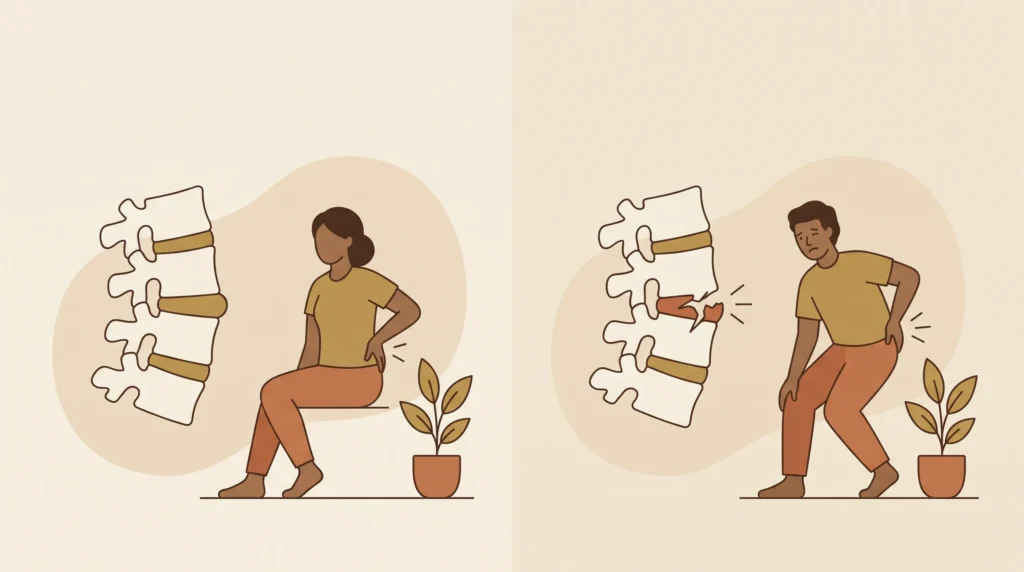
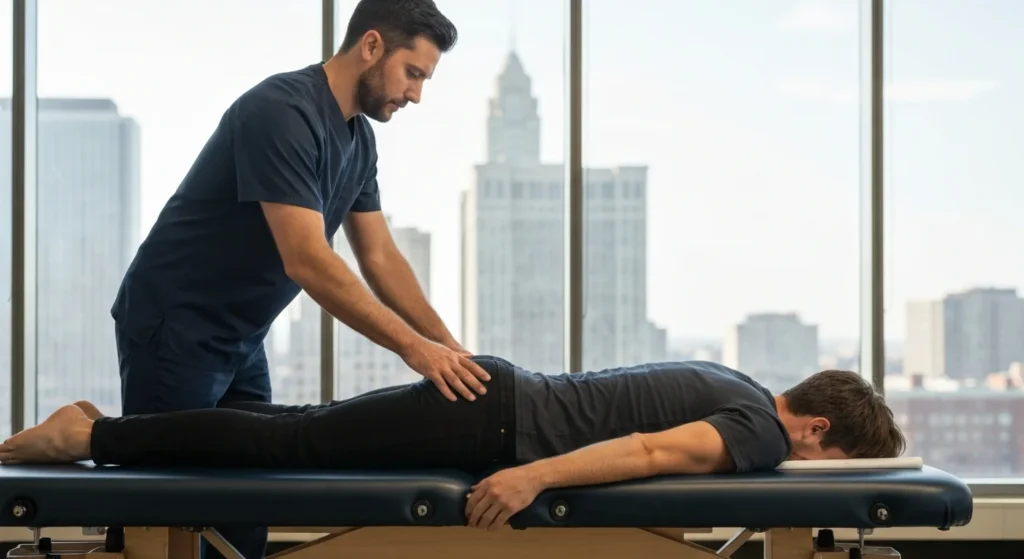
Understanding how chiropractic care actually changes your physiology can demystify the healing process. A clinical spinal adjustment involves a precise, manual technique known as a high-velocity, low-amplitude (HVLA) thrust. When a joint in your spine or pelvis becomes restricted or locked, it limits your range of motion and creates localized inflammation. The chiropractor applies a quick, controlled force to that specific joint, which restores normal joint play, decompresses sensitive nerve pathways, and immediately reduces local muscle spasms.
This process triggers a powerful neuromuscular response. The rapid stretch of the joint capsule stimulates specialized nerve receptors called mechanoreceptors. These receptors send fast signals to your brain that effectively block the slower pain signals traveling from your nociceptors, providing immediate, drug-free pain relief. For individuals seeking a qualified back pain chiropractor in Chicago, this treatment is highly effective for common structural issues like sacroiliac (SI) joint dysfunction, lumbar facet joint syndrome, and mild disc compressions.
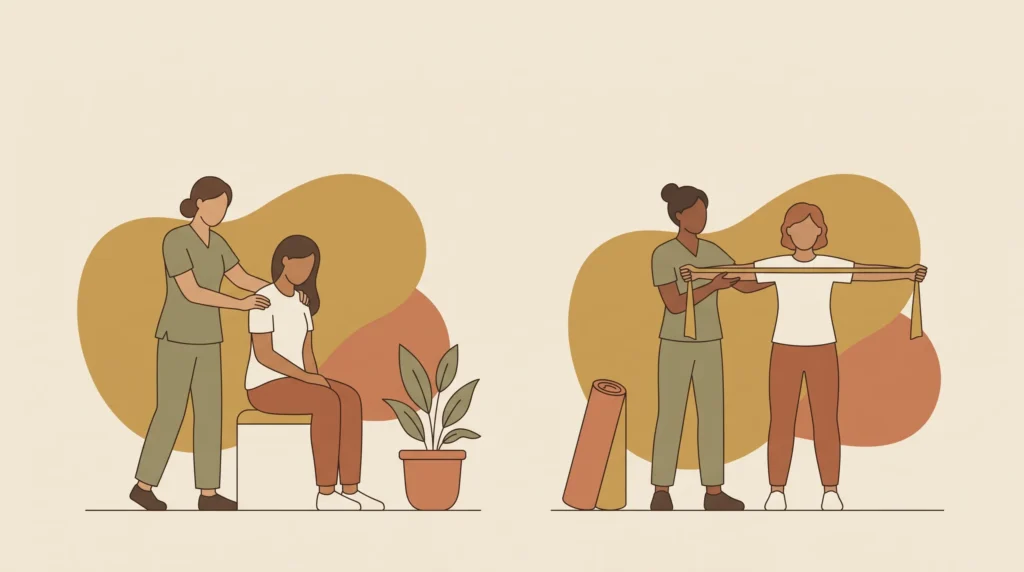
However, focusing exclusively on the joints is a common clinical mistake. If a chiropractor adjusts a spinal segment that is surrounded by hypertonic, spasming muscles, those tight muscles will quickly pull the joint back out of its proper alignment. To prevent this, premium specialists always prepare the surrounding soft tissues before performing an adjustment. Utilizing techniques such as myofascial release, instrument-assisted soft tissue mobilization (IASTM) like the Graston Technique, or targeted therapeutic massage ensures the muscles are relaxed and receptive to structural changes.
By addressing the soft tissues first, the adjustment is much gentler, more comfortable, and significantly more stable. This combined approach is why patients seeking integrative chiropractic care at Copper Wellness experience faster recovery. Combining structural adjustments with deep muscle work allows the body to adapt to its newly restored alignment, facilitating long-term stability and pain reduction.
Comparing Treatments: Spinal Adjustments vs. Physical Therapy vs. Integrative Care
Navigating the differences between various back pain treatments can help you make an informed decision for your recovery. The table below compares the most common therapeutic approaches available to Chicagoans suffering from acute or chronic spinal discomfort.
| Treatment Approach | Best For | Typical Techniques Used | Long-Term Success Rate |
|---|---|---|---|
| Isolated Spinal Adjustment | Acute joint restrictions and quick joint mobilization. | Manual manipulation, drop table, activator methods. | Moderate (requires frequent maintenance if muscles are not retrained). |
| Traditional Physical Therapy | Muscle weakness, post-surgical rehab, and movement retraining. | Corrective exercises, stretching, core stabilization. | High for muscle issues, but slower for resolving acute joint locks. |
| Integrative Care (Chiropractic + PT + Acupuncture) | Chronic lower back pain, sciatica, and complex clinical cases. | Adjustments, dry needling, myofascial release, and targeted rehab. | Highest (addresses joints, muscles, nervous system, and systemic inflammation). |
| Soft-Tissue Mobilization & Massage | Myofascial pain, high muscle tension, and stress-related stiffness. | Trigger point therapy, myofascial release, and deep tissue massage. | Moderate (highly effective for symptoms, but needs structural integration). |
As illustrated, while isolated treatments have their place, an integrative care model provides the most robust path to permanent recovery. A landmark clinical trial published in the Annals of Internal Medicine demonstrated that patients who received spinal manipulation combined with home exercises experienced significantly greater pain reduction and functional improvement at one year compared to those who received spinal manipulation alone. This research highlights why a collaborative approach is superior for long-term health.

The Step-by-Step Clinical Journey to a Pain-Free Spine
When you choose a comprehensive, multi-modality clinic, your recovery is structured to build lasting structural integrity. Our clinical protocol follows a logical, evidence-based sequence designed to move you from acute pain relief to active functional strengthening. This process involves four primary phases:
- Comprehensive Diagnostic Evaluation: We analyze your standing posture, spinal alignment, functional movement patterns, and joint mobility to identify the exact tissues causing your pain.
- Acute Pain Deactivation: We utilize gentle chiropractic adjustments, acupuncture, and physical therapy for back pain to calm the nervous system, reduce local inflammation, and restore basic joint mechanics.
- Soft-Tissue Mobilization: Through clinical techniques like Graston, myofascial release, or target-specific therapeutic massage for back pain, we break down scar tissue and release chronically tight muscles that restrict your movement.
- Neuromuscular Re-education and Stabilization: We teach you customized corrective exercises to strengthen your core, stabilize your pelvis, and correct the bad movement habits that caused your pain in the first place.
By blending these distinct therapies, we create a synergistic effect. For example, clinical studies curated by the National Institutes of Health confirm that acupuncture is a highly effective standalone treatment for chronic musculoskeletal pain. When acupuncture is paired with targeted chiropractic adjustments, the acupuncture reduces local muscle guarding and relaxes the nervous system, making the chiropractic adjustment much easier to perform and significantly more stable over time.
Additionally, addressing underlying pelvic floor dysfunction is a critical and often overlooked component of chronic back pain. For many individuals, especially postpartum patients or those with chronic pelvic pain, weakness or hypertonicity in the pelvic floor muscles destabilizes the base of the spine. By integrating pelvic floor physical therapy with traditional chiropractic care, we provide a complete, 360-degree approach to core stability that resolves back pain from the inside out.
FAQ
What is the difference between a back pain doctor and a chiropractor in Chicago?
A back pain doctor in Chicago typically refers to a medical doctor (MD) or osteopath (DO) who specializes in orthopedics, neurology, or pain management, often utilizing diagnostic imaging, medications, or spinal injections. A chiropractor is a Doctor of Chiropractic (DC) who focuses on conservative, non-invasive neuromusculoskeletal care, utilizing manual adjustments, soft-tissue therapies, and rehabilitative exercises to resolve pain without drugs or surgery.
How do I choose the right lower back pain chiropractor in Chicago?
To choose the right chiropractor, look for a licensed Doctor of Chiropractic who conducts a detailed, one-on-one diagnostic assessment rather than rushing you into treatment. Avoid clinics that push long-term, pre-paid contracts, and instead choose a provider who offers personalized, collaborative treatment plans that combine adjustments with physical therapy, massage, or acupuncture.
Which is better for lower back pain: chiropractic or acupuncture?
Neither is universally better, as they address different components of spinal pain. Chiropractic care is highly effective for correcting joint restrictions, structural alignment issues, and pelvic imbalances. Acupuncture is excellent for down-regulating an overactive nervous system, reducing chronic inflammation, and releasing deep muscular trigger points, making a combination of both therapies the most effective approach.
When should you see a chiropractor for back pain vs. going to the ER?
You should see a chiropractor for localized back pain, stiffness, dull aching, sharp pain during movement, posture issues, or radiating sciatic nerve pain. You must go to the emergency room immediately if your back pain is accompanied by red-flag symptoms, such as sudden bowel or bladder incontinence, numbness in the groin or saddle area, progressive weakness in your legs, a high fever, or pain resulting from major physical trauma.
Is a chiropractic spinal adjustment safe for chronic back pain?
Yes, spinal adjustments are highly safe, gentle, and non-invasive when performed by a licensed, board-certified Doctor of Chiropractic. Chiropractors undergo rigorous doctoral-level training to screen for contraindications, perform precise structural assessments, and tailor their manual techniques to the specific age, physical condition, and comfort level of each patient.
See also: Pelvic Floor Dysfunction: Symptoms, Causes & When to See a Specialist