
Relieve nerve pain with a skilled herniated disc chiropractor. Discover how non-surgical spinal decompression at Copper Wellness helps heal your spine.


For individuals seeking non-surgical relief from a herniated disc, targeted chiropractic care represents an exceptionally safe and highly effective first-line intervention. Clinicians utilize highly specific, low-force biomechanical decompression strategies—most notably Cox Flexion-Distraction therapy—rather than standard high-velocity spinal manipulations to alleviate compression on spinal nerve roots. Patients suffering from acute sciatica, localized lumbar or cervical disc pathology, or radiating radiculopathy should prioritize these non-invasive traction techniques because they drop internal disc pressure, create a mechanical vacuum, and facilitate the natural resorption of extruded disc material. Conversely, patients presenting with progressive motor weakness, loss of bowel or bladder control, or profound sensory deficits require immediate emergency neurosurgical evaluation rather than manual therapy. At Copper Wellness in Chicago, our clinical approach pairs precision chiropractic care with coordinated acupuncture and physical therapy to address the root mechanical and metabolic causes of disc-related pain. This integrated methodology ensures that mechanical pressure is relieved while adjacent soft tissues are rehabilitated, offering a comprehensive pathway to recovery without surgical exposure.
Disclaimer: The information in this article is for educational purposes only and should not replace professional medical advice. Always consult a qualified healthcare provider, such as the clinical team at Copper Wellness, before starting any treatment plan for spinal conditions.
Can a Chiropractor Help with a Herniated Disc?
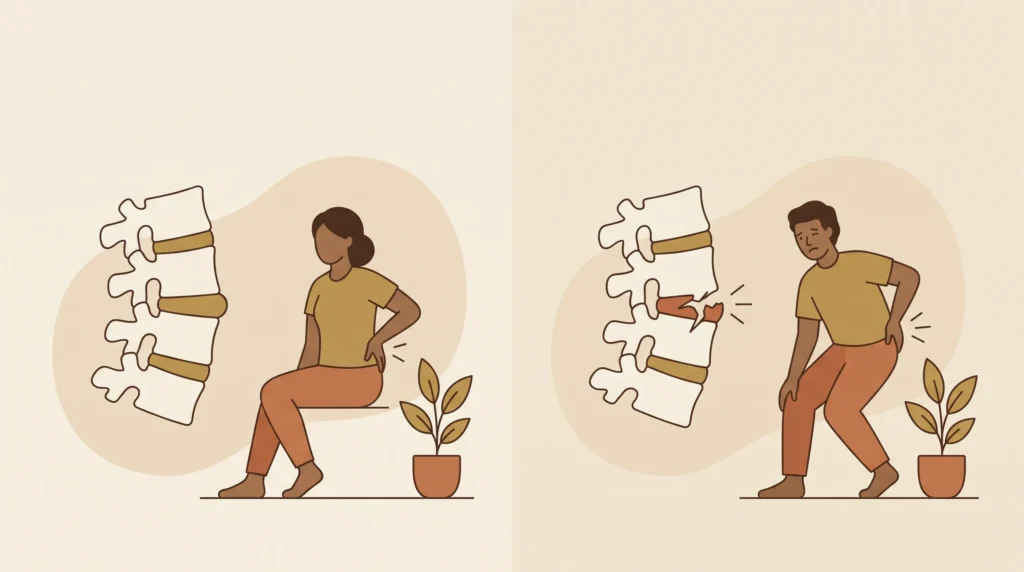
Clinical evidence demonstrates that specialized chiropractic therapy is highly effective for patients managing symptomatic disc herniations. The intervertebral disc is structured with a tough outer ring, the annulus fibrosus, surrounding a gelatinous inner core, the nucleus pulposus. When mechanical stress causes the outer fibers to tear, the inner gel can escape or bulge, compressing adjacent spinal nerve roots and initiating a massive inflammatory response. This mechanical and chemical irritation of the nerve is what produces localized pain, tingling, and radiating symptoms like sciatica.
Chiropractic care for this pathology does not physically “pop” or “crack” the disc back into its original position. Instead, trained chiropractors use precise mechanical therapies to alter the loading dynamics of the spine. By widening the intervertebral space, these therapies reduce the mechanical strain on the damaged disc and create an environment that encourages natural disc resorption. According to a review of randomized controlled trial evidence published in the Journal of Evidence-Based Complementary and Alternative Medicine, spinal manipulation is supported as an effective care option for acute, subacute, and chronic low back pain,
with a growing body of clinical research confirming its safety and efficacy for disc-related
conditions.
This conservative approach aligns with current medical guidelines, which strongly advocate for non-surgical interventions as the first line of defense. The Mayo Clinic emphasizes that the vast majority of herniated discs resolve naturally over time when supported by conservative, non-invasive therapies. Chiropractic adjustments designed specifically for disc management remove mechanical friction, improve localized fluid exchange, and allow the body’s macrophages to naturally break down and resorb the extruded disc material over several weeks or months.
While chiropractic care is highly effective for most cases, patients must be aware of key red flags that preclude manual therapy. If you experience progressive loss of motor control, such as a dragging foot (foot drop), numbness in the groin area (saddle anesthesia), or any sudden loss of bowel or bladder control, you must seek immediate emergency medical evaluation. These symptoms point to cauda equina syndrome, a rare but critical neurosurgical emergency caused by severe compression of the lower spinal nerve roots.
Can a Chiropractor Make a Herniated Disc Worse? (Safety & Risks of Spinal Adjustments)
Safety is the primary concern for any patient diagnosed with a spinal disc herniation. When performed by a licensed, highly trained professional, chiropractic care for a herniated disc is incredibly safe. However, the theoretical risk of exacerbating a disc herniation exists if a practitioner applies incorrect manual force to an unstable spinal segment.
The primary mechanism of injury or exacerbation during manual therapy is the application of aggressive, high-velocity, low-amplitude (HVLA) rotational adjustments directly on an acute, highly unstable disc herniation. The classic side-posture lumbar manipulation, which involves a rapid twisting motion, can generate significant torsional shear force. In an actively inflamed disc with torn annular fibers, this rotational torque can theoretically widen the annular tear, causing further extrusion of the nucleus pulposus and increasing pressure on the spinal nerve. This is a common professional mistake that elite clinicians avoid by utilizing low-velocity, non-rotational decompression methods instead.
To guarantee clinical safety and minimize risk, patients should expect a rigorous diagnostic protocol prior to any physical intervention. At Copper Wellness, located at 1654 W. North Ave. in the Wicker Park and Bucktown neighborhoods of Chicago, IL, our practitioners prioritize patient safety through the following clinical steps:
- Comprehensive Neurological and Orthopedic Assessment: Evaluating deep tendon reflexes, dermatome sensation, and manual muscle strength to pinpoint the exact level of nerve root compromise.
- Utilization of Gentle, Traction-Based Modalities: Employing advanced, non-force mechanical techniques that avoid twisting or high-velocity thrusts on the affected segment.
- Avoiding Outdated “Pushing” Concepts: Discarding the anatomically incorrect theory that a disc can be “pushed” back in, focusing instead on reducing internal disc pressure and restoring proper spinal joint mobility.
Herniated Disc Chiropractic Treatment Techniques: What to Expect

When seeking care for a herniated disc at a specialized facility like Copper Wellness, patients should expect the use of specialized chiropractic tables and precise mechanical instruments designed to safely decompress the spine. These techniques are highly distinct from the standard manual manipulation used for minor joint restrictions.
Cox Flexion-Distraction Technique
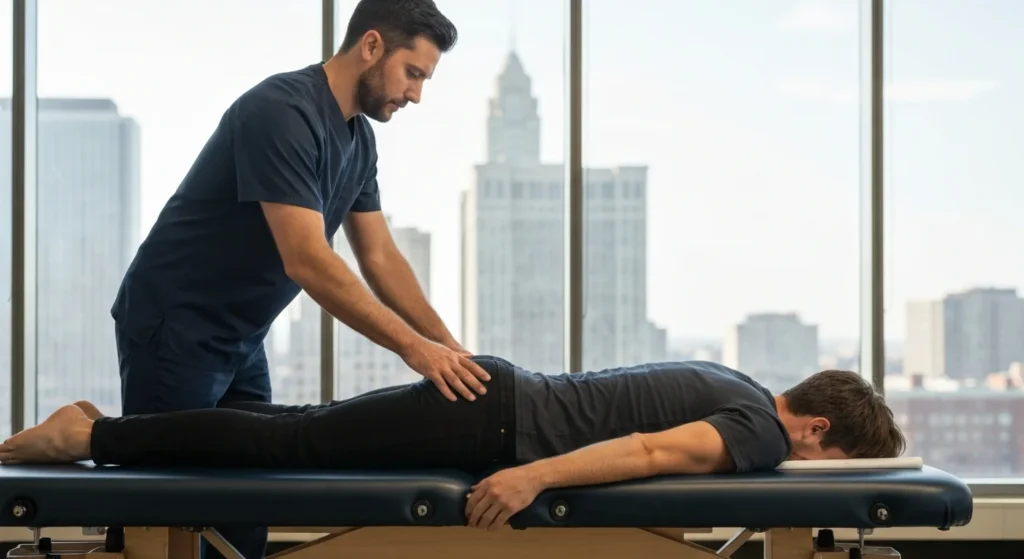
Cox Flexion-Distraction is a highly researched, hands-on, traction-based chiropractic technique. The patient lies face down on a specialized, split-section motorized table. The chiropractor gently secures the patient’s spine at the level above the herniation while the lower section of the table drops and flexes in a slow, rhythmic motion. This gentle movement stretches the lower spine and creates several physiological benefits:
- Increased Intervertebral Space: It physically widens the vertical height of the spinal canal and the neural foramina, immediately reducing mechanical pressure on the compressed nerve root.
- Negative Intradiscal Pressure: The traction creates a localized, negative-pressure vacuum effect (often dropping internal pressure to sub-atmospheric levels) inside the disc. This vacuum pull encourages the protruding nucleus pulposus to migrate back toward the center of the disc, away from the sensitive nerve.
- Improved Fluid Circulation: Because intervertebral discs lack a direct blood supply, they rely on movement to pump nutrients in and waste products out. The gentle pumping motion of flexion-distraction improves this diffusion, accelerating the healing of damaged annular fibers.
Pelvic Blocking (Sacro-Occipital Technique)
Sacro-Occipital Technique (SOT) utilizes pelvic blocking to treat lumbar disc issues without applying direct force to the spine. The chiropractor places padded, triangular wedges beneath the patient’s pelvis in highly specific configurations while the patient lies face down. By using the patient’s own body weight and the natural pull of gravity, this passive technique gently realigns the pelvis and coaxes the lumbar vertebrae into a balanced position. This realignment removes torsional stress from the symptomatic lumbar disc, immediately reducing localized muscle guarding and nerve pressure.
Activator Method & Instrument-Assisted Adjustments
For patients who are highly sensitive, in severe acute pain, or managing cervical disc herniations, manual therapy can sometimes be too intense. In these scenarios, clinicians utilize the Activator Method or other instrument-assisted adjusting devices. These hand-held, spring-loaded instruments deliver a highly localized, high-speed, but low-force physical impulse to targeted joint structures. The speed of the instrument allows the chiropractor to adjust adjacent vertebrae and improve joint alignment before the surrounding muscles have time to tense up. This technique involves zero twisting, cracking, or rotational force, making it an exceptionally safe option for compromised disc segments.
Integrative Therapies (The Copper Wellness Approach)
Spinal discs do not exist in isolation; they are supported by a complex network of muscles, ligaments, tendons, and myofascial tissues. True recovery requires coordinating care across multiple disciplines to treat the root mechanical and metabolic causes of the herniation. Under the clinical supervision of our team, patients at Copper Wellness benefit from a highly coordinated care model. Incorporating comprehensive chiropractic care for back pain and targeted chiropractic treatment for sciatica ensures that the mechanical pressure is directly relieved from the nerve roots.
To support this mechanical decompression, our licensed massage therapists, including Benicia Blue and Andy Holsteen, utilize specialized clinical massage, trigger point therapy, and myofascial release. These soft tissue modalities reduce the protective muscle spasms that lock the spine in a compressed state. Additionally, combining these techniques with sports physical therapy and acupuncture, overseen by Dr. Stephanie Madden and Dr. Anais Jackson-Gonzalez, helps down-regulate the nervous system, reduce systemic inflammation, and rebuild local core stability to prevent future flare-ups.
Can a Chiropractor Diagnose and Feel a Herniated Disc?

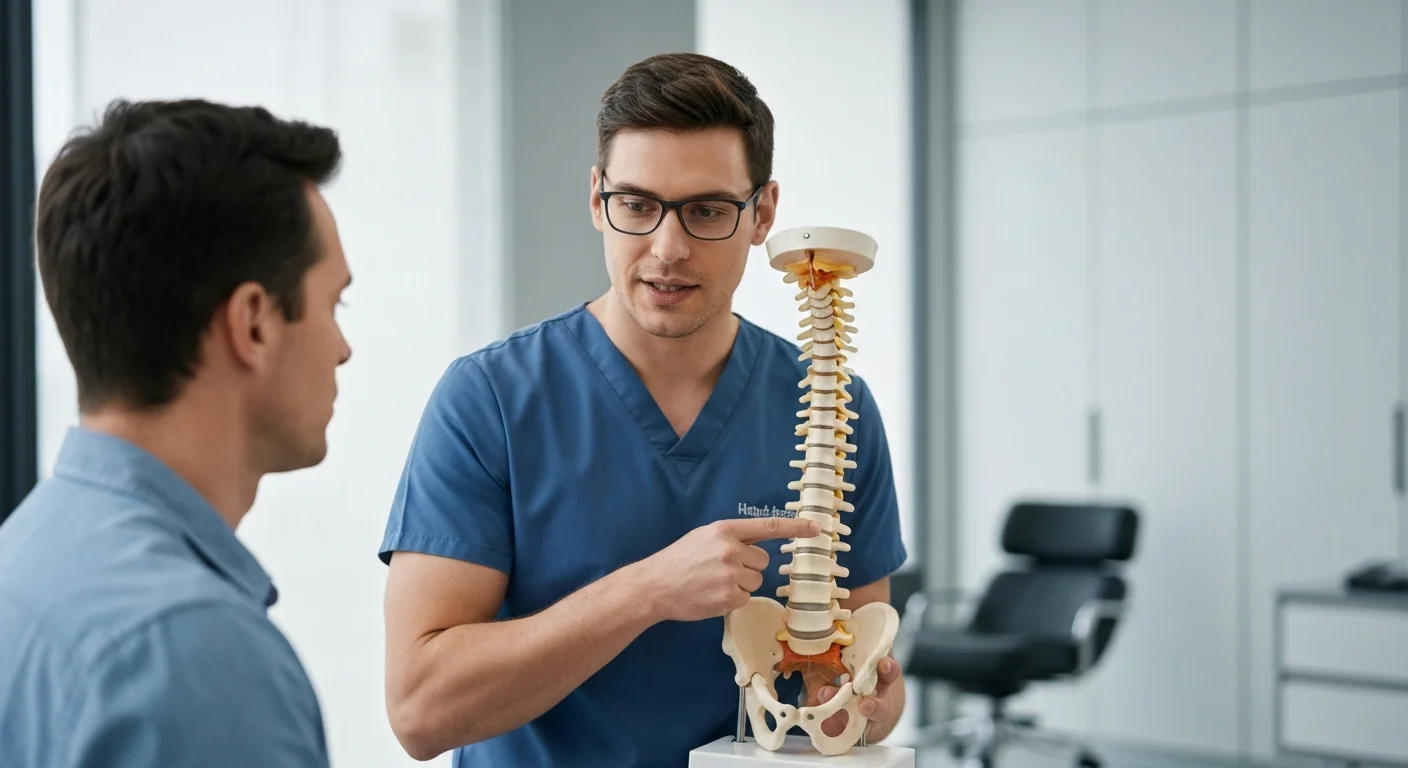
A chiropractor can suspect and clinically diagnose a herniated disc with a high level of accuracy through comprehensive physical testing, but they cannot physically “feel” a herniated disc with their hands. Because intervertebral discs are positioned deep within the spinal column, behind thick spinal muscles, ligaments, and the bony posterior arch of the vertebrae, palpating a disc herniation directly through the skin is anatomically impossible.
Instead, the chiropractor maps the presence of a herniated disc by assessing its neurological and mechanical effects on the body. This structured clinical evaluation involves several key components:
- Neurological Dermatome Testing: Using sensory tools to check for altered skin sensitivity along specific nerve pathways. A loss of sensation in the outer foot, for example, points directly to a compromised S1 nerve root.
- Myotome Strength Assessment: Testing the strength of specific muscle groups. Weakness in big toe extension indicates compression of the L5 nerve root.
- Deep Tendon Reflexes: Checking the patellar (L4) and Achilles (S1) reflexes. An asymmetrical or diminished reflex response suggests nerve root compression.
- Orthopedic Tension Tests: The Straight Leg Raise (LaSègue’s sign) is a classic orthopedic test. While the patient lies flat, the clinician slowly raises the straight leg. If this movement reproduces sharp, radiating pain down the leg between 30 and 70 degrees, it strongly indicates a disc herniation compressing the sciatic nerve.
While orthopedic testing provides an accurate clinical diagnosis, magnetic resonance imaging (MRI) remains the undisputed gold standard for visualizing soft tissue structures. A standard spinal X-ray can show bone spurs, arthritic changes, or a narrow disc space, but it cannot image the soft disc tissue or show the size and direction of a herniation. If a patient’s symptoms do not improve as expected, or if neurological deficits are progressive, our clinical team at Copper Wellness coordinates directly with local diagnostic centers to arrange high-resolution Labs & Imaging, ensuring we have precise anatomical mapping of the injury before continuing advanced therapy.
Chiropractic Care vs. Physical Therapy vs. Surgery for Herniated Discs
Patients managing a herniated disc have several clinical paths to choose from. Understanding the differences in goals, recovery times, and costs is essential for making an informed decision that matches your health needs and lifestyle.
For most patients, conservative care should always be exhausted before considering surgical options. Active rehabilitation, such as physical therapy for back pain, focuses on correcting structural imbalances, improving core recruitment patterns, and taking mechanical pressure off the spine through physical movement. When paired with passive chiropractic decompression, this combination addresses both the acute nerve compression and the underlying movement dysfunction that caused the disc to fail in the first place.
The following table outlines the key differences between these main treatment strategies:
| Feature | Chiropractic Decompression (Cox Flexion-Distraction) | Physical Therapy & Rehab | Spinal Surgery (Microdiscectomy) |
|---|---|---|---|
| Primary Goal | Reduce internal disc pressure and relieve nerve root impingement | Strengthen core stabilizers and correct movement patterns | Physically excise the herniated portion of the disc |
| Invasiveness | Non-invasive | Non-invasive | Invasive (Surgical) |
| Recovery Time | Progressive symptomatic relief over 4 to 12 weeks | Gradual strengthening and stability over 6 to 12 weeks | 2 to 6 weeks of restricted movement; months of active rehab |
| Ideal For | Acute/chronic disc pain, radiating sciatica, localized disc pressure | Muscle imbalances, core weakness, post-acute stability | Severe neurological deficits, progressive motor loss, failed conservative care |
| Typical Cost Range | Moderate ($80–$200 cash rate per session; often covered by insurance/HSA) | Moderate ($100–$250 per session; often covered by insurance/HSA) | High ($15,000–$50,000+; subject to hospital fees and insurance deductibles) |
According to research indexed by the National Library of Medicine, only about 10% of patients with symptomatic disc herniations ultimately require invasive spinal surgery. This means that 90% of cases can be managed successfully through non-surgical methods. A classic surgical microdiscectomy physically removes the piece of herniated disc pressing on the nerve. While this can provide rapid relief for severe, unyielding pain, surgery carries inherent risks, including infection, scar tissue formation, and a 10% to 15% rate of re-herniation at the same spinal level.
To make care accessible, Copper Wellness works with major commercial insurance providers, including Blue Cross Blue Shield and Aetna. We also accept Flexible Spending Accounts (FSA) and Health Savings Accounts (HSA). Our dedicated, certified third-party billing team handles all insurance verifications directly, providing you with a clear, detailed breakdown of your coverage and any potential out-of-pocket costs before your first treatment session begins.
FAQ — People Also Ask
Can a chiropractor fix a herniated disc permanently?
A chiropractor does not physically “fix” or repair a herniated disc in a structural, surgical sense, but they establish the optimal spinal mechanics required for the body to heal itself. By utilizing traction-based therapies to restore normal joint movement and reduce internal disc pressure, they facilitate the natural shrinkage and resorption of the herniated material. When combined with targeted rehabilitation exercises and ergonomic lifestyle adjustments, these changes allow the disc to heal and help permanently prevent future flare-ups.
Is chiropractic safe for a herniated disc in the neck (cervical spine)?
Yes, chiropractic care is safe for a cervical disc herniation, but it requires highly specialized, gentle techniques. Standard rotational neck adjustments (cervical manipulation) should never be performed directly on a segment with an active herniation due to the high risk of nerve irritation. Instead, experienced chiropractors utilize gentle cervical manual traction, computerized axial decompression, and localized instrument-assisted adjustments to safely relieve cervical nerve compression without twisting the neck.
Can a chiropractor cause a herniated disc?
It is exceptionally rare for a chiropractor to cause a herniated disc in a healthy spine. However, if a patient has an undiagnosed, highly unstable disc tear and is subjected to aggressive, high-velocity rotational manipulation without proper diagnostic screening, the mechanical stress can worsen the existing annular tear. This highlights the critical importance of choosing a clinician who performs a thorough neurological examination and diagnostic review before applying any manual force.
How many chiropractic sessions are needed for a herniated disc?
Most patients experience a noticeable reduction in acute pain and nerve irritation within 4 to 6 sessions of specialized flexion-distraction therapy. A complete clinical treatment plan designed to achieve long-term stability and support complete disc resorption typically ranges from 8 to 16 sessions spaced over a period of 4 to 12 weeks. The exact timeline depends on the severity of the herniation, the patient’s baseline physical health, and how closely they follow their home care recommendations.
When should you NOT see a chiropractor for a herniated disc?
You should bypass chiropractic care and seek immediate emergency medical or neurosurgical evaluation if you develop “red flag” symptoms of severe spinal cord or nerve root compression. These include a sudden loss of bowel or bladder control, numbness or a “pins-and-needles” sensation in your groin and inner thighs (saddle anesthesia), or progressive muscle weakness that impairs your ability to walk, such as a sudden foot drop. Additionally, patients with active spinal infections, fractures, or severe advanced osteoporosis should avoid manual spinal therapy.
If you are managing back pain, sciatica, or a diagnosed herniated disc and want to explore safe, non-surgical options, our integrated clinical team is here to guide you. Schedule your complimentary consultation at Copper Wellness — call (872) 267-1717.